Squeaky brakes are one of the most common concerns we hear from drivers in Kettering and across Northamptonshire, and many drivers wonder: is it safe to drive with squeaky brakes? The sound is annoying, but the real question is whether it signals danger. The answer depends entirely on what's causing the noise and how long you've been ignoring it.
At Kettering Motorist Centre, we diagnose brake issues. Some squeaks are harmless. Others mean your brakes are failing. This guide explains what you need to know, and when to stop driving immediately.
What Causes Brakes to Squeak
Brake noise comes from several sources. Understanding which one is yours helps you decide whether to book an appointment or pull over today.
Worn brake pads are the most common culprit. Modern pads include a metal wear indicator. When friction material gets thin, this metal tab rubs the rotor. You hear a high-pitched squeal. It's the brake system's warning signal.
Moisture and rust cause squeaks too. If your car sits overnight, moisture settles on the rotors. The first few brake applications wipe it away. The noise stops. This is normal and harmless.
Dust and debris trapped between the pad and rotor create noise. Brake dust is inevitable. A small amount causes squeaking. It usually disappears after a few stops.
Glazed rotors happen when pads overheat. The rotor surface hardens and becomes slippery. Pads don't grip properly. You get noise, reduced stopping power, and longer stopping distances.
Low-quality brake pads are noisier than premium ones. Budget pads use harder friction materials. They squeak more, especially when cold. This doesn't mean they're unsafe, just louder.
Loose brake components create metallic squeaks. Caliper bolts work loose. Pad clips rattle. These need professional attention.
How to Tell If Brake Pads Are Worn
Worn brake pads are the primary reason brakes squeak. Knowing how to spot them helps you avoid brake failure.
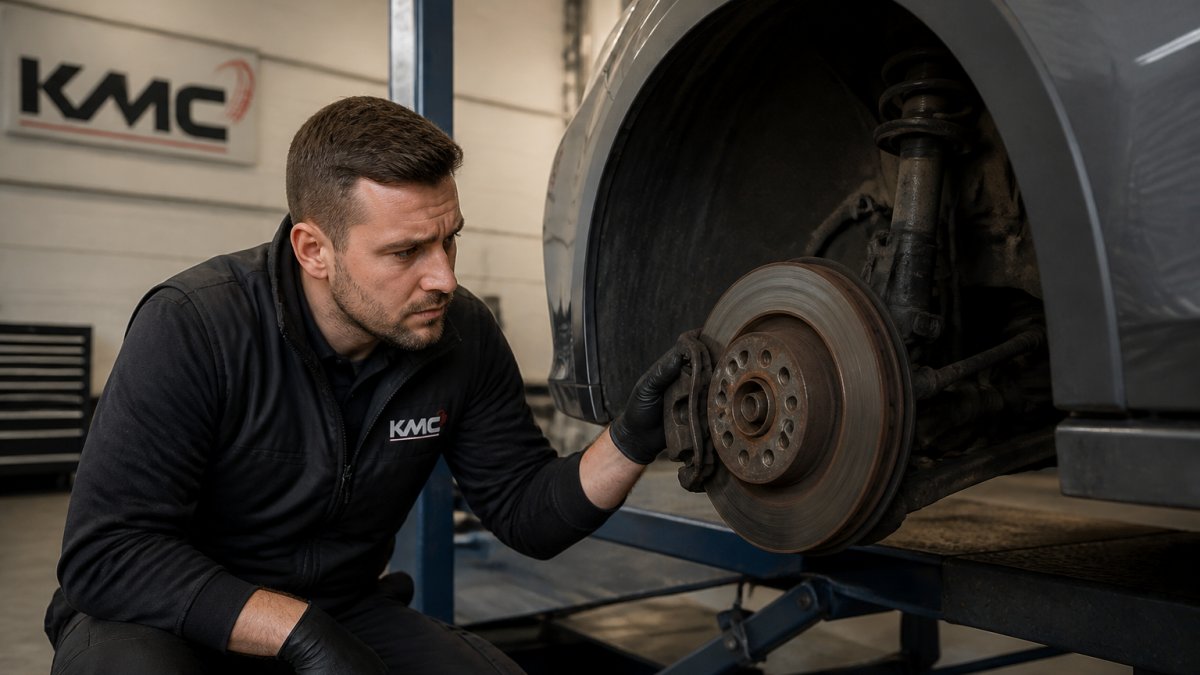
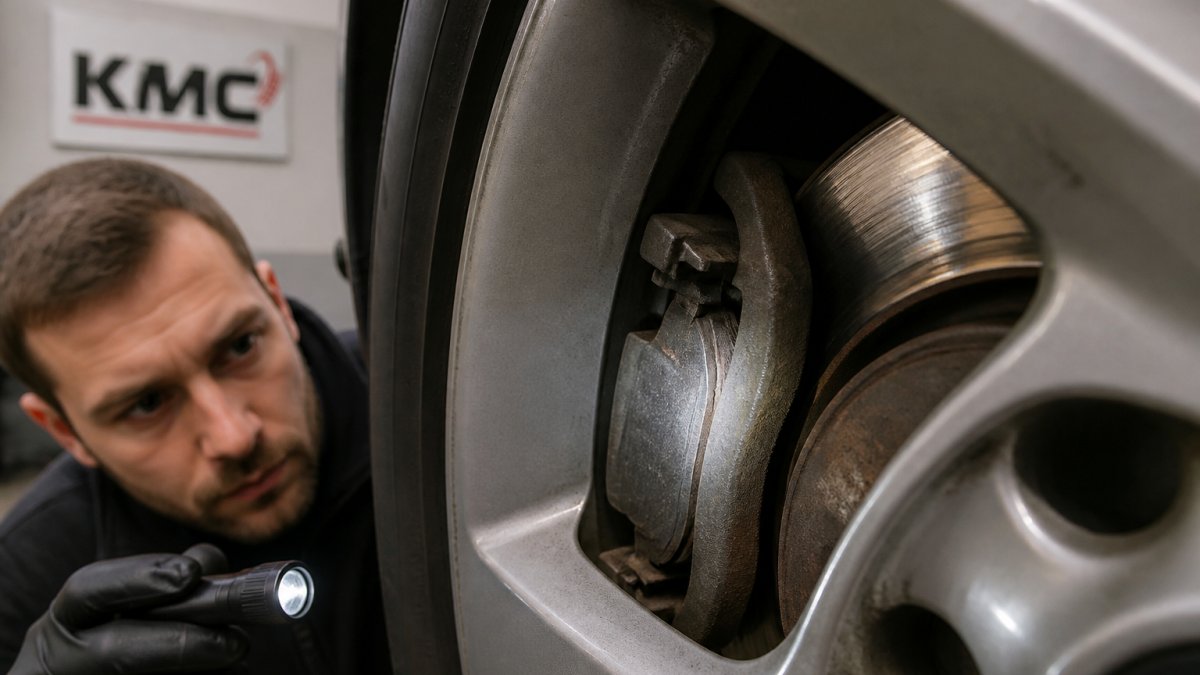
Check your brake pads visually. Most wheels have a gap between the wheel rim and the brake assembly. Look through this gap at the rotor and pads. Healthy pads are at least a quarter-inch thick. If you see metal-on-metal contact, your pads are gone.
Listen for the wear indicator. Modern pads have a small metal tab. When friction material wears down to about 2mm, this tab touches the rotor. You hear a sharp, continuous squeal when braking. This is the manufacturer's warning: replace pads now.
Feel the brake pedal. Worn pads require more pressure to stop the car. Your pedal travels further down. Stopping distance increases. If braking feels softer than usual, pads may be the problem.
Check your stopping distance. Brake a safe distance from a parked car or wall. If you need extra distance to stop, pads are likely worn.
Notice when the noise happens. Squeaking that occurs only when braking is usually the wear indicator. Noise that happens while driving without braking suggests something else, loose parts, debris, or caliper issues.
Supporting keyword insight: How to tell if brake pads are worn becomes obvious once you know what to look for. Most drivers wait for noise. Professional mechanics check pads during routine servicing.
MOT Brake Test Requirements and Squeaky Brakes
Your MOT tests brake performance directly. The DVSA (Driver and Vehicle Standards Agency) sets the standards. Squeaky brakes alone don't automatically fail the MOT. But the underlying cause might.
The MOT brake test measures stopping efficiency. The examiner applies full braking force. Your car must stop within a specific distance. Worn pads, glazed rotors, or fluid problems cause failure.
Brake pad thickness is checked during the MOT. Pads must be at least 1.6mm thick. Below this, you fail.
Brake fluid condition is tested. Old, contaminated fluid reduces stopping power. The examiner looks for leaks and proper fluid level. Squeaky brakes caused by low fluid will fail the MOT.
Brake lines and hoses are inspected for damage and leaks. Corrosion or cracks mean failure. These issues often accompany squeaking.
Brake balance must be correct. If one wheel brakes harder than the other, you fail. This can cause squeaking on the weaker side.
Squeaky brakes don't automatically mean MOT failure. But if the noise indicates worn pads or fluid problems, you will fail. The solution is simple: get the brakes serviced before your test.
Kettering Motorist Centre offers hassle-free online MOT booking with no upfront payment. We'll check your brakes thoroughly and let you know exactly what needs fixing before the test.
Electric Vehicle Brake Maintenance and Squeaking
Electric vehicles use regenerative braking. The motor captures energy when slowing down. This reduces wear on traditional friction brakes. But squeaky brakes still happen, and they require the same attention.
Regenerative braking reduces pad wear. EVs brake using the motor first. Friction brakes engage only when you need hard stopping. This means pads last longer, often twice as long as petrol cars.
Squeaking still signals problems. Even though pads wear slower, they still wear. Moisture, rust, and debris cause the same noises. The wear indicator works the same way.
Brake fluid degrades the same way. Regenerative braking doesn't affect fluid condition. Old fluid absorbs moisture. Contaminated fluid reduces stopping power. EVs need fluid changes on the same schedule as petrol cars.
Caliper corrosion happens faster on EVs. Because brakes are used less often, calipers corrode from sitting. Moisture builds up inside. This causes squeaking and reduced braking efficiency.
Hybrid vehicles need extra attention. They switch between motor and friction braking. This creates different wear patterns. One set of pads may wear faster than the other. Uneven wear causes noise.
If you drive an electric or hybrid vehicle in Kettering, specialist servicing matters. At Kettering Motorist Centre, we have the diagnostic equipment for EV brake systems. For hybrid-specific expertise, our sister siteKMC Electric provides dedicated EV and hybrid servicing.
When Squeaky Brakes Become a Safety Risk
Not all squeaks are dangerous. But some mean you should stop driving immediately.
Stop driving now if:
Your brake pedal feels soft or spongy
Brakes fade when you brake repeatedly (like on a long hill)
The car pulls to one side when braking
You smell burning when braking
The wear indicator squeals continuously, even when not braking
Your stopping distance has increased noticeably
These signs indicate brake failure. Continuing to drive risks a complete loss of braking power. Pull over safely and call for recovery.
Schedule an appointment soon if:
You hear squeaking only when braking
Noise happens mainly in the morning (moisture-related)
Pads look thin when you inspect them
You can't remember when brakes were last serviced
These are warning signs. Your brakes still work, but they need attention within days, not weeks.
Monitor and observe if:
Noise appears only in cold weather
Squeaking stops after a few brake applications
You just heard it once or twice
Braking feels normal and stopping distance is unchanged
These are usually harmless. But have them checked during your next service.
The safest approach is simple: if you're unsure, get it checked. A professional inspection takes minutes.
Getting Your Brakes Checked Professionally
Professional diagnosis is the only way to know what's actually wrong.
What a brake inspection includes:
Visual check of pad thickness and rotor condition
Brake fluid test for contamination and moisture
Brake balance measurement
Caliper and hose inspection for leaks or damage
Stopping distance test
Brake temperature check
A thorough inspection is conducted. You'll know exactly what needs fixing and why.
Why DIY checking isn't enough:
You can see pad thickness through the wheel. But you can't assess rotor condition, fluid quality, or caliper function. A rotor may look fine but be glazed or cracked. Fluid may look clean but be contaminated with moisture. Only professional equipment detects these problems.
Don't wait for the MOT. If brakes squeak regularly, book a service appointment. Kettering Motorist Centre offers convenient online booking for brake checks. No upfront payment is required. We'll diagnose the problem and give you a transparent quote before starting work.
For electric vehicle owners, our EV specialists understand regenerative braking systems and the unique wear patterns of electric cars. Hybrid vehicles need the same attention, get the right expertise from the start.
Frequently Asked Questions
Is it illegal to drive with squeaky brakes in the UK?
Driving with squeaky brakes isn't automatically illegal, but if the underlying cause is worn pads or brake failure, your vehicle fails to meet road safety standards under the Road Vehicles (Construction and Use) Regulations 1986. If your brakes are unsafe, you must not drive the vehicle. Squeaky brakes can also result in an MOT failure if they indicate worn pads or defective components. The safest approach is to have them checked immediately rather than risk a fine or accident.
Can squeaky brakes cause an MOT failure?
Yes, squeaky brakes can cause an MOT failure if the noise indicates worn brake pads, damaged brake components, or brake system defects. During the MOT brake test, inspectors assess braking performance and the condition of pads and discs. If pads are worn below the legal limit (1.5 mm) or the brake system shows signs of damage, the vehicle will fail. Even if the squeak is just a minor noise issue, inspectors may require further investigation if it suggests underlying wear.
What causes brakes to squeak when stopping?
Brake squeak usually comes from friction between brake pads and discs. Common causes include moisture on the rotor, worn brake pads, dust accumulation, or the type of brake pad material. Cold, damp mornings often trigger squeaking because moisture builds up overnight. Metallic brake pads are more prone to noise than organic or ceramic types. Occasionally, squeaking can indicate misalignment, warped rotors, or debris lodged in the brake assembly. Professional diagnosis is the only way to identify the exact cause.
Should I get my brakes checked if they only squeak occasionally?
Yes, occasional squeaking warrants a professional inspection. While it may be harmless moisture-related noise, it could signal early brake pad wear or developing issues. Ignoring it risks your safety and may lead to more expensive repairs later. Kettering Motorist Centre can diagnose the cause quickly and advise whether action is needed. Early detection of brake problems prevents sudden brake failure and helps you pass your MOT without issues.
Squeaky brakes deserve attention, but not panic. Most squeaks are warnings, not emergencies. The key is responding quickly. A small repair today prevents a dangerous situation later. Book a brake check with Kettering Motorist Centre and drive with confidence knowing your brakes are safe.
Thank you for placing a booking with Kettering Motorist Centre Limited for vehicle
PLEASE TAKE YOUR BOOKING REFERENCE NUMBER WITH YOU TO THE MOT CENTRE
Your items
MOT Test
×
Terms and Conditions
These terms and conditions form the basis on which you can visit and use this website. Please read them carefully as they contain important information.
General terms and conditions
This website is owned and operated by Kettering Motorist Centre Ltd (company registration number: 4485858) operating at Trafalgar Road, Kettering, Northamptonshire, NN16 8DB (the "MOT Centre", the "Company", "we" or "us"). If you have any queries about these terms and conditions or if you have any comments or complaints on or about this website, you can contact us at [email protected] or 01536 410142.
The website is to promote and offer for sale the products and services of Kettering Motorist Centre Limited.
1. The contract between us
This website does not take payment for products or services online. The website enables you to view products and services online and to make a booking for later delivery and payment. The vehicle and provision of other products and services promoted by this website and the payment by you of the price of those products and services will take place at the MOT Centre. The booking does not constitute a contract.
The booking process on the site provides details of the booked MOT order. Please take the time to read and check your booking. It is your responsibility to make sure the order is correct and for the correct vehicle.
2. Ownership of rights
All rights, including copyright, in this website are owned by or licensed to the Company. Any use of this website or its contents, including copying or storing it or them in whole or part, other than for your own personal, non commercial use, is prohibited without our permission. You may not modify, distribute or repost anything on this website for any purpose.
3. Accuracy of content
We have taken care in the preparation of the content of this website, in particular to ensure that prices quoted are correct at the time of publishing and that all goods have been fairly described. However, bookings will only be accepted if there are no material errors in the description of the goods or their prices as advertised on this website. Any weights, dimensions and capacities given about the goods are approximate only.
4. Damage to your computer
We try to ensure that this website is free from viruses or defects. However, we cannot guarantee that your use of this website or any websites accessible through it will not cause damage to your computer. It is your responsibility to ensure that the right equipment is available to use the website. Except in the case of negligence on our part, we will not be liable to any person for any loss or damage which may arise to computer equipment as a result of using this website.
5. Availability
All bookings are subject to acceptance and availability. If the MOT date you have requested are is not available, the Centre will contact you by e-mail or phone. You will have the option either to wait until another slot is available or to cancel your booking.
6. Booking errors
You are able to correct errors on your booking up to the point on which you click on “Place Booking” during the booking process.
7. Price
The prices payable for goods that you order are as set out in our website. All prices are inclusive of VAT at the current rates and are correct at the time of entering information, errors and omissions excepted.
Whenever it is not possible to accept your booking to buy goods of the specification and description at the price indicated, the MOT Centre will advise you by email or phone or when you visit the centre.
8. Payment terms
You will be required to pay for the goods or services to the Centre at time of a completed MOT.
9. Delivery charges
N/A
10. Cancellation
The MOT Centre reserves the right to cancel the booking if:
10.1 There is insufficient stock to deliver the goods you have booked.
10.2 One or more of the goods you booked was listed at an incorrect price.
If your booking is cancelled the Centre will notify you by e-mail or phone.
You have the right to cancel your booking at any time up to the point of the MOT. If you do cancel your booking you should inform the centre by phone.
11. Liability
Notwithstanding the foregoing, nothing in these terms and conditions is intended to limit any rights you might have as a consumer under applicable local law or other statutory rights that may not be excluded nor in any way to exclude or limit our liability to you for any death or personal injury resulting from our negligence.
12. Notices
Unless otherwise expressly stated in these terms and conditions, all notices from you to us must be in writing and sent to our contact address given above and all notices from us to you will be displayed on our website from time to time.
13. Changes to legal notices
We reserve the right to change these terms and conditions from time to time and you should look through them as often as possible.
14. Law, jurisdiction and language
This website, any content contained therein and any contract brought into being as a result of usage of this website are governed by and construed in accordance with English law. Parties to any such contract agree to submit to the exclusive jurisdiction of the courts of England and Wales.
15. Invalidity
If any part of these terms and conditions is unenforceable (including any provision in which we exclude our liability to you) the enforceability of any other part of these conditions will not be affected.
16. Privacy
You acknowledge and agree to be bound by the terms of our privacy policy
17. Third party rights
Nothing in this Agreement is intended to, nor shall it confer any rights on a third party.