Worn brake pads are one of the leading causes of preventable braking failures on UK roads, and knowing how to check brake pad wear could be the difference between stopping safely and a serious collision. This guide from Kettering Motorist Centre walks you through every method, from a quick visual check through your wheel spokes to using a brake pad thickness gauge for precise measurement. We'll show you how to inspect your pads, interpret what you find, and decide when to act. Most guides treat brake pad inspection as a once-a-year task, but your driving habits and vehicle type can make monthly checks far more appropriate.
How to Check Brake Pad Wear: What You'll Need Before You Start
A successful brake pad inspection starts with the right tools. You don't need a professional workshop setup, but going in unprepared risks missing something important.
What to gather before you start:
A torch or flashlight with a strong, focused beam
A brake pad thickness gauge (inexpensive and available from most motor factors)
A jack and axle stands if you plan to remove wheels
Wheel chocks for safety
A pair of nitrile gloves to keep brake dust off your skin
A notepad or phone to log your findings
Brake dust contains particulate matter from the friction material, regular exposure without gloves or a mask is best avoided. Also ensure the vehicle has been parked for at least 30 minutes after driving; brake components retain heat and can cause burns on contact.
Pro TipIf you're checking pads on an electric or hybrid vehicle, be aware that regenerative braking means the rear pads often wear more slowly than on a conventional car. Don't assume front and rear wear rates are comparable.
Step-by-Step Visual Inspection of Your Brake Pads
Visual inspection is the fastest way to assess brake pad condition without removing a wheel. Park on a flat surface, apply the handbrake, and turn the steering wheel to full lock on the side you're inspecting to open up the wheel arch and improve access.
Inspecting Through the Wheel Spokes With a Flashlight
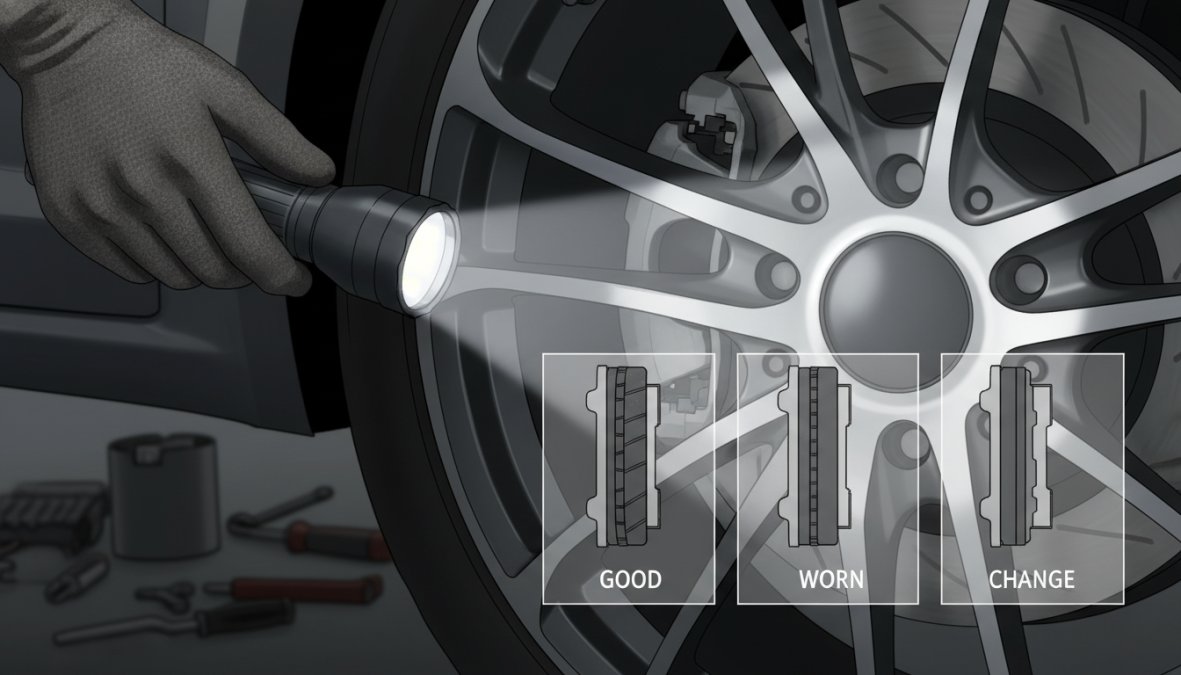
Shine your flashlight through the wheel spokes toward the brake caliper. You're looking for the pad sandwiched between the caliper and the rotor, the friction material is the inner layer sitting against the disc surface. If you can see at least 3mm of pad material, you're within a safe operating range. If the pad appears thin, flush with the metal backing plate, or indistinguishable from the metal, investigate further.
Check both inner and outer pads. Uneven wear between them often points to a sticking caliper, which needs addressing regardless of overall pad thickness. Many pads include a wear indicator, a small metal tab that contacts the rotor and produces a high-pitched squeal when the pad reaches minimum safe thickness. If you hear that sound, treat it as urgent.
Removing the Wheel for a Full Brake Assembly Check
Removing the wheel gives you an unobstructed view of the entire brake assembly. Loosen the wheel bolts before jacking the vehicle, then raise it onto a proper axle stand, never rely on a jack alone. With the wheel off, you can measure pad thickness directly, inspect the rotor for scoring or glazing, and check the caliper for leaks or uneven movement.
Deep grooves, blue heat discolouration, or rotor glazing all affect stopping power independently of pad thickness. A pad sitting against a damaged rotor will not perform as intended, even if the friction material is within spec.
Watch OutNever leave a vehicle supported only by a hydraulic jack while you work near the wheel arch. Axle stands are non-negotiable. A collapsed jack is a medical emergency.
Using a Brake Pad Thickness Gauge for Accurate Measurement
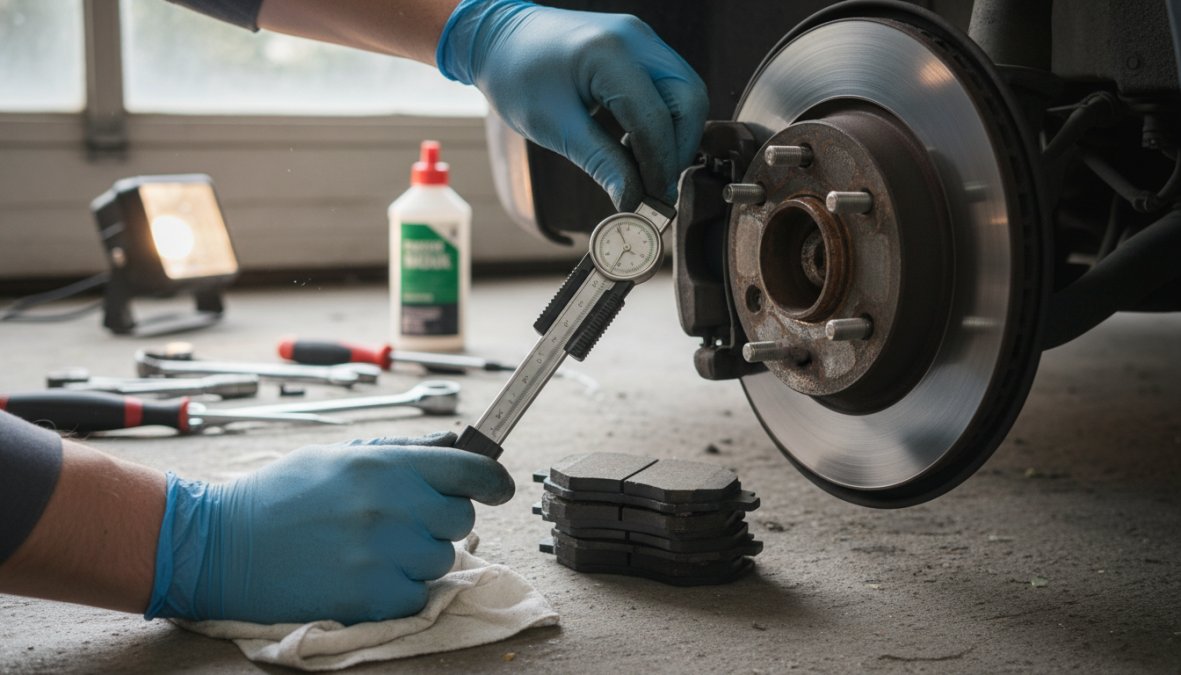
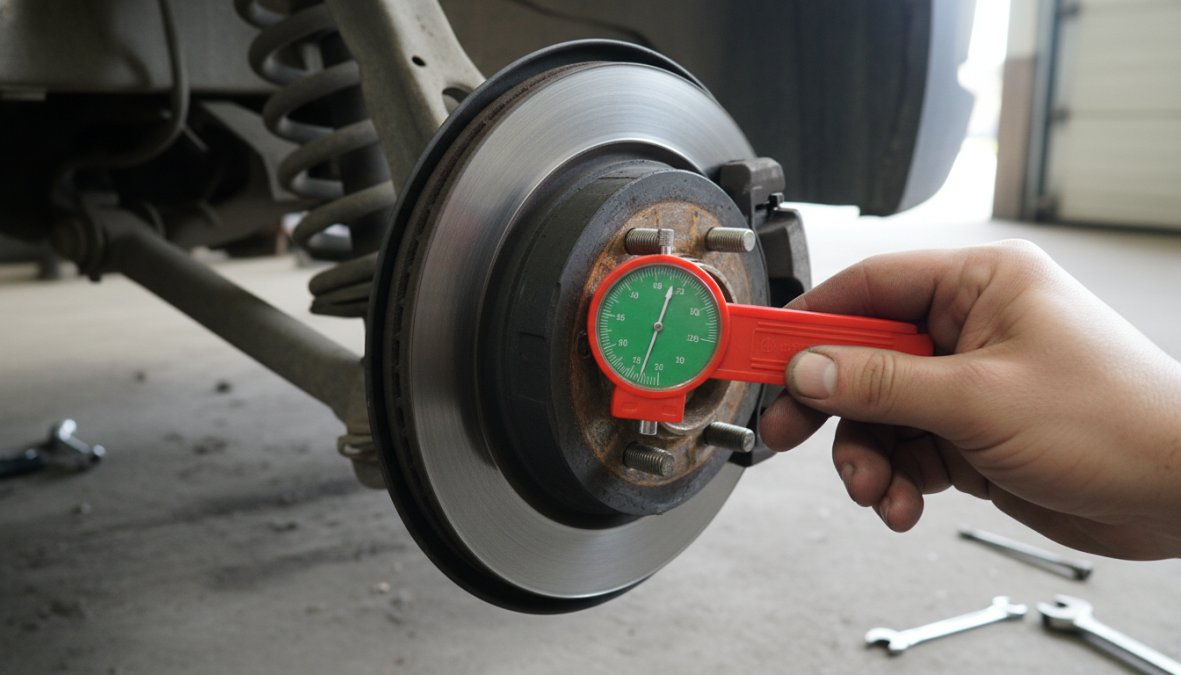
A brake pad thickness gauge is the most reliable DIY measurement tool available, and it costs less than a tank of fuel. Slide the gauge blade between the pad's friction surface and the disc face, then read the millimetre measurement where the gauge stops. Measure at multiple points across the pad width, uneven wear can mean one edge is critically thin while the centre still looks acceptable.
Professional illustration showing brake and pad and person concepts for how to check brake pad wear
The 1/4 Inch Threshold and Minimum Friction Material Guidelines
The 1/4 inch threshold (approximately 6mm) is the point at which many manufacturers recommend scheduling replacement. At 3mm, replacement becomes urgent. Below 2mm, the pad is effectively worn out and braking responsiveness is significantly compromised.
Troubleshooting False Positives: When Noise Doesn't Mean Worn Pads
Not every squeal or grind means your pads are worn. Several common situations produce brake noise without any wear problem:
Morning squeaking after overnight parking: Light surface rust forms on rotors overnight. The first few brake applications scrub it off, producing a brief squeal. If the noise clears within a minute, it's almost certainly surface rust.
Brake dust accumulation: Build-up on the rotor or pad surface can cause noise under light braking. A visual inspection and a few firm stops usually resolve it.
New pads bedding in: Freshly fitted pads need a bedding period to conform to the rotor surface. Some noise during the first 200 miles is normal.
Cold weather: Low temperatures temporarily harden friction material, producing noise that disappears once the brakes warm up.
The key diagnostic question: does the noise occur consistently under normal braking, or only in specific conditions? Consistent noise warrants a proper inspection; intermittent noise tied to weather or temperature is usually benign.
How Long Do Brake Pads Last and What Affects Pad Life
Brake pad lifespan varies considerably. Many drivers find front pads last between 30,000 and 70,000 miles, with rear pads often lasting longer because the front brakes do the majority of braking work under deceleration. What actually determines pad life:
Driving habits: Hard braking from high speeds generates far more heat and wear than progressive, anticipatory braking. City stop-start traffic wears pads faster than motorway miles.
Vehicle weight: Heavier vehicles require more braking force. Towing or carrying consistent heavy loads shortens pad life noticeably.
Pad material: Organic pads are quieter but wear faster. Semi-metallic and ceramic pads last longer but may produce more dust or noise.
Rotor condition: A scored or glazed rotor creates an uneven contact surface that accelerates friction material wear.
According to vehicle maintenance guidance from the AA, regular safety inspections that include brake checks are one of the most effective ways to catch wear before it becomes a safety issue. Check pads regularly rather than counting miles, driving style matters far more than the odometer.
Key TakeawayDriving habits affect brake pad wear more than almost any other factor. Drivers who brake progressively and maintain safe following distances routinely get significantly more life from their pads than those who brake hard and late.
How to Check Brake Pad Wear on Different Vehicle Types
Vehicle-specific variations genuinely change how you approach an inspection.
Disc brakes vs drum brakes: Most modern cars use disc brakes on all four wheels, but some smaller and older vehicles still use drum brakes on the rear axle. Drum brake shoes are not visible through the wheel and require removing the drum for inspection. Wear indicators and thickness thresholds differ from disc brake pads.
Electric and hybrid vehicles: Regenerative braking means physical brake pads are used less frequently, so rear pads can last considerably longer. However, reduced use also means brakes can corrode more quickly from inactivity. Check for rotor glazing and surface corrosion especially carefully on electric vehicles.
SUVs and 4x4s: Additional weight increases braking demands. Expect shorter pad intervals, particularly on the front axle.
Performance vehicles: Many use larger brake assemblies with different minimum thickness specifications. Always check manufacturer-specific guidelines rather than applying a generic threshold.
The core technique remains the same across vehicle types: visual inspection through the wheel spokes, followed by gauge measurement for confirmation. The interpretation of results is where vehicle-specific knowledge becomes essential.
Keeping a Brake Maintenance Log: A Simple Template
Most drivers have no record of when their brake pads were last inspected or replaced. A simple log takes two minutes to fill in and gives you a reliable reference for every future check.
Brake Maintenance Log
Date
Mileage
Front Left (mm)
Front Right (mm)
Rear Left (mm)
Rear Right (mm)
Notes
DD/MM/YYYY
00000
e.g. surface rust, noise
DD/MM/YYYY
00000
Action taken: (e.g. pads replaced, rotor inspected, no action required) Next check due: (mileage or date, whichever comes first)
Fill in one row every time you inspect your brakes. If you notice pad thickness dropping by 1mm every 3,000 miles, you can predict replacement timing with real accuracy rather than guessing. Keep a separate column for brake fluid condition, brake fluid absorbs moisture over time, lowering its boiling point and reducing responsiveness under heavy use. Most manufacturers recommend replacing it every two years regardless of mileage.
When to Stop DIY Checks and Book a Professional Brake Inspection
DIY checks are valuable for routine monitoring, but there are clear situations where professional inspection is the right call.
Book a professional inspection if:
You hear consistent metallic grinding during braking
Brake pedal travel has increased noticeably
The vehicle pulls to one side under braking
You've identified uneven pad wear between inner and outer pads
You're unsure whether a noise is a false positive or genuine wear
Your vehicle is due an MOT and you want to address brake issues beforehand
You drive an electric or hybrid vehicle and haven't had the brakes inspected recently
A professional inspection goes beyond what a visual check can confirm. A qualified technician can assess caliper movement, measure rotor thickness, test brake fluid condition, and identify hydraulic issues affecting pedal travel, none of which a flashlight and gauge can catch reliably.
For drivers in Kettering and the surrounding area, regular brake checks are particularly important given the mix of urban stop-start driving and rural A-road routes that characterise local driving conditions. Both environments place distinct demands on the braking system.
Frequently Asked Questions
How thin should brake pads be before replacing?
As a general guideline, brake pads should be replaced when the friction material drops to around 3mm (approximately 1/4 inch) or less. Many manufacturers consider 2mm the absolute minimum before brake failure risk increases significantly. If you can see the wear indicator slot has disappeared or the pad appears flush with the metal backing plate during a visual inspection, it is time to replace them immediately.
Can I check brake pads without taking the wheel off?
Yes, in many cases you can check brake pad wear without removing the wheel. Using a flashlight and looking through the wheel spokes, you can often see the brake pad pressed against the rotor inside the caliper. If the visible friction material appears very thin — less than the width of your finger — it is worth removing the wheel for a closer inspection or booking a professional safety inspection to confirm.
What are the common symptoms of bad brake pads?
The most common symptoms of bad brake pads include a high-pitched squealing noise when braking, a metallic grinding sound indicating the pad has worn through completely, increased brake pedal travel before the car slows, the vehicle pulling to one side, and visible brake dust build-up. A vibrating brake pedal can also signal worn or glazed pads. If you notice any of these signs, check your brake pad thickness as soon as possible.
How long do brake pads last on average?
Brake pad life varies widely depending on driving habits, vehicle type, and pad material. Generally, brake pads can last anywhere from 25,000 to 65,000 miles. Drivers who frequently use hard braking, drive in stop-start urban traffic, or tow heavy loads will see shorter pad life. Motorway driving with smooth, gradual braking tends to extend pad life considerably. Checking pad thickness every 10,000 to 12,000 miles is a sensible part of any regular maintenance routine.
Is it safe to drive with worn brake pads?
Driving with worn brake pads is not safe and should be avoided. Severely worn pads reduce stopping power significantly, increasing your braking distance and the risk of brake failure. Once the friction material is gone, metal-on-metal contact damages the rotor, turning a straightforward pad replacement into a much more expensive brake assembly repair. If you suspect your pads are worn, arrange a professional inspection before driving further where possible.
Do electric and hybrid vehicles wear brake pads differently?
Yes. Electric and hybrid vehicles use regenerative braking to recover energy, which means the physical disc brakes are used less frequently than in conventional cars. This can extend brake pad life considerably. However, because the brakes are used less, they can be more susceptible to rotor glazing and surface corrosion from inactivity. It is still important to inspect brake pad thickness regularly, even if the pads appear to last longer on EVs and hybrids.
Your booking Failed
Please try again or please call 01536 410142
Thank you for placing a booking with Kettering Motorist Centre Limited for vehicle
PLEASE TAKE YOUR BOOKING REFERENCE NUMBER WITH YOU TO THE MOT CENTRE
Your items
MOT Test
×
Terms and Conditions
These terms and conditions form the basis on which you can visit and use this website. Please read them carefully as they contain important information.
General terms and conditions
This website is owned and operated by Kettering Motorist Centre Ltd (company registration number: 4485858) operating at Trafalgar Road, Kettering, Northamptonshire, NN16 8DB (the "MOT Centre", the "Company", "we" or "us"). If you have any queries about these terms and conditions or if you have any comments or complaints on or about this website, you can contact us at [email protected] or 01536 410142.
The website is to promote and offer for sale the products and services of Kettering Motorist Centre Limited.
1. The contract between us
This website does not take payment for products or services online. The website enables you to view products and services online and to make a booking for later delivery and payment. The vehicle and provision of other products and services promoted by this website and the payment by you of the price of those products and services will take place at the MOT Centre. The booking does not constitute a contract.
The booking process on the site provides details of the booked MOT order. Please take the time to read and check your booking. It is your responsibility to make sure the order is correct and for the correct vehicle.
2. Ownership of rights
All rights, including copyright, in this website are owned by or licensed to the Company. Any use of this website or its contents, including copying or storing it or them in whole or part, other than for your own personal, non commercial use, is prohibited without our permission. You may not modify, distribute or repost anything on this website for any purpose.
3. Accuracy of content
We have taken care in the preparation of the content of this website, in particular to ensure that prices quoted are correct at the time of publishing and that all goods have been fairly described. However, bookings will only be accepted if there are no material errors in the description of the goods or their prices as advertised on this website. Any weights, dimensions and capacities given about the goods are approximate only.
4. Damage to your computer
We try to ensure that this website is free from viruses or defects. However, we cannot guarantee that your use of this website or any websites accessible through it will not cause damage to your computer. It is your responsibility to ensure that the right equipment is available to use the website. Except in the case of negligence on our part, we will not be liable to any person for any loss or damage which may arise to computer equipment as a result of using this website.
5. Availability
All bookings are subject to acceptance and availability. If the MOT date you have requested are is not available, the Centre will contact you by e-mail or phone. You will have the option either to wait until another slot is available or to cancel your booking.
6. Booking errors
You are able to correct errors on your booking up to the point on which you click on “Place Booking” during the booking process.
7. Price
The prices payable for goods that you order are as set out in our website. All prices are inclusive of VAT at the current rates and are correct at the time of entering information, errors and omissions excepted.
Whenever it is not possible to accept your booking to buy goods of the specification and description at the price indicated, the MOT Centre will advise you by email or phone or when you visit the centre.
8. Payment terms
You will be required to pay for the goods or services to the Centre at time of a completed MOT.
9. Delivery charges
N/A
10. Cancellation
The MOT Centre reserves the right to cancel the booking if:
10.1 There is insufficient stock to deliver the goods you have booked.
10.2 One or more of the goods you booked was listed at an incorrect price.
If your booking is cancelled the Centre will notify you by e-mail or phone.
You have the right to cancel your booking at any time up to the point of the MOT. If you do cancel your booking you should inform the centre by phone.
11. Liability
Notwithstanding the foregoing, nothing in these terms and conditions is intended to limit any rights you might have as a consumer under applicable local law or other statutory rights that may not be excluded nor in any way to exclude or limit our liability to you for any death or personal injury resulting from our negligence.
12. Notices
Unless otherwise expressly stated in these terms and conditions, all notices from you to us must be in writing and sent to our contact address given above and all notices from us to you will be displayed on our website from time to time.
13. Changes to legal notices
We reserve the right to change these terms and conditions from time to time and you should look through them as often as possible.
14. Law, jurisdiction and language
This website, any content contained therein and any contract brought into being as a result of usage of this website are governed by and construed in accordance with English law. Parties to any such contract agree to submit to the exclusive jurisdiction of the courts of England and Wales.
15. Invalidity
If any part of these terms and conditions is unenforceable (including any provision in which we exclude our liability to you) the enforceability of any other part of these conditions will not be affected.
16. Privacy
You acknowledge and agree to be bound by the terms of our privacy policy
17. Third party rights
Nothing in this Agreement is intended to, nor shall it confer any rights on a third party.