Worn brake discs are brake rotors that have thinned beyond their safe operating thickness due to friction from repeated braking. Your brake pads press against these discs to slow and stop your vehicle, and over time, both components wear down. When the discs become too thin, they lose their ability to dissipate heat effectively and can fail suddenly, leaving you with severely compromised stopping power.
This isn't a minor maintenance issue. Brake failure is one of the most dangerous mechanical failures you can experience on the road. A vehicle with worn brake discs doesn't just stop less effectively, it becomes a liability. The longer you drive on compromised brakes, the greater the risk of complete brake failure, which could result in loss of control, collision, or injury.
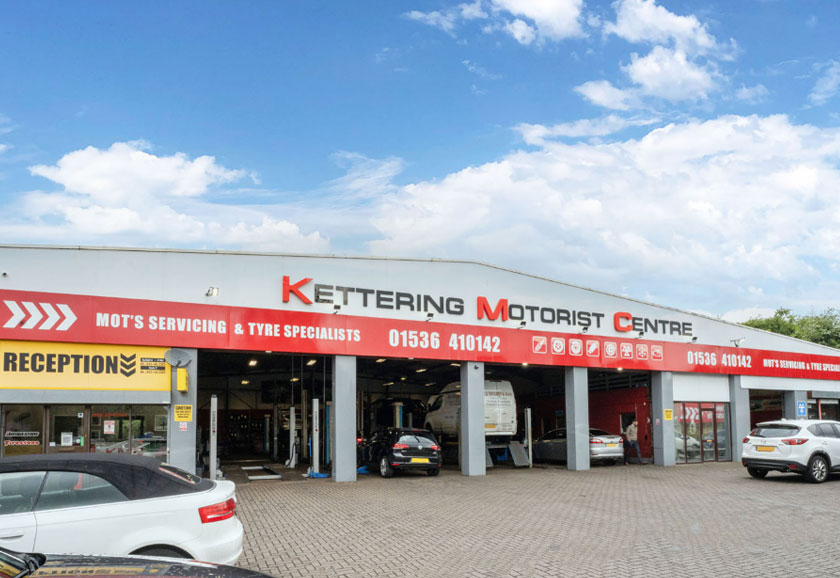
At Kettering Motorist Centre, we understand the importance of addressing brake wear promptly. The good news is that identifying worn brake discs early and replacing them before they fail is straightforward, and understanding what to look for can save you money, time, and potentially your safety.
Signs of Bad Brake Discs You Shouldn't Ignore
Worn brake discs announce themselves in multiple ways. Some signs are obvious; others are subtle. The key is recognising them before your brakes fail completely.
Visual and Audible Warning Signs
The most immediate indicator of worn brake discs is often noise. If you hear a high-pitched squealing or metallic grinding sound when braking, especially when the brakes are cold, this is your first red flag. Modern brake pads contain wear indicators, small metal tabs that contact the disc surface when the pads have worn down. This contact produces that distinctive squeal, which is the brake system's way of telling you it needs attention.
Grinding sounds are more serious. If you hear a rough, grinding noise during braking, the brake pads have likely worn through completely, and metal is now rubbing directly against the disc. This causes accelerated damage to both components and significantly reduces braking effectiveness.
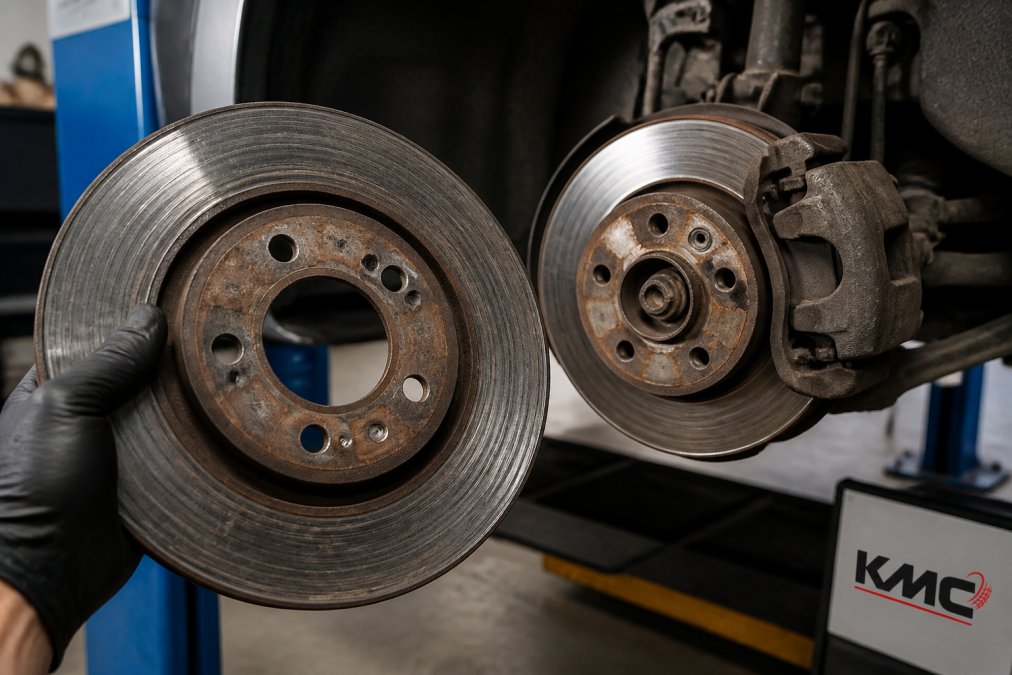
Visually, you can often see worn brake discs if you look through the wheel spokes. A healthy brake disc has a smooth, even surface with a consistent thickness. Worn discs appear thin, sometimes with visible scoring or grooves worn into the surface. You might also notice the disc has a bluish or darkened appearance, which indicates heat damage from friction.
Performance Changes You'll Notice While Driving
How your brakes feel and respond tells you a lot about their condition. If you notice that your brakes require more pressure on the pedal than usual to achieve the same stopping power, the discs are likely worn. The pedal might feel softer or sink lower than normal before the brakes engage.
Pulsing or vibration through the brake pedal when braking is another sign. This typically indicates that the disc surface has become uneven, either from wear or warping, and the brake pads are making inconsistent contact. You'll feel this as a rhythmic pulsing sensation in the pedal.
Longer stopping distances are perhaps the most dangerous sign. If your vehicle takes noticeably longer to stop from the same speed under the same conditions, brake wear is likely the culprit. Don't ignore this. Test it safely in a quiet area, and if you confirm the change, have your brakes inspected immediately.
Pulling to one side during braking can indicate uneven disc wear or a problem with the brake caliper, but it's often related to severely worn discs. If your vehicle veers left or right when you brake, get it checked without delay.
How to Check Brake Discs: A Step-by-Step Guide
You don't need to be a mechanic to perform a basic visual inspection of your brake discs. This simple check can alert you to problems before they become dangerous. However, for a complete assessment of brake health, professional inspection is always recommended.
What You'll Need for a Basic Inspection
A torch or headlamp for visibility
A ruler or measuring tape (preferably metric)
Wheel chocks or blocks to secure the vehicle
A safe, level surface away from traffic
Optional: brake disc thickness gauge (available at automotive shops)
Appropriate safety clothing (avoid loose fabric near moving parts)
Performing a Visual Check
First, ensure your vehicle is parked on a level surface and the engine is off. Apply the handbrake and chock the wheels to prevent any movement.
Remove the wheel by loosening the wheel nuts, lifting the vehicle safely with a jack, and fully removing the wheel. Place the wheel safely to the side where it won't roll.
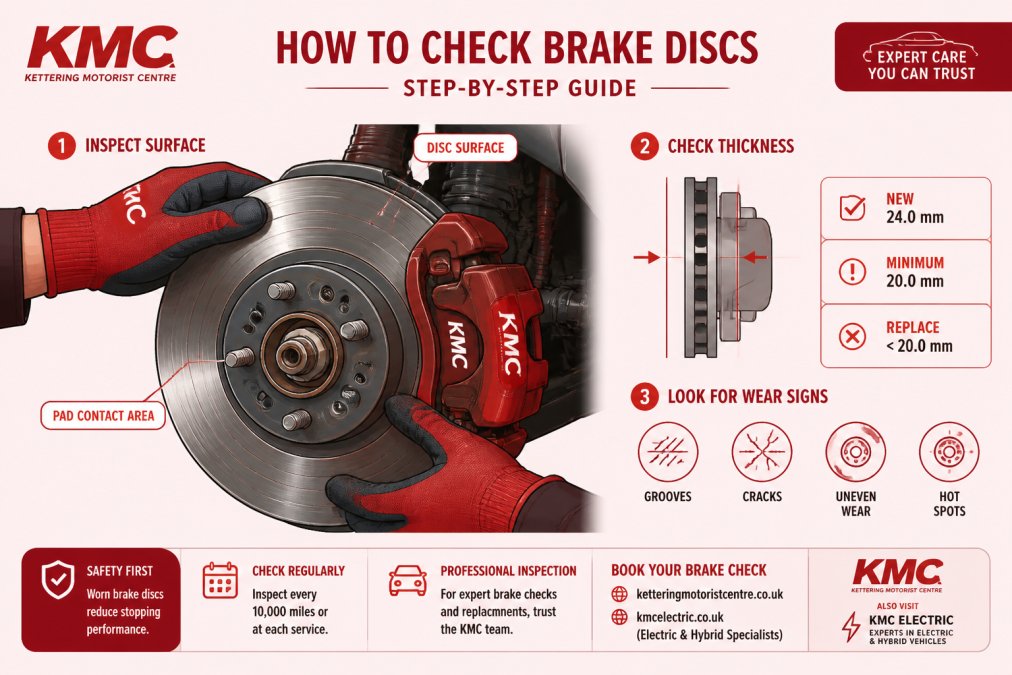
Look through the wheel opening at the brake disc. You're looking at the large, flat, circular component behind the wheel. Examine the surface carefully. A healthy disc should have a smooth, even finish. If you see deep grooves, scoring, or an uneven surface, the disc is worn and needs replacement.
Check the thickness of the disc by eye. Most brake discs are between 10-12mm thick when new. If the disc appears very thin, significantly thinner than you'd expect, it's likely near the end of its service life.
Look at the brake pads as well. These are the friction material that presses against the disc. If the pads appear very thin (less than 2-3mm), they're also due for replacement soon.
Check for any fluid leaks around the brake caliper (the component that holds the brake pads). Brake fluid leaks indicate a problem that needs immediate professional attention.
Repeat this process for all four wheels, as brake wear can be uneven depending on your driving habits and vehicle setup.
Step-by-step visual guide for worn brake discs
Measuring Disc Thickness
For a more precise assessment, you can measure the disc thickness using a ruler or calliper. Measure from the outer edge of the disc to the centre, then compare this measurement to the manufacturer's specification. Most vehicles have a minimum safe disc thickness marked on the caliper or in the owner's manual, typically around 2-3mm above the backing plate.
If your measurement shows the disc is at or below the minimum thickness, replacement is necessary. Don't attempt to continue driving on discs at minimum thickness; they've reached the end of their safe operating life.
The Risks of Driving with Worn Brake Discs
Driving on worn brake discs isn't just uncomfortable, it's dangerous. Understanding the risks helps explain why brake maintenance should never be postponed.
Reduced stopping power is the primary risk. As discs wear, their surface area decreases, reducing the friction available for braking. This means longer stopping distances, especially in emergency situations. In a panic stop from motorway speed, the difference between a disc with adequate thickness and a severely worn disc could be metres, the difference between avoiding a collision and causing one.
Brake fade occurs when brakes overheat due to prolonged use or insufficient disc surface area. This is particularly dangerous on long descents or in stop-and-go traffic. The brake fluid can boil, creating air bubbles in the brake lines, which causes a soft or unresponsive brake pedal. In extreme cases, you may lose brakes entirely.
Heat damage accelerates when discs are worn. Thin discs dissipate heat poorly, causing temperatures to rise rapidly during braking. This can warp the disc further, damage the brake fluid, and even affect the wheel bearings and suspension components nearby.
Brake fluid contamination can result from worn discs. As the disc surface breaks down, microscopic particles enter the brake fluid, compromising its effectiveness and potentially damaging other brake components.
Complete brake failure is the worst-case scenario. A severely worn disc can crack or shatter during braking, instantly eliminating stopping power. This is rare but catastrophic when it happens.
Damage to other brake components accelerates when discs are worn. The caliper, brake pads, and brake lines all work harder to compensate for worn discs, leading to premature failure of these parts as well.
Brake Disc Replacement Cost in the UK
Brake disc replacement is a necessary maintenance expense, and understanding the factors that influence cost helps you budget appropriately. Costs vary based on your vehicle type, the quality of replacement parts, and whether you choose an independent garage or dealership.
Several factors affect the final cost. The make and model of your vehicle determines the size and type of disc needed. Luxury vehicles and performance cars often require more expensive components. Whether you replace discs alone or as part of a complete brake system overhaul (including pads, fluid, and calipers) significantly impacts the bill. The quality of replacement parts, OEM (original equipment manufacturer) parts versus aftermarket alternatives, affects both cost and longevity. Labour time varies by vehicle; some models require more work to access the brakes.
For precise pricing specific to your vehicle, contact Kettering Motorist Centre for a quote. Our transparent approach means you'll know the full cost before work begins, with no hidden charges or surprises. We can advise whether OEM or quality aftermarket parts are appropriate for your situation, helping you balance cost and reliability.
EV Brake Maintenance: What's Different
Electric and hybrid vehicles have brake systems that work differently from traditional petrol or diesel cars, and understanding these differences is crucial for proper maintenance.
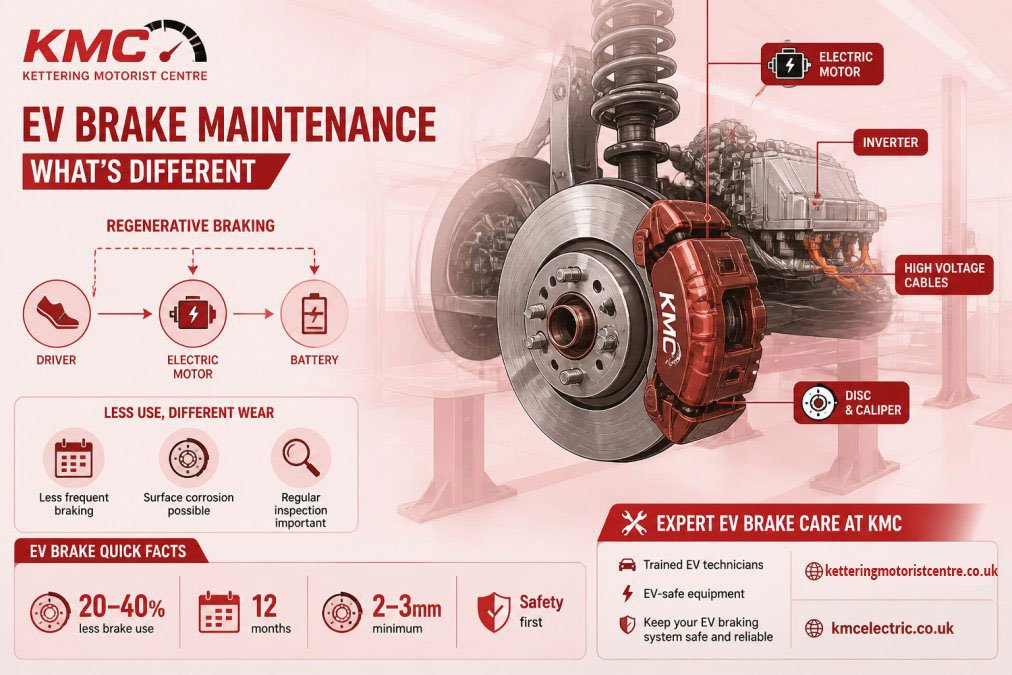
Most electric vehicles use regenerative braking, which captures energy normally lost during braking and feeds it back into the battery. This means the traditional friction brakes are used less frequently, and brake discs typically wear more slowly on EVs than on conventional vehicles. However, the brake system still requires regular inspection and maintenance.
The brake fluid in an EV is identical to that in conventional vehicles and requires the same level of care. The brake caliper and hydraulic system function the same way. What differs is the frequency of use and the type of wear patterns you might observe.
Because regenerative braking does much of the work, the friction brakes on an EV can remain in good condition for longer. However, this doesn't mean you can ignore them. Regular inspection is still essential, particularly if you drive in conditions where regenerative braking is less effective (such as frequent motorway driving where you're not braking as often).
If your EV's brake warning light comes on, or you notice any of the warning signs mentioned earlier, have the system inspected immediately. EV brake systems are more complex, and diagnosis requires specialist equipment and knowledge.
At Kettering Motorist Centre, we have the diagnostic tools and expertise to service and maintain EV and hybrid vehicle brakes. For specialist EV brake work, we can also connect you with our sister site, KMC Electric, which provides comprehensive electric vehicle servicing and maintenance across Northamptonshire.
When to Seek Professional Help
While a basic visual inspection can alert you to obvious problems, professional brake inspection should be part of your regular vehicle maintenance routine. There are specific situations where professional help isn't optional, it's essential.
If you hear grinding, squealing, or any unusual brake noise, book a professional inspection immediately. Don't wait to see if the noise goes away; it won't, and ignoring it risks serious damage.
If your brake pedal feels soft, spongy, or sinks to the floor, this indicates a potential brake fluid leak or air in the brake lines. This is a safety-critical issue that requires immediate professional diagnosis.
If you experience reduced braking power, longer stopping distances, or pulling to one side during braking, have the brakes inspected without delay. These are signs of serious brake system problems.
If your vehicle's brake warning light is illuminated on the dashboard, don't ignore it. This light indicates a fault detected by the vehicle's onboard diagnostic system. Professional diagnosis is necessary to identify the specific problem.
If you're unsure about the condition of your brakes or want a professional assessment, Kettering Motorist Centre offers comprehensive brake inspection as part of our MOT and routine servicing. Book your inspection through our hassle-free online system, no upfront payment required. Our team will provide a full diagnostic report and explain any issues in clear terms, along with transparent recommendations and costs.
For hybrid and electric vehicles, our specialist knowledge ensures your brakes receive the attention they deserve. We understand the unique requirements of EV brake systems and can identify issues that less experienced garages might miss.
Worn brake discs represent a real safety risk that shouldn't be ignored. Recognising the warning signs early, squealing, grinding, reduced stopping power, or a pulsing brake pedal, gives you the chance to address the problem before it becomes dangerous. A basic visual inspection takes just a few minutes and can reveal obvious problems, but professional inspection should be part of your regular vehicle maintenance.
Kettering Motorist Centre provides expert brake diagnosis and replacement for all vehicle types, including specialist services for hybrid and electric vehicles. Our transparent, family-run approach means you'll understand exactly what work is needed and what it costs before we begin. Book your brake inspection today through our online system, convenient, straightforward, and designed with your safety in mind.
Frequently Asked Questions
What are the most common symptoms of worn brake discs?
The most obvious signs include a high-pitched squealing or grinding noise when braking, reduced braking power that requires longer stopping distances, and a pulsating or vibrating brake pedal. You may also notice the brake warning light on your dashboard. Worn brake discs often appear visibly thin or scored when you inspect the wheel. If you notice any of these symptoms, have your brakes checked promptly to avoid safety risks.
How often should I have my brake discs inspected?
Most UK vehicles benefit from brake inspections every 12 months or as part of your MOT. However, your driving habits, road conditions, and vehicle type affect wear rates. Frequent city driving with lots of braking accelerates wear, whilst motorway driving causes less disc deterioration. If you notice any warning signs, don't wait for your scheduled service—get them checked immediately. KMC can inspect your brakes during routine servicing to catch problems early.
Can I drive with worn brake discs?
Driving with worn brake discs is dangerous and illegal in the UK. Your MOT will fail if brake discs fall below the minimum thickness, and driving on worn discs significantly increases stopping distance, raising the risk of accidents. You may also damage other brake components, leading to more expensive repairs. If your brake discs are worn, arrange a replacement before driving further. Contact KMC to book a brake inspection and replacement service.
Do electric vehicles have different brake disc wear patterns?
Yes. Electric vehicles use regenerative braking, which captures energy during deceleration and reduces reliance on friction brakes. This means EV brake discs typically wear more slowly than conventional vehicles. However, they still require regular inspection and maintenance. The brake system itself functions similarly, but understanding EV-specific wear patterns helps predict when replacement is needed. KMC specialises in EV brake maintenance and can advise on your vehicle's specific requirements. Visit kmcelectric.co.uk for more information on EV servicing.
Thank you for placing a booking with Kettering Motorist Centre Limited for vehicle
PLEASE TAKE YOUR BOOKING REFERENCE NUMBER WITH YOU TO THE MOT CENTRE
Your items
MOT Test
×
Terms and Conditions
These terms and conditions form the basis on which you can visit and use this website. Please read them carefully as they contain important information.
General terms and conditions
This website is owned and operated by Kettering Motorist Centre Ltd (company registration number: 4485858) operating at Trafalgar Road, Kettering, Northamptonshire, NN16 8DB (the "MOT Centre", the "Company", "we" or "us"). If you have any queries about these terms and conditions or if you have any comments or complaints on or about this website, you can contact us at [email protected] or 01536 410142.
The website is to promote and offer for sale the products and services of Kettering Motorist Centre Limited.
1. The contract between us
This website does not take payment for products or services online. The website enables you to view products and services online and to make a booking for later delivery and payment. The vehicle and provision of other products and services promoted by this website and the payment by you of the price of those products and services will take place at the MOT Centre. The booking does not constitute a contract.
The booking process on the site provides details of the booked MOT order. Please take the time to read and check your booking. It is your responsibility to make sure the order is correct and for the correct vehicle.
2. Ownership of rights
All rights, including copyright, in this website are owned by or licensed to the Company. Any use of this website or its contents, including copying or storing it or them in whole or part, other than for your own personal, non commercial use, is prohibited without our permission. You may not modify, distribute or repost anything on this website for any purpose.
3. Accuracy of content
We have taken care in the preparation of the content of this website, in particular to ensure that prices quoted are correct at the time of publishing and that all goods have been fairly described. However, bookings will only be accepted if there are no material errors in the description of the goods or their prices as advertised on this website. Any weights, dimensions and capacities given about the goods are approximate only.
4. Damage to your computer
We try to ensure that this website is free from viruses or defects. However, we cannot guarantee that your use of this website or any websites accessible through it will not cause damage to your computer. It is your responsibility to ensure that the right equipment is available to use the website. Except in the case of negligence on our part, we will not be liable to any person for any loss or damage which may arise to computer equipment as a result of using this website.
5. Availability
All bookings are subject to acceptance and availability. If the MOT date you have requested are is not available, the Centre will contact you by e-mail or phone. You will have the option either to wait until another slot is available or to cancel your booking.
6. Booking errors
You are able to correct errors on your booking up to the point on which you click on “Place Booking” during the booking process.
7. Price
The prices payable for goods that you order are as set out in our website. All prices are inclusive of VAT at the current rates and are correct at the time of entering information, errors and omissions excepted.
Whenever it is not possible to accept your booking to buy goods of the specification and description at the price indicated, the MOT Centre will advise you by email or phone or when you visit the centre.
8. Payment terms
You will be required to pay for the goods or services to the Centre at time of a completed MOT.
9. Delivery charges
N/A
10. Cancellation
The MOT Centre reserves the right to cancel the booking if:
10.1 There is insufficient stock to deliver the goods you have booked.
10.2 One or more of the goods you booked was listed at an incorrect price.
If your booking is cancelled the Centre will notify you by e-mail or phone.
You have the right to cancel your booking at any time up to the point of the MOT. If you do cancel your booking you should inform the centre by phone.
11. Liability
Notwithstanding the foregoing, nothing in these terms and conditions is intended to limit any rights you might have as a consumer under applicable local law or other statutory rights that may not be excluded nor in any way to exclude or limit our liability to you for any death or personal injury resulting from our negligence.
12. Notices
Unless otherwise expressly stated in these terms and conditions, all notices from you to us must be in writing and sent to our contact address given above and all notices from us to you will be displayed on our website from time to time.
13. Changes to legal notices
We reserve the right to change these terms and conditions from time to time and you should look through them as often as possible.
14. Law, jurisdiction and language
This website, any content contained therein and any contract brought into being as a result of usage of this website are governed by and construed in accordance with English law. Parties to any such contract agree to submit to the exclusive jurisdiction of the courts of England and Wales.
15. Invalidity
If any part of these terms and conditions is unenforceable (including any provision in which we exclude our liability to you) the enforceability of any other part of these conditions will not be affected.
16. Privacy
You acknowledge and agree to be bound by the terms of our privacy policy
17. Third party rights
Nothing in this Agreement is intended to, nor shall it confer any rights on a third party.