Deciding whether is a full service worth the cost is one of the most common questions drivers ask before booking their car in. At Kettering Motorist Centre, we hear it constantly from motorists across Kettering, Northamptonshire, and the surrounding areas. The short answer: for most vehicles, a full service pays for itself many times over by catching problems early, protecting resale value, and keeping manufacturer warranties intact. Below, we'll show you exactly what a full service includes, how it compares to interim and major options, and how to calculate the real long-term return on that upfront spend.
Here's what most guides get wrong: they focus entirely on the immediate cost and ignore the compounding value of a well-maintained service history. A car with documented, regular servicing commands a meaningfully higher price at resale and is far less likely to produce the kind of unexpected repair bill that makes a full service look cheap in retrospect.
Is a Full Service Worth the Cost? The Core Question Answered
A full car service is worth the cost for the majority of private vehicles driven more than 10,000 miles per year, because the preventative maintenance it delivers consistently reduces the risk of expensive mechanical failures. A full service is a comprehensive annual vehicle inspection and maintenance procedure that covers oil change, filter replacement, fluid levels, brake system checks, suspension, steering, exhaust system assessment, and tyre tread evaluation, among other safety checks.
The real calculation is not "how much does a full service cost today" versus nothing. It is "how much does a full service cost today" versus the cumulative expense of replacing a seized engine, a failed gearbox, or a blown head gasket that a routine inspection would have flagged months earlier. Preventative maintenance at a scheduled interval is almost always cheaper than reactive repair.
That said, the answer does depend on your vehicle's age, mileage, and current condition. A nearly-new car under manufacturer warranty has different servicing needs than a five-year-old family hatchback approaching 60,000 miles. The sections below break down each scenario clearly.
Key TakeawayFor most drivers, the question is not whether a full service is worth it. The question is whether skipping one is a risk worth taking. For the vast majority of vehicles, it is not.
Full Service vs Interim Service: Which One Do You Actually Need?
The most common source of confusion in car maintenance is the difference between service tiers. Choosing the wrong one either leaves your vehicle under-maintained or costs you money on checks your car does not yet need.
What Is an Interim Service?
An interim service is a lighter, more frequent maintenance check typically recommended every six months or 6,000 miles, whichever comes first. It covers the essentials: oil and oil filter change, visual safety inspection, fluid top-ups, and a basic check of brakes and tyres. It is designed as a mid-year top-up between full services, not a replacement for one.
Interim servicing suits high-mileage drivers who cover significant distances and need more frequent oil changes to protect their engine. For lower-mileage drivers, an annual full service is usually sufficient on its own.
What Is a Major Service?
A major service is the most thorough level of vehicle maintenance, typically recommended every two years or 24,000 miles. It includes everything in a full service plus additional replacements: spark plugs, air filter, fuel filter, cabin filter, and a full inspection of timing belts or chains depending on manufacturer recommendations. For older vehicles, a major service is the appropriate choice when wear and tear has accumulated across multiple systems simultaneously.
Service Type Comparison Table
Service Type
Frequency
Key Inclusions
Best For
Interim Service
Every 6 months / 6,000 miles
Oil change, filters, fluid top-up, visual checks
High-mileage drivers
Full Service
Every 12 months / 12,000 miles
Full inspection, oil, filters, brakes, tyres, fluids, safety checks
Most private vehicles
Major Service
Every 24 months / 24,000 miles
All of the above plus spark plugs, timing belt check, full system review
Older vehicles or high mileage
The right choice depends on how you use your vehicle. When in doubt, follow your manufacturer's recommendations, which are documented in your vehicle handbook.
What Happens During a Full Car Service?
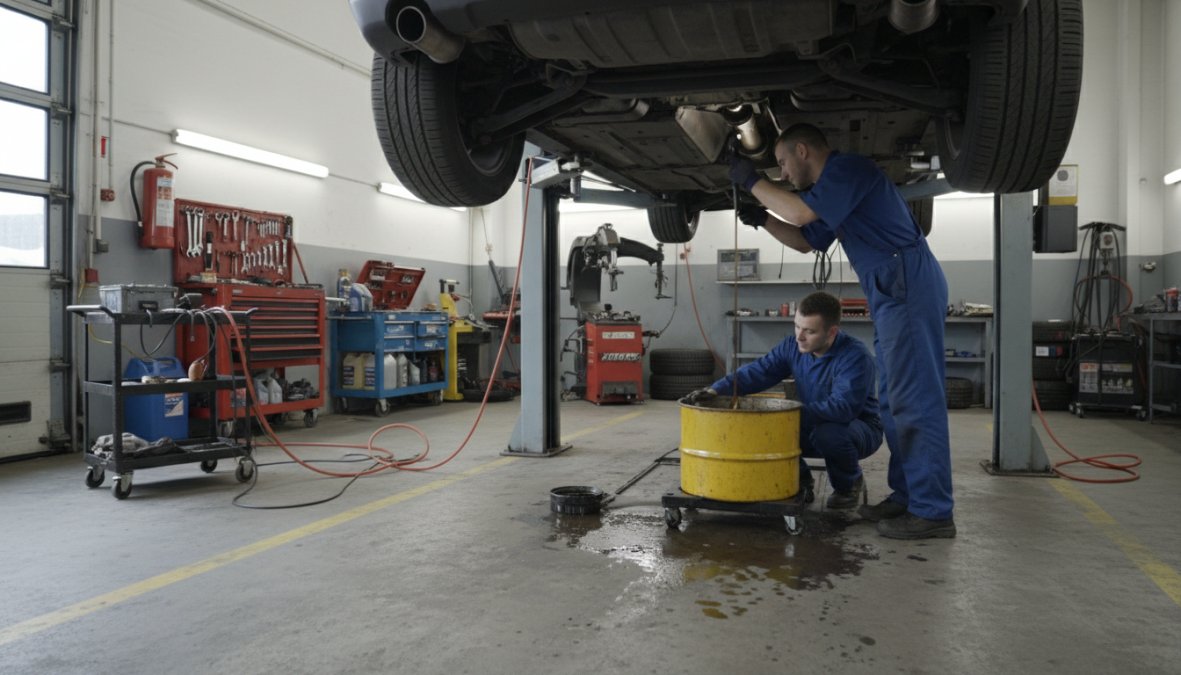
A full car service covers a structured checklist of inspection, replacement, and adjustment tasks designed to ensure your vehicle is safe, reliable, and performing efficiently. Most reputable garages work to a schedule aligned with manufacturer recommendations, though the exact scope can vary slightly by provider.
Software tools interface for mechanic and professional and garage concepts for is a full service worth the cost
Key Checks and Replacements Included
A standard full service typically covers the following:
Engine oil and oil filter replacement: Fresh oil is the single most important factor in engine longevity. Old, degraded oil accelerates wear on internal components.
Air filter inspection and replacement: A blocked air filter reduces fuel efficiency and engine performance.
Brake system inspection: Brake pad thickness, disc condition, and fluid level are checked. Brake failure is one of the most serious safety risks on any vehicle.
Fluid levels: Coolant, brake fluid, power steering fluid, and windscreen wash are checked and topped up.
Tyre tread depth and pressure: Both are checked against legal minimums and manufacturer specifications.
Suspension and steering: Worn components here affect handling and tyre wear patterns.
Exhaust system: Checked for leaks, corrosion, and secure mounting.
Lights, wipers, and electrical systems: A visual and functional check of all safety-critical electrical components.
OEM parts compatibility check: Where parts are replaced, quality garages use OEM-equivalent or manufacturer-approved components.
Pro TipAsk your garage to provide a written report of every check performed, including items that passed and any that were flagged for monitoring. This documentation becomes part of your service history and adds tangible value at resale.
A thorough full service takes between two and four hours depending on the vehicle and any additional work identified during inspection.
How Much Does a Full Car Service Cost in the UK?
Full car service costs in the UK vary depending on vehicle type, location, and whether you use an independent garage or a dealership. According to RAC's guide to car servicing costs, typical full service prices in 2026 range from around £125 to £250 for most standard passenger vehicles at independent garages, with dealerships often charging significantly more for the same scope of work.
Independent Garage vs Dealership: Cost Breakdown
Provider Type
Typical Full Service Cost
Key Advantage
Key Limitation
Independent Garage
£125 - £200
Lower cost, flexible, local expertise
Stamp may not be dealer-recognised on some warranties
Main Dealership
£200 - £400+
Manufacturer-trained technicians, OEM parts
Significantly higher cost, less flexibility
Fast-Fit Chain
£100 - £180
Convenient, standardised pricing
Variable quality, often upsell-focused
Family-Run Local Garage
£120 - £190
Personalised service, consistent mechanic
May have limited specialist equipment
The cost of living has pushed servicing prices upward across the UK, but the gap between independent garages and dealerships has widened further. For most vehicles outside of a manufacturer warranty period, an independent garage offering a full service to the same standard as a dealership represents considerably better value.
A common mistake is choosing the cheapest available option without verifying what is actually included. A "full service" that omits brake inspection or skips fluid checks is not a full service in any meaningful sense. Always ask for a written checklist of what is covered before booking.
The Long-Term ROI: Is a Full Service Worth the Cost Over Time?
Most guides stop at "servicing is cheaper than repairs" and leave it there. That framing is correct but incomplete. The real ROI case for a full service operates across three distinct financial dimensions: avoided repair costs, warranty protection value, and resale price premium. When you model all three together, the return on a £150 annual full service is not marginal, it is substantial.
Dimension 1: Avoided Repair Costs
Preventative maintenance catches failures before they become expensive. The mechanism is straightforward: a full service identifies worn components, low or contaminated fluids, and developing faults at the point where intervention is cheap. Left undetected, those same issues escalate into system failures where intervention is expensive.
Here are common real-world examples of how deferred maintenance costs compound:
None of these failures is guaranteed from a single missed service. But the probability of at least one of them occurring increases meaningfully with each consecutive skipped service, and the costs are not additive, they are often concurrent. A vehicle that has missed three services may present with multiple developing faults simultaneously, and the labour cost alone of addressing them in a single visit frequently exceeds what three annual services would have cost.
A conservative five-year model:
Five annual full services at £150 each: £750 total
Probability-weighted avoided repair cost over five years (based on the failure scenarios above, assuming at least one mid-severity fault caught and resolved early): £400 - £1,200 in parts and labour savings
Net position after servicing costs: broadly cost-neutral to significantly positive, before resale value is factored in
This is a directional model, not a guarantee. Individual outcomes vary by vehicle make, age, driving conditions, and garage quality. But the directional logic is consistent across every credible analysis of preventative versus reactive maintenance: catching faults early is cheaper than fixing failures late.
Dimension 2: Warranty Protection Value
This is the dimension most guides miss entirely, and for vehicles within their manufacturer warranty period, it is arguably the most financially significant.
Most new car warranties in the UK require evidence of servicing at the intervals specified in the vehicle handbook, using approved parts and fluids. A missed service, or a service completed outside of approved parameters, can give a manufacturer grounds to reject a warranty claim on a component failure, even if the causal link between the missed service and the failure is indirect.
According to Which? guidance on car warranties and servicing, under EU Block Exemption Regulation (retained in UK law post-Brexit), manufacturers cannot legally require you to use their own dealership for servicing during the warranty period. You are entitled to use any competent independent garage, provided you use the correct specification parts and fluids and maintain a documented service record. An independent garage that stamps your service book correctly and records the work performed satisfies this requirement.
What this means in practice:
A full service at a quality independent garage (£150) protects the same warranty as a dealership service (£300+)
The difference in cost, often £150 or more per service, is a direct saving with no reduction in warranty protection, provided documentation is correct
A missed service that voids a warranty claim on, for example, a gearbox failure (commonly £1,500 - £3,500 to repair or replace) represents a financial exposure that dwarfs the cost of the service itself
Watch OutIf your vehicle is within its manufacturer warranty period and you cannot produce a stamped service record for every interval specified in your handbook, you risk losing warranty coverage on expensive drivetrain components. Always confirm with your garage that they will stamp your service book and provide a written record of parts and fluids used, including their specification grades.
Dimension 3: Resale Price Premium
The third ROI dimension is covered in detail in the section below on service history. But the headline figure is worth stating here: a complete, documented service history consistently adds hundreds of pounds to a private sale price compared to a vehicle with partial or no history, with the premium growing as the vehicle ages. That premium is a direct financial return on every service you have paid for and documented.
When you combine avoided repair costs, warranty protection, and resale premium, the ROI case for annual full servicing is not a close call for most vehicles. The upfront cost is fixed and predictable. The downside of skipping it is variable, potentially very large, and concentrated in the scenarios where you can least afford it.
Does Full Service History Add Value When Selling Your Car?
Full service history is one of the most significant factors in private and trade vehicle valuations, but most guides treat this as a simple yes/no point and move on. The more useful question, particularly for cost-conscious drivers, is: how exactly does service history affect value, and what can you do to protect that value even if your history has gaps?
Professional illustration showing Close for is a full service worth the cost
Why Buyers and Trade Assessors Weight Service History So Heavily
A service history is not just a record of maintenance. It is a risk document. When a buyer or trade assessor evaluates a used car, they are trying to estimate the probability of expensive problems in the near future. A complete, stamped service history reduces that uncertainty in a way that no amount of verbal reassurance can replicate.
Specifically, a documented service history tells a buyer:
Engine oil has been changed at correct intervals, reducing the risk of internal wear, sludge accumulation, and premature engine failure
Brake fluid has been replaced, reducing the risk of moisture contamination, reduced braking performance, and calliper corrosion
Filters have been maintained, supporting fuel efficiency and reducing the risk of sensor damage or injector fouling
A qualified technician has inspected the vehicle annually, meaning developing faults are less likely to have been missed
Each of these points reduces the buyer's perceived risk. Reduced perceived risk translates directly into a higher offer, in private sales, in part-exchange valuations, and at auction.
Research from Auto Trader's vehicle valuation guidance consistently shows that full service history can add hundreds of pounds to a private sale price compared to a vehicle with partial or no service history, with the premium growing as the vehicle ages and mileage increases. For a five-year-old family hatchback, the difference between full and no service history can represent a meaningful percentage of the vehicle's total value.
The Documentation Standard: What 'Full Service History' Actually Requires
A complete service history is not simply a stamped book. Buyers and trade assessors increasingly scrutinise the quality of documentation, not just its presence. A credible service history should include:
A stamped physical service book with the date, mileage, and garage name and address for each service, stamps without contact details are treated with scepticism
Digital service records where available, many newer vehicles record service data electronically via the manufacturer's system, and this can be verified independently
Receipts for additional work carried out between services, including tyre replacements, brake work, and any unscheduled repairs
MOT certificates for every year since the vehicle was three years old, these provide an independent annual snapshot of the vehicle's condition and flag any advisories that were or were not subsequently addressed
Specification details for parts and fluids used, particularly relevant for vehicles within manufacturer warranty, where the grade of oil and the specification of replacement parts must meet manufacturer requirements
Pro TipKeep all service-related paperwork in a single physical folder in the vehicle. Buyers who can review a complete, organised history at the point of viewing are significantly more likely to proceed and less likely to negotiate aggressively on price. Disorganised or incomplete documentation creates doubt, and doubt costs you money.
How to Protect Resale Value If You Have Gaps in Your History
This is the practical guidance most guides omit entirely, and it matters most for the drivers who are already cost-conscious about servicing.
If your service history has gaps, missed years, lost paperwork, or services completed without a stamp, you are not without options:
1. Reconstruct what you can. Contact previous garages and ask for copies of invoices or job cards. Many garages retain records for several years. Even a printed invoice with the garage's letterhead, date, mileage, and work performed carries evidential weight if the physical stamp is missing.
2. Use a DVLA-registered garage for your next service and ask for a retrospective note. While a garage cannot backdate a stamp, they can provide a written statement confirming the vehicle's current condition and what evidence of prior maintenance they observed. This is not a substitute for a full history but it demonstrates transparency.
3. Document any DIY maintenance meticulously. If you change your own oil, keep the receipt for the oil and filter, note the date and mileage in a logbook, and photograph the odometer alongside the work. A well-documented DIY service log is not equivalent to a professional stamp, but it is meaningfully better than nothing and demonstrates that the vehicle has not been neglected. Some buyers, particularly mechanically knowledgeable private buyers, will accept this.
4. Be transparent in your listing. A private sale listing that honestly describes the service history situation and provides supporting documentation (receipts, photos, MOT history) consistently performs better than one that obscures gaps. Buyers who discover undisclosed history gaps during a viewing lose trust immediately, and that loss of trust costs more than the gap itself.
5. Get a pre-sale inspection. A professional inspection report from a reputable garage, confirming the vehicle's current mechanical condition, partially compensates for historical gaps by providing a contemporaneous third-party assessment. Services like the AA or RAC pre-purchase inspections are widely recognised by private buyers.
Key TakeawayEvery full service you book, document correctly, and retain paperwork for is a direct investment in your vehicle's future sale price. The cost of a single missed and undocumented service is not just the repair risk it creates, it is also the negotiating leverage it hands to every future buyer who notices the gap.
EV and Hybrid Servicing: How It Differs From Traditional Car Maintenance
Electric and hybrid vehicles have fundamentally different servicing requirements compared to traditional internal combustion engine (ICE) cars. This is an area where generic servicing advice frequently falls short.
For pure electric vehicles (EVs), the absence of an internal combustion engine eliminates several traditional service items: no engine oil changes, no oil filter replacements, no spark plugs, no exhaust system checks. However, EVs still require meaningful annual maintenance: brake system inspection (though regenerative braking reduces wear significantly), tyre checks, cabin air filter replacement, coolant system checks for the battery thermal management system, and software updates.
Hybrid vehicles occupy a middle ground. They retain an internal combustion engine alongside an electric motor and battery system, so they require most traditional service items plus additional checks specific to the hybrid drivetrain, high-voltage battery health, and regenerative braking systems.
According to Society of Motor Manufacturers and Traders EV guidance, EV ownership in the UK continues to grow rapidly, and many independent garages are not yet equipped with the specialist diagnostic tools required to service high-voltage battery systems safely. Choosing a garage with specific EV and hybrid expertise is not optional. It is a safety requirement.
At Kettering Motorist Centre, we offer specialist servicing for electric and hybrid vehicles alongside traditional car maintenance, with the diagnostic equipment and trained technicians required to work safely on high-voltage systems. For EV and hybrid owners in Kettering and across Northamptonshire, this matters more than ever as the local vehicle parc shifts toward electrification.
Pro TipEV owners should check whether their vehicle's battery health report is included in their annual service. Battery degradation is gradual and often invisible without diagnostic testing. Catching early degradation protects both range and resale value.
The "is a full service worth the cost" question applies equally to EVs, though the answer looks slightly different. The overall service cost for a pure EV is typically lower than for an ICE vehicle due to fewer consumable parts. But the specialist knowledge required to service them safely means choosing the right garage matters more, not less.
Conclusion: Making the Right Servicing Decision for Your Vehicle
Skipping a full service to save money in the short term is one of the most reliably expensive decisions a car owner can make. The cost of preventative maintenance is predictable and manageable. The cost of deferred maintenance is neither.
Frequently Asked Questions
What is included in a full car service?
A full car service typically covers an oil change, filter replacement, fluid level checks, brake system inspection, tyre tread assessment, steering and suspension checks, exhaust system review, and a comprehensive vehicle inspection. Some garages also include a battery check and diagnostic scan. The exact checklist can vary between providers, so it is worth asking for a written breakdown before booking to confirm what is covered.
What is the difference between an interim and a full service?
An interim service is a lighter check carried out roughly every six months or 6,000 miles, covering essentials like an oil change and basic safety checks. A full service is more comprehensive, typically done annually or every 12,000 miles, and includes additional inspections of the brake system, suspension, steering, exhaust, and more. For higher-mileage drivers, combining both throughout the year offers the most complete preventative maintenance coverage.
Is a full service necessary every year, even if the car seems fine?
Yes, annual car maintenance is strongly recommended even when a vehicle appears to be running well. Many mechanical issues — such as worn brake pads, deteriorating filters, or low fluid levels — develop gradually and show no obvious symptoms until they cause a breakdown or safety risk. Regular servicing catches these problems early, helping avoid costly repairs and keeping the vehicle reliable. It also ensures compliance with manufacturer recommendations, which can affect your warranty status.
Does a full service history increase car resale value?
A complete, documented service history can meaningfully improve a car's resale value and buyer confidence. It demonstrates that the vehicle has received consistent preventative maintenance and has been looked after properly. Buyers and dealers often pay a premium for cars with a full service history, and vehicles without one can be harder to sell or may attract lower offers. Keeping service records — whether a stamped booklet or digital documentation — is one of the simplest ways to protect your investment.
How does servicing differ for electric and hybrid vehicles?
Electric vehicles (EVs) require less frequent servicing than internal combustion engine cars because they have no oil changes, fewer moving parts, and no exhaust system to maintain. However, EVs still need regular checks on brake systems, tyre wear, coolant for the battery thermal management system, and software diagnostics. Hybrid vehicles combine both maintenance needs. It is important to use a garage with specialist expertise in electric and hybrid vehicles to ensure the correct procedures are followed safely.
Your booking Failed
Please try again or please call 01536 410142
Thank you for placing a booking with Kettering Motorist Centre Limited for vehicle
PLEASE TAKE YOUR BOOKING REFERENCE NUMBER WITH YOU TO THE MOT CENTRE
Your items
MOT Test
×
Terms and Conditions
These terms and conditions form the basis on which you can visit and use this website. Please read them carefully as they contain important information.
General terms and conditions
This website is owned and operated by Kettering Motorist Centre Ltd (company registration number: 4485858) operating at Trafalgar Road, Kettering, Northamptonshire, NN16 8DB (the "MOT Centre", the "Company", "we" or "us"). If you have any queries about these terms and conditions or if you have any comments or complaints on or about this website, you can contact us at [email protected] or 01536 410142.
The website is to promote and offer for sale the products and services of Kettering Motorist Centre Limited.
1. The contract between us
This website does not take payment for products or services online. The website enables you to view products and services online and to make a booking for later delivery and payment. The vehicle and provision of other products and services promoted by this website and the payment by you of the price of those products and services will take place at the MOT Centre. The booking does not constitute a contract.
The booking process on the site provides details of the booked MOT order. Please take the time to read and check your booking. It is your responsibility to make sure the order is correct and for the correct vehicle.
2. Ownership of rights
All rights, including copyright, in this website are owned by or licensed to the Company. Any use of this website or its contents, including copying or storing it or them in whole or part, other than for your own personal, non commercial use, is prohibited without our permission. You may not modify, distribute or repost anything on this website for any purpose.
3. Accuracy of content
We have taken care in the preparation of the content of this website, in particular to ensure that prices quoted are correct at the time of publishing and that all goods have been fairly described. However, bookings will only be accepted if there are no material errors in the description of the goods or their prices as advertised on this website. Any weights, dimensions and capacities given about the goods are approximate only.
4. Damage to your computer
We try to ensure that this website is free from viruses or defects. However, we cannot guarantee that your use of this website or any websites accessible through it will not cause damage to your computer. It is your responsibility to ensure that the right equipment is available to use the website. Except in the case of negligence on our part, we will not be liable to any person for any loss or damage which may arise to computer equipment as a result of using this website.
5. Availability
All bookings are subject to acceptance and availability. If the MOT date you have requested are is not available, the Centre will contact you by e-mail or phone. You will have the option either to wait until another slot is available or to cancel your booking.
6. Booking errors
You are able to correct errors on your booking up to the point on which you click on “Place Booking” during the booking process.
7. Price
The prices payable for goods that you order are as set out in our website. All prices are inclusive of VAT at the current rates and are correct at the time of entering information, errors and omissions excepted.
Whenever it is not possible to accept your booking to buy goods of the specification and description at the price indicated, the MOT Centre will advise you by email or phone or when you visit the centre.
8. Payment terms
You will be required to pay for the goods or services to the Centre at time of a completed MOT.
9. Delivery charges
N/A
10. Cancellation
The MOT Centre reserves the right to cancel the booking if:
10.1 There is insufficient stock to deliver the goods you have booked.
10.2 One or more of the goods you booked was listed at an incorrect price.
If your booking is cancelled the Centre will notify you by e-mail or phone.
You have the right to cancel your booking at any time up to the point of the MOT. If you do cancel your booking you should inform the centre by phone.
11. Liability
Notwithstanding the foregoing, nothing in these terms and conditions is intended to limit any rights you might have as a consumer under applicable local law or other statutory rights that may not be excluded nor in any way to exclude or limit our liability to you for any death or personal injury resulting from our negligence.
12. Notices
Unless otherwise expressly stated in these terms and conditions, all notices from you to us must be in writing and sent to our contact address given above and all notices from us to you will be displayed on our website from time to time.
13. Changes to legal notices
We reserve the right to change these terms and conditions from time to time and you should look through them as often as possible.
14. Law, jurisdiction and language
This website, any content contained therein and any contract brought into being as a result of usage of this website are governed by and construed in accordance with English law. Parties to any such contract agree to submit to the exclusive jurisdiction of the courts of England and Wales.
15. Invalidity
If any part of these terms and conditions is unenforceable (including any provision in which we exclude our liability to you) the enforceability of any other part of these conditions will not be affected.
16. Privacy
You acknowledge and agree to be bound by the terms of our privacy policy
17. Third party rights
Nothing in this Agreement is intended to, nor shall it confer any rights on a third party.