Blog >
Car Repair: A Complete Guide to Services, Costs & Finding Help Car Repair: A Complete Guide to Services, Costs & Finding Help
14 May 2026
Table of Contents
Last Updated: May 14, 2026
What Every Driver Should Know About Car Repair
Car repair is one of those topics where the gap between what people know and what they need to know costs real money. According to the UK's Society of Motor Manufacturers and Traders vehicle maintenance guidance, neglected maintenance is a leading cause of preventable breakdowns on British roads. At Kettering Motorist Centre, we see this pattern constantly: drivers who arrive with a minor issue that escalated into a major one simply because the warning signs were ignored.
The most important thing to understand is this: most expensive car repairs start as cheap ones. A worn brake pad that gets ignored becomes a damaged disc. A low coolant level that goes unchecked becomes an overheated engine. The repair invoice at the end is always bigger than it needed to be.
Below, we'll break down every core service, explain what fair pricing looks like, show you how to find a mechanic you can actually trust, and give you a practical framework for deciding when to fix versus replace. The sections on understanding your repair invoice and emergency preparedness are the ones most guides skip entirely. We don't.
Preventative Maintenance vs. Reactive Repairs
Preventative maintenance is the practice of servicing a vehicle on a scheduled basis to prevent failures before they occur. Reactive repair is what happens when you skip that schedule.
The cost difference is not subtle. Routine services like oil changes, tyre rotations, and brake inspections are predictable and relatively low-cost. Reactive repairs, by contrast, often involve cascading damage: one failed component stresses adjacent parts, and suddenly a single fix becomes three. Drivers who follow a maintenance schedule consistently tend to spend considerably less on repairs over the lifetime of a vehicle than those who service reactively. The vehicle also holds its resale value better, because a documented service history signals to any buyer that the car was cared for properly.
The practical rule: if your manufacturer recommends a service interval, treat it as a deadline, not a suggestion.
Core Auto Repair Services Explained
Understanding what each service actually involves helps you make informed decisions at the counter, rather than just nodding along while someone rattles off a list of parts and labour costs.
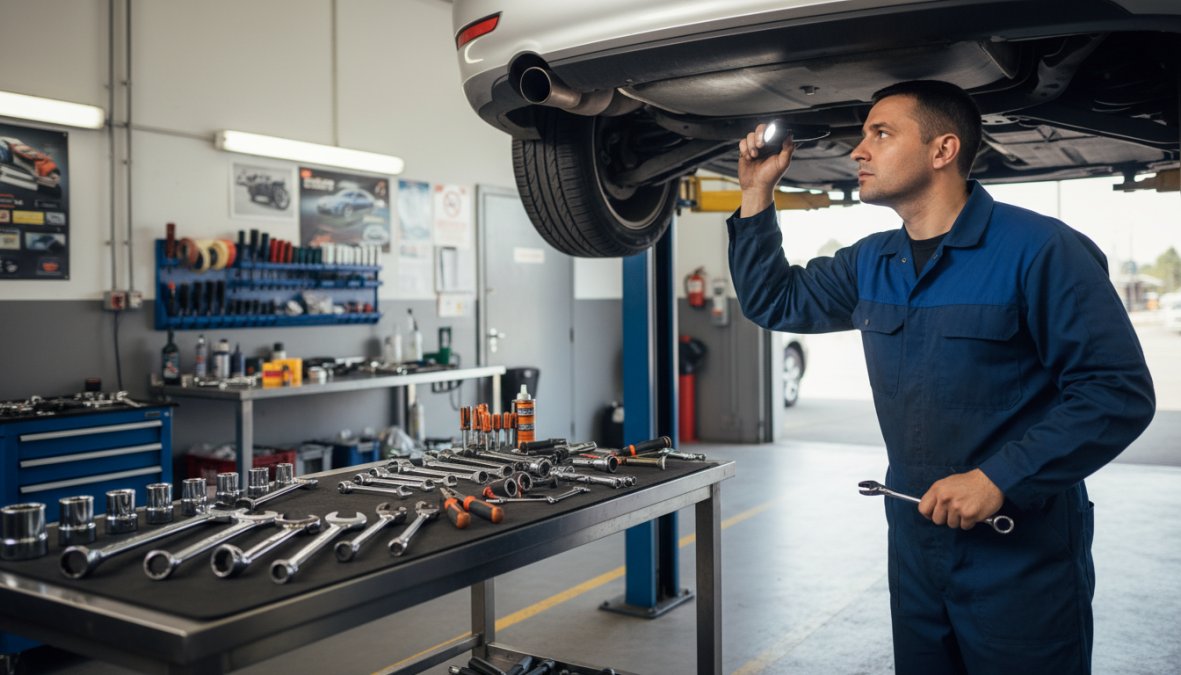
A professional mechanic in a well-equipped auto repair facility will typically offer a core set of services that cover the majority of what your vehicle needs across its lifespan. These are not upsells. They are the foundation of a functioning car.
Oil Change and Oil Filter Replacement
An oil change is the single most frequent maintenance task a car requires, and the one most directly tied to engine longevity. Engine oil lubricates moving parts, reduces friction, and carries heat away from critical components. Over time, it degrades and accumulates contaminants. An oil filter replacement should always accompany an oil change, because a new filter paired with old oil defeats the purpose.
Most modern vehicles require an oil change every 10,000 to 15,000 miles under normal driving conditions, though older vehicles and those used for short urban journeys often benefit from more frequent changes. Ignoring this interval allows degraded oil to circulate through the engine, accelerating wear on components that are expensive to replace.
Pro Tip - Always ask your technician to check fluid levels during an oil change. Coolant, brake fluid, and power steering fluid can all be topped up at the same visit at minimal cost, and low levels in any of these can cause serious damage.
Brake Maintenance and Brake Pad Replacement
Brake maintenance is non-negotiable from a safety standpoint. Brake pads wear down gradually through normal use, and the warning signs are usually audible: a squealing or grinding noise when braking indicates that pads are at or near the end of their service life.
A full brake inspection should assess pad thickness, disc condition, caliper function, and brake fluid quality. Brake fluid absorbs moisture over time, which lowers its boiling point and reduces braking effectiveness. Many drivers overlook fluid replacement entirely, which is a mistake. The UK Government's MOT testing standards for brakes set minimum performance thresholds, but staying well above those minimums is the right approach for everyday safety.
Replacing brake pads before they reach the metal-on-metal stage protects the discs. Disc replacement costs significantly more than pad replacement. The maths are straightforward.
Battery Testing and Battery Services
Car batteries typically last three to five years under normal UK driving conditions. Cold weather accelerates discharge, and short urban trips prevent the battery from fully recharging between journeys. Battery testing should be part of any routine service visit, not just something checked when the car fails to start.
A qualified technician can perform a load test that measures the battery's ability to deliver current under demand, which is far more informative than a simple voltage reading. If the test reveals a weakening cell, replacing the battery proactively costs a fraction of what a breakdown callout does.
Tire Rotation, Alignment, and Wheel Services
Tyres wear unevenly depending on their position on the vehicle. Front tyres on front-wheel-drive cars, for example, handle both steering and drive forces, so they wear faster than rears. Tyre rotation moves tyres between positions to even out that wear, extending the overall lifespan of the set.
Wheel alignment refers to the angle at which tyres contact the road. Misalignment causes uneven wear, reduces fuel efficiency, and affects handling. It is commonly knocked out of specification by kerb strikes or pothole impacts. Alignment should be checked after any significant impact and as part of regular tyre servicing.
Watch OutDriving on a misaligned vehicle for an extended period will destroy a new set of tyres prematurely. If you notice your car pulling to one side or uneven tread wear on the inner or outer edges, get alignment checked before it costs you a full set of tyres.
Average Car Repair Costs: What to Expect in the UK
Car repair costs in the UK vary considerably depending on the vehicle make, the type of repair, the region, and whether you use an independent garage or a main dealer. Understanding the ranges is useful, but knowing how to evaluate whether a specific quote is fair is more useful still, and that is what most pricing guides skip entirely.
Typical UK Cost Ranges by Service
The table below reflects indicative ranges for common services at independent garages across the UK. Main dealer rates typically run 30 to 60 percent higher for the same work, reflecting higher overhead and, in some cases, manufacturer-mandated parts requirements.
Service | Typical Independent Garage Range | Frequency |
|---|
Oil and filter change | £50 - £120 | Every 10,000-15,000 miles |
Brake pad replacement (per axle) | £80 - £180 | As required |
Brake disc and pad replacement (per axle) | £150 - £350 | As required |
Battery replacement | £70 - £200 | Every 3-5 years |
Tyre rotation | £20 - £50 | Every 6,000-8,000 miles |
Wheel alignment (two-wheel) | £40 - £70 | Annually or after impact |
Wheel alignment (four-wheel) | £70 - £120 | Annually or after impact |
Full diagnostic check | £50 - £100 | As required |
Timing belt replacement | £300 - £700 | Per manufacturer schedule |
Exhaust and muffler repair | £80 - £400 | As required |
Coolant flush | £50 - £100 | Every 2-5 years |
These figures are indicative ranges. The actual cost for your vehicle will depend on its specific make and model, the parts specification required, and the labour rate of your chosen service centre.
Independent Garage vs. Main Dealer: When the Price Difference Is Worth It
The default assumption that main dealers are always better is not supported by the evidence of day-to-day servicing. For routine maintenance, oil changes, brake pads, tyres, batteries, a well-equipped independent garage staffed by qualified technicians delivers equivalent results at a meaningfully lower cost.
The calculation shifts in specific circumstances:
Vehicles under manufacturer warranty: Servicing at a non-franchised garage does not void your warranty in the UK, provided the garage uses parts that meet manufacturer specifications and keeps records. This has been the case since block exemption regulations were updated. However, for complex warranty claims, having a main dealer service history can simplify the process.
Brand-specific software and calibration: Some repairs, particularly on newer vehicles with advanced driver assistance systems (ADAS), electric powertrains, or proprietary electronics, require manufacturer-specific diagnostic software that independent garages may not hold. For these jobs, a main dealer or a specialist with the relevant software licence is the right choice.
Recall work: Manufacturer recalls are always carried out free of charge at franchised dealers. No independent garage can perform recall work on your behalf.
Pro TipFor vehicles older than three years and out of manufacturer warranty, a reputable independent garage almost always represents better value than a main dealer for routine and most non-specialist repairs. The key qualifier is 'reputable', check IMI accreditation, independent reviews, and whether the garage provides written estimates and parts warranties.
How to Evaluate Whether a Quote Is Fair
Receiving a quote and knowing whether it is reasonable are two different things. A structured approach helps:
Step 1: Get at least two written quotes for any repair over £150. This is not about finding the cheapest option, it is about establishing a reference point. If two independent garages quote within 15 to 20 percent of each other, that range is likely reflective of genuine market rates for your vehicle. A quote significantly below that range warrants questions about parts quality; one significantly above it warrants questions about labour time.
Step 2: Ask the garage to separate parts and labour on the estimate. This allows you to check the parts cost against approximate retail prices online (sites like Euro Car Parts or GSF Car Parts list retail prices for common components). Garages legitimately add a margin to parts, but the estimate gives you a basis for comparison.
Step 3: Ask which parts specification is being used. For most repairs, there are three tiers: genuine manufacturer parts, OEM-equivalent parts (made by the same supplier that makes parts for the manufacturer, sold under a different brand), and budget aftermarket parts. OEM-equivalent parts are appropriate for the vast majority of repairs and cost less than genuine parts without compromising quality. Budget parts carry more variability. Ask which tier is being quoted and why.
Step 4: Check the labour time against a reference. Labour time guides are not publicly available in the same way parts prices are, but you can ask the garage which guide they use and what time is allocated for the job. For common repairs, a quick search of owner forums for your specific make and model will often surface what other owners have been quoted for the same work, giving you a useful benchmark.
Regional Variation in UK Labour Rates
Labour rates vary by region in ways that are worth factoring into your expectations. Garages in London and the South East typically charge at the higher end of the independent garage range, often £90 to £120 per hour, reflecting higher operating costs. Garages in the Midlands, North of England, Wales, and Scotland tend to operate at £55 to £85 per hour for comparable work. This regional variation is normal and does not reflect a difference in quality; it reflects the cost of running a business in different parts of the country.
Fair Pricing, Written Estimates, and Understanding Labour Costs
A reputable auto repair facility will always provide a written estimate before work begins. This is not just good practice; it protects both the customer and the garage. The estimate should itemise parts and labour separately, so you can see exactly what you are paying for.
Labour costs reflect the time a technician spends on the repair, billed at the garage's hourly rate. Some garages use flat-rate labour guides, which set standard times for common jobs regardless of how long the actual work takes. This can work in your favour for straightforward repairs, but ask questions if a quote seems high relative to the work involved.
Never authorise work beyond the original estimate without a revised written quote. Any professional service centre should contact you for approval before exceeding the agreed scope. Under the Consumer Rights Act 2015, you are entitled to pay only for work you have explicitly authorised, this applies whether the garage is a sole trader or a national chain.
Watch OutA verbal estimate is not the same as a written one. If a garage gives you a price over the phone or at the counter without putting it in writing, ask for a written estimate before leaving your vehicle. A garage that is reluctant to commit to a written figure before starting work is one to approach with caution.
How to Find a Reliable Mechanic You Can Trust
Finding a reliable mechanic comes down to three things: qualifications, transparency, and track record. The easiest mistake to make is choosing a garage based solely on price. The cheapest quote does not always represent the best value, particularly when it comes from a workshop that cuts corners on parts quality or skips diagnostic steps.
Start by looking for garages that employ technicians with recognised qualifications. In the UK, the Institute of the Motor Industry (IMI) provides accreditation for automotive professionals, and many quality garages also work to standards aligned with Automotive Service Excellence (ASE) principles. Factory trained technicians are particularly valuable for complex or brand-specific work.
Check independent reviews on platforms like Google and Trustpilot. Look for patterns in the feedback rather than individual five-star ratings. Consistent mentions of clear communication, fair pricing, and honest assessments are the signals that matter.
Ask whether the garage provides written estimates and whether they offer a warranty on parts and labour. Any garage unwilling to put those commitments in writing is one to avoid.

What to Look for in an ASE Certified or Qualified Technician
ASE certification is an internationally recognised standard for automotive service excellence that demonstrates a technician's competence across specific areas of vehicle repair and maintenance. In the UK context, equivalent quality signals include IMI accreditation and manufacturer-specific training programmes.
A qualified technician will approach diagnosis systematically rather than guessing at the cause of a fault. They use diagnostic testing equipment to read fault codes, analyse sensor data, and identify the root cause of a problem before recommending any repair. This matters because replacing parts without proper diagnosis is expensive and often fails to resolve the underlying issue.
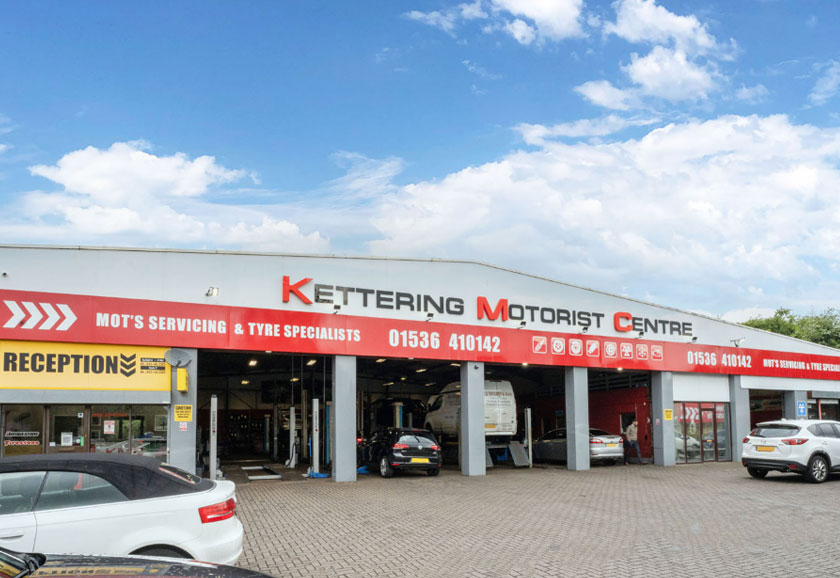
Kettering Motorist Centre's team brings this diagnostic-first approach to every vehicle, including specialist expertise for electric and hybrid vehicles, which require additional qualifications that many general garages simply do not hold.
Car diagnostic tools connect to a vehicle's onboard diagnostic (OBD) port and read fault codes stored by the engine control unit. These codes indicate which systems have flagged an error, from emissions components to transmission sensors to airbag circuits.
What most guides get wrong here is the assumption that a fault code tells you what to replace. It doesn't. A code tells you which system is reporting an issue. Proper diagnostic testing then involves checking that system methodically to identify the actual cause. A P0420 code, for example, indicates a catalytic converter efficiency fault, but the root cause might be an oxygen sensor, an exhaust leak, or an engine running issue rather than a failed catalytic converter itself.
This is why professional diagnostic testing is worth the fee. A technician with the right equipment and training interprets the data correctly. A consumer-grade OBD reader gives you the code but not the context.
DIY vs. Professional Car Repair: A Cost-Benefit Analysis
The honest answer is that DIY car repair makes sense for a narrow range of tasks and very little sense for most others.
Tasks that are genuinely DIY-appropriate for a competent home mechanic include replacing wiper blades, changing cabin air filters, topping up fluid levels, and replacing a battery. These require minimal tools, carry low risk if done incorrectly, and the savings are real.
The calculation changes sharply for anything involving brakes, suspension, fuel systems, or electronics. These systems require specialist tools, calibration equipment, and knowledge of vehicle-specific torque specifications. An incorrectly fitted brake component is not just an expensive mistake; it is a safety risk. Labour costs on professional repairs reflect genuine expertise, not just time.
Key TakeawayDIY repair saves money on simple maintenance tasks. For anything safety-critical or diagnostically complex, professional repair costs less in the long run than correcting a DIY error.
The other factor most DIY guides ignore: warranty. Parts fitted by a qualified technician at a reputable service centre typically come with a warranty on both parts and labour. DIY work carries no such protection.
When to Replace vs Repair Your Car
The replace-versus-repair decision is one of the most financially significant choices a driver makes, and it deserves a structured approach rather than a gut-feel response.
A useful framework: if the cost of the repair exceeds 50% of the vehicle's current market value, and the car has multiple other systems approaching end-of-life, replacement is usually the more rational choice. A single expensive repair on an otherwise sound vehicle is a different calculation entirely.
Vehicle-Specific Maintenance Schedules and Service History
Every vehicle manufacturer publishes a maintenance schedule specifying which services are required at which mileage or time intervals. These schedules are not generic; they account for the specific engineering of that model, including fluid capacities, filter specifications, and component service life.
Following the manufacturer's schedule and keeping a complete service history serves two purposes. First, it keeps the vehicle in the condition it was designed to operate in. Second, it protects resale value. A car with a full, documented service history commands a meaningfully higher price than an equivalent vehicle without one, because it removes uncertainty for the buyer.
Pre-purchase inspection is the other side of this: if you are buying a used vehicle, a professional inspection by an independent mechanic is one of the best investments you can make. It reveals deferred maintenance, hidden damage, and upcoming costs before you commit to the purchase.
According to the RAC Foundation's guidance on used car buying, many costly post-purchase surprises are entirely avoidable with a proper pre-purchase check.
Emergency Repair Preparedness: What to Do When Your Car Breaks Down
Most drivers are underprepared for a breakdown, and the consequences range from inconvenient to dangerous depending on where it happens.
A basic emergency kit should include:
A warning triangle and high-visibility vest (legally required in many European countries and strongly advisable in the UK)
A jump-start pack or jump leads
A tyre inflation kit or spare tyre with a functioning jack and wheel brace
A torch with fresh batteries
Basic contact information for your roadside assistance provider
If your car breaks down on a motorway, the protocol is specific: exit the vehicle from the left-hand door, move behind the barrier if possible, and call for assistance from a safe position. Do not attempt repairs on a live carriageway.
Roadside assistance cover from providers like the AA or RAC provides peace of mind, but it does not replace knowing the basics of what to do in the moments immediately after a breakdown. Knowing your vehicle's location, its make, model, and registration, and the nature of the fault all accelerate the response.
Understanding Your Repair Invoice
A repair invoice is a legal document, and it should be treated as one. But beyond the legal basics, knowing how to read a mechanic's bill critically is one of the most practical skills a driver can develop, because the invoice is also where upselling, padding, and unnecessary work tend to show up, if they are going to show up at all.
Every invoice from a reputable auto repair facility should include the following:
A clear description of the work carried out, in plain language, not just part numbers
Parts used, with part numbers where applicable
Labour time charged and the hourly rate applied, shown separately
VAT itemised separately from parts and labour
Any warranty terms for parts and labour, stated explicitly
The vehicle's mileage at the time of service
Repair orders should match the written estimate you approved before work began. If there are discrepancies, ask for a line-by-line explanation before paying. Reputable garages expect this and welcome the question.
How to Spot Upselling on a Repair Invoice
Upselling in automotive servicing is not always dishonest, sometimes a technician genuinely identifies a secondary issue while completing the primary repair. The problem is that drivers rarely have the context to distinguish a legitimate recommendation from a revenue-generating add-on. Here is what to look for:
Vague labour descriptions. A line that reads 'general inspection' or 'system check' with a labour charge attached, but no corresponding finding or action, is worth querying. Inspection time should either be absorbed into the diagnostic fee or result in a documented finding. If neither applies, ask what was actually checked and what the result was.
Fluid flushes on a new or recently serviced vehicle. Coolant flushes, transmission fluid flushes, and power steering flushes are legitimate services, but they have defined service intervals. If your vehicle's service history shows a coolant flush 18 months ago and the invoice includes another one, ask why. The answer may be valid (a contamination finding, for example), but it should be explained, not assumed.
Cabin air filter replacement at every visit. Cabin filters typically need replacing every 12,000 to 15,000 miles under normal conditions. If one appears on your invoice more frequently than that, ask to see the old filter. A genuinely dirty filter is obvious. A filter that looks clean should not be on the invoice.
Brake fluid replacement without a moisture test. Brake fluid condition is best assessed with a moisture content tester, a simple tool that takes seconds to use. If a garage recommends brake fluid replacement without being able to show you a test result or explain what triggered the recommendation, that is worth questioning.
Parts marked up significantly above retail. You are entitled to ask what parts were fitted and to look up their approximate retail cost. Garages legitimately add a margin to parts, that is standard practice, but a markup of more than 30 to 50 percent above trade price on a standard component is worth raising. Some garages will also fit cheaper parts than quoted while charging for the higher-specification item; asking to see the old part and the packaging of the new one addresses this.
Pro TipFor any repair costing more than £200, ask the garage to retain the old parts for your inspection when you collect the vehicle. Most professional garages will do this without hesitation. If a garage refuses, that tells you something important about how they operate.
Reading the Labour Section
Labour is typically the largest single line on a repair invoice, and it is the least transparent to most customers. Garages use one of two approaches:
Actual time billing: You pay for the time the technician spent on your vehicle, at the garage's hourly rate.
Flat-rate billing: The garage bills a standard time for the job as listed in a labour time guide (such as those published by Autodata or the vehicle manufacturer), regardless of how long the work actually took.
Flat-rate billing is common and not inherently unfair, an experienced technician who completes a job in less than the guide time still delivers the same result. However, if a flat-rate job is billed at a time that seems high relative to the work involved, it is reasonable to ask which guide was used and what time it specifies.
What to Do If the Invoice Does Not Match the Estimate
If the final invoice exceeds the written estimate you approved, the garage should have contacted you for authorisation before proceeding with any additional work. This is standard practice and, in the UK, aligns with consumer protection expectations under the Consumer Rights Act 2015.
If you were not contacted and the invoice is higher than agreed:
Do not pay the excess under pressure. Ask for a written explanation of why the scope changed.
Request to speak with the service manager, not just the front-desk advisor.
If the explanation is unsatisfactory, you are entitled to pay only the originally agreed amount for the originally agreed work, and to escalate through the garage's formal complaints process or, if necessary, through the Motor Ombudsman, which provides free dispute resolution for consumers dealing with accredited garages in the UK.
The Motor Ombudsman's consumer advice on garage disputes
Customer satisfaction in automotive servicing is closely tied to invoice transparency. The garages that build long-term relationships with their customers are the ones where the invoice never contains surprises, and where, if you ask questions, the answers come readily and without defensiveness.
Frequently Asked Questions
How do I know if my car needs a major repair?
Common warning signs include unusual noises such as grinding or knocking, warning lights on your dashboard, reduced engine performance, pulling to one side when braking, or a noticeable drop in fuel efficiency. If you notice any of these, booking a diagnostic test at a trusted auto repair facility is the safest first step. Early car repair often prevents small issues from becoming expensive problems, so acting quickly on warning signs is always worthwhile.
What are average car repair costs in the UK?
Average car repair costs vary widely depending on the job. Routine services such as an oil change typically range from £50-£120, while brake pad replacement can cost £80-£200 per axle. More complex repairs like clutch replacement or diagnostic work can run from £200 to over £600. Always request written estimates before work begins, and compare parts and labour costs across local service centres to ensure you're getting a fair price.
How can I find a reliable and honest mechanic near me?
Look for a service centre staffed by qualified technicians, ideally with recognised accreditations or memberships in trade bodies. Read recent customer reviews, ask whether they provide written estimates, and check if they offer a warranty on completed work. A trustworthy mechanic will explain repairs clearly, show you the faulty parts if asked, and never pressure you into unnecessary work. Family-run local garages often offer more personalised, transparent service than larger chains.
Is it cheaper to repair my car or buy a new one?
When deciding whether to repair or replace your car, consider the repair cost against the vehicle's current value. A common rule of thumb is: if the repair cost exceeds 50% of the car's market value, replacement may make more financial sense. Also factor in the vehicle's service history, age, mileage, and reliability record. A pre-purchase inspection on a replacement vehicle is strongly recommended to avoid inheriting someone else's car repair problems.
What should I do if my car breaks down on the road?
First, move the vehicle safely off the road if possible and switch on your hazard lights. If on a motorway, exit the car via the left door and stand behind the barrier. Call your roadside assistance provider or breakdown service. Keep a basic emergency kit in your boot, including a warning triangle, torch, and jump leads. Once recovered, arrange a full diagnostic check at a qualified auto repair facility before driving long distances again.
What is the difference between DIY car repair and professional service?
DIY car repair can save money on simple tasks like replacing wiper blades, topping up fluid levels, or changing an air filter. However, jobs involving brakes, engine diagnostics, or electrical systems carry safety risks if done incorrectly and may void your warranty. Professional technicians use specialist car diagnostic tools and have the training to identify underlying issues. For anything beyond basic maintenance, using a qualified service centre is usually the safer and more cost-effective long-term choice.