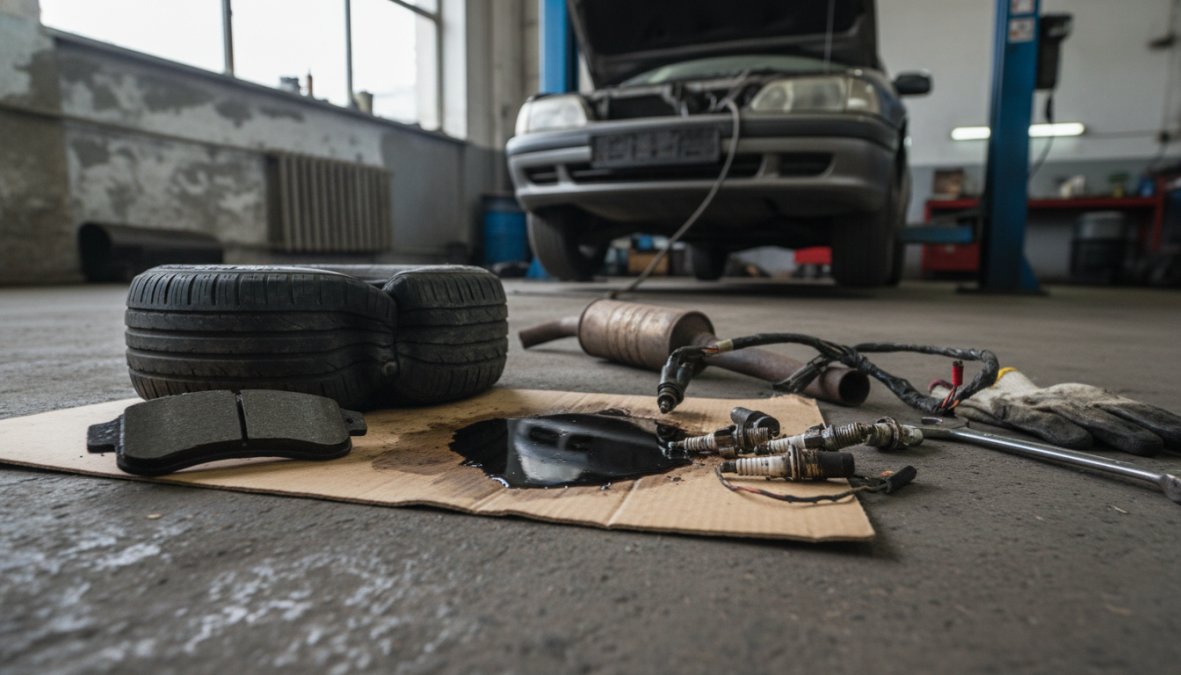
Recognising the signs your car needs repair early is one of the most cost-effective decisions any driver can make. At Kettering Motorist Centre, we see vehicles every week that have developed minor issues into serious mechanical failures simply because the early warning signs were missed or ignored. This guide covers ten clear warning signs to watch for, what they mean, and when to act. Below, we'll show you exactly how to categorise each symptom by severity, which checks you can do yourself, and when a professional mechanic is the only sensible option.
Most drivers assume their car will feel obviously wrong before anything serious happens. That assumption is expensive. Many of the costliest repairs, including seized brakes, blown head gaskets, and failed transmissions, begin as subtle symptoms that are easy to dismiss.
Why Ignoring Signs Your Car Needs Repair Costs You More
Deferred maintenance is one of the most reliable ways to turn a small repair bill into a large one. The mechanism is straightforward: most car components fail progressively, not suddenly, and every mile driven on a worn part accelerates damage to the components around it. What makes this expensive is not the original fault, it is the secondary damage that accumulates while the original fault is ignored.
The table below shows how common early-stage faults escalate when left unaddressed. The repair cost ranges are illustrative of typical UK independent garage pricing and will vary by vehicle make, model, and region.
Early Warning Sign
Likely Cause
Typical Early-Stage Repair
What It Becomes If Ignored
Typical Late-Stage Repair
Squealing brakes
Worn brake pads
Pad replacement (both front wheels)
Warped or scored disc rotors requiring full disc and pad replacement
Two to four times the original cost
Coolant warning light / low coolant
Minor coolant leak (hose, seal)
Hose replacement or seal repair
Overheated engine, warped cylinder head, blown head gasket
Head gasket repair is one of the most labour-intensive jobs on most engines
Rough idle / hesitation
Worn spark plugs or dirty fuel injectors
Spark plug set replacement or injector service
Misfires stressing the catalytic converter, which can be destroyed by unburned fuel
Catalytic converter replacement adds significant cost on top of the original ignition fault
Knocking noise from engine
Low oil pressure or worn bearings
Oil and filter change, pressure investigation
Spun bearing, scored crankshaft, or seized engine
Engine rebuild or replacement, the most expensive outcome on this list
Vibration through steering wheel
Wheel imbalance or alignment fault
Wheel balance and alignment check
Accelerated tyre wear, worn suspension components
Premature tyre replacement plus suspension work
Battery warning light
Failing alternator or weak battery
Battery or alternator replacement
Complete battery drain, potential damage to sensitive electronics from voltage irregularities
Roadside recovery plus potential ECU or sensor damage
The Compounding Effect: Why Small Faults Get Expensive Fast
The pattern across every row in that table is the same: the original fault is relatively contained and inexpensive to address. The secondary damage, the warped rotor, the destroyed catalytic converter, the seized engine, is what makes the final bill painful. And the secondary damage only happens because the early warning sign was dismissed.
There is a specific mechanism worth understanding here. When a brake pad wears through completely, the metal backing plate contacts the disc rotor directly. The rotor is a precision-machined component. Metal-on-metal contact at braking temperatures removes material from the rotor surface rapidly. A rotor that is within tolerance on Monday can be scored beyond the minimum thickness specification by the end of the week if the car is driven daily. The pad replacement that was needed becomes a pad-and-disc replacement, and on many vehicles, discs are replaced in axle pairs, so one worn pad on one corner can result in four new discs.
The same compounding logic applies to coolant leaks and engine overheating. A coolant system that is losing fluid slowly will eventually reach a point where the engine temperature rises beyond normal operating range. At sustained high temperatures, aluminium cylinder heads can warp. A warped head allows combustion gases to enter the coolant system and coolant to enter the combustion chamber, this is a blown head gasket. Head gasket replacement is one of the most labour-intensive repairs on most modern engines, requiring the removal of the cylinder head, machining or replacement of the head itself if it has warped, and reassembly with new gaskets and seals. The labour hours alone make this a significant bill. The original coolant leak that caused it may have been a £20 hose.
The Safety Argument Is Stronger Than the Financial One
The financial case for early intervention is compelling. The safety case is more important. Brake components, steering linkages, and tyres that are past their service limits do not just cost more to fix, they reduce the vehicle's ability to respond in an emergency. A car with worn brake pads and a soft pedal will have a longer stopping distance than the same car with fresh pads and firm hydraulic pressure. In an emergency stop situation, that difference in stopping distance is the difference between avoiding a collision and not.
Steering components that are worn, ball joints, tie rod ends, wheel bearings, introduce play and unpredictability into the steering response. At motorway speeds, that unpredictability is dangerous.
Watch OutThe two fault categories where the cost-of-delay argument is most urgent are brakes and engine oil pressure. Both can cause irreversible damage or a loss of vehicle control within a very short time frame once they reach a critical threshold. Neither gives much warning between 'manageable' and 'serious'.
According to the RAC's breakdown statistics and vehicle maintenance guidance, a significant proportion of roadside breakdowns are caused by issues that were detectable before the vehicle left the driveway. Preventative maintenance is not just good practice. It is the most reliable way to keep repair costs predictable and avoid the compounding effect described above.
Dashboard Warning Lights and Check Engine Light Meanings
Dashboard warning lights are your vehicle's built-in diagnostic system, and each illuminated symbol corresponds to a specific fault detected by the car's onboard computer. The check engine light, often displayed as an amber engine outline, is the most commonly misunderstood. It does not always mean catastrophe. But it never means nothing.
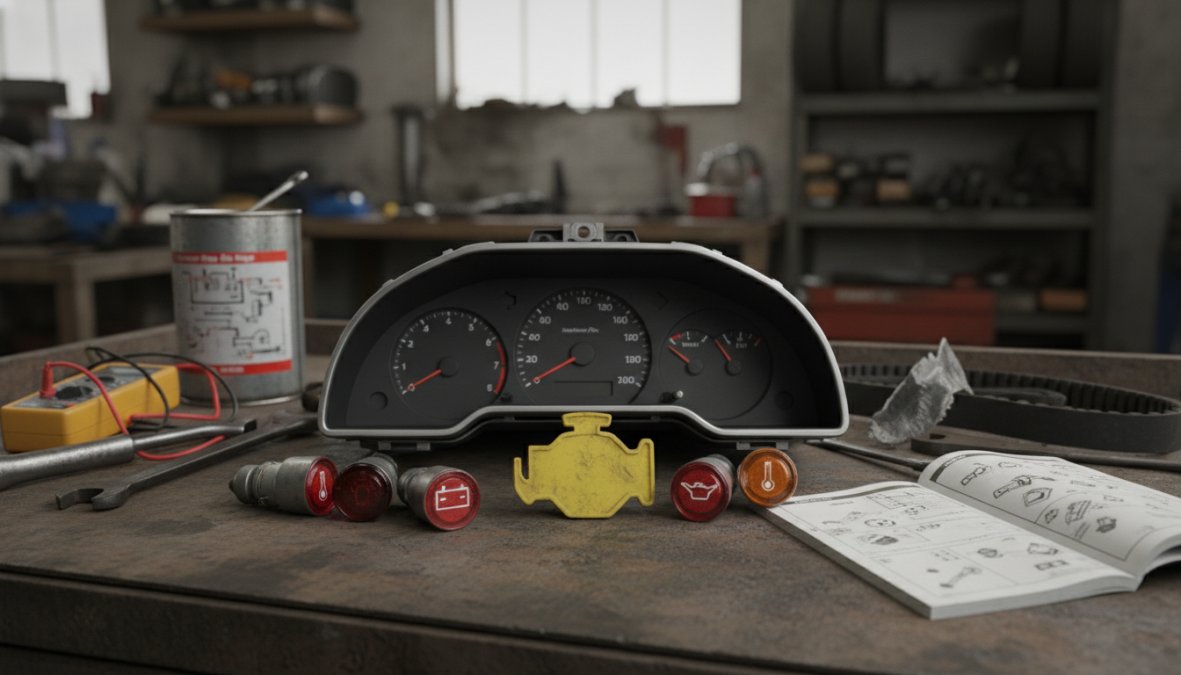
Professional illustration showing Close for signs your car needs repair
Close-up of a car dashboard illuminated with multiple warning lights including a check engine light glowing amber, photographed from the driver's seat in a dimly lit car interior with the steering wheel visible in the foreground
Modern vehicles monitor dozens of systems simultaneously, from the emissions system and fuel pump to the transmission and battery voltage. When a sensor detects a reading outside normal parameters, it triggers a fault code stored in the engine control unit. That fault code is what causes the warning light to appear.
The colour of the light matters:
Red lights indicate an immediate problem requiring you to stop safely as soon as possible. Oil pressure and engine temperature warnings fall into this category.
Amber lights signal a fault that needs attention soon but does not require an immediate stop. The check engine light and traction control warnings typically appear in amber.
Blue or green lights are informational, confirming a system is active rather than warning of a fault.
Using an OBDII Reader to Diagnose Warning Lights at Home
An OBDII reader is a diagnostic tool that connects to your vehicle's onboard diagnostic port, usually located beneath the steering column, and reads the fault codes stored by the engine control unit. Every car manufactured after 1996 is legally required to have an OBDII port, making this one of the most universally applicable DIY diagnostic tools available.
Consumer-grade options like the FIXD OBD2 Scanner translate fault codes into plain English via a smartphone app, providing a description of the fault and an estimated repair cost range. For drivers who want deeper access, the BlueDriver Bluetooth Pro OBDII Scan Tool reads not just engine codes but also ABS, SRS, and transmission codes, and generates vehicle-specific repair reports without a subscription fee.
Using an OBDII reader does not replace a professional diagnosis, but it tells you whether a warning light corresponds to a minor sensor fault or a more serious mechanical issue. That information helps you prioritise.
Which Warning Lights Need Immediate Attention
Stop driving immediately if any of these illuminate: the red oil pressure warning, the engine temperature warning (indicating overheating), the red battery warning, or the brake system warning light. These indicate conditions that can cause irreversible engine damage or a loss of vehicle control within minutes.
Strange Car Noises and What They Mean
Sound is one of the most reliable early indicators of a developing mechanical problem. The challenge is that many drivers habituate to gradual changes in their car's noise profile, which means a noise that should prompt immediate action gets normalised over weeks or months.
Understanding strange car noises and what they mean starts with identifying when the noise occurs: at speed, during braking, when turning, on startup, or continuously. Each timing pattern points to a different system.
Squealing and Grinding: What Your Brakes Are Telling You
Squealing during braking is almost always the brake pad wear indicator doing exactly what it was designed to do: creating a high-pitched noise to alert you that the pad material is running low. This is not a sign of imminent failure. It is a scheduled warning. Act on it within a few hundred miles.
Grinding during braking is a different matter entirely. Grinding means the pad material has worn through completely and metal is contacting metal. At this point, the brake disc itself is being damaged with every stop. This requires immediate professional attention.
A squealing noise when the brakes are not applied, particularly at lower speeds, can indicate a worn wheel bearing. Wheel bearings that fail completely can cause a wheel to seize, which is a serious safety risk.
Knocking, Rattling and Clunking Sounds Explained
A deep knocking from the engine, particularly under load or acceleration, often indicates worn engine bearings or low oil pressure. This is a high-severity symptom. Continuing to drive with engine knock risks catastrophic internal damage.
Rattling from underneath the car at low speeds typically points to a loose exhaust heat shield or a failing catalytic converter. Neither is immediately dangerous, but both will worsen and become more expensive to address if left.
Clunking when going over bumps or during cornering suggests worn suspension components, such as ball joints, anti-roll bar links, or shock absorbers. Worn steering components affect both ride quality and handling precision.
When to Replace Car Brakes: Performance Signs You Should Not Ignore
Knowing when to replace car brakes goes beyond listening for squealing. Brake performance changes gradually, and drivers often adapt to reduced stopping power without recognising it as a problem.
Watch for these specific signs:
The brake pedal feels soft, spongy, or travels further than usual before the car slows
The car pulls to one side under braking, indicating uneven pad wear or a sticking calliper
Vibration through the brake pedal, which suggests a warped disc rotor
The handbrake requires a noticeably higher pull to hold the car on an incline
Visible brake dust accumulation on one wheel significantly more than others
Brake fluid also degrades over time. As brake fluid absorbs moisture, its boiling point drops, which reduces braking performance under heavy use. According to the DVSA's guidance on vehicle safety and roadworthiness, brake condition is one of the most common reasons for MOT failures in the UK. Checking brake fluid condition as part of a regular car maintenance checklist is straightforward and inexpensive.
Key TakeawayIf your stopping distance feels longer than it used to, trust that instinct. Increased stopping distance is a measurable sign of brake degradation, even when no noise is present.
Fluid Leaks, Strange Odours and Overheating
Fluid leaks are among the clearest signs your car needs repair, yet they are frequently overlooked because they appear when the car is parked rather than during driving. Making a habit of checking the ground beneath your car after it has been stationary for a few hours takes seconds and can catch serious problems early.
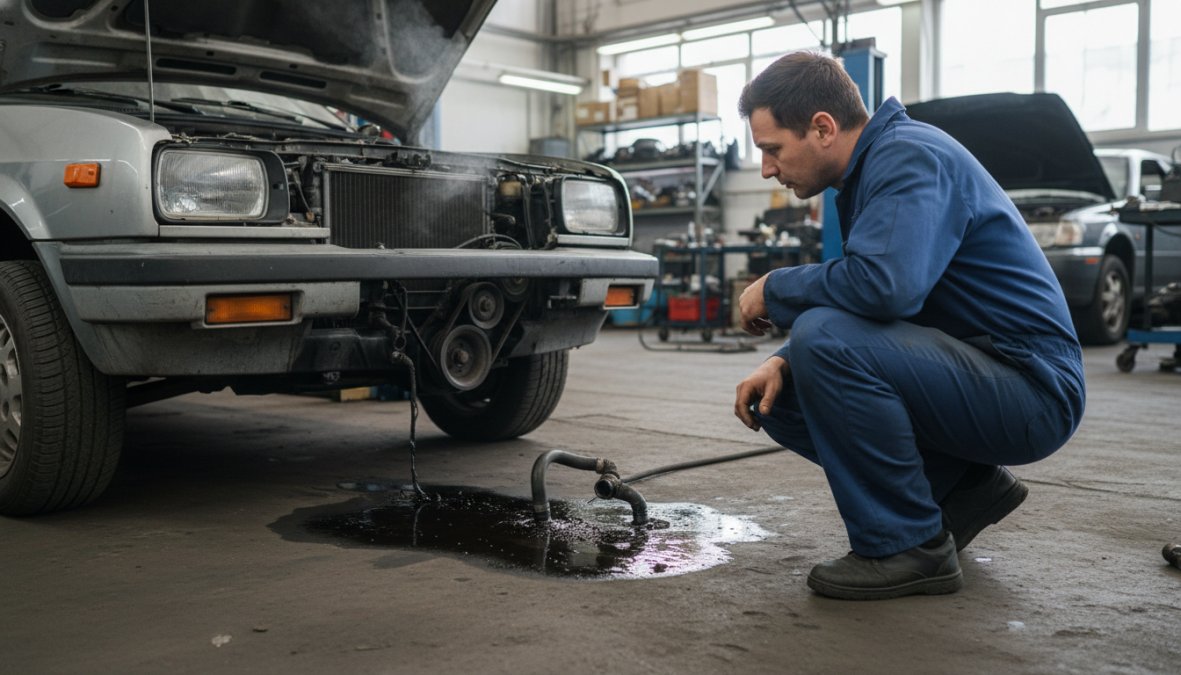
Professional illustration showing mechanic and garage and crouching concepts for signs your car needs repair
A mechanic in blue overalls crouching beside a car in a well-lit garage workshop, closely inspecting a dark fluid stain on the concrete floor beneath the vehicle's engine bay
Identifying Coolant, Transmission Fluid and Oil Leaks
Different fluids have distinct colours and textures, which makes identification straightforward once you know what to look for:
High, leads directly to overheating and head gasket failure
Transmission fluid
Red or dark brown
Oily
Centre of vehicle
Medium-High, low fluid causes overheating and slipping inside the gearbox
Power steering fluid
Clear to light brown
Thin, oily
Front, near steering rack
Medium, progressive loss causes heavy steering and pump failure
Brake fluid
Clear to light yellow
Thin, slightly slippery
Near wheels or brake master cylinder
Critical, any brake fluid loss affects stopping performance immediately
Fuel
Clear to pale yellow
Very thin, strong petrol smell
Anywhere under the vehicle
Critical, fire risk; do not drive
Severity Triage: What to Do Based on What You Find
Not all fluid leaks require the same response. The appropriate action depends on which fluid is leaking, how much is present, and whether the vehicle is currently driveable.
Stop driving immediately if you find:
Any brake fluid leak near a wheel or under the bonnet near the master cylinder. Even a small loss of brake fluid can introduce air into the hydraulic system, causing a soft or spongy pedal. This is a safety-critical fault.
Fuel on the ground beneath the vehicle. Fuel leaks present a fire risk. Do not start the engine.
A large coolant puddle combined with a temperature gauge reading above normal. The engine may already be overheating. Driving further risks head gasket failure.
Book a professional inspection within 24-48 hours if you find:
A consistent oil drip of more than a few drops after overnight parking. Small oil leaks worsen over time and can drop oil pressure to dangerous levels without warning.
Any transmission fluid on the ground. Transmission repairs are expensive; catching a seal leak early is significantly cheaper than addressing gearbox damage from running low on fluid.
Power steering fluid loss accompanied by heavier-than-normal steering feel.
Monitor and check fluid levels weekly if you find:
An occasional small spot of oil that does not increase in size. Some older engines with high mileage seep slightly from gaskets. This is worth watching but does not require immediate action if levels remain stable.
A small coolant drip that has been consistent and unchanged for some time, with the coolant reservoir remaining at the correct level. This may indicate condensation rather than a true leak, but confirm by checking the reservoir level at the same time each week.
DIY Fluid Checks You Can Do at Home
Several fluid checks require no tools and take under five minutes. These are worth doing monthly as part of a basic car maintenance routine:
Engine oil: With the engine cold and the car on level ground, remove the dipstick, wipe it clean, reinsert fully, and withdraw again. The oil level should sit between the minimum and maximum markers. Oil that is very dark and gritty is overdue for a change. Oil that appears milky or foamy may indicate coolant contamination, a serious symptom requiring professional diagnosis.
Coolant: Check the coolant reservoir (the translucent plastic tank connected to the radiator) when the engine is cold. The level should sit between the MIN and MAX markings. Never open the radiator cap on a hot engine, pressurised coolant can cause serious burns.
Brake fluid: The brake fluid reservoir is typically located on top of the brake master cylinder under the bonnet. The level should be between MIN and MAX. Brake fluid that has darkened significantly from its original clear or pale yellow colour has absorbed moisture and should be replaced, degraded brake fluid has a lower boiling point, which reduces braking performance under sustained heavy use.
Power steering fluid: On vehicles with hydraulic power steering (not electric), the reservoir is usually near the front of the engine bay. Check the level with the engine warm for an accurate reading.
Pro TipIf you find a fluid leak but are unsure which fluid it is, place a clean piece of white cardboard or paper under the car overnight. The colour and location of the stain on the paper will help you identify the fluid using the table above before you contact a mechanic.
What That Burning or Rotten Egg Smell Really Means
Smells are often the first indication of a fluid leak or a developing fault, because many automotive fluids produce a distinctive odour when they contact hot engine or exhaust components.
Burning rubber smell: Most commonly caused by a slipping or misaligned drive belt contacting a hot surface, or a brake calliper that is sticking and overheating. A sticking calliper applies constant friction to the disc even when the brake pedal is not pressed, which generates significant heat. If the burning rubber smell is accompanied by a wheel that feels hotter than the others after a short drive, a sticking calliper is the likely cause.
Sweet, syrupy smell: Almost always indicates coolant leaking onto hot engine components. Coolant contains ethylene glycol, which produces a distinctive sweet smell when it burns off. This smell should be taken seriously, it means coolant is escaping from the system and the engine is at risk of overheating.
Sharp, acrid burning smell from the cabin: Points to an electrical fault, a wire with damaged insulation contacting a hot surface, or an overloaded circuit. Electrical burning smells inside the cabin warrant immediate investigation. In rare cases they can indicate a fire risk.
Rotten egg or sulphur smell from the exhaust: Associated with a failing catalytic converter or a fuel system running too rich (delivering more fuel than the engine can burn). The catalytic converter uses a chemical reaction to convert harmful exhaust gases; when it fails, unburned sulphur compounds pass through unprocessed. This fault will typically trigger the check engine light and will cause an MOT emissions failure. It is not an immediate safety emergency, but it will worsen fuel economy and the repair cost increases if the converter is left to fail completely.
Petrol smell inside the cabin or around the car: A fuel smell that is present when the engine is running or immediately after it is switched off can indicate a fuel injector leak, a damaged fuel line, or a failing fuel pressure regulator. Any persistent fuel smell should be investigated promptly given the fire risk.
Overheating: What to Do in the Moment
If the temperature gauge climbs into the red while you are driving:
Turn off the air conditioning immediately, it adds load to the engine.
If the temperature does not drop within a minute or two, pull over safely and switch off the engine.
Do not open the bonnet until the engine has cooled for at least 30 minutes. Pressurised coolant in a hot system can cause severe burns.
Do not add cold water to a hot radiator, thermal shock can crack the engine block or cylinder head.
Once cooled, check the coolant reservoir level. If it is empty or very low, the car needs professional attention before it is driven further.
According to the RAC's vehicle breakdown and overheating guidance, overheating is one of the more serious breakdown scenarios because the damage it causes, warped heads, blown gaskets, cracked blocks, is often not immediately visible and can worsen if the vehicle is driven even a short distance after the temperature warning appears.
Steering Problems, Stalling and Acceleration Issues
Steering and acceleration problems are two categories where the line between "monitor it" and "stop driving immediately" is particularly important to understand.
Stalling at junctions or during low-speed manoeuvring points to ignition problems, a failing fuel pump, a dirty throttle body, or issues with the idle control system. Occasional stalling in cold weather on older vehicles is less alarming. Frequent stalling on a well-maintained modern car is a fault that needs diagnosis.
Acceleration issues, including hesitation, surging, or a noticeable flat spot when pressing the accelerator, often relate to the fuel delivery system, spark plugs, or the mass airflow sensor. These faults are typically logged as fault codes that an OBDII reader will detect.
Steering problems deserve particular attention. A car that drifts to one side without steering input suggests alignment issues or uneven tyre wear. A steering wheel that vibrates at motorway speeds indicates wheel balance problems or worn suspension components. Heavy, unresponsive steering on a vehicle with power steering often means low power steering fluid or a failing power steering pump.
What most guides miss here is the interaction between alignment issues and tyre wear. Misalignment does not just affect handling. It accelerates tyre wear unevenly, meaning a tyre that should last 30,000 miles might be worn out at 15,000. Fixing alignment early protects the tyres.
Battery, Electrical and Ignition Warning Signs
Battery and electrical faults are the most common cause of vehicles failing to start, and they are also among the easiest to catch early if you know what to look for.
A battery that is approaching the end of its service life typically shows these symptoms before it fails completely:
Slow, laboured engine cranking on startup, particularly in cold weather
Dimming headlights or interior lights when the engine is idling
The battery warning light illuminating on the dashboard
Electrical accessories behaving erratically (windows moving slowly, radio resetting)
The battery warning light does not always indicate a failed battery. It can also point to a failing alternator, which is the component responsible for recharging the battery while the engine runs. A battery with low voltage that is not being recharged by a healthy alternator will drain quickly regardless of its age.
Corrosion on battery terminals, visible as a white or blue-green powdery build-up around the terminal connections, increases electrical resistance and reduces the battery's ability to deliver current. Cleaning terminal corrosion is a straightforward DIY task that can extend battery life.
According to the AA's vehicle battery and electrical system guidance, battery failure is one of the leading causes of breakdown callouts in the UK, with cold weather significantly accelerating the rate of failure in batteries that are already weakened.
Your Car Maintenance Checklist: DIY Checks vs Professional Repairs
A practical car maintenance checklist separates the checks any driver can do from the work that genuinely requires professional diagnostic equipment and mechanical expertise.
DIY checks you can do monthly:
Check engine oil level and condition (dipstick check, 2 minutes)
Check coolant level in the reservoir (cold engine only)
Check tyre pressures including the spare
Inspect tyre tread depth visually and with a gauge
Check all exterior lights are functioning
Inspect wiper blades for streaking or splitting
Check brake fluid level in the reservoir
Look beneath the car for fluid stains after overnight parking
Faults that require a professional mechanic:
Any dashboard warning light that persists after restarting the engine
Brake system faults, including spongy pedal feel or pulling under braking
Steering or suspension noises
Overheating or coolant loss
Electrical faults beyond bulb replacement
Engine noises including knocking or rattling
Pro TipDownload a free vehicle management app like CARFAX Car Care or Simply Auto to set mileage-based maintenance reminders. These apps track service history and alert you when scheduled maintenance is due, which removes the guesswork from interval-based servicing.
How Vehicle Age and Mileage Change the Repair Decision
Vehicle age and mileage are the most important context factors when assessing signs your car needs repair. A five-year-old car with 40,000 miles has very different risk thresholds from a twelve-year-old car with 110,000 miles.
On higher-mileage vehicles, multiple systems are often approaching their service limits simultaneously. A worn timing belt on a 100,000-mile engine is not a standalone problem. It is a prompt to assess the water pump, tensioners, and ancillary belts at the same time, since the labour cost of accessing those components is shared. Addressing them together is significantly cheaper than returning to the same job twice.
For newer vehicles, modern sensor technology means that faults are often detected and logged before they produce any noticeable symptom. This is where an OBDII reader provides genuine value: it surfaces pending fault codes that have not yet triggered a warning light, giving you advance notice of developing issues.
When to Book a Professional Mechanic in Kettering
If you are based in Kettering or the surrounding areas of Northamptonshire and you have identified one or more of the warning signs covered in this guide, the next step is a professional diagnostic inspection. Not every symptom requires an expensive repair. Many can be resolved quickly and affordably when caught early. What they all require is an accurate diagnosis.
Kettering Motorist Centre provides expert diagnostic and repair services for all vehicle types, including specialist expertise for electric and hybrid vehicles. Booking is straightforward through the hassle-free online system, with no payment required at the point of booking for MOT and tyre appointments. For drivers who have spotted a warning sign and are unsure of its severity, a diagnostic check is the most efficient way to get a clear answer.
Spotting the signs your car needs repair early is the difference between a manageable repair bill and a serious mechanical failure. Kettering Motorist Centre offers expert diagnostic and repair services for drivers across Kettering and Northamptonshire, with a transparent online booking process and no upfront payment required for MOT and tyre appointments. Book your MOT with Kettering Motorist Centre and get a clear, professional assessment of your vehicle's condition before minor issues become costly problems.
Frequently Asked Questions
What are the most common signs that a car needs repair?
The most common signs your car needs repair include illuminated dashboard warning lights such as the check engine light, unusual noises like squealing or grinding brakes, visible fluid leaks beneath the vehicle, strange odours such as burning or rotten egg smells, difficulty starting, stalling, and changes in steering or handling. Catching these signs early through regular preventative maintenance can prevent minor issues from becoming costly mechanical failures.
Can I keep driving if my check engine light is on?
It depends on whether the light is steady or flashing. A steady check engine light often indicates a non-urgent fault in the emissions system or a sensor issue, but it still warrants a diagnostic check soon. A flashing check engine light signals a more serious problem — such as a misfire that can damage the catalytic converter — and you should visit a professional mechanic promptly. Using an OBDII reader can help identify the fault code before your appointment.
What sounds should I never ignore in my car?
Never ignore squealing or grinding noises when braking, as these typically indicate worn brake pads that need immediate replacement. A knocking sound from the engine can signal low oil pressure or serious internal damage. Clunking when turning often points to worn steering components or CV joints. A high-pitched whine that changes with speed may indicate a failing wheel bearing. These strange car noises and what they mean can vary, but all warrant a professional inspection without delay.
How do I know if my car problem is serious enough to stop driving?
Stop driving immediately if you notice overheating (temperature gauge in the red), a loss of brake pressure, a flashing warning light, heavy fluid leaks, or a sudden loss of steering control. These represent roadside emergency-level risks. Less urgent but still important signs — such as a steady check engine light or minor fluid seepage — allow you to drive carefully to an auto repair shop. When in doubt, book a diagnostic check rather than risk further mechanical failure.
How often should I get my car inspected to prevent major repairs?
As a general rule, a full vehicle service once a year or every 12,000 miles — whichever comes first — is a solid baseline for preventative maintenance. Older vehicles or those with higher mileage may benefit from more frequent checks. In the UK, an annual MOT is a legal requirement and a useful safety net, but it does not replace regular servicing. Keeping a car maintenance checklist and monitoring fluid levels, tyre condition, and brake performance between services can catch early warning signs before they escalate.
When is it time to replace car brakes?
You should consider brake replacement when you hear persistent squealing or grinding when braking, feel vibration through the brake pedal, notice the car pulling to one side, or experience a longer stopping distance than usual. Most brake pads wear down after 25,000 to 60,000 miles depending on driving style and vehicle type. If your brake warning light illuminates, treat it as urgent. A professional mechanic can measure pad thickness and assess disc condition to confirm when to replace car brakes safely.
Your booking Failed
Please try again or please call 01536 410142
Thank you for placing a booking with Kettering Motorist Centre Limited for vehicle
PLEASE TAKE YOUR BOOKING REFERENCE NUMBER WITH YOU TO THE MOT CENTRE
Your items
MOT Test
×
Terms and Conditions
These terms and conditions form the basis on which you can visit and use this website. Please read them carefully as they contain important information.
General terms and conditions
This website is owned and operated by Kettering Motorist Centre Ltd (company registration number: 4485858) operating at Trafalgar Road, Kettering, Northamptonshire, NN16 8DB (the "MOT Centre", the "Company", "we" or "us"). If you have any queries about these terms and conditions or if you have any comments or complaints on or about this website, you can contact us at [email protected] or 01536 410142.
The website is to promote and offer for sale the products and services of Kettering Motorist Centre Limited.
1. The contract between us
This website does not take payment for products or services online. The website enables you to view products and services online and to make a booking for later delivery and payment. The vehicle and provision of other products and services promoted by this website and the payment by you of the price of those products and services will take place at the MOT Centre. The booking does not constitute a contract.
The booking process on the site provides details of the booked MOT order. Please take the time to read and check your booking. It is your responsibility to make sure the order is correct and for the correct vehicle.
2. Ownership of rights
All rights, including copyright, in this website are owned by or licensed to the Company. Any use of this website or its contents, including copying or storing it or them in whole or part, other than for your own personal, non commercial use, is prohibited without our permission. You may not modify, distribute or repost anything on this website for any purpose.
3. Accuracy of content
We have taken care in the preparation of the content of this website, in particular to ensure that prices quoted are correct at the time of publishing and that all goods have been fairly described. However, bookings will only be accepted if there are no material errors in the description of the goods or their prices as advertised on this website. Any weights, dimensions and capacities given about the goods are approximate only.
4. Damage to your computer
We try to ensure that this website is free from viruses or defects. However, we cannot guarantee that your use of this website or any websites accessible through it will not cause damage to your computer. It is your responsibility to ensure that the right equipment is available to use the website. Except in the case of negligence on our part, we will not be liable to any person for any loss or damage which may arise to computer equipment as a result of using this website.
5. Availability
All bookings are subject to acceptance and availability. If the MOT date you have requested are is not available, the Centre will contact you by e-mail or phone. You will have the option either to wait until another slot is available or to cancel your booking.
6. Booking errors
You are able to correct errors on your booking up to the point on which you click on “Place Booking” during the booking process.
7. Price
The prices payable for goods that you order are as set out in our website. All prices are inclusive of VAT at the current rates and are correct at the time of entering information, errors and omissions excepted.
Whenever it is not possible to accept your booking to buy goods of the specification and description at the price indicated, the MOT Centre will advise you by email or phone or when you visit the centre.
8. Payment terms
You will be required to pay for the goods or services to the Centre at time of a completed MOT.
9. Delivery charges
N/A
10. Cancellation
The MOT Centre reserves the right to cancel the booking if:
10.1 There is insufficient stock to deliver the goods you have booked.
10.2 One or more of the goods you booked was listed at an incorrect price.
If your booking is cancelled the Centre will notify you by e-mail or phone.
You have the right to cancel your booking at any time up to the point of the MOT. If you do cancel your booking you should inform the centre by phone.
11. Liability
Notwithstanding the foregoing, nothing in these terms and conditions is intended to limit any rights you might have as a consumer under applicable local law or other statutory rights that may not be excluded nor in any way to exclude or limit our liability to you for any death or personal injury resulting from our negligence.
12. Notices
Unless otherwise expressly stated in these terms and conditions, all notices from you to us must be in writing and sent to our contact address given above and all notices from us to you will be displayed on our website from time to time.
13. Changes to legal notices
We reserve the right to change these terms and conditions from time to time and you should look through them as often as possible.
14. Law, jurisdiction and language
This website, any content contained therein and any contract brought into being as a result of usage of this website are governed by and construed in accordance with English law. Parties to any such contract agree to submit to the exclusive jurisdiction of the courts of England and Wales.
15. Invalidity
If any part of these terms and conditions is unenforceable (including any provision in which we exclude our liability to you) the enforceability of any other part of these conditions will not be affected.
16. Privacy
You acknowledge and agree to be bound by the terms of our privacy policy
17. Third party rights
Nothing in this Agreement is intended to, nor shall it confer any rights on a third party.