Blog >
Why Do Car Brakes Squeal? Causes, Fixes & When to Act Why Do Car Brakes Squeal? Causes, Fixes & When to Act
17 May 2026
Table of Contents
Last Updated: May 17, 2026
Why Do Car Brakes Squeal? The Most Common Causes Explained
Squealing brakes are one of the most common reasons drivers in Northamptonshire book an unplanned garage visit, and understanding why do car brakes squeal can mean the difference between a quick fix and a costly repair. At Kettering Motorist Centre, we see brake-related issues every single week, and the causes follow predictable patterns. Below, we'll walk you through exactly what's happening inside your brake system when that high-pitched squeal kicks in, and what to do about it before the noise turns into something far more serious.
Brake squeal is an audible warning produced when components within the disc brake or drum brake system vibrate at high frequency during friction contact. It is not always a sign of immediate danger, but it is always a sign worth investigating.
Worn Brake Pads and Mechanical Wear Indicators
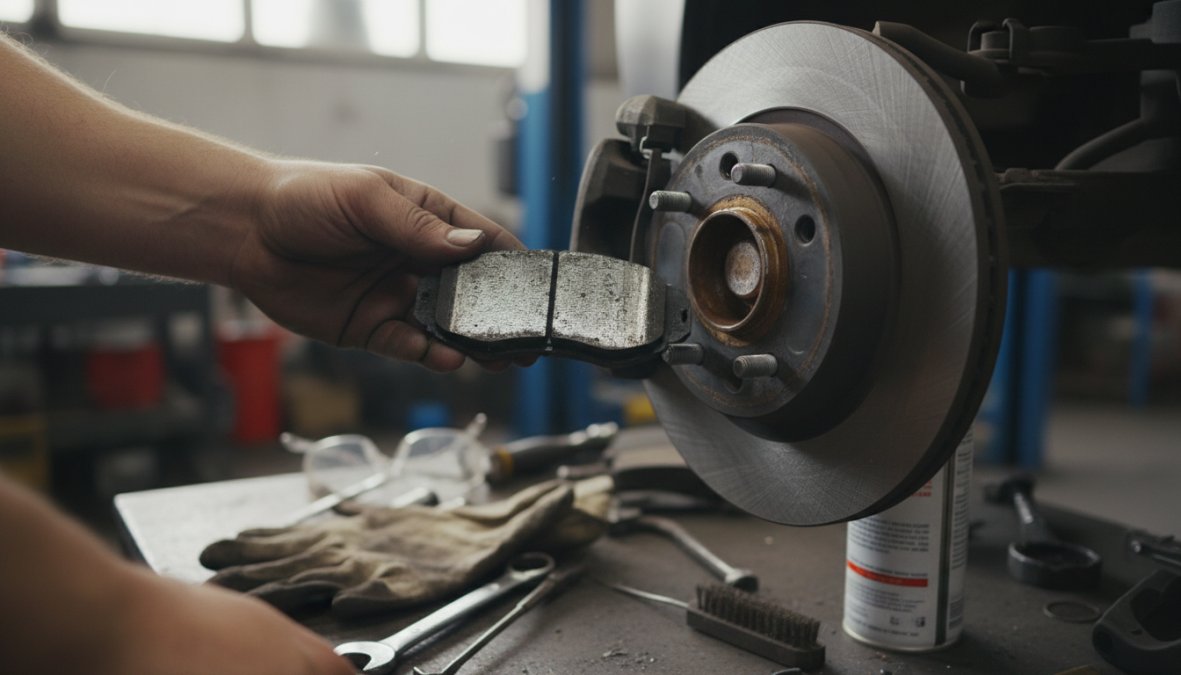
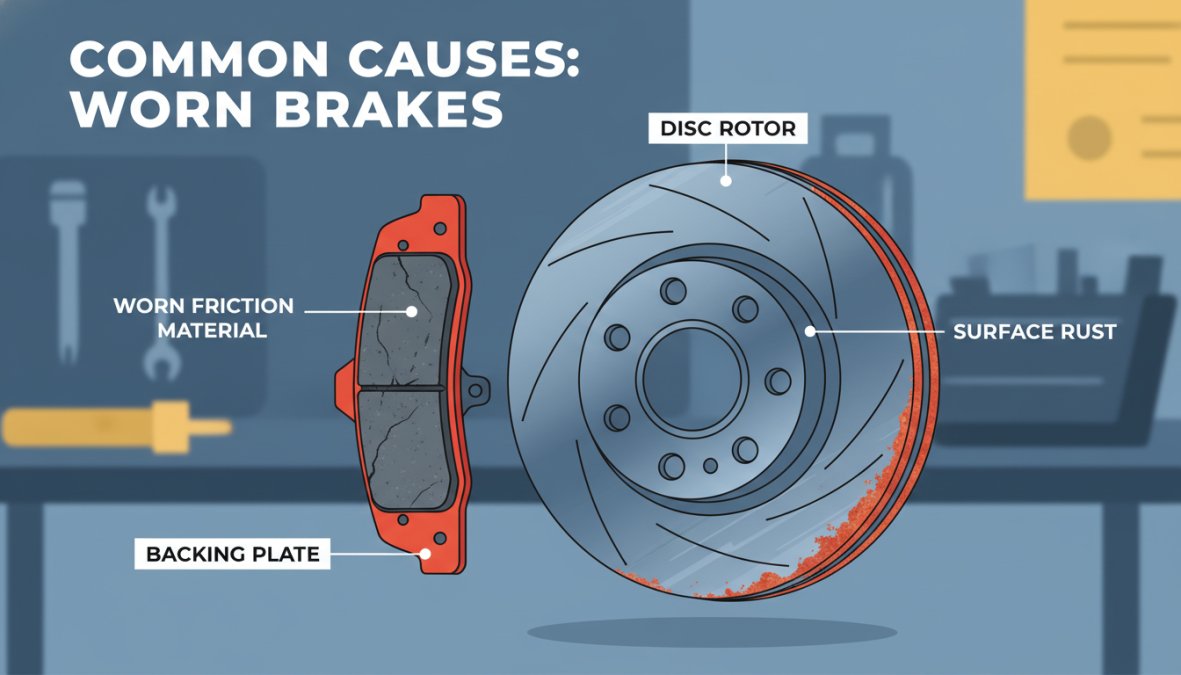
The most common cause of brake squealing is worn brake pads reaching the end of their service life. Most modern brake pads include a small metal tab called a mechanical wear indicator, which is engineered to contact the rotor surface once the friction material wears down to a critical threshold. When that metal tab scrapes against the spinning rotor, it produces a deliberate, high-pitched squeal. This is not a fault. It is a safety feature designed to alert you before metal-on-metal contact causes rotor damage.
Ignoring this warning is where drivers make a costly mistake. Once the pad friction material is fully gone, the metal backing plate grinds directly against the rotor. At that point, you're no longer looking at a pad replacement. You're looking at rotor replacement too, and potentially caliper damage.
Watch OutContinuing to drive after the wear indicator squeal begins can turn a straightforward pad replacement into a full brake assembly repair. The window between "squeal" and "grind" is often shorter than drivers expect, sometimes just a few hundred miles.
Glazed Pads or Rotors Reducing Friction
Glazed brake pads are less talked about but surprisingly common, particularly on vehicles driven frequently at low speeds or in stop-start urban traffic. When brake pads overheat repeatedly without reaching the temperatures needed to properly bed in, the friction material hardens and develops a smooth, glassy surface. The same process can affect rotors.
A glazed pad or rotor reduces the friction coefficient, which compromises stopping distance and produces a high-pitched squeal or scraping sound during braking. The fix is not always replacement. In mild cases, a controlled brake bedding-in procedure can restore the surface. In severe cases, the pads and rotors need replacing.
Moisture, Rust, and Overnight Buildup
Here's something most guides skip over: a perfectly healthy brake system can squeal after sitting overnight or through a wet Kettering morning. When moisture settles on the rotor surface, a thin layer of rust forms quickly on the exposed iron. The first few brake applications scrape that rust off, producing a brief squeal or scraping sound.
This type of noise typically disappears within a mile or two of normal driving. If the squeal persists beyond that, moisture is not the culprit and something else needs attention. According to the Institute of the Motor Industry's guidance on brake maintenance, surface rust on rotors is a normal environmental response, not a defect, provided it clears quickly.
Contamination, Debris, and Lack of Lubrication on Hardware
Debris contamination is an underrated cause of squeaky brakes. Small stones, grit, or road debris can become lodged between the pad and rotor, creating a persistent scraping or squealing noise. This is more common in Northamptonshire's rural and semi-rural roads where loose stone and agricultural debris are frequent.
Separately, the brake hardware, specifically the shims, backing plates, and caliper slide pins, requires lubrication to function without noise. Shims are thin metal or rubber layers bonded to the backing plate of a brake pad, designed to dampen vibration between the pad and caliper. When these shims degrade or when slide pins run dry, the pad vibrates during contact with the rotor and squeals. A technician will apply brake-specific lubricant to these contact points during a proper brake service.
Is a Squealing Brake Always a Safety Warning? Separating Normal from Critical
Not every squeal demands an emergency garage visit. Brake squeal exists on a spectrum, and knowing where your noise sits on that spectrum is genuinely useful, and something most guides handle too vaguely to be actionable. The distinction between a normal environmental noise and a critical mechanical failure comes down to three variables: duration, consistency, and accompanying symptoms.
The Noise Spectrum: From Harmless to Urgent
Category 1, Normal, no action required:
Morning or post-rain squeal that clears within 1-2 miles. Cast iron rotors oxidise rapidly when exposed to moisture. The thin rust layer that forms overnight is abrasive enough to produce a brief squeal or scrape on the first few brake applications. Once the pads have swept the rotor surface clean, the noise stops entirely. This is a normal property of ferrous metal, not a defect. If it clears consistently and braking performance is unchanged, no action is needed.
Mild squeal from new pads during the first 100-300 miles. New friction material and a freshly machined or replaced rotor surface have microscopic irregularities that produce vibration until a transfer layer of pad material bonds evenly to the rotor face. This is the bedding-in phase. The squeal is typically intermittent, occurs at low brake pressures, and diminishes progressively as mileage accumulates.
Low-speed squeal from certain pad compounds. Semi-metallic brake pads, which use a higher proportion of steel fibre in the friction material, are inherently noisier than organic or ceramic compounds, particularly at low speeds and low temperatures. Some vehicles are factory-fitted with semi-metallic pads because their higher heat tolerance suits the vehicle's braking demands. The noise is a trade-off, not a fault. If the squeal only occurs below approximately 10 mph and disappears under moderate braking, pad compound is the likely explanation.
Category 2, Monitor closely, book an inspection within 1-2 weeks:
Squeal that appears consistently but clears under firm braking. This pattern, noise under light pedal pressure that disappears when you brake harder, is a classic indicator of worn or missing shims on the pad backing plate. Shims are the vibration-damping layer between the pad and caliper bracket. When they degrade, the pad resonates at low contact pressures. Under harder braking, the clamping force suppresses the vibration. The brakes are still functional, but the shims need replacing at the next service.
Squeal that has been present for more than a week without worsening. Persistent but stable squeal with no change in stopping distance or pedal feel warrants a visual pad thickness check. If the friction material is above 3mm and no other symptoms are present, the cause is likely glazing or a pad compound issue rather than imminent failure.
Category 3, Critical, requires immediate professional inspection:
Grinding, scraping, or metallic crunching sounds. This is the sound of metal-on-metal contact. The friction material is gone. The steel backing plate of the pad is now contacting the rotor directly. Every brake application at this stage scores the rotor surface. What would have been a straightforward pad replacement is now a pad-and-rotor replacement at minimum, and potentially caliper damage if the piston has over-extended.
Squeal accompanied by the vehicle pulling to one side under braking. Directional pull during braking indicates unequal braking force between the left and right wheels on the same axle. The most common causes are a seized caliper slide pin (keeping one pad in constant contact with the rotor) or a caliper piston that is not releasing fully. Both are mechanical failures, not noise issues, and they compromise vehicle control.
Any brake noise combined with a longer stopping distance or a soft, spongy pedal. A change in pedal feel or stopping performance means the hydraulic system or friction components are compromised. Possible causes include brake fluid contamination, air in the brake lines, a failing master cylinder, or pads worn past the point of effective friction. This is a safety-critical situation.
Brake warning light illuminated alongside any noise. The amber or red brake warning light on the dashboard monitors brake fluid level. A drop in fluid level can indicate a hydraulic leak or critically worn pads (as the caliper pistons extend further, displacing fluid from the reservoir). Either cause requires immediate diagnosis.
The Practical Rule
If the noise is new, consistent, getting worse, or accompanied by any change in braking behaviour, treat it as critical regardless of which category it appears to fit. Brake systems degrade progressively, and a noise that sits in Category 2 today can move to Category 3 within a few hundred miles if the underlying cause is wear-related.
The single most reliable self-check you can perform is this: after a week of noticing the squeal, ask yourself whether it is occurring more frequently, at higher speeds, or under lighter pedal pressure than when you first noticed it. Escalation in any of those three dimensions means the cause is active wear, not a static environmental or compound issue.
Watch OutBrake fluid level changes, a pulsating pedal, or visible brake dust buildup concentrated on one wheel more than the others are additional warning signs that point to a mechanical problem rather than a noise-only issue. Do not wait for the squeal to worsen before acting on these secondary symptoms.
Why Do Car Brakes Squeal After New Pads Are Fitted?
New brake pads squeal because the friction material and rotor surfaces have not yet conformed to each other. This is normal and expected, not a sign of a faulty installation.
When fresh brake pads are installed, both the pad surface and the rotor surface are relatively uneven at a microscopic level. The bedding-in process creates a thin, even transfer layer of pad material across the rotor face, which is what gives disc brakes their optimal friction performance. Until that layer forms, vibration between the two surfaces produces squeal.
Brake Bedding-In Procedures: How to Silence New Brakes
Bedding in new brake pads properly is one of those things most garages don't explain clearly, and it makes a real difference.
Standard bedding-in procedure:
Find a safe, quiet road with minimal traffic.
Accelerate to approximately 30 mph.
Apply moderate brake pressure to slow to around 5 mph. Do not come to a complete stop.
Allow the brakes to cool for 60-90 seconds by driving slowly without braking.
Repeat this cycle 6-8 times.
Then accelerate to 50 mph and apply firmer brake pressure, again slowing to 5 mph without stopping.
Repeat the 50 mph cycle 4-6 times, allowing cooling intervals between each.
After the procedure, avoid heavy braking for at least 20 minutes to let the components cool fully.
Pro TipAvoid coming to a complete stop during the bedding-in process. Stopping while the pads are hot can transfer an uneven deposit of friction material onto the rotor, which creates a pulsating brake pedal rather than solving the squeal.
This procedure applies to most standard organic and semi-metallic pad compounds. High-performance ceramic pads may require a slightly extended cycle, but the principle is the same.
How to Stop Brakes from Squeaking: A Step-by-Step Guide
The right fix depends entirely on the cause. A diagnostic approach works better than guessing.
Step 1: Identify the noise pattern. Does it happen on initial braking only, or throughout the stop? Does it clear after the first few applications? Is it present on one side or both?
Step 2: Check pad thickness visually. Look through the wheel spokes at the brake caliper. The outer pad is usually visible. If the friction material is less than 3mm thick, replacement is overdue.
Step 3: Inspect for debris. A stone or piece of grit lodged between pad and rotor often causes a rhythmic scraping noise that changes frequency with vehicle speed. A visual inspection or a quick listen while the car rolls slowly can identify this.
Step 4: Check rotor condition. Deep grooves, heavy scoring, or a pronounced lip at the rotor edge indicate the rotor needs machining or replacement alongside the pads.
Step 5: Assess lubrication points. Slide pin seizure is a common cause of uneven pad wear and persistent squeal. A seized caliper slide pin causes the pad to drag constantly against the rotor. This requires caliper servicing.
Step 6: Apply brake shim lubricant. During any pad replacement, apply a thin layer of copper grease or ceramic brake lubricant to the backing plate and caliper contact points. Never apply lubricant to the friction surface itself.
DIY vs. Professional Repair: Cost Analysis
The honest answer here is that most brake work is accessible to a competent home mechanic, but several failure modes are not obvious without proper equipment.
Job | DIY Feasibility | Approximate Parts Cost | Professional Labour |
|---|
Pad replacement (axle) | High | £30-£80 | £60-£120 |
Pad + rotor replacement | Medium | £80-£200 | £100-£200 |
Caliper slide pin service | Medium | £5-£15 | £40-£80 |
Caliper replacement | Low | £60-£150 | £80-£150 |
Brake fluid change | Medium | £10-£20 | £40-£70 |
Costs are approximate and vary by vehicle make and model.
The DIY route saves money on labour but carries real risk if brake hardware issues or caliper problems are missed. A professional inspection also picks up issues like uneven rotor wear, brake fluid contamination, and caliper piston seizure, none of which are visible without removing the wheel.
When to Replace Brake Pads: Key Warning Signs and Service Intervals
Brake pad replacement intervals vary significantly by vehicle type, driving style, and pad compound. There is no universal mileage figure that applies to every car, and the generic ranges most guides quote (25,000 to 60,000 miles) mask a wide spread of real-world outcomes that depends heavily on what type of pad is fitted and how the vehicle is used.
How Pad Compound Affects Replacement Intervals
The friction material in your brake pads is not standardised. Three main compound types are in common use on UK passenger vehicles, and each has a different wear profile, noise characteristic, and cost implication:
Organic (non-asbestos organic / NAO) pads Made from a mixture of fibres, fillers, and binding resins. Quiet, gentle on rotors, and well-suited to light passenger cars driven predominantly in urban conditions. They wear faster than other compounds, typically reaching replacement threshold sooner on high-mileage vehicles, and perform less well under sustained high-temperature braking. Budget-friendly at the parts level (often £20-£50 per axle for standard fitments), but the faster wear rate means more frequent replacement.
Semi-metallic pads Contain a significant proportion of steel fibre, which improves heat dissipation and extends pad life under demanding conditions. Common on larger vehicles, SUVs, and vehicles with towing capacity. More durable than organic compounds in high-load use, but inherently noisier, particularly at low speeds and low temperatures, and harder on rotor surfaces. Parts cost typically ranges from £30-£80 per axle for standard fitments, higher for OEM-specification pads on premium vehicles.
Ceramic pads Use ceramic fibres and non-ferrous filler materials. Quieter than semi-metallic, produce less brake dust, and are gentler on rotors. Increasingly common as OEM fitment on mid-range and premium vehicles. Generally the most expensive option at the parts level (£50-£120 per axle for quality ceramic pads), but the reduced rotor wear can extend rotor service life, partially offsetting the higher pad cost over time. Ceramic pads can feel less progressive at very low temperatures, which is worth noting for drivers in colder climates.
The practical implication: if your vehicle is fitted with semi-metallic pads and you replace them with organic pads to reduce noise, you may find the replacement interval shortens noticeably. Conversely, upgrading from organic to ceramic on a vehicle used for frequent urban stop-start driving can reduce both noise and replacement frequency.
Disc Brakes vs. Drum Brakes: Different Wear Patterns
Most modern vehicles use disc brakes on the front axle and either disc or drum brakes on the rear. Drum brakes, still fitted to the rear of many budget and older vehicles, use curved brake shoes that press outward against the inside of a rotating drum rather than pads clamping a disc. The wear indicators, replacement thresholds, and squeal patterns are different.
Disc brake pads have a minimum friction material thickness of approximately 2-3mm before replacement is required. Visual inspection through the wheel spokes is usually possible without removing the wheel.
Drum brake shoes wear more slowly in typical use because the contact area is larger and the self-energising geometry of the drum amplifies braking force. However, they are harder to inspect visually without removing the drum, and wear is less obvious until the shoe lining is severely depleted. Squeal from drum brakes often indicates worn shoes, contamination from axle grease entering the drum, or a weak return spring that fails to pull the shoe cleanly away from the drum surface after braking.
If your vehicle has drum brakes on the rear, include a drum brake inspection in your annual service, the absence of a visible wear indicator squeal does not mean the shoes are in good condition.
Replacement Warning Signs: What to Look and Listen For
Replace brake pads when you notice:
The mechanical wear indicator squeal (the deliberate high-pitched tone produced when the metal tab contacts the rotor)
Pad friction material visually below 3mm when inspected through the wheel spokes
Grinding or metallic scraping during braking, this means the friction material is already gone
Increased stopping distances under normal pedal pressure
Brake pedal feels soft, spongy, or travels further than usual before the vehicle slows
Vehicle pulls to one side under braking
Uneven brake dust accumulation, significantly more dust on one wheel than the other suggests uneven pad wear or a partially seized caliper
Service Intervals: What the Manufacturers Recommend
Most vehicle manufacturers recommend a brake inspection at every scheduled service interval, typically every 12 months or 12,000 miles, whichever comes first. This is the minimum. Drivers who cover high annual mileage, tow regularly, drive in hilly terrain, or use their vehicles predominantly in urban stop-start conditions should request a brake check more frequently, or at least visually inspect pad thickness every six months.
According to the RAC's guidance on brake pad lifespan, driving style is the single biggest variable in pad longevity, an urban driver covering 15,000 miles per year may replace pads twice as often as a motorway commuter covering the same distance.
The Real Cost of Waiting Too Long
The financial case for replacing pads at the right time, rather than waiting until the grind begins, is straightforward:
Scenario | Approximate Parts Cost | Approximate Labour | Total Estimate |
|---|
Pad replacement at correct interval (front axle) | £30-£80 | £60-£120 | £90-£200 |
Pad + rotor replacement (front axle, wear-induced) | £80-£200 | £100-£200 | £180-£400 |
Pad + rotor + caliper inspection/service (front axle) | £120-£300 | £140-£250 | £260-£550 |
Costs are approximate, vary by vehicle make and model, and are provided as a general guide only.
The rotor is the variable that changes the economics. A rotor that has been scored by metal-on-metal contact cannot always be machined back to specification, it depends on whether sufficient material remains above the manufacturer's minimum thickness. If the rotor needs replacing rather than machining, the cost of delaying pad replacement roughly doubles the total repair bill. On vehicles with larger brake assemblies (SUVs, performance models), the cost differential is proportionally higher.
Key TakeawayThe wear indicator squeal is your last warning before rotor damage begins. Treating it as a minor inconvenience rather than an urgent signal is the most common and most expensive mistake drivers make with their brakes. The window between the squeal and the grind, and between a pad-only job and a pad-plus-rotor job, is often shorter than drivers expect.
Brake Squeal Troubleshooting Flowchart: Diagnose Your Noise in Minutes
A structured diagnostic approach saves time and avoids unnecessary parts replacement. Work through this decision framework before booking a repair.
Start here: When does the squeal occur?
Only on the first 1-3 brake applications in the morning: Most likely surface rust. Monitor for a week. If it clears consistently, no action needed.
Consistently on every brake application: Move to next question.
Is the noise a squeal or a grind?
How long have the current pads been fitted?
Is pad thickness below 3mm?
Yes: Replace pads. Inspect rotors for scoring.
No: Check for debris contamination, glazing, or caliper slide pin issues.
Is the squeal from one side only?
This flowchart won't replace a professional inspection, but it will tell you whether you're dealing with something minor or something that needs immediate attention.
Vehicle-Specific Squeal Patterns and What They Mean
Not all brake squeal is equal, and the pattern of noise often points to a specific cause. This is the part most generic guides miss entirely.
High-pitched squeal at low speeds only: Classic indicator of glazed pads, particularly on vehicles used predominantly for short urban journeys. The pads never reach the temperature needed to properly seat, so the surface hardens.
Squeal under light braking that disappears under firm braking: Often caused by worn or missing shims on the backing plate. The vibration dampening is gone, but under harder braking, pad-to-rotor pressure is sufficient to suppress the vibration.
Squeal that appears after rain and does not clear: If surface rust were the cause, it would clear within a mile. Persistent post-rain squeal often points to a partially seized caliper that is not fully releasing, keeping the pad in light contact with the rotor.
Squeal on one wheel only, combined with pulling: A seized caliper slide pin is the most likely cause. The pad on one side is dragging constantly. This also causes uneven pad wear and can lead to rotor scoring on the affected side.
Squeal from rear brakes only on a vehicle with drum brakes: Drum brake squeal often indicates worn brake shoes, contamination from axle grease, or a weak return spring that fails to pull the shoe away from the drum cleanly after braking. Drum brake systems are less common on modern vehicles but still appear on the rear axle of many budget and older cars.
According to the Society of Motor Manufacturers and Traders' technical guidance on brake systems, vehicle-specific factors including pad compound specification, rotor metallurgy, and caliper design all influence how susceptible a particular model is to brake noise. Some vehicles are simply noisier than others by design.
When to See a Professional Mechanic in Kettering
Some brake issues are genuinely straightforward. Others are not, and the consequences of getting it wrong are severe.
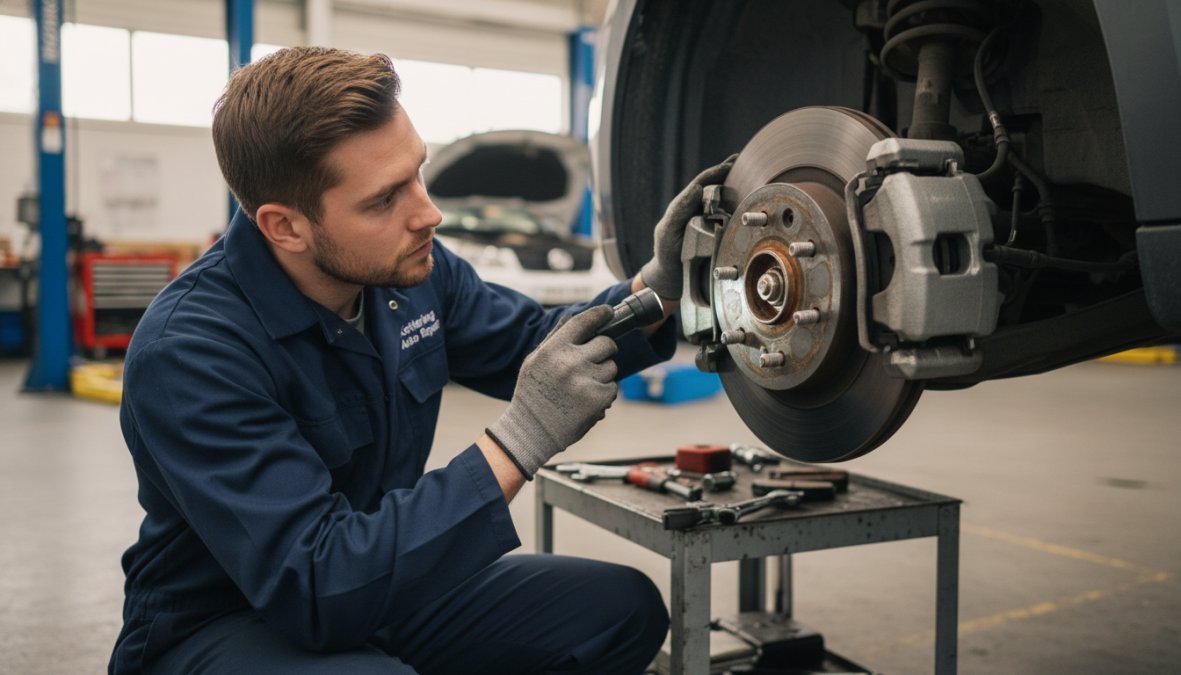
Book a professional brake inspection near me in Kettering if you experience any of the following:
Grinding or metal-on-metal noise: This is beyond DIY territory. Rotor damage assessment requires measurement with a micrometer to determine whether the disc can be machined or needs replacement.
Brake pedal changes: A soft, spongy, or pulsating pedal suggests brake fluid contamination, air in the hydraulic system, or a warped rotor. None of these are visible from outside the vehicle.
Vehicle pulling under braking: A seized caliper or uneven pad wear on one side creates an imbalance that affects vehicle control. This is a safety issue.
Brake warning light: The dashboard brake warning light indicates low brake fluid, which can signal a leak in the hydraulic system or critically worn pads.
Any noise accompanied by reduced braking performance: Longer stopping distances are the clearest sign that the brake system is compromised.
Kettering Motorist Centre provides expert diagnostic and repair services for all brake-related issues, covering vehicles from standard petrol and diesel cars through to electric and hybrid models. The team offers a transparent booking process with no upfront payment required for MOT and tyre appointments, and the hassle-free online booking system means you can arrange an inspection at a time that suits you without the phone queue.
If you're unsure whether your brake noise is normal or critical, the safest approach is always to have a qualified technician assess it. Brake systems are not the place to apply a wait-and-see approach.
Conclusion
Brake squeal is one of those problems that rewards early attention and punishes delay. The causes range from completely harmless surface rust to critical wear indicator alerts that need same-week action, and the difference between them is not always obvious without proper inspection.
Kettering Motorist Centre has the diagnostic expertise to identify exactly why your brakes are squealing and what the correct fix is, with transparent pricing and a no-payment-required online booking process that makes getting an inspection straightforward. Book your MOT or brake inspection today and get your vehicle back to safe, quiet stopping.
Frequently Asked Questions
Is it safe to drive with squeaky brakes?
It depends on the cause. A brief squeal in the morning caused by surface rust on rotors is generally harmless and clears within a few stops. However, a persistent high-pitched squeal or grinding noise often signals worn brake pads or metal-on-metal contact, which can significantly increase your stopping distance and become dangerous. If the noise is constant or worsening, you should have your brakes inspected by a technician as soon as possible.
Why do my brakes squeal only in the morning?
Morning squealing is usually caused by a thin layer of rust or moisture that forms on the rotor surface overnight. As disc brakes heat up during the first few stops, this surface rust burns off and the noise disappears. This is a normal occurrence, especially in damp climates like Northamptonshire. If the squeaking continues well beyond your first few stops, the cause is more likely worn brake pads, glazed rotors, or a lack of lubrication on the brake hardware.
Why do my brakes squeal after fitting new pads?
Squeaky brakes after new pads are very common and usually temporary. New brake pads need a bedding-in period where the friction material transfers evenly onto the rotor surface. Until this process is complete, you may hear squealing during normal braking. Following a proper brake bedding-in procedure, a series of controlled stops from moderate speed, can significantly reduce or eliminate the noise. If squealing persists beyond the first 200-300 miles, check for missing shims or improper lubrication on the backing plate.
How much does it cost to fix squeaky brakes?
Costs vary depending on the cause. A basic lubrication of brake hardware is a low-cost DIY fix using brake grease. Replacing brake pads typically costs between £80 and £200 per axle at a professional garage, including parts and labour. If rotors are glazed or heavily worn and need replacing, costs can rise to £150-£350 per axle. Addressing the issue early almost always saves money, ignoring worn pads can lead to rotor damage that significantly increases the overall repair bill.
Do squeaky brakes always mean the pads need replacing?
Not always. While worn brake pads are a very common reason car brakes squeal, other causes include glazed rotors, contamination from dirt or brake fluid, missing or damaged shims, or surface rust after rain. However, because worn pads are a genuine safety concern, squealing should never be ignored without investigation. If you are unsure, a professional brake inspection is the safest way to confirm whether replacement is needed or whether a simpler fix will resolve the noise.