What are the new rules for the MOT test? This question is on the minds of UK drivers across Kettering, Northamptonshire and beyond as significant changes come into effect. At Kettering Motorist Centre, we've been tracking these updates closely because they fundamentally reshape how vehicles are tested, how examiners are trained, and how fraud is prevented. The changes reflect a shift toward stricter safety standards, better equipment requirements, and tighter controls on who can conduct MOT tests.
Below, we'll break down exactly what's changing, why it matters for your vehicle, and what you need to know before your next MOT appointment.
Why the MOT is Changing
The MOT inspection system has remained largely unchanged for decades. Modern vehicles, particularly electric vehicles and hybrids with advanced safety systems, demand a rethink. The Driver and Vehicle Standards Agency (DVSA) recognised that the old framework couldn't adequately test the technology now embedded in everyday cars.
Safety standards have evolved dramatically. Today's vehicles feature high-voltage battery systems, complex electronic braking systems, and emissions control technology that previous MOT procedures simply didn't address. Environmental standards are tighter too. The UK's commitment to reducing emissions means the MOT must keep pace with modern powertrains.
Fraud has also been a persistent problem. Ghost MOTs, tests that never actually happened or were conducted inadequately, undermined the system's credibility. The new rules introduce mandatory photography, digital records, and stricter disciplinary measures to eliminate this entirely.
Key TakeawayThe MOT is changing because vehicles have evolved, and the test needed to catch up.
Key Timeline and Implementation
The new MOT rules began rolling out in 2024 and continue through 2026. Most changes took effect from September 2024 onwards. Authorised Examiner Principals (AEPs) and MOT testers have been required to meet enhanced training standards, and mandatory photography and digital record requirements are now live across all testing centres.
For drivers, the timeline is straightforward: if your MOT is due now, you're being tested under the new rules. The three-year initial test period remains unchanged, as does the annual testing requirement thereafter.
Stricter Standards for MOT Testers and Authorised Examiner Principals
The people conducting your MOT are now held to far higher standards than before.
Enhanced Training and Disciplinary Measures
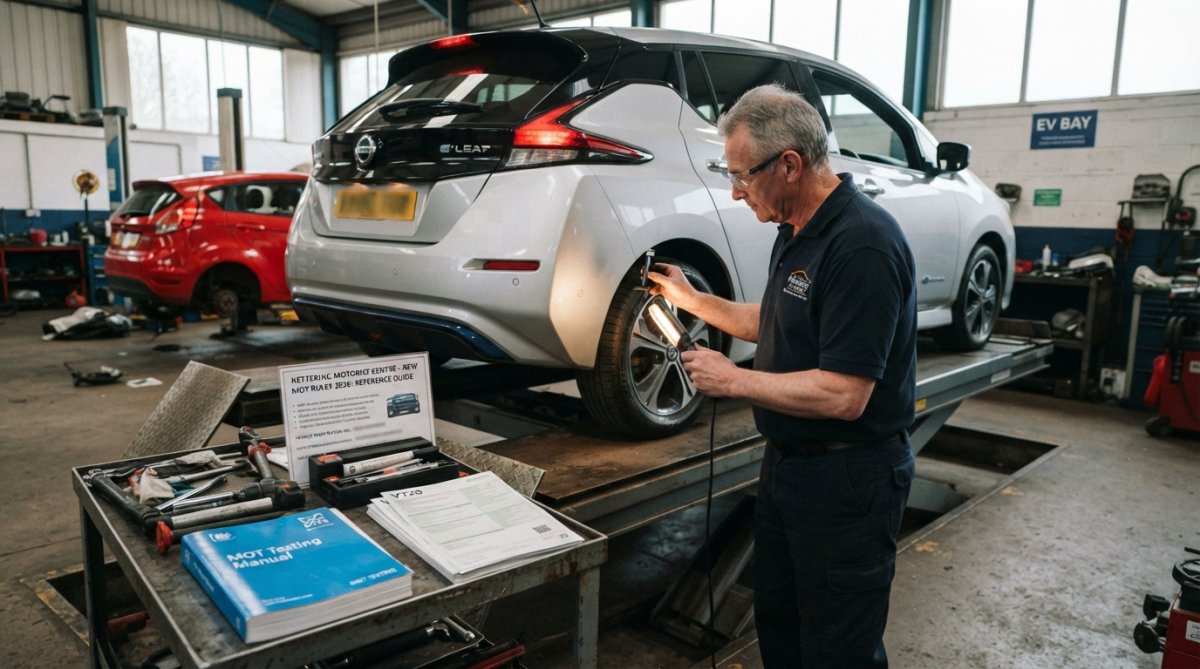
MOT testers must now complete more rigorous training, particularly for modern vehicle types. Examiners handling electric vehicles and hybrids need specialist knowledge of high-voltage systems, battery management, and EV-specific safety checks. Authorised Examiner Principals face stricter accountability.
The DVSA has introduced disciplinary cessation powers, meaning testers who consistently fail to meet standards can lose their certification. A tester caught conducting inadequate inspections or issuing fraudulent passes faces removal from the register entirely.
At Kettering Motorist Centre, our team has invested in this training because we understand that your vehicle's safety depends on thorough, knowledgeable inspection. Continuing professional development is now mandatory, ensuring testers keep pace with the rapidly evolving automotive industry.
What This Means for Your MOT Experience
Stricter tester standards translate directly to a more thorough MOT for you. The inspection will take slightly longer because it's more comprehensive, but that's time well spent. If your vehicle fails, you'll get a clear explanation of why, with photographic evidence for major faults.
You should also expect consistency. Because all testers are trained to the same standard and audited regularly, your MOT experience in Kettering will be comparable to one anywhere in the UK. Standards are uniform across the country.
Pro TipWhen you book your MOT with Kettering Motorist Centre, ask the tester to walk you through any advisories. Our team is trained to explain findings clearly, so you understand exactly what's happening with your vehicle.
Fraud Prevention: The End of Ghost MOTs and Mandatory Photography
Every MOT test now generates a digital record with photographs of key inspection points. If a tester claims to have checked your brakes, there's now photographic proof. Vehicle identification is mandatory at every test, with the MOT system capturing your vehicle's VIN (Vehicle Identification Number) alongside photographs, making it impossible to falsify records.
Testing centres are audited regularly, with DVSA staff reviewing photographic records against written reports. If photos don't match the findings, it's immediately flagged. For honest garages like Kettering Motorist Centre, these changes simply document what we're already doing. For dishonest operators, the new system makes their business model impossible.
New Equipment Requirements for Heavier Vehicles and EVs
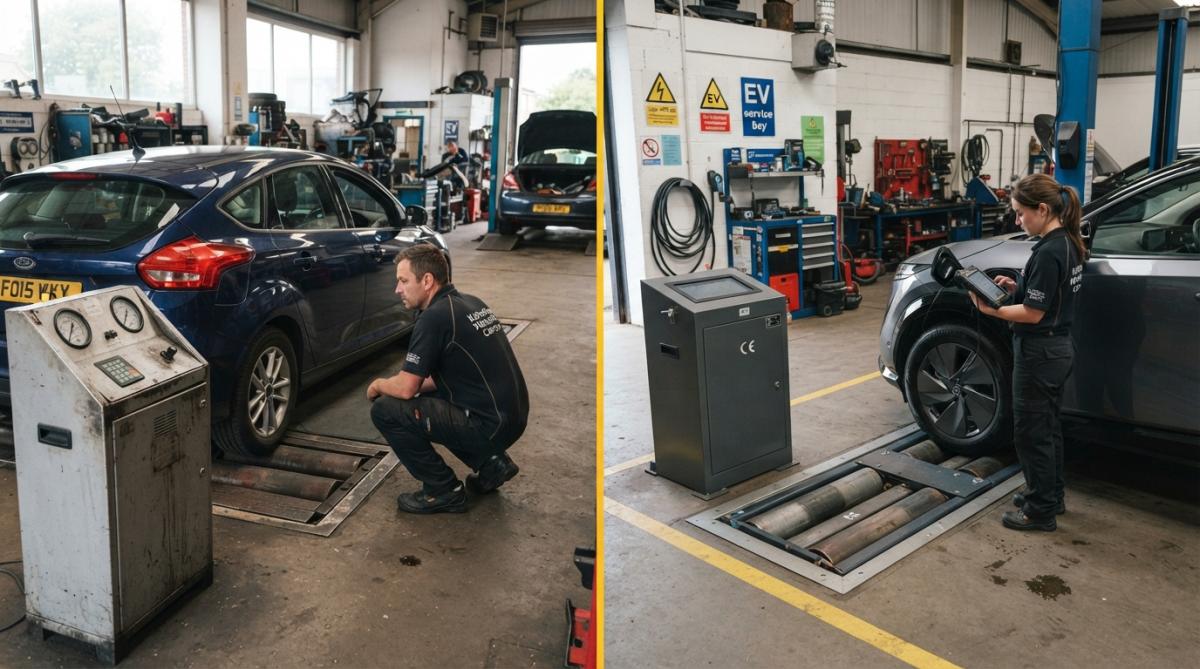
Modern testing demands modern equipment. The DVSA has introduced stricter standards for lifting and jacking equipment, with particular focus on heavier vehicles and electric vehicles.
Jacking Beams and Lifting Equipment Standards
Jacking beams and lifting equipment must now meet ISO 4413 standards for safety. For heavier vehicles, particularly larger SUVs, vans, and commercial vehicles, the testing requirements are more stringent. Weight distribution matters, and the new rules ensure testing stations have equipment rated for the full range of vehicles they test.
Close-up of modern MOT testing equipment including certified jacking beams and hydraulic lifting apparatus in a professional garage setting with bright overhead lighting
At Kettering Motorist Centre, we've upgraded our lifting and jacking equipment to meet these standards, ensuring we can safely test any vehicle type.
High-Voltage Safety Checks for Electric Vehicles
Electric vehicles present unique testing challenges. High-voltage systems, typically 400V in modern EVs, pose safety risks if not handled correctly. The new MOT rules introduce specific checks for EV-related components.
Testers must verify that high-voltage battery enclosures are intact, wiring is properly shielded, and safety interlocks function correctly. They check for signs of water ingress or damage to battery housings and verify that the vehicle's onboard diagnostics system correctly reports the battery's state of health.
For hybrid vehicles, the rules are similarly detailed. Hybrids combine petrol or diesel engines with electric motors and batteries, creating their own complexity. The MOT now specifically checks hybrid-specific components: battery isolation switches, electric motor safety systems, and the integration between engine and electric systems.
If you drive an electric or hybrid vehicle in Kettering or Northamptonshire, Kettering Motorist Centre has the expertise and equipment to handle your MOT properly. We've invested in specialist training and tools specifically for EV and hybrid testing. For more detailed information on electric vehicle servicing and MOT requirements, visit kmcelectric.co.uk.
Electric Vehicle MOT Rules UK
Electric vehicles are tested under the same MOT framework as petrol cars, with additional checks specific to EV technology. The core MOT, testing brakes, lights, steering, suspension, still applies, but for EVs there is no tailpipe emissions test. Instead, the MOT verifies that hybrid vehicles' emissions control systems function correctly, and for pure EVs, the focus shifts entirely to safety systems and high-voltage components.
The MOT also checks that your EV's safety systems are operational. Modern electric vehicles rely heavily on electronic stability control, automated emergency braking, and other active safety systems. Tyre pressure monitoring systems (TPMS) are checked on all vehicles, including EVs. Electric vehicles are often heavier than equivalent petrol cars due to battery weight, which puts more stress on tyres.
Hybrid Vehicle Considerations
Hybrid vehicles face a dual inspection. The MOT checks both the petrol or diesel engine components and the electric system, meaning more inspection points than a conventional vehicle. The diesel particulate filter (DPF) on diesel hybrids is checked for functionality, and the integration between the two powertrains comes under scrutiny.
At Kettering Motorist Centre, we explain this clearly. Your hybrid MOT takes slightly longer because we're checking more systems, but that thoroughness ensures your vehicle is truly roadworthy.
MOT Retest Rules UK: What Happens If You Fail
Failing an MOT can be stressful, but the retest process is straightforward. You have 10 working days from the date of the original test to retest your vehicle without paying a fresh MOT fee.
Retesting Timelines and Procedures
Once you've had repairs carried out, you can bring your vehicle back for a retest. The retest focuses on the faults that were identified in the original test. If you retest after 10 working days, you'll pay the full MOT fee again. It's worth planning your repairs quickly to avoid this.
The retest must be conducted at the same testing centre where the original test took place. This consistency prevents people gaming the system. If your vehicle fails again on retest, you'll need to identify what's still wrong and fix it. At Kettering Motorist Centre, we'll diagnose the problem clearly and explain what needs fixing.
MOT Exemptions UK: Which Vehicles Don't Need Testing
Not every vehicle requires an MOT. Certain categories are exempt, though the rules are specific.
Age-Related and Specialist Exemptions
Vehicles over 40 years old are exempt from MOT testing, provided they haven't been substantially modified. Certain specialist vehicles are also exempt: agricultural tractors, some mobility vehicles, and vehicles used exclusively off-road.
New vehicles are exempt for the first three years after registration. After that, annual testing is mandatory. There's no exemption for expensive cars or luxury vehicles, once that three-year period ends, everyone tests annually.
If you're unsure whether your vehicle is exempt, check the DVSA website or ask at Kettering Motorist Centre when you book. We can confirm your vehicle's status immediately.
Common MOT Failures UK: What to Watch For
Understanding what fails an MOT helps you catch problems before the test. The most common failures centre on a few key areas.
Brakes, Tyres, Lights and Suspension
Brakes are the most common failure point. Brake pad wear, fluid leaks, or uneven braking performance will fail an MOT. Check your brake pads regularly; if they're worn thin, get them replaced before testing.
Tyres fail for several reasons: insufficient tread depth (below 1.6mm), visible damage, uneven wear patterns, or incorrect pressure. Lights are another frequent issue, headlights, brake lights, indicators, and fog lights must all function correctly. A burnt-out bulb is an easy fix, but it's an automatic failure.
Suspension faults, worn shock absorbers, damaged springs, or play in steering components are common failures on older vehicles. If your car feels bouncy or the steering feels loose, have it inspected before the MOT.
Environmental and Safety Standards
Emissions are tested on petrol and diesel vehicles. If your vehicle's emissions are above the threshold, it fails. Seatbelts must work correctly. If a seatbelt is frayed, won't retract, or doesn't lock properly, the vehicle fails.
Windscreen condition matters. Significant cracks or chips in the driver's line of sight will fail the MOT. Exhaust systems must be secure and not leaking. A damaged or hanging exhaust is an automatic failure.
Common Failure
Why It Happens
How to Prevent
Brake pad wear
Normal friction over time
Check pads every 6 months, replace at 3mm thickness
Tyre tread
Gradual wear from driving
Rotate tyres every 10,000 miles, replace at 1.6mm
Burnt-out bulbs
Electrical failure
Test all lights monthly, carry spare bulbs
Worn shock absorbers
Age and mileage
Listen for bouncy ride, get suspension checked annually
Engine emissions
Engine management issues
Service regularly, address warning lights immediately
Seatbelt damage
Wear or damage
Inspect belts visually, ensure they retract smoothly
At Kettering Motorist Centre, we offer a pre-MOT inspection service. We'll check these common failure points and flag any issues before you book your official test. This saves time, money, and the frustration of a failed MOT.
Watch OutA single failed MOT doesn't mean your vehicle is unsafe, it means one or more components need attention. Address the failures quickly and retest within 10 working days to avoid paying another full MOT fee.
Preparing Your Vehicle for the New MOT Rules
The new MOT rules demand that vehicles be in better condition than before. Start with the basics: check your brakes, tyres, lights, and suspension yourself. Look under the car for obvious leaks and listen for unusual noises.
For electric and hybrid vehicle owners, ensure your high-voltage system is functioning correctly. If your EV shows any battery warnings or charging issues, address them before testing.
Service your vehicle on schedule. A well-maintained car is far more likely to pass the MOT. If your vehicle is over 10 years old, consider a pre-MOT inspection. Older cars are more likely to have hidden issues.
Book your MOT with a testing centre you trust. At Kettering Motorist Centre, our hassle-free online booking system requires no upfront payment, and we'll walk you through any issues we find. We serve motorists across Kettering, Northamptonshire, and surrounding areas with transparent, expert service.
The new MOT rules represent a genuine step forward for road safety in the UK. Stricter tester standards, mandatory photography, enhanced equipment requirements, and comprehensive checks on modern vehicle technology all contribute to safer roads. For drivers, the message is simple: keep your vehicle well-maintained, understand what the MOT checks, and address any issues promptly.
If you're unsure about your vehicle's readiness for the new MOT rules, particularly if you drive an electric or hybrid, Kettering Motorist Centre is here to help. We offer expert diagnostic and repair services, specialist EV and hybrid expertise, and transparent online booking with no upfront payment required. Book your MOT today and drive with confidence knowing your vehicle meets the latest safety standards.
Frequently Asked Questions
What are the main changes to the new MOT rules for 2026?
The new MOT rules introduce stricter standards for testers and Authorised Examiner Principals (AEPs), mandatory photography to prevent fraud and ghost MOTs, new equipment requirements for heavier vehicles including jacking beams, and enhanced high-voltage safety checks for electric vehicles. The core MOT test frequency remains unchanged, three years after registration, then annually, but enforcement and inspection procedures have become more rigorous. These changes aim to improve vehicle safety and environmental standards across the UK.
Are electric vehicle MOT rules UK different from standard cars?
Yes, electric vehicles and hybrid vehicles have additional MOT requirements under the new rules. These include high-voltage safety checks, inspection of battery systems, and verification of electrical safety components. Garages must have specialised training and equipment to conduct these tests safely. At Kettering Motorist Centre, we have expertise in electric and hybrid vehicle MOTs, visit kmcelectric.co.uk for more information on our specialist EV services.
What happens if my car fails the MOT retest rules UK?
If your vehicle fails its MOT, you have a set period to retest it. Under MOT retest rules UK, you can retest your vehicle without paying the full MOT fee again if you do so within a specific timeframe, typically within 10 working days. However, if you exceed this window, you'll need to pay for a full MOT. Any defects identified must be rectified before retesting. Our team at Kettering Motorist Centre can advise on the quickest path to getting your vehicle roadworthy again.
What are the most common MOT failures UK I should avoid?
Common MOT failures UK include worn tyres below the legal limit, faulty brakes, broken lights, suspension issues, and emissions problems, particularly diesel particulate filter (DPF) faults. Seatbelts, steering components, and windscreen damage are also frequent failure points. Regular maintenance helps prevent these issues. We recommend checking your brakes, tyres, and lights before your MOT appointment. Book a pre-MOT inspection at Kettering Motorist Centre to identify and fix potential problems in advance.
Your booking Failed
Please try again or please call 01536 410142
Thank you for placing a booking with Kettering Motorist Centre Limited for vehicle
PLEASE TAKE YOUR BOOKING REFERENCE NUMBER WITH YOU TO THE MOT CENTRE
Your items
MOT Test
×
Terms and Conditions
These terms and conditions form the basis on which you can visit and use this website. Please read them carefully as they contain important information.
General terms and conditions
This website is owned and operated by Kettering Motorist Centre Ltd (company registration number: 4485858) operating at Trafalgar Road, Kettering, Northamptonshire, NN16 8DB (the "MOT Centre", the "Company", "we" or "us"). If you have any queries about these terms and conditions or if you have any comments or complaints on or about this website, you can contact us at [email protected] or 01536 410142.
The website is to promote and offer for sale the products and services of Kettering Motorist Centre Limited.
1. The contract between us
This website does not take payment for products or services online. The website enables you to view products and services online and to make a booking for later delivery and payment. The vehicle and provision of other products and services promoted by this website and the payment by you of the price of those products and services will take place at the MOT Centre. The booking does not constitute a contract.
The booking process on the site provides details of the booked MOT order. Please take the time to read and check your booking. It is your responsibility to make sure the order is correct and for the correct vehicle.
2. Ownership of rights
All rights, including copyright, in this website are owned by or licensed to the Company. Any use of this website or its contents, including copying or storing it or them in whole or part, other than for your own personal, non commercial use, is prohibited without our permission. You may not modify, distribute or repost anything on this website for any purpose.
3. Accuracy of content
We have taken care in the preparation of the content of this website, in particular to ensure that prices quoted are correct at the time of publishing and that all goods have been fairly described. However, bookings will only be accepted if there are no material errors in the description of the goods or their prices as advertised on this website. Any weights, dimensions and capacities given about the goods are approximate only.
4. Damage to your computer
We try to ensure that this website is free from viruses or defects. However, we cannot guarantee that your use of this website or any websites accessible through it will not cause damage to your computer. It is your responsibility to ensure that the right equipment is available to use the website. Except in the case of negligence on our part, we will not be liable to any person for any loss or damage which may arise to computer equipment as a result of using this website.
5. Availability
All bookings are subject to acceptance and availability. If the MOT date you have requested are is not available, the Centre will contact you by e-mail or phone. You will have the option either to wait until another slot is available or to cancel your booking.
6. Booking errors
You are able to correct errors on your booking up to the point on which you click on “Place Booking” during the booking process.
7. Price
The prices payable for goods that you order are as set out in our website. All prices are inclusive of VAT at the current rates and are correct at the time of entering information, errors and omissions excepted.
Whenever it is not possible to accept your booking to buy goods of the specification and description at the price indicated, the MOT Centre will advise you by email or phone or when you visit the centre.
8. Payment terms
You will be required to pay for the goods or services to the Centre at time of a completed MOT.
9. Delivery charges
N/A
10. Cancellation
The MOT Centre reserves the right to cancel the booking if:
10.1 There is insufficient stock to deliver the goods you have booked.
10.2 One or more of the goods you booked was listed at an incorrect price.
If your booking is cancelled the Centre will notify you by e-mail or phone.
You have the right to cancel your booking at any time up to the point of the MOT. If you do cancel your booking you should inform the centre by phone.
11. Liability
Notwithstanding the foregoing, nothing in these terms and conditions is intended to limit any rights you might have as a consumer under applicable local law or other statutory rights that may not be excluded nor in any way to exclude or limit our liability to you for any death or personal injury resulting from our negligence.
12. Notices
Unless otherwise expressly stated in these terms and conditions, all notices from you to us must be in writing and sent to our contact address given above and all notices from us to you will be displayed on our website from time to time.
13. Changes to legal notices
We reserve the right to change these terms and conditions from time to time and you should look through them as often as possible.
14. Law, jurisdiction and language
This website, any content contained therein and any contract brought into being as a result of usage of this website are governed by and construed in accordance with English law. Parties to any such contract agree to submit to the exclusive jurisdiction of the courts of England and Wales.
15. Invalidity
If any part of these terms and conditions is unenforceable (including any provision in which we exclude our liability to you) the enforceability of any other part of these conditions will not be affected.
16. Privacy
You acknowledge and agree to be bound by the terms of our privacy policy
17. Third party rights
Nothing in this Agreement is intended to, nor shall it confer any rights on a third party.