MOT Test Requirements for Vans: Complete 2026 Guide
Last Updated: July 5, 2026
Understanding MOT test requirements for vans is essential for any van owner operating in the UK. At Kettering Motorist Centre, we've guided thousands of van operators through their MOT obligations, and we know the rules can feel complex. This guide covers everything you need to know about keeping your van roadworthy and compliant with current regulations in Northamptonshire and beyond.
The three-year rule applies to most vans: your first MOT is due three years after registration, then annually thereafter. However, vans are subject to stricter testing standards than cars due to their commercial use and weight classifications. Understanding these Class 7 requirements and preparing properly can mean the difference between a pass and a costly failure.
What Are MOT Test Requirements for Vans?
MOT test requirements for vans differ significantly from standard car testing because vans are classified as light commercial vehicles. Your van's MOT certificate proves it meets current safety and emissions standards set by the DVLA and UK law. According to UK government guidance on vehicle testing, all vans must pass an annual MOT test once they reach three years old.
The three-year rule means your first MOT is due exactly three years from your van's registration date. After that initial test, you'll need an MOT every 12 months to remain roadworthy and legally compliant. Many van owners miss this deadline through simple oversight, your MOT certificate will clearly show the expiration date, so checking it regularly prevents penalties and keeps you on the right side of the law.
Why does this matter? Driving without a valid MOT test certificate can result in a £1,000 fine and invalidate your insurance coverage. More importantly, an MOT ensures your van is safe for the road and won't put other road users at risk. The test covers critical components like brakes, steering, emissions, tyres, and lighting, all areas where wear and tear can develop quickly on commercial vehicles.
Pro TipSet a reminder three months before your MOT expires. This gives you time to book an appointment at a convenient time and address any potential issues before the test date.
Class 7 MOT Requirements for Vans
Class 7 vehicles are the classification for most standard vans up to 3,500kg maximum authorised mass. What makes Class 7 different from other vehicle classes is the emphasis on commercial durability and load-carrying capability. These vans undergo more rigorous testing than private cars because they're designed for frequent use and often operate under heavier loads.
The key components tested under Class 7 standards include brake performance, suspension systems, steering accuracy, and tyre condition. Your van's brakes must demonstrate consistent stopping power under load, examiners test this more stringently than they would for a standard car. Suspension components must show no signs of excessive wear, leaks, or damage that could affect handling or safety when carrying cargo.
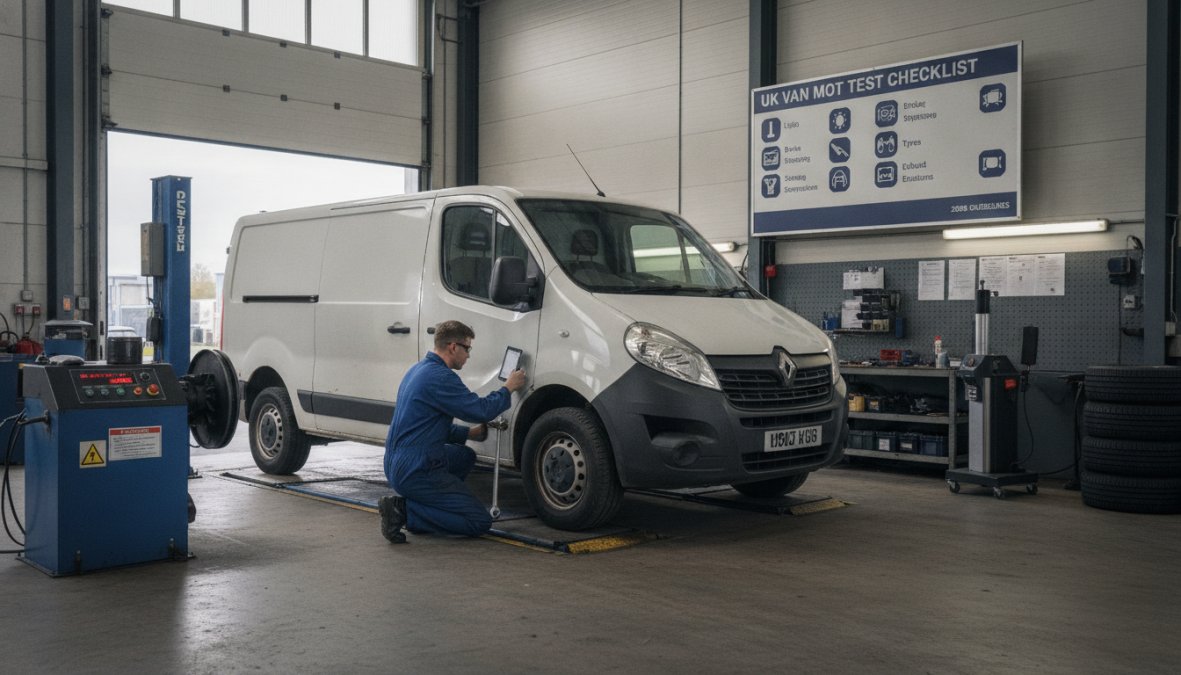
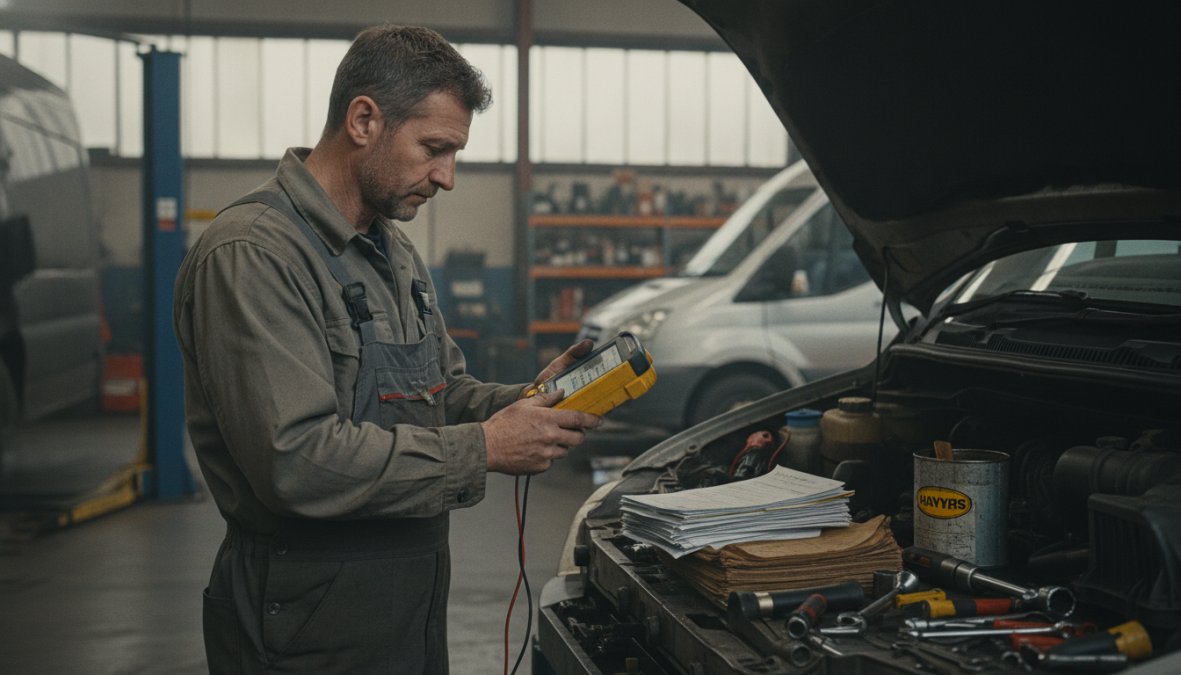
Mechanic performing brake inspection on a commercial van in a workshop, checking components with diagnostic tools and measuring equipment
Emissions testing is equally rigorous for Class 7 vans. The exhaust system must be intact with no leaks, and emission levels must fall within legal limits. Many van owners are surprised to learn that a damaged silencer or exhaust bracket can trigger an MOT failure, these aren't just cosmetic issues, they affect both emissions and noise pollution.
Lighting and electrical systems receive detailed examination. All exterior lights must function correctly, including headlights, tail lights, brake lights, and side markers. For vans with towing capabilities, additional lighting requirements apply. The wiring must be secure and undamaged, with no exposed connections that could create safety hazards.
Key TakeawayClass 7 testing is stricter than standard car MOTs because vans carry heavier loads and operate commercially. Brake performance, suspension integrity, and emissions control are tested more rigorously.
Van MOT Checklist: What to Prepare Before Your Test
Before booking your MOT appointment, conduct a thorough pre-test inspection to identify and address obvious issues. Essential checks before booking your MOT should focus on the components most likely to cause failures. Start with your tyres: check tread depth (minimum 1.6mm across the central three-quarters), look for sidewall damage, and ensure all tyres are properly inflated to the manufacturer's specification.
Inspect your braking system carefully. Listen for unusual noises when braking, check brake fluid levels, and look for any signs of fluid leaks under the van. Worn brake pads or contaminated fluid can trigger immediate failures. Test your brakes on a quiet road to confirm they feel responsive and consistent, if you notice any spongy feeling or uneven stopping, have the system inspected before your MOT.
Check all lighting systems thoroughly. Turn on headlights, dipped beams, and full beams to confirm they illuminate evenly. Test brake lights, reversing lights, and indicator lights. Many failures occur because a single bulb has blown, this is an inexpensive fix but an easy oversight if you don't check beforehand. Examine light lenses for cracks or condensation inside the housing, which can cause failures.
Examine your exhaust system for visible damage, rust, or loose connections. The silencer must be securely attached, and there should be no holes or corrosion. A damaged exhaust doesn't just fail the emissions test; it's a safety hazard and environmental concern. If you notice any issues, replacement or repair should happen before your test appointment.
Documentation and records you'll need include your vehicle registration document (V5C), your current MOT certificate (if applicable), and proof of any recent repairs or maintenance work. While the examiner won't require these documents during the test, having them available helps if questions arise about your van's history. Keep service records showing regular maintenance, this demonstrates your commitment to roadworthiness.
Pre-MOT Check
What to Inspect
Common Issues
Action
Tyres
Tread depth, damage, pressure
Worn tread, bulges, punctures
Replace or repair before test
Brakes
Pads, fluid, responsiveness
Soft pedal, leaks, uneven stopping
Service brakes immediately
Lights
All exterior lights function
Blown bulbs, cracked lenses, loose connections
Replace bulbs, check wiring
Exhaust
Silencer attachment, rust, holes
Loose connections, corrosion, damage
Repair or replace exhaust
Windscreen
Chips, cracks, visibility
Damage in driver's line of sight
Replace windscreen if needed
Wipers
Blade condition, fluid level
Streaking, worn blades, empty reservoir
Replace blades, refill fluid
Common Reasons for Van MOT Failure
Brake and suspension issues account for a significant proportion of van MOT failures. Worn brake pads reduce stopping power, and corroded brake discs can cause uneven braking. Suspension components like springs, dampers, and bushes wear faster on vans because of the weight they carry and the demanding use patterns. If your van feels bouncy when braking or leans excessively when cornering, suspension work is likely needed before your MOT.
Emissions, lighting, and wear and tear problems frequently trigger failures. A faulty oxygen sensor, blocked catalytic converter, or damaged exhaust system can cause emission test failures. These aren't always obvious to the untrained eye, your van might seem to run normally while failing emissions standards. Lighting failures are usually straightforward (blown bulbs, damaged lenses), but they're surprisingly common oversights.
Tyre wear and tear is another frequent culprit. Tyres must have at least 1.6mm tread depth across the central three-quarters of the tyre. Many van owners don't check tyre condition regularly, and worn tyres fail the test immediately. Uneven wear patterns can indicate suspension or alignment problems that also need addressing.
Structural rust and corrosion can cause failures if they affect safety-critical areas. Rust on the chassis, floor pan, or suspension mounting points signals structural weakness. While minor surface rust is acceptable, corrosion that compromises structural integrity will result in an MOT failure. Prevention through regular washing and underside treatment helps avoid this issue.
Watch OutDriving a van with known MOT defects is illegal and dangerous. If you know your van has brake issues, lighting problems, or emissions concerns, fix them before your test. Attempting to pass an MOT with known defects wastes your test fee and puts other road users at risk.
How to Check Your Van MOT Status
Using the DVLA system to verify your MOT certificate is straightforward and takes just minutes. Visit the official DVLA MOT checker at DVLA MOT history checker, enter your vehicle registration mark (the number plate), and select your MOT test number if you have it. The system displays your current MOT status, expiration date, and test history.
Your MOT history and renewal dates are recorded against your registration number. The DVLA system shows all previous MOT tests, including pass and fail results. If your van has failed previous tests, you can see which components caused the failures, this information helps you understand recurring issues and prioritise maintenance.
Understanding your MOT certificate itself is important. The certificate shows the test date, expiration date, and any advisories noted by the examiner. Advisories aren't failures, but they flag components showing wear that may need attention before the next test. Taking these advisories seriously helps prevent failures at your next MOT.
Many van owners check their status just weeks before expiration, leaving no time for repairs if problems are found. Checking your status three months in advance gives you adequate time to book an appointment and address any issues. Set a calendar reminder for three months before your MOT expires, this simple step prevents last-minute stress and potential non-compliance.
Maintaining Roadworthy Condition Between MOT Tests
Regular maintenance to avoid failures starts with a structured approach to vehicle care. Monthly checks of fluid levels (oil, coolant, brake fluid, windscreen washer) take ten minutes but prevent serious problems. Checking tyre pressure and condition monthly catches wear patterns early. These simple habits cost nothing but can save hundreds in emergency repairs.
Seasonal checks and wear and tear management become increasingly important as your van ages. Before winter, check your battery condition, as cold weather reduces battery effectiveness significantly. Inspect wiper blades for wear and ensure your heating system works properly. Winter driving puts additional stress on brakes and suspension, so pre-season inspection is worthwhile.
Spring maintenance should focus on underside inspection after winter salt exposure. Have your undercarriage cleaned and inspected for rust development. Check suspension components for corrosion and wear. Summer preparation involves confirming your air conditioning system functions (if fitted) and checking lights before longer journeys.
Service history demonstrates your commitment to roadworthiness and helps maintain your van's value. Regular servicing according to the manufacturer's schedule keeps components in optimal condition. Many MOT failures could be prevented through scheduled maintenance, worn brake pads, corroded suspension parts, and fluid leaks are all caught during proper servicing.
Pro TipKeep detailed maintenance records. When you sell your van, comprehensive service history proves you've maintained it properly and helps justify your asking price. For MOT purposes, it demonstrates your diligence to the examiner.
MOT Test Requirements for Vans: Leased and Company Vehicles
For leased and company vehicles, responsibility for MOT compliance typically falls to the vehicle owner or leasing company, not the driver. However, drivers must report any mechanical issues immediately. If you're driving a company van and notice brake problems, warning lights, or other concerns, inform your fleet manager or maintenance department immediately. Driving a non-compliant vehicle exposes both you and your employer to legal liability.
Leasing companies usually manage MOT scheduling and arrange testing through approved centres. Your lease agreement specifies these responsibilities clearly. As the driver, you're responsible for reporting defects and ensuring the van isn't operated with known safety issues. If your company van fails its MOT, you shouldn't drive it until repairs are completed.
Imported vans and specialist requirements add another layer of complexity. Vans imported from outside the UK must pass an MOT before they can be registered and legally driven. Some imported vans may have specifications that differ from UK standards, for example, lighting arrangements or emissions systems. These vans require thorough inspection to ensure they meet current UK safety and environmental standards.
Specialist vans, those with custom modifications, additional equipment, or unusual configurations, may require additional testing. A van fitted with a hydraulic tail lift, for example, needs the lift system tested as part of the MOT. Vans with specialist bodywork (refrigerated units, workshop conversions, etc.) must have these systems inspected for safety and functionality. Kettering Motorist Centre has experience with specialist van requirements and can advise on specific testing needs for your vehicle type.
Conclusion
MOT test requirements for vans in 2026 remain a critical legal obligation for any van owner in Kettering, Northamptonshire, and across the UK. Staying compliant protects you, your passengers, and other road users. Regular maintenance, thorough pre-test preparation, and timely booking ensure your van passes its MOT and remains roadworthy throughout the year.
Frequently Asked Questions
At what age does a van need its first MOT?
A van must have its first MOT test three years after the date of first registration, then annually thereafter. This three-year rule applies to most vans, though some specialist or imported vehicles may have different timelines. After the first MOT certificate is issued, you'll need to renew it every 12 months to maintain legal roadworthy condition and comply with DVLA requirements.
What is the difference between Class 4 and Class 7 MOT requirements?
Class 4 MOT tests apply to cars and small vans (up to 3 tonnes), while Class 7 MOT requirements cover larger vans and goods vehicles over 3 tonnes. Class 7 tests are more rigorous, with stricter standards for brakes, suspension, emissions, and structural integrity. Larger vans require more comprehensive safety inspections due to their greater impact on road safety and their commercial use.
What are the most common reasons vans fail their MOT test?
The most frequent MOT failures for vans include brake performance issues, worn tyre tread depth below legal limits, defective lighting or headlight alignment, suspension wear and tear, and emissions test failures. Structural corrosion, damaged mirrors, and faulty windscreen wipers also cause failures. Regular maintenance and pre-MOT checks of these components significantly reduce failure risk and keep your van in roadworthy condition.
How do I check my van's MOT status and when it's due?
You can check your van's MOT status using the DVLA online service by entering your vehicle registration mark and MOT test number. This confirms your current MOT certificate validity and shows your MOT history. You'll see your renewal date, allowing you to book your annual test at an authorised examiner before expiry. Many garages also offer this service during routine maintenance appointments.
Getting your van MOT-ready doesn't have to be stressful. Kettering Motorist Centre offers hassle-free online booking for MOT appointments with no upfront payment required. Our expert team has extensive experience with all van types, including Class 7 commercial vehicles, and we provide transparent diagnostic and repair services to address any issues found during testing. Book your van's MOT today and drive with confidence knowing your vehicle meets all current safety and emissions standards.
Your booking Failed
Please try again or please call 01536 410142
Thank you for placing a booking with Kettering Motorist Centre Limited for vehicle
PLEASE TAKE YOUR BOOKING REFERENCE NUMBER WITH YOU TO THE MOT CENTRE
Your items
MOT Test
×
Terms and Conditions
These terms and conditions form the basis on which you can visit and use this website. Please read them carefully as they contain important information.
General terms and conditions
This website is owned and operated by Kettering Motorist Centre Ltd (company registration number: 4485858) operating at Trafalgar Road, Kettering, Northamptonshire, NN16 8DB (the "MOT Centre", the "Company", "we" or "us"). If you have any queries about these terms and conditions or if you have any comments or complaints on or about this website, you can contact us at [email protected] or 01536 410142.
The website is to promote and offer for sale the products and services of Kettering Motorist Centre Limited.
1. The contract between us
This website does not take payment for products or services online. The website enables you to view products and services online and to make a booking for later delivery and payment. The vehicle and provision of other products and services promoted by this website and the payment by you of the price of those products and services will take place at the MOT Centre. The booking does not constitute a contract.
The booking process on the site provides details of the booked MOT order. Please take the time to read and check your booking. It is your responsibility to make sure the order is correct and for the correct vehicle.
2. Ownership of rights
All rights, including copyright, in this website are owned by or licensed to the Company. Any use of this website or its contents, including copying or storing it or them in whole or part, other than for your own personal, non commercial use, is prohibited without our permission. You may not modify, distribute or repost anything on this website for any purpose.
3. Accuracy of content
We have taken care in the preparation of the content of this website, in particular to ensure that prices quoted are correct at the time of publishing and that all goods have been fairly described. However, bookings will only be accepted if there are no material errors in the description of the goods or their prices as advertised on this website. Any weights, dimensions and capacities given about the goods are approximate only.
4. Damage to your computer
We try to ensure that this website is free from viruses or defects. However, we cannot guarantee that your use of this website or any websites accessible through it will not cause damage to your computer. It is your responsibility to ensure that the right equipment is available to use the website. Except in the case of negligence on our part, we will not be liable to any person for any loss or damage which may arise to computer equipment as a result of using this website.
5. Availability
All bookings are subject to acceptance and availability. If the MOT date you have requested are is not available, the Centre will contact you by e-mail or phone. You will have the option either to wait until another slot is available or to cancel your booking.
6. Booking errors
You are able to correct errors on your booking up to the point on which you click on “Place Booking” during the booking process.
7. Price
The prices payable for goods that you order are as set out in our website. All prices are inclusive of VAT at the current rates and are correct at the time of entering information, errors and omissions excepted.
Whenever it is not possible to accept your booking to buy goods of the specification and description at the price indicated, the MOT Centre will advise you by email or phone or when you visit the centre.
8. Payment terms
You will be required to pay for the goods or services to the Centre at time of a completed MOT.
9. Delivery charges
N/A
10. Cancellation
The MOT Centre reserves the right to cancel the booking if:
10.1 There is insufficient stock to deliver the goods you have booked.
10.2 One or more of the goods you booked was listed at an incorrect price.
If your booking is cancelled the Centre will notify you by e-mail or phone.
You have the right to cancel your booking at any time up to the point of the MOT. If you do cancel your booking you should inform the centre by phone.
11. Liability
Notwithstanding the foregoing, nothing in these terms and conditions is intended to limit any rights you might have as a consumer under applicable local law or other statutory rights that may not be excluded nor in any way to exclude or limit our liability to you for any death or personal injury resulting from our negligence.
12. Notices
Unless otherwise expressly stated in these terms and conditions, all notices from you to us must be in writing and sent to our contact address given above and all notices from us to you will be displayed on our website from time to time.
13. Changes to legal notices
We reserve the right to change these terms and conditions from time to time and you should look through them as often as possible.
14. Law, jurisdiction and language
This website, any content contained therein and any contract brought into being as a result of usage of this website are governed by and construed in accordance with English law. Parties to any such contract agree to submit to the exclusive jurisdiction of the courts of England and Wales.
15. Invalidity
If any part of these terms and conditions is unenforceable (including any provision in which we exclude our liability to you) the enforceability of any other part of these conditions will not be affected.
16. Privacy
You acknowledge and agree to be bound by the terms of our privacy policy
17. Third party rights
Nothing in this Agreement is intended to, nor shall it confer any rights on a third party.