Is Electric Car Maintenance Cheaper? The Short Answer
Yes, electric vehicles require roughly 40% less maintenance over their lifetime compared to petrol or diesel cars, primarily because they have far fewer moving parts and eliminate routine tasks like oil changes, spark plug replacements, and transmission fluid flushes. At Kettering Motorist Centre, we've tracked maintenance patterns across both vehicle types, and the data is clear: battery electric vehicles (BEVs) and plug-in hybrids (PHEVs) deliver substantial long-term savings for Kettering and Northamptonshire motorists.
However, EV owners face different risks, particularly around battery degradation and out-of-warranty repair expenses. Understanding these trade-offs is essential before making your decision.
EV vs Gas Car Maintenance: Cost Comparison
A battery electric vehicle typically costs 30-40% less to maintain than a comparable petrol car over ten years, while plug-in hybrids fall somewhere between the two extremes.
The reason is straightforward: electric motors have one moving part (the rotor). Internal combustion engines have hundreds. Fewer moving parts mean less friction, less wear, and fewer components that can fail.
What Electric Cars Don't Need
Battery electric vehicles eliminate several expensive maintenance categories entirely. Oil changes are the most obvious omission, traditional cars require them every 10,000 miles, but electric motors produce no combustion byproducts. Spark plugs don't exist in electric drivetrains. Transmission fluid is another category eliminated, as most EVs use single-speed transmissions with no fluid changes required. Exhaust systems, including catalytic converters and mufflers, don't exist on battery electric vehicles. Timing belts and chains, which require replacement every 60,000-100,000 miles in petrol engines, are absent from electric powertrains.
What Both Vehicle Types Still Require
Despite the advantages, electric and petrol cars share several maintenance needs. Tyres wear at similar rates, though regenerative braking extends brake pad life on EVs. Both require regular tyre rotations, wheel alignments, and seasonal inspections. Cabin air filters need replacement on both vehicle types, typically every 12,000-15,000 miles. Battery electric vehicles also require coolant for thermal management systems that regulate battery temperature, though this coolant lasts longer than in petrol engines (typically 8 years versus 2 years).
Why Electric Cars Require Less Maintenance
The fundamental reason electric vehicles require less maintenance is architectural simplicity. An electric motor is elegantly simple compared to an internal combustion engine.
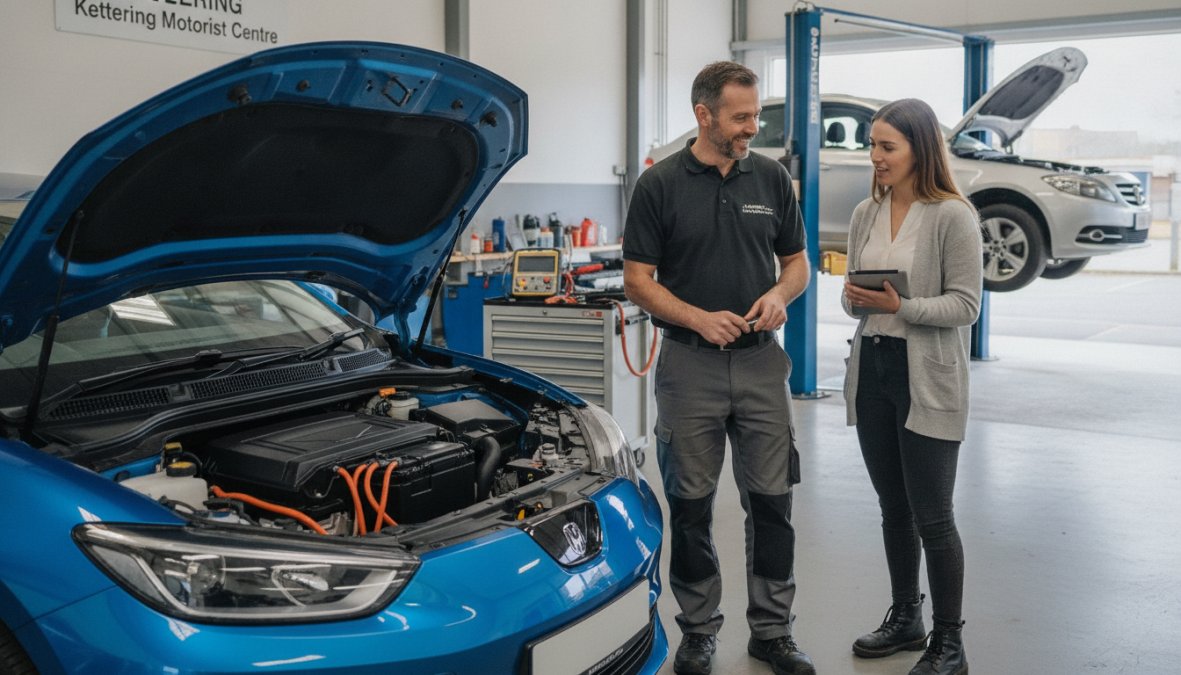
Professional illustration showing Technician for is electric car maintenance cheaper
Regenerative Braking and Brake Pad Longevity
Regenerative braking is the single most significant maintenance advantage of battery electric vehicles. When an EV driver releases the accelerator or applies the brakes, the electric motor reverses function and acts as a generator, converting kinetic energy back into electrical energy that charges the battery. This process reduces reliance on friction brakes by up to 70% in typical driving conditions.
The practical result: EV brake pads last 100,000+ miles compared to 50,000 miles for petrol cars. Some manufacturers report brake pad life extending to 150,000-200,000 miles.
Pro TipRegenerative braking is most effective in city driving. Motorway driving, where braking is less frequent, provides less regenerative opportunity. Drivers in Kettering and surrounding areas who combine urban commuting with occasional motorway trips typically see 80,000-120,000 miles from a single set of brake pads.
Fewer Moving Parts in the Drivetrain
An internal combustion engine contains pistons, crankshafts, camshafts, valve trains, fuel injectors, and hundreds of other precision components. An electric motor contains a rotor spinning inside a stator. No combustion means no explosions, no fuel ignition sequences, no exhaust gases, no oil circulation required.
Fewer moving parts means fewer things break and less frequent servicing. A petrol car typically requires a full service every 10,000 miles. An EV service interval is typically 20,000-30,000 miles, and the service itself is simpler, mostly checking fluid levels, inspecting suspension, and running diagnostics.
EV Maintenance Schedule: What You Actually Need
Routine Tasks: Tyres, Filters, and Coolant
Tyre maintenance follows the same schedule as petrol vehicles: rotate every 6,000-8,000 miles and replace when tread depth reaches 2/32 of an inch. EV tyres may wear slightly faster due to vehicle weight (batteries add 300-600 pounds), but regenerative braking reduces overall brake wear, offsetting some tyre wear differences.
Cabin air filters require replacement every 12,000-15,000 miles, identical to petrol cars. Coolant systems in electric vehicles require less frequent servicing than petrol engines. EV coolant typically lasts 8 years or 100,000 miles before requiring replacement, compared to 2 years or 20,000 miles for petrol engines.
Battery Health Monitoring
Battery monitoring is unique to electric vehicles. Modern EVs include sophisticated battery management systems (BMS) that continuously track cell voltage, temperature, and charge cycles. For the vehicle owner, battery health monitoring is largely passive, with the vehicle's onboard diagnostics tracking degradation automatically.
Typical battery degradation follows a predictable curve: 2-3% capacity loss in the first year, then stabilizing at roughly 1% per year thereafter. An EV battery retaining 80% capacity after eight years is normal and expected.
Watch OutOut-of-warranty battery issues are the primary financial risk for used EV buyers. If a battery degrades faster than expected after the warranty expires, replacement costs can exceed £5,000-£8,000 depending on the vehicle. Always verify warranty coverage before purchasing a used EV.
Electric Vehicle Battery Replacement Cost: What to Expect
Battery replacement is the most significant potential maintenance expense for EV owners, yet it's often misunderstood.
Battery Degradation Over Time
Battery degradation is gradual and predictable. Lithium-ion battery cells lose capacity through electrochemical processes that occur during charge and discharge cycles. Temperature extremes accelerate degradation; moderate climates like Northamptonshire's extend battery life.
Most EV batteries lose 2-3% capacity in the first year as cells stabilize. After stabilization, degradation typically continues at 1% per year under normal driving conditions. This gradual degradation means most EV owners never require battery replacement during vehicle ownership. A battery reaching 70% capacity, typically after 8-10 years, still provides adequate range for most drivers.
Fast charging accelerates battery degradation slightly. Owners who frequently use DC fast chargers may experience slightly faster capacity loss than owners who primarily use home charging, but the difference is modest.
Warranty Coverage and Out-of-Warranty Risks
Most modern EV manufacturers offer battery warranties of 8 years or 100,000 miles, whichever comes first. Some manufacturers offer 10-year warranties on certain models. These warranties typically guarantee that battery capacity won't degrade below 70% during the warranty period.
For used EV buyers, verifying remaining battery warranty is essential. A five-year-old EV with three years of remaining warranty provides significantly more protection than one with only one year remaining. Out-of-warranty battery replacement costs vary by vehicle: smaller EVs with 40-50 kWh batteries cost roughly £4,000-£6,000 to replace, while larger vehicles with 80-100 kWh batteries cost £8,000-£12,000.
Lifetime Ownership Costs: Total Cost of Ownership (TCO)
When comparing electric vehicles to petrol cars, maintenance represents only one component of total cost of ownership. Fuel costs, insurance, depreciation, and purchase price all factor into the true financial picture.
Research from UK government electric vehicle cost analysis suggests that battery electric vehicles achieve lower total cost of ownership than petrol cars within 5-7 years for most UK drivers, even accounting for higher purchase prices.
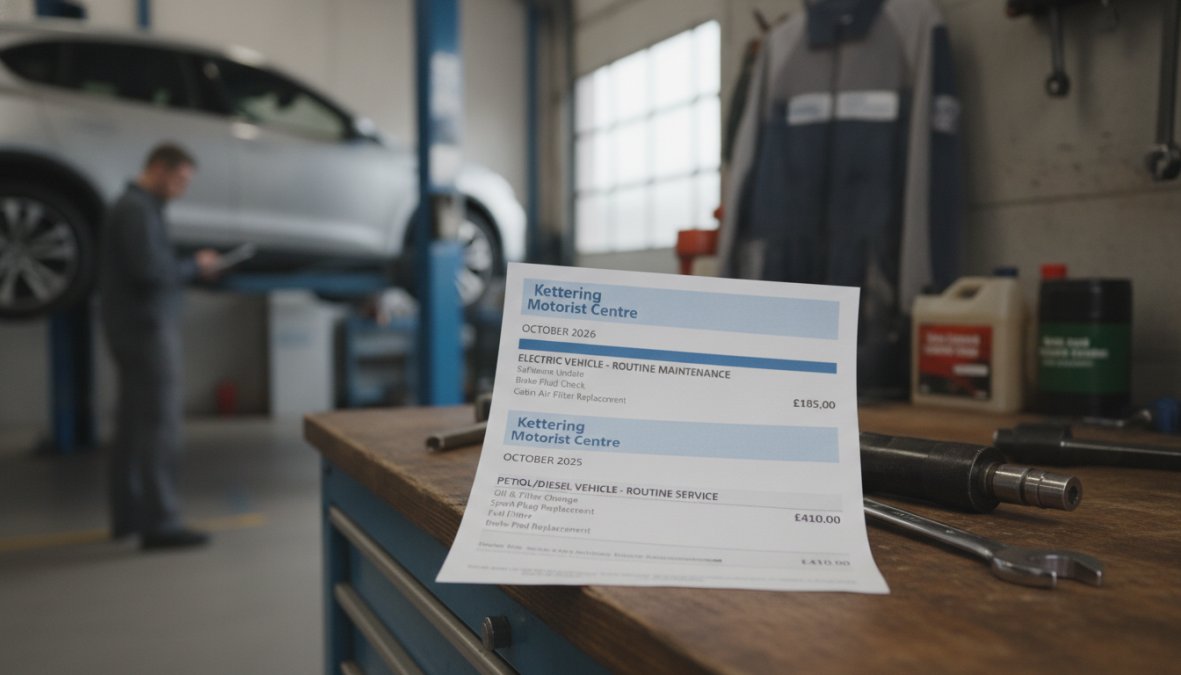
Over ten years, a typical EV owner spends roughly £1,500-£2,000 on maintenance, compared to £3,500-£5,000 for a petrol car. This £2,000-£3,000 maintenance advantage compounds when combined with lower fuel costs (electricity is roughly 60% cheaper than petrol per mile) and potential government incentives for EV ownership.
Total cost of ownership calculations typically show EVs becoming cheaper than petrol cars around the 50,000-60,000 mile mark, accounting for purchase price, fuel, maintenance, insurance, and depreciation.
Used EV Maintenance: Hidden Risks and Considerations
The primary concern with used EVs is battery warranty coverage. A three-year-old EV may have only five years of remaining battery warranty. If the battery degrades faster than expected after warranty expiration, the owner bears full replacement costs. This risk is significantly higher for used EVs purchased from private sellers compared to dealer-certified used vehicles, which often include extended warranties.
Secondary concerns include thermal management system condition and high-voltage electrical component status. Professional pre-purchase inspections by certified technicians are advisable for used EV purchases.
Key TakeawayUsed EV values have stabilized after years of uncertainty. Current market data shows used EVs retaining 50-60% of original purchase price after five years, comparable to petrol cars. This stability makes used EVs increasingly attractive for buyers seeking EV benefits without new-car pricing.
DIY Maintenance vs Professional Service for EVs
Tasks suitable for DIY maintenance include tyre rotations, cabin air filter replacements, and windscreen wiper replacements. These tasks require no electrical system interaction and are identical to petrol car maintenance.
Tasks requiring professional service include brake fluid checks, coolant inspections, battery diagnostics, and any work involving the high-voltage electrical system. The high-voltage battery operates at 300-400 volts, significantly higher than petrol car electrical systems. Working on these systems without proper training and equipment poses serious electrical hazard risks.
At Kettering Motorist Centre, we recommend that EV owners avoid attempting any work involving the battery pack, thermal management system, or high-voltage components. Professional service costs for these tasks are comparable to petrol car servicing, and the expertise ensures your vehicle remains safe and reliable.
Electric vehicle maintenance costs represent a genuine financial advantage over petrol cars, with savings of 30-40% over the vehicle's lifetime. At Kettering Motorist Centre, we provide specialized diagnostic and repair services for electric and hybrid vehicles across Kettering and Northamptonshire. Our certified technicians can assess battery health, perform thermal system inspections, and handle all routine EV maintenance. Book your MOT or service appointment through our hassle-free online booking system, no upfront payment required, and discover why Kettering motorists trust us with their electric and hybrid vehicles.
Frequently Asked Questions
Do electric cars really need less maintenance than petrol cars?
Yes. Electric vehicles have far fewer moving parts than internal combustion engine (ICE) vehicles. EVs don't require oil changes, spark plug replacements, transmission fluid flushes, or exhaust system repairs. Regenerative braking also means brake pads last significantly longer. The main maintenance tasks, tyre rotation, cabin air filters, and coolant checks, are similar to petrol cars, but the overall service frequency and cost are substantially lower.
What is the most expensive part to replace in an electric car?
The high-voltage battery is the most costly component. However, most modern EV batteries come with 8-10 year warranties covering degradation. Battery replacement costs vary significantly depending on vehicle model and capacity, so it's essential to check warranty details before purchasing. Many owners never face this expense during typical ownership periods, making the long-term total cost of ownership (TCO) still favourable compared to repeated engine repairs on petrol vehicles.
How does an EV maintenance schedule differ from a gas car?
An EV maintenance schedule focuses on battery thermal management, brake fluid checks, and tyre rotation rather than engine servicing. You won't need oil changes, spark plug replacements, or transmission servicing. Service intervals are typically longer for EVs, often 20,000 to 40,000 miles depending on the manufacturer. Preventative maintenance remains important, but the scope is narrower and less frequent, reducing both service time and cost per mile of ownership.
Are used electric vehicles more expensive to maintain?
Used EVs can present maintenance risks if purchased outside warranty coverage. Battery degradation accelerates after warranty expiry, and out-of-warranty battery repairs are expensive. However, many used EVs still retain substantial battery capacity and warranty protection. Always check the battery health report, remaining warranty, and service history before buying used. Certified pre-owned EVs often provide better protection than private sales and may include extended warranty options.
Is electric car maintenance cheaper overall compared to petrol cars?
Yes, electric car maintenance is significantly cheaper. Over a vehicle's lifetime, EV owners save on oil changes, spark plugs, transmission fluid, exhaust repairs, and more frequent brake servicing. Studies show EVs cost roughly 40% less to maintain than comparable petrol vehicles. When combined with lower energy costs (electricity vs fuel), the total cost of ownership (TCO) makes electric vehicles a more economical choice, especially for high-mileage drivers and those in Kettering seeking reliable, cost-effective vehicle maintenance.
Your booking Failed
Please try again or please call 01536 410142
Thank you for placing a booking with Kettering Motorist Centre Limited for vehicle
PLEASE TAKE YOUR BOOKING REFERENCE NUMBER WITH YOU TO THE MOT CENTRE
Your items
MOT Test
×
Terms and Conditions
These terms and conditions form the basis on which you can visit and use this website. Please read them carefully as they contain important information.
General terms and conditions
This website is owned and operated by Kettering Motorist Centre Ltd (company registration number: 4485858) operating at Trafalgar Road, Kettering, Northamptonshire, NN16 8DB (the "MOT Centre", the "Company", "we" or "us"). If you have any queries about these terms and conditions or if you have any comments or complaints on or about this website, you can contact us at [email protected] or 01536 410142.
The website is to promote and offer for sale the products and services of Kettering Motorist Centre Limited.
1. The contract between us
This website does not take payment for products or services online. The website enables you to view products and services online and to make a booking for later delivery and payment. The vehicle and provision of other products and services promoted by this website and the payment by you of the price of those products and services will take place at the MOT Centre. The booking does not constitute a contract.
The booking process on the site provides details of the booked MOT order. Please take the time to read and check your booking. It is your responsibility to make sure the order is correct and for the correct vehicle.
2. Ownership of rights
All rights, including copyright, in this website are owned by or licensed to the Company. Any use of this website or its contents, including copying or storing it or them in whole or part, other than for your own personal, non commercial use, is prohibited without our permission. You may not modify, distribute or repost anything on this website for any purpose.
3. Accuracy of content
We have taken care in the preparation of the content of this website, in particular to ensure that prices quoted are correct at the time of publishing and that all goods have been fairly described. However, bookings will only be accepted if there are no material errors in the description of the goods or their prices as advertised on this website. Any weights, dimensions and capacities given about the goods are approximate only.
4. Damage to your computer
We try to ensure that this website is free from viruses or defects. However, we cannot guarantee that your use of this website or any websites accessible through it will not cause damage to your computer. It is your responsibility to ensure that the right equipment is available to use the website. Except in the case of negligence on our part, we will not be liable to any person for any loss or damage which may arise to computer equipment as a result of using this website.
5. Availability
All bookings are subject to acceptance and availability. If the MOT date you have requested are is not available, the Centre will contact you by e-mail or phone. You will have the option either to wait until another slot is available or to cancel your booking.
6. Booking errors
You are able to correct errors on your booking up to the point on which you click on “Place Booking” during the booking process.
7. Price
The prices payable for goods that you order are as set out in our website. All prices are inclusive of VAT at the current rates and are correct at the time of entering information, errors and omissions excepted.
Whenever it is not possible to accept your booking to buy goods of the specification and description at the price indicated, the MOT Centre will advise you by email or phone or when you visit the centre.
8. Payment terms
You will be required to pay for the goods or services to the Centre at time of a completed MOT.
9. Delivery charges
N/A
10. Cancellation
The MOT Centre reserves the right to cancel the booking if:
10.1 There is insufficient stock to deliver the goods you have booked.
10.2 One or more of the goods you booked was listed at an incorrect price.
If your booking is cancelled the Centre will notify you by e-mail or phone.
You have the right to cancel your booking at any time up to the point of the MOT. If you do cancel your booking you should inform the centre by phone.
11. Liability
Notwithstanding the foregoing, nothing in these terms and conditions is intended to limit any rights you might have as a consumer under applicable local law or other statutory rights that may not be excluded nor in any way to exclude or limit our liability to you for any death or personal injury resulting from our negligence.
12. Notices
Unless otherwise expressly stated in these terms and conditions, all notices from you to us must be in writing and sent to our contact address given above and all notices from us to you will be displayed on our website from time to time.
13. Changes to legal notices
We reserve the right to change these terms and conditions from time to time and you should look through them as often as possible.
14. Law, jurisdiction and language
This website, any content contained therein and any contract brought into being as a result of usage of this website are governed by and construed in accordance with English law. Parties to any such contract agree to submit to the exclusive jurisdiction of the courts of England and Wales.
15. Invalidity
If any part of these terms and conditions is unenforceable (including any provision in which we exclude our liability to you) the enforceability of any other part of these conditions will not be affected.
16. Privacy
You acknowledge and agree to be bound by the terms of our privacy policy
17. Third party rights
Nothing in this Agreement is intended to, nor shall it confer any rights on a third party.