Hybrid vehicles are more popular than ever across Northamptonshire, and with that rise comes a genuine need for clear, accurate servicing advice. This hybrid car maintenance tips guide from Kettering Motorist Centre covers everything you need to keep your hybrid running efficiently, from battery health checks to seasonal storage. The biggest maintenance mistakes happen when owners treat a hybrid like a standard petrol car, this guide addresses that directly.
Hybrid Car Maintenance Tips Guide: The Core Framework
A hybrid vehicle combines a conventional combustion engine with one or more electric motors and a high-voltage battery pack. That dual powertrain shapes every maintenance decision you make.
Hybrids are not more complicated to maintain than standard cars, in several respects they're simpler. Regenerative braking reduces brake wear significantly, and the combustion engine runs fewer hours, so oil degrades more slowly. What owners miss is that reduced wear on some components doesn't mean zero maintenance. Intervals shift, and new checks appear that don't exist on conventional vehicles.
How a Hybrid Powertrain Differs From a Standard Engine
The powertrain routes power between the combustion engine, electric motor, and high-voltage battery depending on speed and load. This switching behaviour has real maintenance implications:
The combustion engine is cold-started less frequently, accelerating condensation in oil and the exhaust system
Regenerative braking converts kinetic energy back into electricity rather than heat, reducing brake wear
Lower idle time affects how quickly fuel degrades in the tank
Understanding these differences directly informs how you read your manufacturer maintenance schedule and which items to prioritise.
Routine Oil Changes, Filters, and Spark Plugs
A common mistake is assuming oil changes can be skipped because the engine runs less. Short, low-speed journeys where the engine rarely fully warms up can cause moisture and unburned fuel to contaminate oil faster. Follow the manufacturer's recommended interval, but also check oil quality visually between services, milky or fuel-smelling oil signals the interval needs tightening.
Cabin air filters should be checked at least annually. A blocked filter forces the HVAC system to work harder, increasing battery load. Spark plugs in hybrid combustion engines often use iridium-tipped designs with extended service lives, but skipping replacement causes misfires that strain the electric motor as it compensates.
Hybrid Car Service Intervals: Following the Manufacturer Maintenance Schedule
The manufacturer maintenance schedule is your single most important reference document. Most hybrid manufacturers publish interval guides that differ from their conventional petrol equivalents, and treating them as interchangeable is one of the most common errors in hybrid ownership.
According to guidance published by the Society of Motor Manufacturers and Traders, hybrid vehicle servicing requirements have become increasingly model-specific as powertrain configurations diversify. The owner's manual is non-negotiable reading.
A typical hybrid service schedule includes:
Oil and filter change (every 10,000-12,000 miles or annually, whichever comes first)
Tyre pressure check and rotation (every 6,000-8,000 miles)
Cabin air filter replacement (annually or every 15,000 miles)
Brake fluid check (every 2 years regardless of mileage)
Coolant system inspection (every 30,000-40,000 miles)
Transmission fluid check (every 30,000-40,000 miles depending on model)
High-voltage battery state of health check (every 2-3 years or as prompted by the vehicle)
Cooling System, Transmission Fluid, and Cabin Air Filter Checks
Hybrid vehicles often have two separate cooling circuits, one for the combustion engine, one for the high-voltage battery pack and power electronics. Neglecting the second circuit is a common oversight even in specialist garages. The battery cooling system uses its own coolant that degrades over time; overheating is a primary cause of premature battery degradation.
Transmission fluid varies widely by model. Some hybrids use a conventional automatic transmission; others use a dedicated hybrid transaxle requiring a specific fluid type. Using the wrong fluid causes premature wear and can void warranty coverage. Always cross-reference the vehicle handbook before any transmission fluid replacement.
Pro TipMany hybrid models have a cabin air filter that also covers the high-voltage battery cooling intake. Replacing only the passenger compartment filter and missing the battery intake filter is a common oversight. Check your model's service diagram to confirm both locations.
Hybrid Car Battery Life Expectancy and How to Protect It
Most modern hybrid high-voltage batteries are designed to last the lifetime of the vehicle under normal use, with many manufacturers offering 8-10 year or 100,000-mile warranties as standard. The biggest threats to longevity are consistent full discharge, prolonged exposure to extreme temperatures, and leaving the vehicle unused with a low state of charge.
Protecting battery health comes down to consistent habits:
Avoid letting the battery discharge to near-zero regularly
Park in shade or a garage during prolonged hot weather
If leaving the vehicle unused for more than two weeks, keep the battery at 40-60% charge
Use eco driving modes to smooth acceleration and maximise regenerative braking recovery
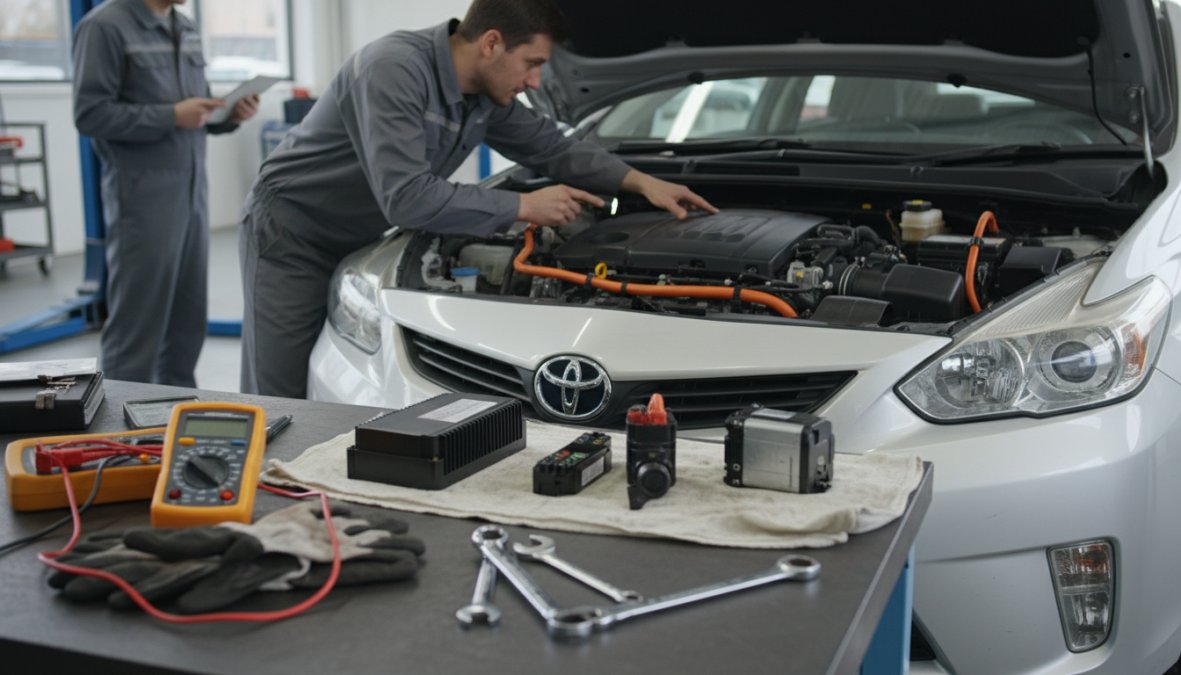
Technician working on hybrid car maintenance tips guide
Regenerative Braking and Its Role in Battery Longevity
Regenerative braking runs the electric motor in reverse during deceleration, converting kinetic energy back into electrical energy. It extends range and reduces mechanical brake wear simultaneously, many hybrid owners find original brake components last twice as long as expected.
The downside: because the brakes are used less, callipers can corrode over time. Brake fluid condition matters more than pad depth on a hybrid. Have the braking system inspected annually regardless of how the pads look.
12-Volt Battery Maintenance Alongside the High-Voltage Battery
Every hybrid contains a conventional 12-volt battery powering lights, infotainment, central locking, and the systems needed to wake up the high-voltage powertrain. If the 12-volt battery fails, the car will not start, even if the main hybrid battery is fully charged.
The 12-volt battery in a hybrid is often smaller than in a petrol car because it doesn't crank a starter motor. That smaller capacity means it can fail faster if consistently undercharged, particularly in vehicles used exclusively for short journeys where the engine rarely runs long enough to top it up. Check the 12-volt battery condition annually, a certified technician can test its state of health in minutes.
How to Check Hybrid Battery Health: DIY vs Professional Service
DIY checks give surface-level indicators. The dashboard shows battery charge level and, on many models, a basic state of health indicator. Monitoring fuel economy over time is also useful, a meaningful drop in mpg without a change in driving conditions often signals battery degradation.
Professional state of health checks go significantly deeper, extracting cell-level data the dashboard never shows.
Check Type
What It Reveals
Who Can Do It
Frequency
Dashboard monitoring
Charge level, basic warnings
Owner
Ongoing
OBD scan (basic)
Fault codes, general health
DIY with scanner
Annually
State of health check
Cell balance, capacity, degradation
Certified technician
Every 2-3 years
Full battery diagnostic
Individual cell voltage, thermal data
Specialist workshop
When fault codes appear
What a State of Health Check Involves
A state of health check measures the actual remaining capacity of a hybrid high-voltage battery compared to its original specification. A battery at 80% state of health has 20% less capacity than when new, directly affecting fuel efficiency and electric-only range.
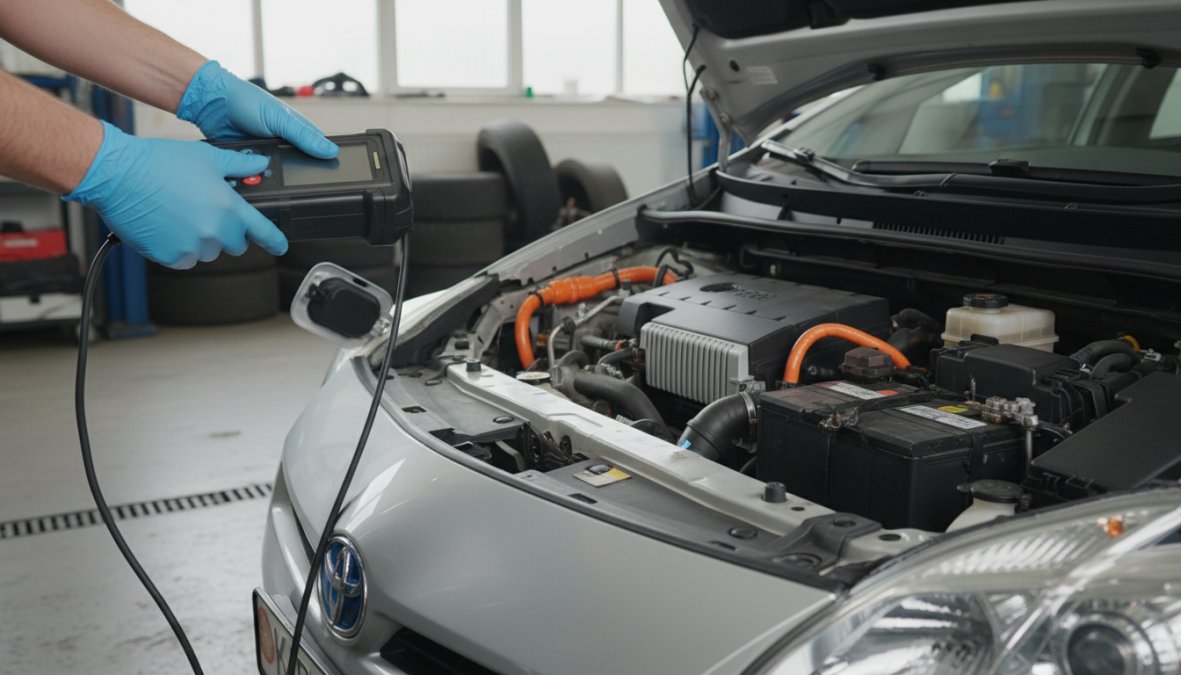
The check involves connecting to the battery management system via the diagnostic port, reading individual cell voltages, checking for cell imbalance, reviewing thermal data, and generating a capacity report. At Kettering Motorist Centre, this specialist diagnostic work is part of our electric and hybrid vehicle service offering, with results communicated clearly so you understand what they mean for your vehicle's performance.
Watch OutAttempting to access the high-voltage battery system without specialist training is genuinely dangerous. The voltage levels involved can be lethal. Any work beyond dashboard monitoring and OBD fault code reading should be handled by a certified technician with appropriate equipment.
Signs of Hybrid Battery Failure You Should Never Ignore
Signs of hybrid battery failure often appear gradually, which is why many owners miss early indicators until the problem is advanced. Watch for these warning signs:
Sudden drop in fuel efficiency, A noticeable mpg fall without changed driving conditions indicates the battery is not holding or delivering charge effectively
Erratic battery charge display, A battery that reads full then drops sharply within minutes indicates cell degradation or imbalance
Increased combustion engine running, The engine running more than usual at low speeds where the electric motor should dominate signals the battery is not contributing
False warning lights, Hybrid system warning lights, particularly the triangle with exclamation mark on Toyota models, indicate a fault detected by the battery management system
Reduced performance, Sluggish acceleration from a standstill suggests the electric motor is not receiving adequate power
Vehicle entering "limp mode", Some hybrids reduce power output automatically when battery health falls below a safe threshold
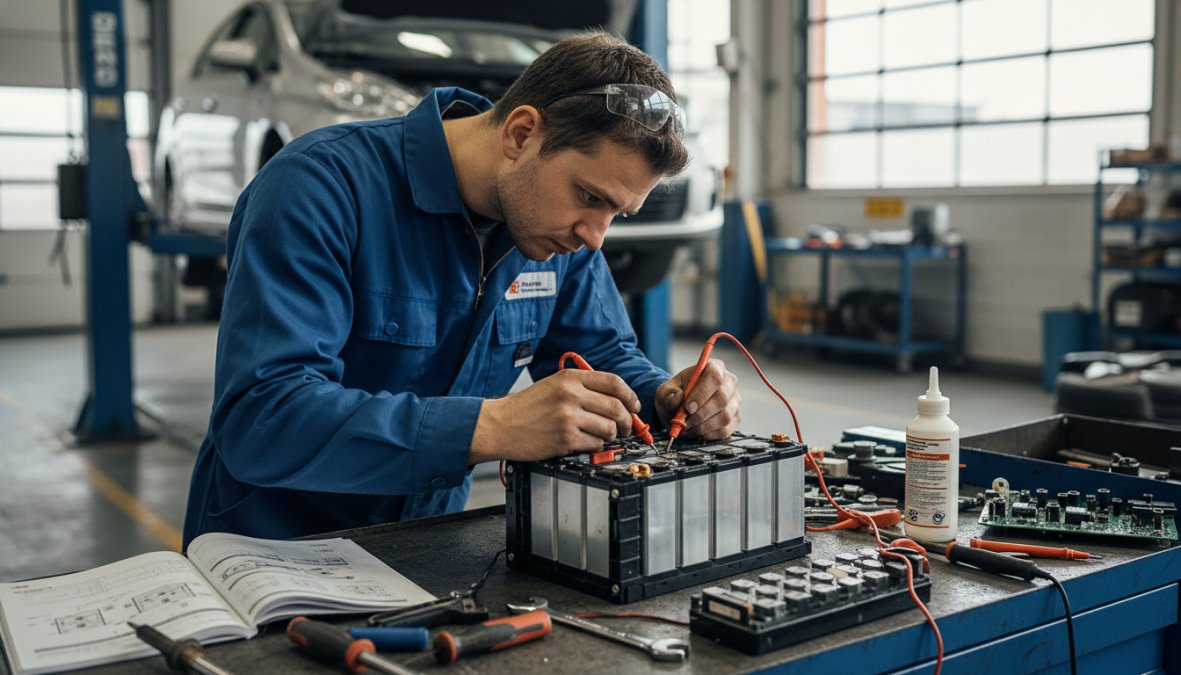
Professional image showing a certified technician and garage testing hybrid car maintenance tips guide
Any combination of these signs warrants a professional state of health check. Warning lights should never be dismissed as a sensor glitch without a diagnostic scan to confirm.
Debunking Hybrid Maintenance Myths and Seasonal Storage Tips
The popular advice that hybrids require almost no maintenance is wrong. It's not that hybrids are high-maintenance, but the idea that you can drive one indefinitely without attention leads to expensive repairs.
Common Misconceptions About Hybrid Repair and Servicing
Myth 1: Hybrid batteries always need replacing after 8 years. Many batteries last well beyond their warranty period with proper care. The warranty is a minimum guarantee, not a lifespan prediction.
Myth 2: Any garage can service a hybrid. High-voltage system work requires specialist training and equipment. Check that your chosen workshop holds hybrid-specific diagnostic capability before booking.
Myth 3: Regenerative braking means you never need brake work. Reduced pad wear does not mean zero brake maintenance. Callipers can seize, brake fluid absorbs moisture, and discs can corrode if mechanical brakes are rarely applied. Annual inspection is still necessary.
Myth 4: Hybrids don't need oil changes as often. Short-journey patterns can make oil changes more important, not less. Manufacturer interval guidance always takes precedence over assumptions.
According to the UK government's guidance on low-emission vehicles, hybrid vehicles are subject to the same MOT requirements as conventional cars, including checks on emissions, braking performance, and lighting systems.
Seasonal Storage and Eco-Friendly Driving Habits
If storing a hybrid for more than a month, standard advice for conventional cars does not fully apply.
For winter storage or extended non-use:
Charge the high-voltage battery to 40-60% before storage (not full, not empty)
Ensure the 12-volt battery is in good condition and connected to a trickle charger or disconnected
Store in a garage or covered space to reduce temperature extremes
Run the vehicle briefly every two to three weeks to cycle systems and prevent brake corrosion
For eco-friendly driving habits that extend battery life: smooth acceleration, anticipating stops to maximise regenerative braking recovery, and using eco mode all contribute meaningfully to long-term battery health and fuel efficiency.
Key TakeawayThe single most protective habit for a hybrid battery is smooth, anticipatory driving. Hard acceleration followed by hard braking bypasses regenerative recovery and puts thermal stress on the battery. Driving smoothly is not just economical, it directly extends battery lifespan.
Hybrid Car Maintenance Tips Guide: Cost Comparison and What to Budget
Budgeting for hybrid maintenance is genuinely different from planning for a conventional petrol car. Some costs are lower; a few are higher.
Where hybrids typically cost less:
Brake pad and disc replacement: significantly less frequent due to regenerative braking
Oil consumption: lower because the combustion engine runs fewer hours
Fuel: the core efficiency advantage of hybrid ownership
Where costs can be higher:
High-voltage battery replacement outside warranty: costs vary considerably by model and whether new, remanufactured, or refurbished units are used
Specialist diagnostic fees: hybrid-specific diagnostics require equipment not all garages carry, reflected in labour rates
Coolant system servicing: two cooling circuits mean more fluid and more inspection points
The practical approach is to treat hybrid maintenance as a two-tier system. Standard items like oil, filters, tyres, and MOT follow similar patterns to conventional servicing. High-voltage system work is specialist territory requiring a garage with genuine hybrid expertise.
As Which? magazine's guide to hybrid car running costs notes, long-term running costs compare favourably to petrol equivalents when maintenance is managed proactively rather than reactively. Build a reserve for battery system checks every two to three years into your annual budget, owners who do this rarely face unexpected bills.
The hybrid car maintenance tips guide framework comes down to this: follow the manufacturer schedule, don't ignore the 12-volt battery, take early warning signs seriously, and choose a workshop that actually understands the powertrain you're bringing in.
Hybrid ownership in Kettering and across Northamptonshire is growing, and so is the gap between garages that genuinely understand these vehicles and those that don't. Kettering Motorist Centre offers specialist diagnostic and repair services for electric and hybrid vehicles, with a transparent booking process and no upfront payment required for MOT and tyre appointments. Book your MOT or hybrid service through our hassle-free online booking system and get a clear picture of your vehicle's condition from a team that knows what they're looking at.
Frequently Asked Questions
Do hybrid cars require more maintenance than regular cars?
Generally, hybrid vehicles require similar or slightly less maintenance than conventional cars. The combustion engine still needs routine oil changes, spark plugs, and coolant checks, but components like brake pads typically last longer thanks to regenerative braking reducing wear. The high-voltage battery adds a unique maintenance consideration, but it rarely needs hands-on servicing outside of periodic state of health checks. Following your manufacturer maintenance schedule is the best way to stay on top of your hybrid car's long-term service needs.
How often should you service a hybrid car?
Hybrid car service intervals vary by manufacturer and model, but most recommend a full service every 10,000 to 12,000 miles or once a year — whichever comes first. Oil change intervals may be slightly extended compared to traditional vehicles due to reduced idle time and combustion engine load. Always refer to your vehicle's handbook for exact hybrid car service intervals, and ensure a certified technician familiar with hybrid systems carries out the work to protect your warranty coverage.
What are the most common signs of hybrid battery failure?
Key signs of hybrid battery failure include a noticeable drop in fuel efficiency, the vehicle relying more heavily on the combustion engine, false warning lights on the dashboard, reduced electric motor performance, and the battery discharging faster than usual. You may also notice the car struggling to hold a charge or experiencing erratic power delivery. If you spot any of these warning signs, booking a state of health check with a hybrid repair shop or certified technician promptly can prevent more costly repairs.
Can any mechanic work on a hybrid car?
Not every mechanic is qualified to work safely on hybrid vehicles. High-voltage battery systems require specialist training, certified diagnostic tools, and strict safety protocols. While routine tasks like oil changes and cabin air filter replacements can sometimes be handled by a general garage, anything involving the high-voltage battery, electric motor, or powertrain should be entrusted to a certified technician with proven hybrid expertise. Using an unqualified mechanic risks both personal safety and voiding your vehicle's warranty coverage.
How long does a hybrid car battery typically last?
Hybrid car battery life expectancy varies by make and model, but most high-voltage batteries are designed to last between 100,000 and 150,000 miles, or roughly 8 to 15 years under normal driving conditions. Factors such as eco-friendly driving habits, avoiding deep discharge cycles, regular state of health checks, and following the manufacturer maintenance schedule all contribute to maximising battery longevity. Extreme temperatures can accelerate degradation, so seasonal storage precautions are worth taking if the vehicle will sit unused for extended periods.
Your booking Failed
Please try again or please call 01536 410142
Thank you for placing a booking with Kettering Motorist Centre Limited for vehicle
PLEASE TAKE YOUR BOOKING REFERENCE NUMBER WITH YOU TO THE MOT CENTRE
Your items
MOT Test
×
Terms and Conditions
These terms and conditions form the basis on which you can visit and use this website. Please read them carefully as they contain important information.
General terms and conditions
This website is owned and operated by Kettering Motorist Centre Ltd (company registration number: 4485858) operating at Trafalgar Road, Kettering, Northamptonshire, NN16 8DB (the "MOT Centre", the "Company", "we" or "us"). If you have any queries about these terms and conditions or if you have any comments or complaints on or about this website, you can contact us at [email protected] or 01536 410142.
The website is to promote and offer for sale the products and services of Kettering Motorist Centre Limited.
1. The contract between us
This website does not take payment for products or services online. The website enables you to view products and services online and to make a booking for later delivery and payment. The vehicle and provision of other products and services promoted by this website and the payment by you of the price of those products and services will take place at the MOT Centre. The booking does not constitute a contract.
The booking process on the site provides details of the booked MOT order. Please take the time to read and check your booking. It is your responsibility to make sure the order is correct and for the correct vehicle.
2. Ownership of rights
All rights, including copyright, in this website are owned by or licensed to the Company. Any use of this website or its contents, including copying or storing it or them in whole or part, other than for your own personal, non commercial use, is prohibited without our permission. You may not modify, distribute or repost anything on this website for any purpose.
3. Accuracy of content
We have taken care in the preparation of the content of this website, in particular to ensure that prices quoted are correct at the time of publishing and that all goods have been fairly described. However, bookings will only be accepted if there are no material errors in the description of the goods or their prices as advertised on this website. Any weights, dimensions and capacities given about the goods are approximate only.
4. Damage to your computer
We try to ensure that this website is free from viruses or defects. However, we cannot guarantee that your use of this website or any websites accessible through it will not cause damage to your computer. It is your responsibility to ensure that the right equipment is available to use the website. Except in the case of negligence on our part, we will not be liable to any person for any loss or damage which may arise to computer equipment as a result of using this website.
5. Availability
All bookings are subject to acceptance and availability. If the MOT date you have requested are is not available, the Centre will contact you by e-mail or phone. You will have the option either to wait until another slot is available or to cancel your booking.
6. Booking errors
You are able to correct errors on your booking up to the point on which you click on “Place Booking” during the booking process.
7. Price
The prices payable for goods that you order are as set out in our website. All prices are inclusive of VAT at the current rates and are correct at the time of entering information, errors and omissions excepted.
Whenever it is not possible to accept your booking to buy goods of the specification and description at the price indicated, the MOT Centre will advise you by email or phone or when you visit the centre.
8. Payment terms
You will be required to pay for the goods or services to the Centre at time of a completed MOT.
9. Delivery charges
N/A
10. Cancellation
The MOT Centre reserves the right to cancel the booking if:
10.1 There is insufficient stock to deliver the goods you have booked.
10.2 One or more of the goods you booked was listed at an incorrect price.
If your booking is cancelled the Centre will notify you by e-mail or phone.
You have the right to cancel your booking at any time up to the point of the MOT. If you do cancel your booking you should inform the centre by phone.
11. Liability
Notwithstanding the foregoing, nothing in these terms and conditions is intended to limit any rights you might have as a consumer under applicable local law or other statutory rights that may not be excluded nor in any way to exclude or limit our liability to you for any death or personal injury resulting from our negligence.
12. Notices
Unless otherwise expressly stated in these terms and conditions, all notices from you to us must be in writing and sent to our contact address given above and all notices from us to you will be displayed on our website from time to time.
13. Changes to legal notices
We reserve the right to change these terms and conditions from time to time and you should look through them as often as possible.
14. Law, jurisdiction and language
This website, any content contained therein and any contract brought into being as a result of usage of this website are governed by and construed in accordance with English law. Parties to any such contract agree to submit to the exclusive jurisdiction of the courts of England and Wales.
15. Invalidity
If any part of these terms and conditions is unenforceable (including any provision in which we exclude our liability to you) the enforceability of any other part of these conditions will not be affected.
16. Privacy
You acknowledge and agree to be bound by the terms of our privacy policy
17. Third party rights
Nothing in this Agreement is intended to, nor shall it confer any rights on a third party.