How to Prevent Car Overheating in Summer: Key Maintenance Steps
Summer heat stresses your vehicle's cooling system. Most overheating incidents are preventable with basic maintenance and awareness. Your engine generates intense heat during operation, and without a functioning cooling system, temperatures can climb beyond safe levels within minutes, causing expensive damage to the engine block, cylinder head, and internal seals.
Below are seven practical strategies addressing both immediate prevention and long-term thermal management to keep your engine running safely throughout summer.
Understanding Car Overheating Symptoms
Recognising early warning signs prevents catastrophic engine damage. Your temperature gauge should sit in the middle of the dial during normal driving. If the needle creeps toward the red zone, your engine is signalling distress.
Physical symptoms include a sweet smell from under the bonnet (indicating coolant leaking or burning), steam rising from the engine bay, loss of engine power, rough idling, or ticking sounds from the engine compartment. Dashboard warning lights, typically a thermometer symbol or "check engine" light, demand immediate attention. Don't ignore these warnings; overheating escalates quickly once it begins.
If your cabin suddenly feels hotter than usual despite air conditioning running, your cooling system may be struggling. This often precedes visible external symptoms by several minutes, giving you time to act.
Watch OutContinuing to drive with an overheating engine risks complete engine failure. Pull over safely, turn off the air conditioning, and allow the engine to cool before attempting any diagnosis. Never open the radiator cap when the engine is hot; pressurised coolant can cause severe burns.
How to Check Car Coolant Level: A Step-by-Step Guide
Checking your coolant level takes five minutes and requires no special tools. This is the single most important preventative maintenance task you can perform yourself.
Step 1: Cool the Engine
Never check coolant when the engine is hot. Wait at least 30 minutes after driving, or check first thing in the morning before starting the car.
Step 2: Locate the Coolant Reservoir
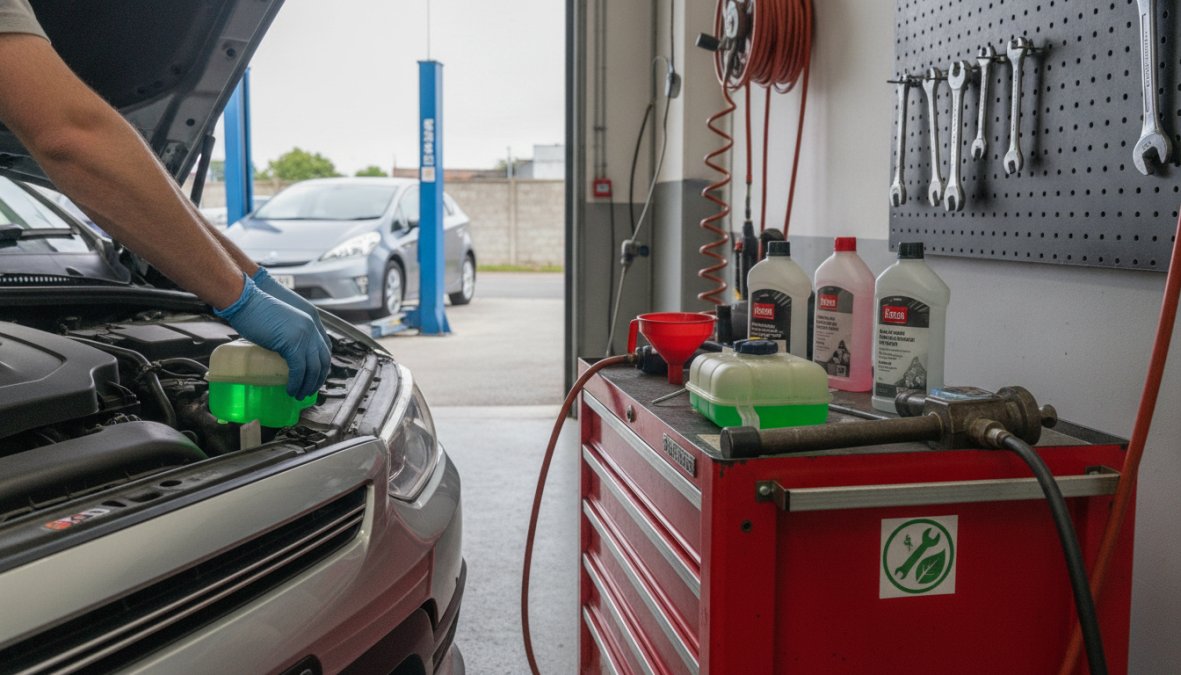
Open your bonnet and locate the translucent plastic coolant reservoir, usually mounted on the side of the engine bay with a white or blue cap marked with a coolant symbol.
Step 3: Inspect the Level
The reservoir has minimum and maximum level markings. Coolant should sit between these lines. If below the minimum mark, your system has a leak or has consumed coolant through normal operation.
Step 4: Add Coolant if Needed
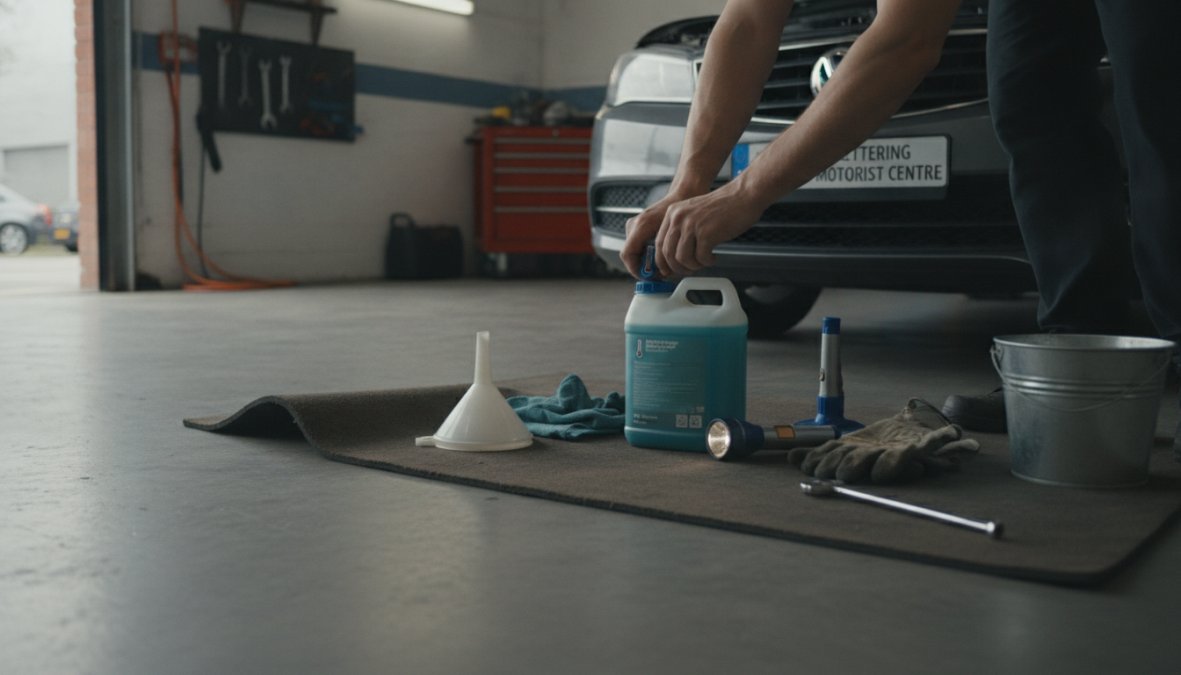
If the level is low, remove the cap by twisting it counterclockwise. Pour distilled water and coolant in the correct ratio for your vehicle, or use pre-mixed coolant ready to pour directly. Fill until the level reaches the maximum mark.
Step 5: Replace the Cap and Inspect for Leaks
Twist the cap back on firmly. Inspect the ground beneath your car and the engine bay for signs of coolant leaks, typically bright green, orange, or pink fluid.
Close-up of a car engine coolant reservoir under an open bonnet, with hands pointing to the minimum and maximum level markers on the translucent plastic container
Pro TipCheck your coolant level every two weeks during summer. Set a phone reminder on the first of each month to catch slow leaks early and prevent roadside breakdowns.
What Type of Coolant Should You Use?
Your vehicle requires a specific coolant type. Using the wrong coolant causes corrosion inside the cooling system and reduces heat dissipation efficiency. Check your owner's manual for the exact specification, usually listed as a colour (green, orange, pink, or blue) and chemical designation (IAT, OAT, or HOAT).
Never mix different coolant types. If topping up, use the same type and brand as what's already in your system. If unsure what coolant is currently in your car, drain and flush the entire system before adding new coolant. Distilled water alone should never be used as coolant; it lacks corrosion inhibitors and heat transfer properties, and it freezes at 0°C.
Car Cooling System Maintenance: Long-Term Prevention
Prevent overheating by maintaining your entire cooling system, radiator, water pump, thermostat, hoses, and radiator fan. A full cooling system flush should occur every 30,000 to 50,000 miles, removing accumulated sediment and corrosion that reduces cooling efficiency.
Inspect all coolant hoses regularly for cracks, splits, or soft spots. Hoses under pressure can fail suddenly, causing complete coolant loss and immediate overheating. Hose clamps should also be checked; loose clamps allow coolant to seep from connection points.
Check that all radiator fins are intact and free from debris. Bent or missing fins reduce the radiator's ability to dissipate heat. If clogged with dirt, leaves, or dead insects, gently rinse with a garden hose to restore airflow.
Key TakeawayYour cooling system is only as strong as its weakest component. A single failing hose or partially blocked radiator can trigger overheating even if coolant levels are correct.
The Role of Your Radiator Fan and Water Pump
The radiator fan pulls air through the radiator to dissipate heat. A failing fan reduces cooling capacity dramatically, especially at low speeds or when stationary. Listen for the fan running when the engine is hot; you should hear it spin up and down as the thermostat regulates temperature. If your fan doesn't engage when the engine is hot, the thermostat or fan motor may be faulty.
The water pump circulates coolant through the engine block and radiator. A failing water pump leaks coolant or circulates it inefficiently, causing rapid temperature rise. Listen for high-pitched whining noise from the front of the engine, which often signals water pump bearing wear.
Flushing Your Coolant System Regularly
A coolant flush removes old, degraded coolant and sediment that accumulates inside the radiator and engine passages. This sediment acts as an insulator, preventing heat transfer and forcing the cooling system to work harder. Old coolant loses its pH balance and corrosion inhibitors, allowing rust to form inside the radiator and engine block.
The flush process involves draining old coolant, running distilled water through the system to remove sediment, then refilling with fresh coolant. Most flushes take one to two hours. Regular flushing prevents expensive repairs and ensures your cooling system operates at peak efficiency throughout summer.
Daily Summer Driving Habits to Prevent Overheating
How you drive directly impacts engine temperature. Aggressive acceleration, sustained high RPM, and heavy engine load generate more heat than steady, moderate driving. Avoid prolonged idling in traffic; while stationary, your engine generates heat without forward motion to cool it.
Reduce air conditioning use when possible. Air conditioning compresses refrigerant, which loads the engine and forces it to work harder. On mild summer days, open windows instead of running air conditioning. On hot days, use air conditioning but set it to a moderate temperature rather than maximum cooling.
Towing or carrying heavy loads dramatically increases engine load and heat generation. If you must tow during summer, do so during cooler morning or evening hours. Check coolant levels before any towing trip.
Parking in the Shade and Using Sunshades
Parking in direct sunlight causes interior cabin temperatures to exceed 65°C on hot summer days. A shaded parking spot reduces interior temperature by 15-20°C. If shade isn't available, use a reflective sunshade on your windscreen to reduce solar heat gain significantly.
Interior heat affects air conditioning efficiency. A hot cabin requires the air conditioning system to work harder, loading the engine further. By parking in shade, you reduce air conditioning load and engine heat generation before you even drive.
Managing Engine Load and Air Conditioning Use
Engine load is the amount of work your engine performs. Higher load generates more heat. During summer, accelerate gradually and maintain steady speeds to keep engine load moderate. Air conditioning increases engine load by 10-15%. If your engine temperature gauge creeps toward the red zone, turn off the air conditioning temporarily and open windows to immediately reduce engine load and allow temperature to drop.
What to Do When Your Car Starts to Overheat
If your temperature gauge enters the red zone or your overheating warning light illuminates, act immediately.
Step 1: Reduce Engine Load
Turn off the air conditioning immediately. Shift into neutral if safe, allowing engine RPM to fall.
Step 2: Turn on the Heater
Running the heater at full blast diverts coolant through the heater core, pulling heat away from the engine. Open all windows to expel hot air.
Step 3: Pull Over Safely
Find a safe location away from traffic and stop the engine. Allow it to cool for at least 30 minutes before restarting.
Step 4: Never Open the Radiator Cap While Hot
The cooling system is pressurised. Opening the cap releases this pressure violently, and escaping steam or coolant can cause severe burns.
Step 5: Check Coolant Level Once Cool
After 30 minutes, check the coolant level. If significantly low, you have a leak. Top it up with distilled water in an emergency, then have the system serviced professionally before driving further.
Watch OutNever pour cold water onto a hot engine. The thermal shock can crack the engine block or cylinder head. Allow the engine to cool naturally.
Coolant Leak Repair Cost UK and When to Seek Help
A small coolant leak escalates quickly. Losing even a litre of coolant over several weeks reduces cooling capacity and increases overheating risk. Common leak sources include hose connections, the water pump seal, the radiator, and the thermostat housing. A loose hose clamp costs virtually nothing to tighten. A failing water pump seal may require £200-400 in parts and labour. A cracked radiator typically requires replacement at £300-600.
Have any suspected leak inspected by a professional before summer driving season. Early diagnosis prevents expensive emergency repairs and keeps your vehicle safe throughout summer.
EV-Specific Cooling Considerations for Electric Vehicles
Electric vehicles manage heat differently than petrol or diesel engines. They generate less waste heat from combustion, but their battery packs and electric motors require active thermal management. EV batteries generate heat during charging and discharging. High ambient temperatures reduce the battery's ability to dissipate this heat, triggering thermal throttling and reducing power output.
Liquid cooling systems circulate coolant through battery packs and electric motors, maintaining optimal operating temperatures. Coolant level checks and system flushes remain important for EV owners.
Charging during cooler hours, early morning or evening, reduces battery heat generation and extends battery life. Avoid fast-charging during peak afternoon heat. Air conditioning uses battery power directly, reducing driving range. In summer, modulate air conditioning use to balance comfort and range. Parking in shade and using sunshades reduces the initial cooling demand when you start driving.
Summer overheating is preventable through regular maintenance and awareness. Check your coolant level regularly, inspect hoses and connections, and address any leaks immediately. If uncertain about your vehicle's cooling system condition, book a professional diagnostic and maintenance service. Our team can perform coolant flushes, inspect cooling components, and identify potential issues before they become emergencies.
Maintenance Task
Frequency
When to Check
Priority
Check coolant level
Every 2 weeks
Morning before driving
Critical
Inspect hoses for damage
Monthly
During coolant checks
High
Listen for radiator fan
Monthly
When engine is hot
High
Flush coolant system
Every 30,000-50,000 miles
Per manufacturer schedule
Medium
Inspect radiator fins
Quarterly
Before summer season
Medium
Check for leaks underneath
Monthly
After parking
High
Frequently Asked Questions
What are the most common signs of a car overheating in summer?
Common car overheating symptoms include a rising temperature gauge needle moving into the red zone, steam coming from under the bonnet, a sweet smell from the engine, loss of power, and warning lights on your dashboard. If you notice any of these signs, pull over safely and allow the engine to cool. Never ignore these warnings, as continued driving can cause serious engine damage.
How often should I check my car's coolant level?
Check your coolant level at least once a month, especially during summer months. Always check when the engine is cold to avoid burns. Top up with distilled water or the correct coolant type specified in your vehicle manual. Regular checks help prevent overheating and identify potential leaks early. Kettering Motorist Centre can perform a full cooling system inspection as part of routine vehicle maintenance.
Can using air conditioning cause my car to overheat?
Yes, using air conditioning increases engine load and can contribute to overheating in extreme heat. To minimise this risk, avoid running the air conditioning at maximum whilst stationary or in heavy traffic. Instead, use ventilation settings and park in shade when possible. During summer, ensure your cooling system is in peak condition before long journeys. Kettering Motorist Centre offers air conditioning servicing to maintain optimal performance.
What should I do if my car overheats while I'm driving?
If your car begins to overheat whilst driving, turn off the air conditioning and open the windows to reduce engine load. Switch on the heater to help dissipate heat from the engine block. Avoid sudden acceleration and reduce your speed. If the temperature gauge remains high, find a safe place to pull over and allow the engine to cool for at least 15 minutes before opening the bonnet. Never remove the coolant cap whilst the engine is hot, as this can cause serious burns.
Your booking Failed
Please try again or please call 01536 410142
Thank you for placing a booking with Kettering Motorist Centre Limited for vehicle
PLEASE TAKE YOUR BOOKING REFERENCE NUMBER WITH YOU TO THE MOT CENTRE
Your items
MOT Test
×
Terms and Conditions
These terms and conditions form the basis on which you can visit and use this website. Please read them carefully as they contain important information.
General terms and conditions
This website is owned and operated by Kettering Motorist Centre Ltd (company registration number: 4485858) operating at Trafalgar Road, Kettering, Northamptonshire, NN16 8DB (the "MOT Centre", the "Company", "we" or "us"). If you have any queries about these terms and conditions or if you have any comments or complaints on or about this website, you can contact us at [email protected] or 01536 410142.
The website is to promote and offer for sale the products and services of Kettering Motorist Centre Limited.
1. The contract between us
This website does not take payment for products or services online. The website enables you to view products and services online and to make a booking for later delivery and payment. The vehicle and provision of other products and services promoted by this website and the payment by you of the price of those products and services will take place at the MOT Centre. The booking does not constitute a contract.
The booking process on the site provides details of the booked MOT order. Please take the time to read and check your booking. It is your responsibility to make sure the order is correct and for the correct vehicle.
2. Ownership of rights
All rights, including copyright, in this website are owned by or licensed to the Company. Any use of this website or its contents, including copying or storing it or them in whole or part, other than for your own personal, non commercial use, is prohibited without our permission. You may not modify, distribute or repost anything on this website for any purpose.
3. Accuracy of content
We have taken care in the preparation of the content of this website, in particular to ensure that prices quoted are correct at the time of publishing and that all goods have been fairly described. However, bookings will only be accepted if there are no material errors in the description of the goods or their prices as advertised on this website. Any weights, dimensions and capacities given about the goods are approximate only.
4. Damage to your computer
We try to ensure that this website is free from viruses or defects. However, we cannot guarantee that your use of this website or any websites accessible through it will not cause damage to your computer. It is your responsibility to ensure that the right equipment is available to use the website. Except in the case of negligence on our part, we will not be liable to any person for any loss or damage which may arise to computer equipment as a result of using this website.
5. Availability
All bookings are subject to acceptance and availability. If the MOT date you have requested are is not available, the Centre will contact you by e-mail or phone. You will have the option either to wait until another slot is available or to cancel your booking.
6. Booking errors
You are able to correct errors on your booking up to the point on which you click on “Place Booking” during the booking process.
7. Price
The prices payable for goods that you order are as set out in our website. All prices are inclusive of VAT at the current rates and are correct at the time of entering information, errors and omissions excepted.
Whenever it is not possible to accept your booking to buy goods of the specification and description at the price indicated, the MOT Centre will advise you by email or phone or when you visit the centre.
8. Payment terms
You will be required to pay for the goods or services to the Centre at time of a completed MOT.
9. Delivery charges
N/A
10. Cancellation
The MOT Centre reserves the right to cancel the booking if:
10.1 There is insufficient stock to deliver the goods you have booked.
10.2 One or more of the goods you booked was listed at an incorrect price.
If your booking is cancelled the Centre will notify you by e-mail or phone.
You have the right to cancel your booking at any time up to the point of the MOT. If you do cancel your booking you should inform the centre by phone.
11. Liability
Notwithstanding the foregoing, nothing in these terms and conditions is intended to limit any rights you might have as a consumer under applicable local law or other statutory rights that may not be excluded nor in any way to exclude or limit our liability to you for any death or personal injury resulting from our negligence.
12. Notices
Unless otherwise expressly stated in these terms and conditions, all notices from you to us must be in writing and sent to our contact address given above and all notices from us to you will be displayed on our website from time to time.
13. Changes to legal notices
We reserve the right to change these terms and conditions from time to time and you should look through them as often as possible.
14. Law, jurisdiction and language
This website, any content contained therein and any contract brought into being as a result of usage of this website are governed by and construed in accordance with English law. Parties to any such contract agree to submit to the exclusive jurisdiction of the courts of England and Wales.
15. Invalidity
If any part of these terms and conditions is unenforceable (including any provision in which we exclude our liability to you) the enforceability of any other part of these conditions will not be affected.
16. Privacy
You acknowledge and agree to be bound by the terms of our privacy policy
17. Third party rights
Nothing in this Agreement is intended to, nor shall it confer any rights on a third party.