Why Battery Maintenance Matters for Electric Vehicles
Electric vehicle batteries are among the most expensive components in any EV. Unlike traditional petrol engines, lithium-ion battery packs require careful management to preserve their capacity over time. The way you charge, drive, and store your EV directly impacts how long that battery will last and how much range you'll retain after five, ten, or fifteen years of ownership.
Battery degradation isn't inevitable, it's preventable. Small daily habits compound into significant differences in battery longevity. An owner who charges aggressively and frequently uses rapid charging might see 20-30% capacity loss within five years. Another owner following best practices might lose only 5-10% in the same period. That's the difference between replacing a battery at 100,000 miles and keeping the original pack until 200,000 miles.
At Kettering Motorist Centre, we work with electric and hybrid vehicle owners across Northamptonshire who want to maintain electric vehicle battery health properly. The good news is that maintaining your battery requires understanding a few core principles and building them into your routine. Below, we'll show you exactly how to extend your battery's lifespan and avoid the mistakes that accelerate degradation.
The Ideal EV Charging Percentage for Daily Use
The 20-80% Rule Explained
The single most important principle for maintaining electric vehicle battery longevity is the 20-80% state of charge rule. This means charging your battery from 20% to 80% for everyday use, rather than depleting it completely or charging it to full capacity.
Lithium-ion batteries experience the most stress at the extreme ends of their charge range. When your battery sits at 0% (completely empty), the electrochemical reactions inside the cells become unstable. When it sits at 100% (completely full), the voltage stress on the cells increases significantly. Both extremes accelerate degradation. The middle 60% of the battery's capacity, from 20% to 80%, is the sweet spot where chemical processes are most balanced and cells experience minimal stress.
If your battery has a usable capacity of 60 kilowatt hours, charging from 20% to 80% gives you about 36 kWh of usable energy per day. For most daily commutes in the Kettering area, this is more than sufficient. You're trading a small amount of daily range for significantly extended battery life.
The 20-80% rule applies specifically to lithium-ion battery chemistry, which is standard across nearly all modern EVs.
Charging Habits for Commuting vs Long Trips
For daily commuting, the 20-80% rule is straightforward to implement. If you charge overnight at home and your commute consumes 30-40% of your battery capacity, you'll naturally stay within the optimal range without thinking about it.
Long trips present a different scenario. If you're planning a 300-mile journey and need to arrive with charge remaining, you can't stick to 80%. In this case, charge to what you need for the trip, but don't make it a daily habit. Occasional charges to 90-95% won't significantly damage your battery. It's the repeated, chronic exposure to full charges that causes accelerated degradation.
A practical approach for Kettering-area EV owners: set your vehicle's charge limit to 80% in the infotainment system for everyday charging. Most modern EVs allow you to programme a maximum charge percentage. For a planned long journey, temporarily increase the limit to 90%, complete your trip, then return it to 80%.
Allowing your battery to drop below 10% regularly, or running it completely flat, accelerates capacity loss. Running the battery down to 5-10% occasionally is acceptable; making it a habit is not.
Impact of Rapid Charging on Battery Health
DC Fast Charging and Battery Degradation
Rapid charging, also called DC fast charging or ultra-fast charging, pumps enormous amounts of electrical current into your battery in a short time. A typical home charger delivers 7 kW. A rapid charger delivers 50-350 kW depending on the network and the vehicle. That speed comes with a cost to battery health.
When you rapid charge, the battery experiences thermal stress. The high current generates heat inside the cells, and that heat accelerates chemical degradation. Studies of EV fleet data consistently show that vehicles relying heavily on rapid charging experience faster capacity loss than vehicles charged primarily at home using standard chargers.
This doesn't mean you should never use rapid chargers. For occasional long trips, they're invaluable. But if you're using rapid chargers multiple times per week for routine commuting, you're unnecessarily accelerating battery degradation.
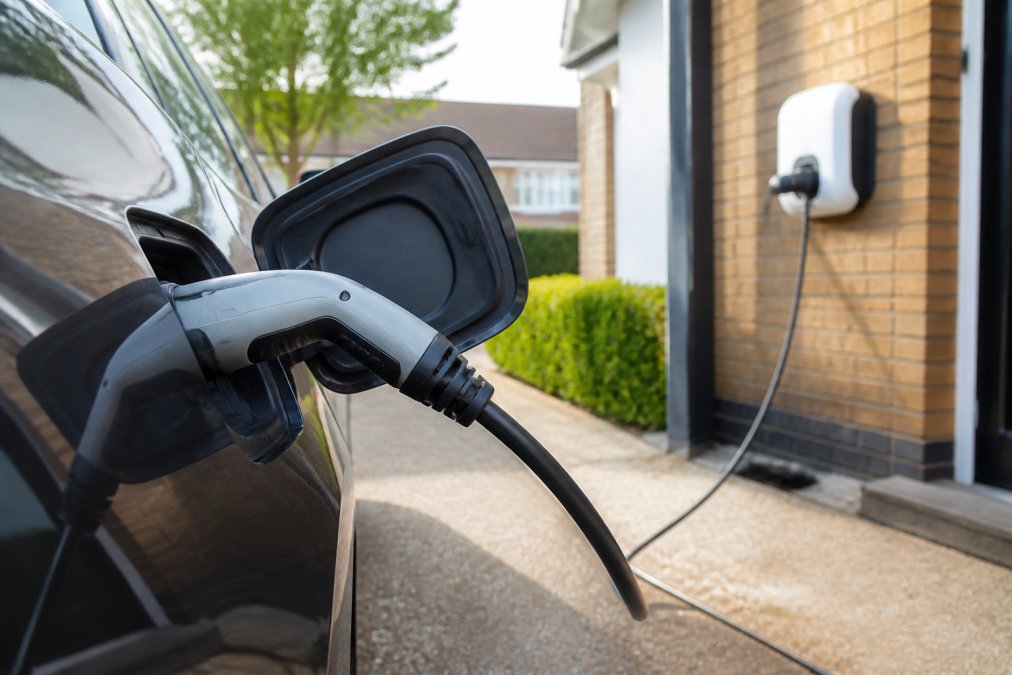
A sensible approach: use rapid chargers for long journeys when you need to minimise stop time. For daily commuting, charge at home overnight using a standard 7 kW wall charger. If you don't have home charging, a workplace charger is the next best option. Rapid chargers should be the exception, not the default.
Managing Thermal Stress During Fast Charging
Modern EVs have battery management systems that attempt to cool the battery during rapid charging. When you plug into a DC fast charger, the BMS activates cooling systems to keep the battery temperature within safe limits. However, the BMS can only do so much. If you rapid charge in hot weather, or if you rapid charge repeatedly without allowing the battery to cool between sessions, thermal stress accumulates.
Some vehicles allow you to precondition the battery before rapid charging. This means cooling the battery to an optimal temperature before you arrive at the charger, which reduces the thermal shock when high current flows through. If your vehicle has this feature, use it on hot days or before planned rapid charging sessions.
The battery management system continuously monitors cell voltage, temperature, and state of charge. If the BMS detects excessive heat or voltage stress, it will throttle charging speed automatically. This is the system protecting itself and working as designed to preserve battery health.
Temperature Control and Battery Longevity
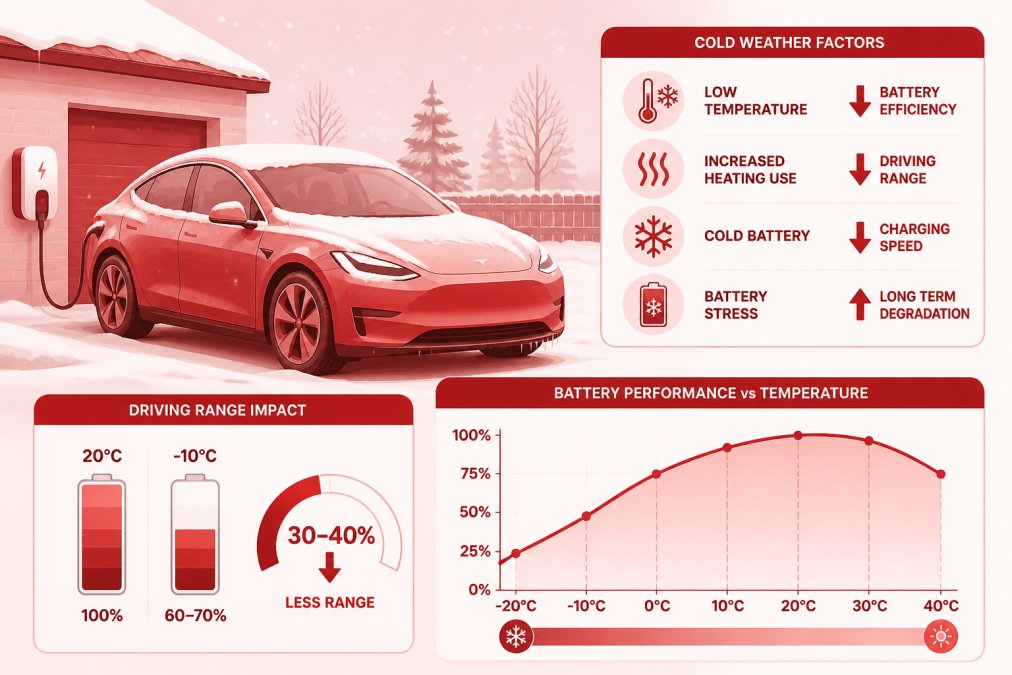
Ambient temperature is one of the most significant factors affecting battery degradation. Lithium-ion batteries perform best between 15°C and 25°C. Outside this range, chemical reactions slow down in cold weather and accelerate dangerously in heat.
Cold temperatures reduce the battery's ability to deliver power and accept charge efficiently. You might notice reduced range on winter mornings; this is temporary and reversible. However, repeatedly charging a cold battery causes irreversible damage. If you charge your EV immediately after driving in freezing conditions, before the battery has warmed up, you're stressing the cells unnecessarily.
Heat is worse. Temperatures above 30°C accelerate degradation significantly. If you live in a region with hot summers, or if your vehicle is regularly exposed to direct sunlight, battery lifespan will be shorter than in cooler climates.
For EV owners in Kettering and Northamptonshire, winters are mild compared to northern regions, but cold charging is still a consideration. If you charge overnight in winter, precondition the battery if your vehicle offers this feature. Warm the battery using the cabin heating system before you begin charging. This takes 10-15 minutes but reduces stress on the cells.
Park in shade when possible, especially in summer. If you have access to covered parking, use it. Some owners install sunshades in the windscreen to reduce cabin and battery temperature on hot days.
How to Store an Electric Car for Long Periods
Preparing Your EV Before Extended Storage
If you're storing your EV for more than a month, preparation is essential. Improper storage can damage the battery and other electrical systems.
First, charge the battery to 50% state of charge before storage. This is the ideal resting state for lithium-ion batteries. A battery left at 0% for weeks will develop internal resistance and potential cell damage. A battery left at 100% will experience voltage stress. Fifty percent minimises degradation during idle periods.
Disable any systems that drain the battery while the vehicle is parked. Most vehicles have a "storage mode" or "transport mode" that minimises parasitic battery drain. Without this, the 12V auxiliary battery will gradually drain the main battery pack even when the car isn't being driven.
Disconnect the negative terminal of the 12V auxiliary battery if you're storing the vehicle for more than three months. This prevents any parasitic drain. Reconnect it when you're ready to use the vehicle again.
Monitoring Battery Health During Downtime
Before putting your EV into storage, record the battery's current state of health using the vehicle's diagnostic system or your smartphone app. This gives you a baseline to compare against when you retrieve the vehicle.
Check on the battery every two to four weeks, even if the vehicle is in storage. The charge level should remain at or near 50%. If it's dropped significantly, the vehicle's auxiliary systems are draining it. If the charge level has increased, the charger might be trickle charging the battery. Adjust the charging settings accordingly.
When you're ready to take the vehicle out of storage, charge it fully before driving. The battery may have developed slight imbalances during the idle period, and a full charge cycle helps recalibrate the battery management system.
How to Maintain Electric Vehicle Battery Through Software and Diagnostics
Battery Management Systems and Capacity Retention
The battery management system is the brain of your EV's battery pack. It monitors the voltage, temperature, and state of charge of individual cells and the overall pack. The BMS makes real-time decisions about charging speed, discharging power, and cooling to keep the battery safe and healthy.
A well-functioning BMS can extend battery life significantly. A failing BMS cannot. This is why regular diagnostic checks are important. If the BMS isn't functioning correctly, it might allow the battery to overcharge, overheat, or discharge too deeply, all of which accelerate degradation.
Software updates often improve battery management algorithms. Manufacturers release updates that optimise how the BMS controls charging and discharging. If your vehicle's manufacturer releases a battery management software update, install it promptly.
Regular Diagnostic Checks at Kettering Motorist Centre
Annual diagnostic checks are one of the best preventative measures for EV battery health. A professional technician can use diagnostic equipment to assess the battery's actual capacity, cell balance, and overall health. This gives you concrete data about whether your battery is degrading at the expected rate or faster.
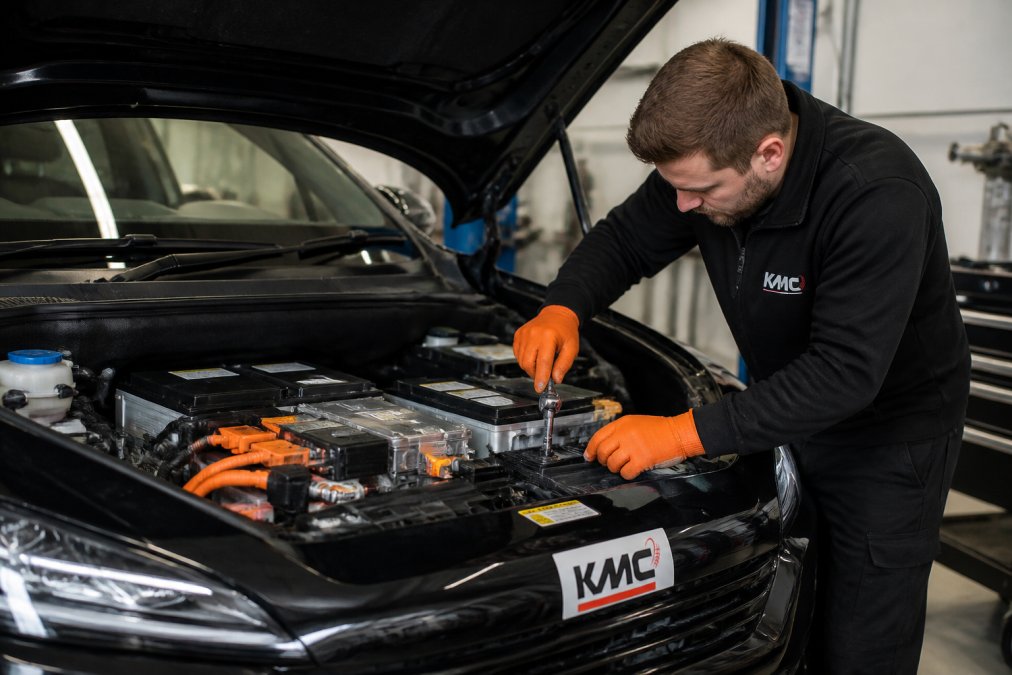
At Kettering Motorist Centre, we offer specialist diagnostic services for electric and hybrid vehicles. Our team can perform comprehensive battery health checks that go beyond what your vehicle's infotainment system displays. We can identify issues with the battery management system, cooling systems, or charging circuits before they cause significant damage.
Early detection matters. If a cooling fan is failing, you might not notice until the battery overheats during rapid charging. A diagnostic check catches this before it happens. If a cell is developing internal resistance, a full diagnostic reveals it before capacity loss becomes severe.
You can book a diagnostic check through our hassle-free online booking system with no upfront payment required. We'll assess your EV's battery health and provide transparent recommendations based on what we find.
Common Mistakes That Damage EV Batteries
The most common mistake is daily reliance on rapid charging. Owners without home charging access sometimes use rapid chargers for routine commuting. If you don't have home charging, workplace charging or a public standard charger is a better long-term choice, even if it takes longer.
Another frequent error is charging to 100% regularly. Many owners charge to full overnight, thinking they're maximising range. Charging to 80% provides 20% less daily range but can extend battery lifespan by years. The trade-off is worth it for most owners.
Running the battery completely flat is damaging. Some owners do this intentionally to "recalibrate" the battery, but this is a myth. Modern EVs don't need recalibration. Repeatedly discharging to 0% damages the cells.
Charging immediately after a long drive in hot weather is another mistake. The battery is already warm from driving. Adding fast charging heat on top accelerates thermal degradation. Wait an hour or two for the battery to cool, then charge at a standard charger if possible.
Finally, ignoring software updates is a common oversight. Manufacturers release battery management updates for a reason. Installing them promptly ensures your BMS is running the latest optimised algorithms.
Maintaining your electric vehicle's battery doesn't require specialist knowledge or expensive equipment. It requires understanding how lithium-ion batteries respond to charging, temperature, and discharge cycles, and building simple habits around that knowledge. Charge between 20% and 80% for daily use, avoid rapid charging for routine commuting, keep the battery cool, and have it checked professionally once a year.
At Kettering Motorist Centre, we specialise in electric and hybrid vehicle diagnostics and maintenance. Our team can assess your battery's actual health, identify potential issues early, and advise you on the best practices for your specific vehicle and driving pattern. Book a battery health diagnostic check through our online system with no upfront payment required. For specialist EV servicing and diagnostics, visit kmcelectric.co.uk or contact Kettering Motorist Centre to discuss your vehicle's needs.
Frequently Asked Questions
How do I keep my EV battery healthy?
Maintain your electric vehicle battery by charging between 20% and 80% for daily use, avoiding rapid charging when possible, and keeping the battery at moderate temperatures. Regular diagnostic checks help monitor battery health and catch issues early. Kettering Motorist Centre offers specialist EV diagnostic services to ensure your battery management system is functioning correctly and your capacity retention remains optimal.
What is the ideal EV charging percentage for everyday driving?
The ideal EV charging percentage for daily commuting is between 20% and 80% state of charge. This charging habit significantly reduces battery degradation compared to charging to 100% regularly. For longer trips, you can charge higher, but returning to the 20-80% range for routine use extends your battery's longevity and maintains its energy density over time.
How does rapid charging affect my EV battery?
Rapid charging and DC fast charging generate substantial heat, which accelerates battery degradation and reduces long-term capacity retention. While convenient for long journeys, frequent rapid charging increases discharge rates and electrochemical stress on lithium-ion cells. Limit DC fast charging to occasional use, and rely on slower, standard charging for daily use to protect your battery's health and extend its lifespan.
How should I store an electric car for long periods?
Before long-term storage, charge your battery to around 50% state of charge, this minimises stress on the lithium-ion cells. Store the vehicle in a cool, dry location away from extreme temperatures. Disconnect the 12V battery if storing for more than a month. Check your vehicle's manual for specific storage guidance, and consider booking a pre-storage diagnostic at Kettering Motorist Centre to ensure everything is ready for downtime.
Thank you for placing a booking with Kettering Motorist Centre Limited for vehicle
PLEASE TAKE YOUR BOOKING REFERENCE NUMBER WITH YOU TO THE MOT CENTRE
Your items
MOT Test
×
Terms and Conditions
These terms and conditions form the basis on which you can visit and use this website. Please read them carefully as they contain important information.
General terms and conditions
This website is owned and operated by Kettering Motorist Centre Ltd (company registration number: 4485858) operating at Trafalgar Road, Kettering, Northamptonshire, NN16 8DB (the "MOT Centre", the "Company", "we" or "us"). If you have any queries about these terms and conditions or if you have any comments or complaints on or about this website, you can contact us at [email protected] or 01536 410142.
The website is to promote and offer for sale the products and services of Kettering Motorist Centre Limited.
1. The contract between us
This website does not take payment for products or services online. The website enables you to view products and services online and to make a booking for later delivery and payment. The vehicle and provision of other products and services promoted by this website and the payment by you of the price of those products and services will take place at the MOT Centre. The booking does not constitute a contract.
The booking process on the site provides details of the booked MOT order. Please take the time to read and check your booking. It is your responsibility to make sure the order is correct and for the correct vehicle.
2. Ownership of rights
All rights, including copyright, in this website are owned by or licensed to the Company. Any use of this website or its contents, including copying or storing it or them in whole or part, other than for your own personal, non commercial use, is prohibited without our permission. You may not modify, distribute or repost anything on this website for any purpose.
3. Accuracy of content
We have taken care in the preparation of the content of this website, in particular to ensure that prices quoted are correct at the time of publishing and that all goods have been fairly described. However, bookings will only be accepted if there are no material errors in the description of the goods or their prices as advertised on this website. Any weights, dimensions and capacities given about the goods are approximate only.
4. Damage to your computer
We try to ensure that this website is free from viruses or defects. However, we cannot guarantee that your use of this website or any websites accessible through it will not cause damage to your computer. It is your responsibility to ensure that the right equipment is available to use the website. Except in the case of negligence on our part, we will not be liable to any person for any loss or damage which may arise to computer equipment as a result of using this website.
5. Availability
All bookings are subject to acceptance and availability. If the MOT date you have requested are is not available, the Centre will contact you by e-mail or phone. You will have the option either to wait until another slot is available or to cancel your booking.
6. Booking errors
You are able to correct errors on your booking up to the point on which you click on “Place Booking” during the booking process.
7. Price
The prices payable for goods that you order are as set out in our website. All prices are inclusive of VAT at the current rates and are correct at the time of entering information, errors and omissions excepted.
Whenever it is not possible to accept your booking to buy goods of the specification and description at the price indicated, the MOT Centre will advise you by email or phone or when you visit the centre.
8. Payment terms
You will be required to pay for the goods or services to the Centre at time of a completed MOT.
9. Delivery charges
N/A
10. Cancellation
The MOT Centre reserves the right to cancel the booking if:
10.1 There is insufficient stock to deliver the goods you have booked.
10.2 One or more of the goods you booked was listed at an incorrect price.
If your booking is cancelled the Centre will notify you by e-mail or phone.
You have the right to cancel your booking at any time up to the point of the MOT. If you do cancel your booking you should inform the centre by phone.
11. Liability
Notwithstanding the foregoing, nothing in these terms and conditions is intended to limit any rights you might have as a consumer under applicable local law or other statutory rights that may not be excluded nor in any way to exclude or limit our liability to you for any death or personal injury resulting from our negligence.
12. Notices
Unless otherwise expressly stated in these terms and conditions, all notices from you to us must be in writing and sent to our contact address given above and all notices from us to you will be displayed on our website from time to time.
13. Changes to legal notices
We reserve the right to change these terms and conditions from time to time and you should look through them as often as possible.
14. Law, jurisdiction and language
This website, any content contained therein and any contract brought into being as a result of usage of this website are governed by and construed in accordance with English law. Parties to any such contract agree to submit to the exclusive jurisdiction of the courts of England and Wales.
15. Invalidity
If any part of these terms and conditions is unenforceable (including any provision in which we exclude our liability to you) the enforceability of any other part of these conditions will not be affected.
16. Privacy
You acknowledge and agree to be bound by the terms of our privacy policy
17. Third party rights
Nothing in this Agreement is intended to, nor shall it confer any rights on a third party.