Knowing how to maintain electric car battery health is one of the most valuable things you can do to protect your investment. At Kettering Motorist Centre, we work with EV and hybrid owners across Kettering, Northamptonshire every week, and the same preventable mistakes come up repeatedly. The good news: most battery degradation is avoidable with the right habits. Below, we'll show you exactly how to extend your battery's cycle life, protect it through extreme weather, and avoid the charging errors that quietly shorten its lifespan.
Here's what most guides get wrong: they treat all EV batteries the same. The chemistry inside your battery pack changes everything, from how you should charge to how you should store your car. Get that detail wrong and you're following advice designed for a different vehicle entirely.
According to the UK Government's guidance on electric vehicle ownership, EV adoption across the UK continues to accelerate, making battery maintenance knowledge more relevant than ever. The strategies covered here apply to modern lithium-ion battery systems and are grounded in how battery management systems actually work.
How Your Electric Car Battery Actually Works
Battery degradation is the gradual, permanent reduction in a lithium-ion battery's capacity to store and deliver energy. Understanding why it happens is the first step to slowing it down.
Lithium-Ion Chemistry and Battery Degradation
A lithium-ion battery stores energy by moving lithium ions between a cathode and an anode through an electrolyte. Each charge and discharge cycle causes microscopic stress on the electrode materials, accumulating over hundreds of cycles and reducing total capacity.
Several factors accelerate this process:
Voltage stress: Charging to 100% or discharging to 0% pushes the battery to its voltage extremes, where electrode degradation is fastest
Heat: High temperatures accelerate chemical reactions inside the cell, including unwanted side reactions that permanently damage capacity
High charge rates: DC fast charging forces large amounts of current through the cells rapidly, generating heat and mechanical stress
Calendar ageing: Even an unused battery will degrade over time, particularly if stored at high or low state of charge
The battery management system (BMS) monitors and controls all of this, limiting charge and discharge rates, balancing cells, and managing thermal conditions. But the BMS can only do so much, your charging habits determine how hard it has to work.
LFP vs NMC: Why Battery Chemistry Changes Everything
This is the detail most guides skip, and it genuinely changes the advice you should follow.
Lithium Iron Phosphate (LFP) batteries, used in many Tesla Model 3 Standard Range vehicles and a growing number of other EVs, are chemically more stable at full charge. Manufacturers of LFP vehicles often recommend charging to 100% regularly, because the chemistry tolerates it and accurate state of charge readings depend on periodic full charges.
Nickel Manganese Cobalt (NMC) batteries, found in most other EVs including the Nissan Leaf, BMW i3, and Hyundai Ioniq, are more energy-dense but more sensitive to voltage extremes. The 20-80% charging rule is specifically designed for NMC chemistry.
Before applying any charging advice, check your owner's manual or manufacturer app to confirm which chemistry your vehicle uses. Following NMC advice on an LFP battery is unnecessary and, in some cases, counterproductive.
Pro TipNot sure which battery chemistry your EV uses? Check the manufacturer's official vehicle spec page or your owner's manual under "battery type." LFP vehicles will often explicitly recommend 100% daily charging in their settings.
Best Charging Practices for Electric Cars
The single most impactful thing you can do for electric car battery health is manage your charging limits. This one habit, applied consistently, can meaningfully extend your battery's useful life over years of ownership.
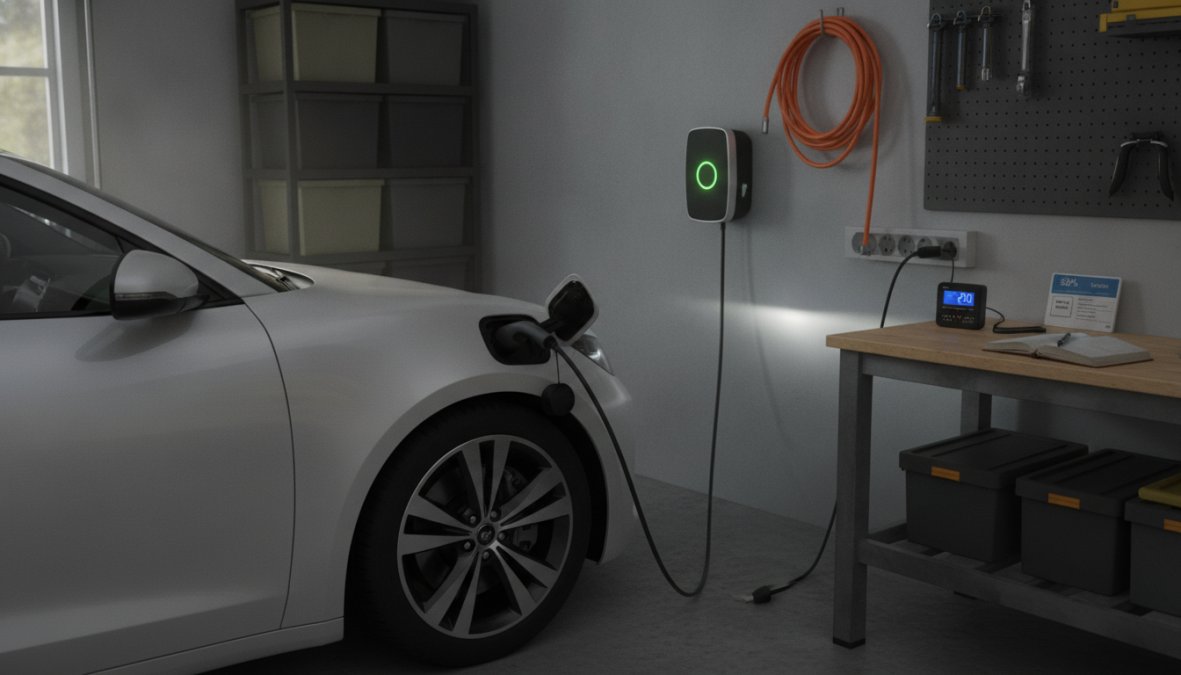
Close-up of a black electric car charging cable plugged into a vehicle's charging port at a residential home charging point, with a smartphone on the car bonnet displaying a green charging status screen, shot in soft evening light
The 20% to 80% Charging Rule Explained
The 20-80% rule means keeping your battery's state of charge (SoC) between 20% and 80% for everyday use, avoiding the voltage extremes where lithium-ion degradation is most aggressive. Above 80%, NMC cathode material is under elevated stress; below 20%, the anode risks lithium plating during rapid charging, permanent, cumulative damage.
Practically, this means:
Set your charge limit to 80% in the manufacturer app for daily use
Only charge to 100% before a long motorway journey, and drive shortly after rather than leaving it parked at full charge
Avoid regularly running below 20% before plugging in
Use scheduled charging to finish closer to departure time rather than sitting at 80% overnight
Shallow cycles, charging from 40% to 70%, for example, are far gentler on cells than deep cycles from 10% to 100%. Frequent top-ups beat waiting until nearly empty.
How to Minimise DC Fast Charging Damage
DC fast charging is genuinely useful, but it does the most damage over time. Standard AC home charging delivers current at a rate the BMS can manage comfortably. DC fast charging bypasses the onboard charger and pushes high-voltage current directly into the battery pack, generating significant heat and mechanical stress.
The practical approach:
Use DC fast charging for long journeys and genuine emergencies, not as your daily routine
Charge to 80% on a rapid charger rather than waiting for 100%, since heat builds most in the final 20%
Allow the battery to cool before plugging into a rapid charger after a long motorway run
Use battery preconditioning where available: the navigation system heats or cools the battery to its optimal temperature before you arrive at the charger, reducing stress significantly
Home charging on a 7kW wallbox is the best default for daily electric car maintenance, slower, gentler, and cheaper per kWh on most home tariffs.
How to Maintain Electric Car Battery Health in Extreme Weather
Temperature is the most underappreciated factor in EV battery management. Both cold and heat affect performance and longevity in distinct ways, and Northamptonshire's winters give local drivers a practical reason to take this seriously.
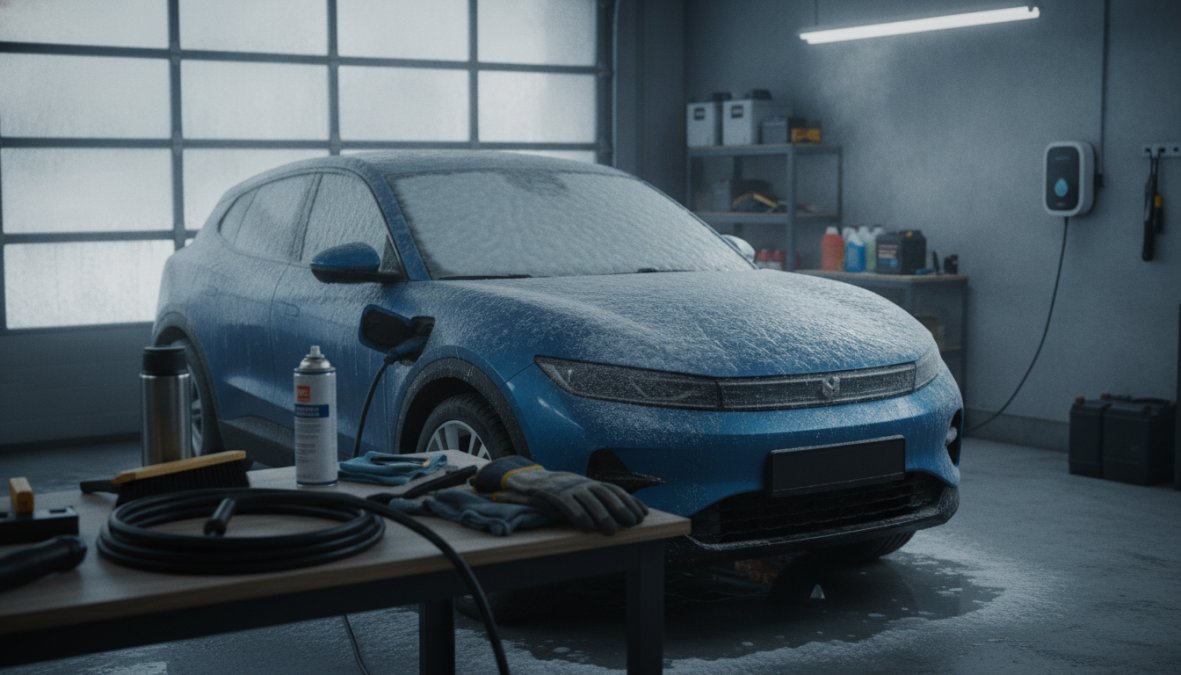
An electric car parked on a frost-covered residential street on a grey winter morning, with thick ice on the windscreen, frost across the bonnet and roof, and a light dusting of snow on the pavement beside it
Winter-Specific Maintenance and Preconditioning
Cold temperatures slow electrochemical reactions inside lithium-ion cells, reducing available capacity and increasing internal resistance. The bigger risk is charging a cold battery quickly: when cell temperature is low, lithium ions cannot intercalate into the anode graphite properly, and lithium plating occurs, permanent, cumulative damage.
The solution is preconditioning: warming the battery to its optimal operating temperature before charging or driving, while still plugged in. This draws energy from the grid rather than the battery, preserving range and protecting the cells.
Winter-specific habits that protect battery health:
Precondition the cabin and battery while plugged in before departure, particularly before using a DC fast charger
Keep the vehicle plugged in when parked in cold conditions so the thermal management system can maintain battery temperature
Avoid parking with a low state of charge in freezing temperatures for extended periods
Expect reduced range below 5°C and plan charging stops to avoid deep discharges
Heat, Overheating, and Active Thermal Management
High temperatures accelerate battery degradation more aggressively than cold. Most modern EVs use active liquid-cooled thermal management systems, maintaining cells within a target temperature range, significantly more effective than the passive air-cooling in older vehicles like the first-generation Nissan Leaf.
To support your vehicle's thermal management system:
Park in shade or a cool garage during hot weather where possible
Avoid leaving the vehicle in direct sun at a high state of charge
Do not DC fast charge immediately after a long drive in hot conditions; allow the battery to cool first
Use the scheduled departure feature so the BMS pre-cools the battery before you arrive at the car
Watch OutParking an EV in direct sunlight at 100% SoC during a heatwave is one of the fastest ways to accelerate calendar ageing. The combination of heat and high voltage stress is particularly damaging to NMC chemistry.
How to Store an Electric Car Long Term Without Harming the Battery
Storing an electric car for weeks or months requires specific preparation. Leaving a battery at 0% risks copper dissolution inside the cells; sustained high charge causes cathode stress and electrolyte oxidation. Both cause accelerated degradation.
The correct approach to long-term electric car storage:
Charge to 50% SoC before storage. Voltage stress is lowest here and the BMS can maintain cell balance without active charging
Store in a cool, dry location. A garage avoiding temperature extremes is ideal; avoid unheated outbuildings that reach sub-zero temperatures in a Kettering winter
Check the SoC every four to six weeks. If it drops below 20%, top up to 50%
Disable features that draw parasitic power while parked, such as always-on connectivity or sentry mode
Do not leave the vehicle plugged in at 100% for months. Use the charge limit setting if available
As documented in guidance from the Society of Motor Manufacturers and Traders on EV ownership, the UK EV market is growing rapidly, meaning more drivers will face long-term storage questions as secondary market ownership increases.
How to Maintain Electric Car Battery Health: Common Mistakes to Avoid
The most common errors we see from EV owners in Kettering are not dramatic failures. They're quiet habits that compound over years.
Mistake
Why It Harms the Battery
Better Habit
Daily charging to 100% (NMC)
Sustained high voltage stress
Set charge limit to 80%
Frequent DC fast charging
Heat and current stress
Default to home AC charging
Storing at 0% or 100%
Electrode damage, copper dissolution
Store at 50% SoC
Ignoring preconditioning in winter
Lithium plating risk during cold charging
Precondition while plugged in
Parking at 100% in summer heat
Combined voltage and thermal stress
Charge closer to departure
Regenerative Braking: The Free Battery Benefit Most Drivers Ignore
Regenerative braking converts kinetic energy back into electrical energy during deceleration, returning it to the battery. The benefit for battery health is indirect but real: effective use reduces how often you need to charge, cutting total cycle count over the vehicle's life.
Practical tips for maximising regenerative braking:
Use the highest regenerative braking setting available
Anticipate stops early and lift off the accelerator well in advance, allowing regen to slow the car
One-pedal driving maximises regen capture and reduces brake wear simultaneously
In cold weather, regenerative braking capacity is temporarily reduced until the battery warms up; plan stopping distances accordingly
Key TakeawayRegenerative braking reduces total charge cycles over the vehicle's lifetime. Fewer cycles means less cumulative degradation. It's the most passive battery maintenance habit available to any EV driver.
EV Battery Health Check: What to Monitor and When
An EV battery health check involves monitoring your battery pack's state of health (SoH), remaining capacity as a percentage of original design capacity. Most modern EVs display this in the manufacturer's app or onboard diagnostics, though terminology varies by brand.
What to monitor and how often:
State of Health (SoH): Check annually via the manufacturer app or a third-party OBD2 diagnostic tool. A healthy battery should retain above 80% capacity after several years of normal use
Charging behaviour changes: Noticeably longer charge times or significantly reduced range at full charge warrants investigation
Unusual heat during charging: Excessive warmth around the battery during normal AC charging can indicate a thermal management issue
BMS warning lights: Any battery-related warning light should be investigated promptly by a specialist
According to research published by Geotab on real-world EV battery degradation, most EV batteries degrade more slowly than early predictions suggested, provided charging habits are managed well. Behaviour, not just chemistry, determines long-term battery health.
Battery Warranty Implications and What Voids Your Cover
Most EV manufacturers provide a separate battery warranty guaranteeing the battery will not fall below 70% of its original capacity within the warranty term. Specifics vary significantly by manufacturer and model.
What commonly affects warranty cover:
Unauthorised modifications to the charging system or BMS software
Physical damage from impacts, flooding, or improper storage
Using non-approved charging equipment that delivers incorrect voltage or current
What does NOT void your warranty under normal use:
Using public DC fast chargers occasionally
Charging to 100% for long journeys
Normal capacity loss within the manufacturer's defined acceptable range
Keep your vehicle serviced according to the manufacturer's schedule, use approved charging equipment, and document any unusual battery behaviour with timestamps. If you suspect a battery fault, have it assessed by a qualified technician before the warranty expires.
Maintaining your EV battery well is not complicated, but it does require consistent attention to charging habits, temperature management, and periodic health monitoring. Kettering Motorist Centre provides specialist diagnostic and repair services for electric and hybrid vehicles across Kettering and Northamptonshire, with no upfront payment required to book online. Our hassle-free booking system means you can schedule an EV health check or MOT at a time that suits you. Book your MOT with Kettering Motorist Centre today and keep your electric vehicle running safely and efficiently for years to come.
Frequently Asked Questions
How can I extend the life of my electric car battery?
To extend your EV battery life, keep your state of charge between 20% and 80% for daily driving, avoid frequent DC fast charging, and use your car's preconditioning feature before driving in cold weather. Parking in a garage during extreme temperatures reduces thermal stress. Enabling scheduled charging through your vehicle's app also helps by completing the charge just before you drive, minimising the time the battery spends at high voltage levels.
Does fast charging damage electric car batteries?
Occasional DC fast charging is unlikely to cause significant harm, but relying on it daily can accelerate battery degradation over time. High-speed charging generates more heat inside the battery pack, increasing voltage stress on individual cells. Most modern battery management systems limit charging speed to protect the pack, but the cumulative effect of frequent fast charging still shortens cycle life compared to regular AC home charging. Reserve DC fast charging for longer journeys when it is genuinely needed.
What is the ideal battery percentage to keep an electric car at?
For NMC lithium-ion batteries, the ideal daily range is 20% to 80% state of charge. Staying within this window reduces voltage stress and slows capacity loss. If your car uses an LFP (lithium iron phosphate) battery, common in some Tesla Model 3 variants and certain other EVs, manufacturers often recommend charging to 100% regularly, as LFP chemistry is more tolerant of full charges. Check your owner's manual or manufacturer app to confirm which battery chemistry your vehicle uses.
What happens to EV batteries in extreme temperatures?
Extreme cold temporarily reduces battery capacity and range, as lithium-ion cells become less chemically active below freezing. Extreme heat poses a greater long-term risk, accelerating battery degradation if the thermal management system cannot keep the pack within its safe operating temperature. Most EVs use an active liquid coolant system to regulate temperature. Using preconditioning, warming or cooling the battery while still plugged in, before driving in extreme weather protects both range and long-term battery health.
How often should I get an EV battery health check?
An EV battery health check is worth carrying out at least once a year, ideally during your annual service or MOT. A diagnostic scan of the battery management system can reveal capacity loss, cell imbalances, and any fault codes before they become costly problems. At Kettering Motorist Centre, our technicians are experienced with electric and hybrid vehicles and can carry out diagnostic checks alongside your regular vehicle maintenance, giving you a clear picture of your battery's condition.
How should I store an electric car long term without damaging the battery?
For long-term storage, aim for a state of charge between 50% and 70%, never store the vehicle at 0% or 100%. Store the car in a cool, dry location away from temperature extremes where possible. Check and top up the charge every four to six weeks to prevent the battery from dropping too low. Avoid leaving the car on a charger set to 100% for extended periods, as prolonged high voltage stress contributes to battery degradation even when the vehicle is not being driven.
Your booking Failed
Please try again or please call 01536 410142
Thank you for placing a booking with Kettering Motorist Centre Limited for vehicle
PLEASE TAKE YOUR BOOKING REFERENCE NUMBER WITH YOU TO THE MOT CENTRE
Your items
MOT Test
×
Terms and Conditions
These terms and conditions form the basis on which you can visit and use this website. Please read them carefully as they contain important information.
General terms and conditions
This website is owned and operated by Kettering Motorist Centre Ltd (company registration number: 4485858) operating at Trafalgar Road, Kettering, Northamptonshire, NN16 8DB (the "MOT Centre", the "Company", "we" or "us"). If you have any queries about these terms and conditions or if you have any comments or complaints on or about this website, you can contact us at [email protected] or 01536 410142.
The website is to promote and offer for sale the products and services of Kettering Motorist Centre Limited.
1. The contract between us
This website does not take payment for products or services online. The website enables you to view products and services online and to make a booking for later delivery and payment. The vehicle and provision of other products and services promoted by this website and the payment by you of the price of those products and services will take place at the MOT Centre. The booking does not constitute a contract.
The booking process on the site provides details of the booked MOT order. Please take the time to read and check your booking. It is your responsibility to make sure the order is correct and for the correct vehicle.
2. Ownership of rights
All rights, including copyright, in this website are owned by or licensed to the Company. Any use of this website or its contents, including copying or storing it or them in whole or part, other than for your own personal, non commercial use, is prohibited without our permission. You may not modify, distribute or repost anything on this website for any purpose.
3. Accuracy of content
We have taken care in the preparation of the content of this website, in particular to ensure that prices quoted are correct at the time of publishing and that all goods have been fairly described. However, bookings will only be accepted if there are no material errors in the description of the goods or their prices as advertised on this website. Any weights, dimensions and capacities given about the goods are approximate only.
4. Damage to your computer
We try to ensure that this website is free from viruses or defects. However, we cannot guarantee that your use of this website or any websites accessible through it will not cause damage to your computer. It is your responsibility to ensure that the right equipment is available to use the website. Except in the case of negligence on our part, we will not be liable to any person for any loss or damage which may arise to computer equipment as a result of using this website.
5. Availability
All bookings are subject to acceptance and availability. If the MOT date you have requested are is not available, the Centre will contact you by e-mail or phone. You will have the option either to wait until another slot is available or to cancel your booking.
6. Booking errors
You are able to correct errors on your booking up to the point on which you click on “Place Booking” during the booking process.
7. Price
The prices payable for goods that you order are as set out in our website. All prices are inclusive of VAT at the current rates and are correct at the time of entering information, errors and omissions excepted.
Whenever it is not possible to accept your booking to buy goods of the specification and description at the price indicated, the MOT Centre will advise you by email or phone or when you visit the centre.
8. Payment terms
You will be required to pay for the goods or services to the Centre at time of a completed MOT.
9. Delivery charges
N/A
10. Cancellation
The MOT Centre reserves the right to cancel the booking if:
10.1 There is insufficient stock to deliver the goods you have booked.
10.2 One or more of the goods you booked was listed at an incorrect price.
If your booking is cancelled the Centre will notify you by e-mail or phone.
You have the right to cancel your booking at any time up to the point of the MOT. If you do cancel your booking you should inform the centre by phone.
11. Liability
Notwithstanding the foregoing, nothing in these terms and conditions is intended to limit any rights you might have as a consumer under applicable local law or other statutory rights that may not be excluded nor in any way to exclude or limit our liability to you for any death or personal injury resulting from our negligence.
12. Notices
Unless otherwise expressly stated in these terms and conditions, all notices from you to us must be in writing and sent to our contact address given above and all notices from us to you will be displayed on our website from time to time.
13. Changes to legal notices
We reserve the right to change these terms and conditions from time to time and you should look through them as often as possible.
14. Law, jurisdiction and language
This website, any content contained therein and any contract brought into being as a result of usage of this website are governed by and construed in accordance with English law. Parties to any such contract agree to submit to the exclusive jurisdiction of the courts of England and Wales.
15. Invalidity
If any part of these terms and conditions is unenforceable (including any provision in which we exclude our liability to you) the enforceability of any other part of these conditions will not be affected.
16. Privacy
You acknowledge and agree to be bound by the terms of our privacy policy
17. Third party rights
Nothing in this Agreement is intended to, nor shall it confer any rights on a third party.