What Is a Diesel Particulate Filter and Why Does the Warning Light Appear?
A Diesel Particulate Filter (DPF) traps and burns soot particles from diesel engines, reducing harmful emissions. When soot accumulates beyond safe levels, your vehicle's engine management system triggers a warning light, signalling that regeneration is needed. The DPF collects exhaust particles during normal driving and periodically burns them off through regeneration, which heats the filter to around 600°C to convert soot into ash. If your driving patterns don't allow this natural process to occur regularly, the filter fills up faster than it can clean itself.
Pro TipShort-trip driving in urban environments is the biggest culprit behind DPF problems. Journeys under 10 miles at low speeds don't generate enough exhaust temperature for passive regeneration to occur.
Understanding DPF Regeneration and Soot Accumulation
Soot accumulates silently until the filter reaches saturation, typically around 45% on modern vehicles. Under motorway or high-speed driving conditions, exhaust gas temperature rises sufficiently to burn off particles automatically. However, town centre driving, frequent short journeys, and idling prevent the exhaust from reaching the threshold needed for passive regeneration.
When saturation is reached, the engine management system activates a warning sequence. First, a yellow warning light appears. If ignored, the light may flash, indicating active regeneration is being attempted. If the vehicle continues in conditions that prevent successful regeneration, the light remains solid and the vehicle may enter limp mode, restricting engine power to protect the engine.
Common Reasons for the Dashboard Warning Light
Insufficient regeneration due to short journeys and low-speed urban driving is the most common cause. Low AdBlue levels also trigger the warning light, AdBlue is a diesel exhaust fluid that helps reduce nitrogen oxides during regeneration. A faulty differential pressure sensor, which measures how full the filter is, may send incorrect signals to the engine computer. Engine faults elsewhere in the system, such as a faulty EGR valve or turbocharger issues, can also prevent the exhaust from reaching the correct temperature for regeneration.
Signs of a Clogged DPF Filter You Shouldn't Ignore
Visual and Performance Indicators
A clogged DPF manifests through reduced engine power, sluggish acceleration, and lack of throttle response. Excessive black smoke from the exhaust indicates the filter is severely blocked. You may also smell strong diesel odour or burning from the exhaust area as active regeneration is attempted. Fuel consumption increases noticeably as the engine works harder to push exhaust gases through the clogged filter.
Limp Mode and Reduced Engine Performance
When severely clogged, the vehicle may enter limp mode, deliberately reducing engine power to prevent damage. Maximum speed may be limited to around 50 mph. Limp mode is a protective mechanism, driving with a completely blocked DPF can warp the cylinder head or damage the turbocharger as exhaust backpressure builds to dangerous levels.
If your vehicle enters limp mode, drive carefully to a garage. Continuing to drive in limp mode with a severely blocked filter risks permanent engine damage.
Watch OutDriving with a blocked DPF in limp mode for extended distances can cause the turbocharger to overheat and fail, potentially resulting in thousands of pounds of damage.
Understanding DPF Regeneration Process: Passive vs Active
How Passive Regeneration Works During Highway Driving
Passive regeneration occurs naturally during sustained high-speed driving, typically motorway journeys, where exhaust gas temperature remains consistently above 400°C. The accumulated soot is oxidised (burned) at high temperature, converting it into ash. This process is entirely automatic and requires no driver input.
For passive regeneration to be effective, you typically need to drive at motorway speeds for at least 20-30 minutes continuously. Regular motorway journeys, at least one or two per week, will usually prevent the DPF warning light from appearing. This is why the warning light is common among urban drivers and those using vehicles for short commutes.
Active Regeneration and Forced Regeneration Explained
When passive regeneration hasn't occurred for around 300-500 miles, the engine management system initiates active regeneration. The engine management computer adjusts fuel injection timing and increases engine load to raise exhaust gas temperature to around 600°C, forcing soot to burn. This typically lasts 10-20 minutes and happens automatically while you drive.
Active regeneration is effective but less efficient than passive regeneration because it requires extra fuel. If it fails, perhaps because you turn off the engine too soon or the vehicle is driven in conditions preventing the exhaust from reaching the required temperature, the warning light will remain.
Forced regeneration is a professional procedure performed at a garage using specialist diagnostic equipment. The technician connects an OBD-II scanner to the vehicle's diagnostic port and manually initiates a regeneration cycle. This allows the filter to be cleaned without hours of motorway driving.
Key TakeawayPassive regeneration is free and automatic during high-speed driving; active regeneration is automatic but uses extra fuel; forced regeneration is manual, performed by a technician, and guarantees immediate filter cleaning.
How to Fix DPF Warning Light Issues: Step-by-Step Methods
Step 1: Check Your Driving Conditions and Attempt Passive Regeneration
Review your recent journeys. If you've been doing primarily short trips and urban driving, your DPF hasn't had the opportunity to regenerate naturally. Drive at sustained motorway speeds for at least 30-40 minutes at 60 mph or higher, maintaining consistent throttle input. Avoid stop-start traffic and frequent braking. Many drivers find that a single long motorway journey clears the warning light if the filter isn't severely clogged.
Step 2: Verify AdBlue and DPF Additive Fluid Levels
Check your vehicle's AdBlue level. If the tank is empty or very low, the engine management system may prevent regeneration. Most vehicles display an AdBlue warning light when fluid is running low. AdBlue is inexpensive and available at most petrol stations. After topping up, attempt another motorway drive to allow passive regeneration.
Step 3: Use an OBD-II Scanner to Read Diagnostic Fault Codes
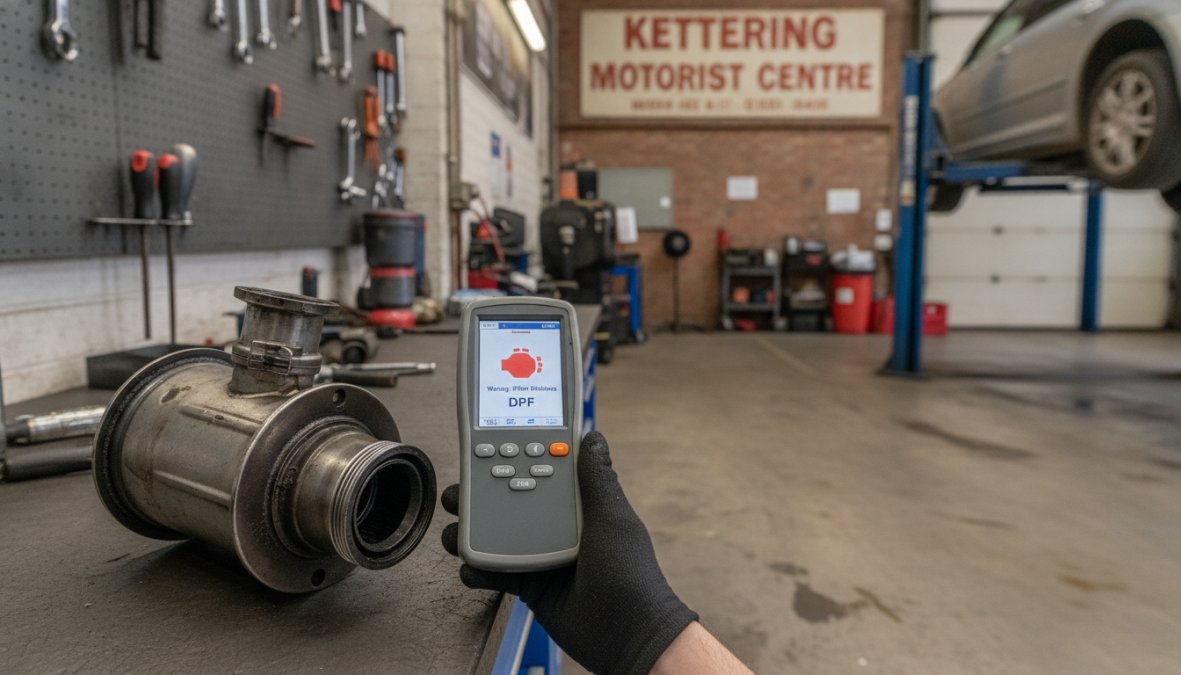
If the warning light persists, use an OBD-II scanner to read diagnostic fault codes. These handheld devices connect to your vehicle's diagnostic port and retrieve fault codes that indicate what the engine management system has detected. Different codes point to different problems. Many garages offer free or low-cost diagnostic scans, or you can purchase a scanner for around £20-50.
Step-by-step visual guide for Mechanic, OBD for dpf warning light
Step 4: Perform Manual Regeneration If Appropriate
If diagnostic codes don't indicate a sensor fault and the DPF simply appears full of soot, attempt manual regeneration by driving at a constant speed of 60 mph or higher for 15-20 minutes without interruption. Monitor your dashboard for any indication that regeneration is occurring. Manual regeneration has variable success rates and works best if the DPF is only partially full.
Prevent DPF Warning Light Issues Through Maintenance
Avoiding Short-Trip Driving and Maintaining Proper RPM Range
Avoid excessive short-trip driving. If your daily commute is under 5 miles, combine errands into a single journey or plan a longer drive at least once or twice per week. Maintain steady throttle input and aim for RPM ranges around 2,000-2,500 where modern diesel engines operate efficiently. Even a single 30-minute motorway drive per week can prevent the warning light.
Regular Servicing and Differential Pressure Sensor Checks
Regular servicing is essential for DPF health. Technicians can inspect the DPF system, check sensor operation, and verify all components function correctly. A faulty differential pressure sensor is one of the most common causes of false DPF warnings. Service your vehicle according to the manufacturer's schedule using the correct grade of engine oil.
Pro TipIf purchasing a diesel vehicle, ask about the DPF service history. A vehicle with regular motorway use is far less likely to have future DPF problems than one with urban-only driving history.
DPF Cleaning Cost and Professional Service Options
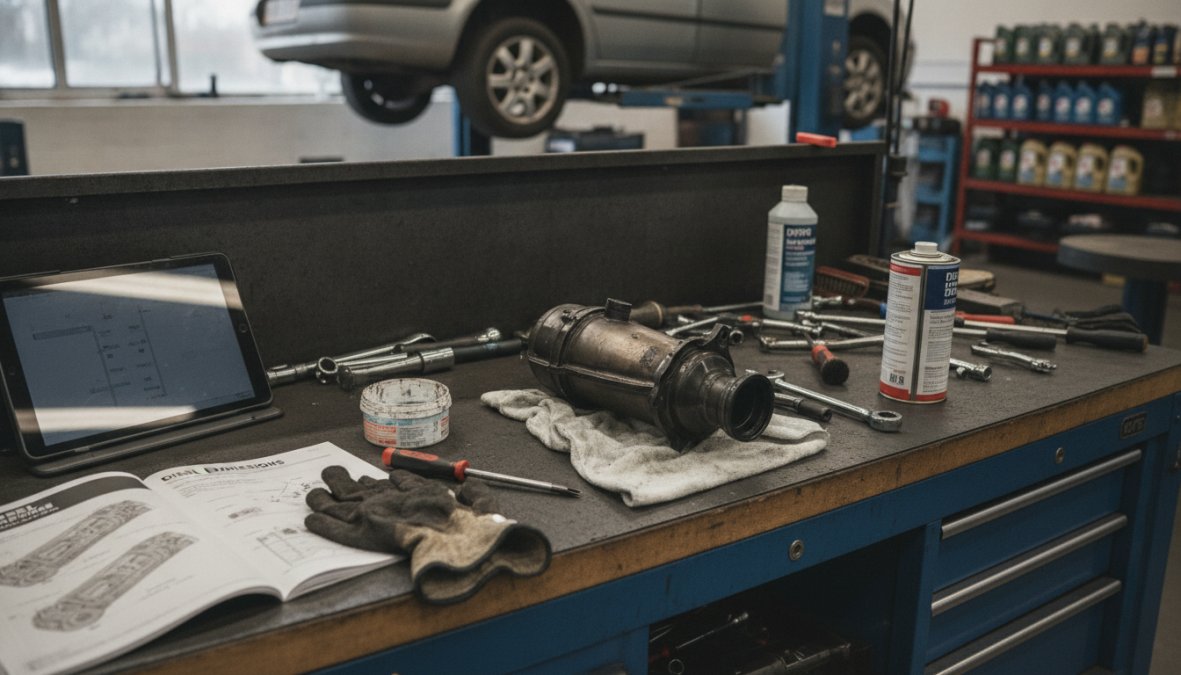
When a DPF warning light persists despite your efforts, professional help is needed. Professional DPF cleaning involves removing the filter and using specialised equipment to force high-pressure air or water through it to dislodge soot and ash. This can restore the filter to near-original condition and is the more economical option when the filter itself isn't damaged.
DPF filter replacement is necessary when the filter is cracked, physically damaged, or warped by extreme temperatures. The new filter comes with a warranty and performs like new.
A technician will begin with a diagnostic scan to read fault codes. If the diagnosis indicates a blockage, forced regeneration may be recommended first as the quickest and least expensive option. If forced regeneration fails, DPF cleaning or replacement will be recommended. The technician will explain options, costs, and expected outcomes before beginning work.
During cleaning or replacement, the technician may also inspect related components like the differential pressure sensor, EGR valve, and fuel injectors to identify other faults that may have contributed to the DPF problem.
Key TakeawayAlways get a diagnostic scan before committing to expensive DPF work. A fault code reading costs very little but can prevent unnecessary cleaning or replacement if the real problem is a faulty sensor.
Common Mistakes to Avoid When Dealing with DPF Warning Lights
Ignoring the warning light is the most common mistake. A DPF warning light indicates a problem that will only worsen if ignored, eventually leading to limp mode and potential engine damage. Attempting to disable or remove the DPF is illegal in the UK and will result in MOT failure.
Assuming a single motorway drive will fix the problem is another mistake. If the light has been on for weeks, you may need multiple long drives over several days or professional cleaning. Using cheap, low-quality diesel fuel accelerates DPF blockage. Neglecting other engine faults that contribute to DPF problems is costly, faulty EGR valves, turbocharger issues, or fuel injection problems prevent regeneration and cause repeated blockage.
When to Seek Professional Help for Your DPF Warning Light
Red Flags That Require Garage Intervention
If your vehicle enters limp mode, professional help is urgent. A flashing DPF warning light (rather than steady) indicates active regeneration has failed, suggesting either severe blockage or an underlying fault. If the warning light reappears within a week or two of a motorway drive or forced regeneration, something more serious is wrong. A burning smell from the exhaust persisting beyond 20-30 minutes suggests active regeneration is stuck or the filter is damaged. If diagnostic codes reveal faults other than "DPF full," such as sensor or turbocharger faults, professional diagnosis is necessary.
How Long You Can Safely Drive with the Warning Light On
You can generally drive with a DPF warning light for a few days to a week without risking serious damage, provided the vehicle isn't in limp mode. If the light appears and you haven't driven on a motorway recently, attempt a long motorway drive. If this doesn't clear the light within a few days, book a garage appointment. If the vehicle enters limp mode or the light flashes, stop driving immediately. The longer you drive with a blocked DPF, the more soot accumulates and the more expensive the eventual fix becomes.
A DPF warning light doesn't have to mean an expensive repair. By understanding what causes the warning, taking preventative steps like regular motorway driving, and seeking professional help promptly when needed, you can keep your diesel engine running smoothly. If your DPF warning light is on, book your diagnostic appointment today and get back on the road with confidence.
Frequently Asked Questions
What does a DPF warning light mean and what causes it to come on?
A DPF warning light indicates your Diesel Particulate Filter is becoming clogged with soot and ash buildup. This occurs when the engine management system detects excessive exhaust backpressure or when the differential pressure sensor signals that regeneration is needed. Common causes include frequent short-trip driving, low-quality fuel, incorrect AdBlue levels, or a faulty sensor. If ignored, the light can trigger limp mode, restricting engine performance.
How can I fix a DPF warning light myself without professional help?
Start by driving at sustained highway speeds (above 2,500 RPM for 20–30 minutes) to trigger passive regeneration. Check your AdBlue and DPF additive fluid levels—low levels prevent proper regeneration. Use an OBD-II scanner to read any fault codes, which may reveal simple issues like sensor problems. If your vehicle supports manual regeneration through the engine management system, this can clear accumulated soot. However, if these steps don't resolve the issue, professional diagnostic help from Kettering Motorist Centre is recommended.
What are the signs of a clogged DPF filter that I should watch for?
Key signs include a yellow or flashing dashboard warning light, reduced engine power and acceleration, black smoke from the exhaust, increased fuel consumption, and difficulty reaching higher RPM ranges. Your vehicle may also enter limp mode, limiting speed and performance. If you notice any combination of these symptoms, your DPF likely requires cleaning or regeneration. Professional mechanics can use diagnostic tools to confirm the issue and recommend the best solution.
How much does DPF cleaning cost compared to filter replacement?
DPF cleaning costs depend on the severity of soot accumulation, your vehicle model, and whether forced regeneration or professional cleaning is needed. Filter replacement is typically more expensive than cleaning but may be necessary if the filter is damaged or ash buildup is severe. For accurate pricing on DPF cleaning and replacement services in Kettering, contact Kettering Motorist Centre directly for a quote tailored to your specific vehicle and situation.
Your booking Failed
Please try again or please call 01536 410142
Thank you for placing a booking with Kettering Motorist Centre Limited for vehicle
PLEASE TAKE YOUR BOOKING REFERENCE NUMBER WITH YOU TO THE MOT CENTRE
Your items
MOT Test
×
Terms and Conditions
These terms and conditions form the basis on which you can visit and use this website. Please read them carefully as they contain important information.
General terms and conditions
This website is owned and operated by Kettering Motorist Centre Ltd (company registration number: 4485858) operating at Trafalgar Road, Kettering, Northamptonshire, NN16 8DB (the "MOT Centre", the "Company", "we" or "us"). If you have any queries about these terms and conditions or if you have any comments or complaints on or about this website, you can contact us at [email protected] or 01536 410142.
The website is to promote and offer for sale the products and services of Kettering Motorist Centre Limited.
1. The contract between us
This website does not take payment for products or services online. The website enables you to view products and services online and to make a booking for later delivery and payment. The vehicle and provision of other products and services promoted by this website and the payment by you of the price of those products and services will take place at the MOT Centre. The booking does not constitute a contract.
The booking process on the site provides details of the booked MOT order. Please take the time to read and check your booking. It is your responsibility to make sure the order is correct and for the correct vehicle.
2. Ownership of rights
All rights, including copyright, in this website are owned by or licensed to the Company. Any use of this website or its contents, including copying or storing it or them in whole or part, other than for your own personal, non commercial use, is prohibited without our permission. You may not modify, distribute or repost anything on this website for any purpose.
3. Accuracy of content
We have taken care in the preparation of the content of this website, in particular to ensure that prices quoted are correct at the time of publishing and that all goods have been fairly described. However, bookings will only be accepted if there are no material errors in the description of the goods or their prices as advertised on this website. Any weights, dimensions and capacities given about the goods are approximate only.
4. Damage to your computer
We try to ensure that this website is free from viruses or defects. However, we cannot guarantee that your use of this website or any websites accessible through it will not cause damage to your computer. It is your responsibility to ensure that the right equipment is available to use the website. Except in the case of negligence on our part, we will not be liable to any person for any loss or damage which may arise to computer equipment as a result of using this website.
5. Availability
All bookings are subject to acceptance and availability. If the MOT date you have requested are is not available, the Centre will contact you by e-mail or phone. You will have the option either to wait until another slot is available or to cancel your booking.
6. Booking errors
You are able to correct errors on your booking up to the point on which you click on “Place Booking” during the booking process.
7. Price
The prices payable for goods that you order are as set out in our website. All prices are inclusive of VAT at the current rates and are correct at the time of entering information, errors and omissions excepted.
Whenever it is not possible to accept your booking to buy goods of the specification and description at the price indicated, the MOT Centre will advise you by email or phone or when you visit the centre.
8. Payment terms
You will be required to pay for the goods or services to the Centre at time of a completed MOT.
9. Delivery charges
N/A
10. Cancellation
The MOT Centre reserves the right to cancel the booking if:
10.1 There is insufficient stock to deliver the goods you have booked.
10.2 One or more of the goods you booked was listed at an incorrect price.
If your booking is cancelled the Centre will notify you by e-mail or phone.
You have the right to cancel your booking at any time up to the point of the MOT. If you do cancel your booking you should inform the centre by phone.
11. Liability
Notwithstanding the foregoing, nothing in these terms and conditions is intended to limit any rights you might have as a consumer under applicable local law or other statutory rights that may not be excluded nor in any way to exclude or limit our liability to you for any death or personal injury resulting from our negligence.
12. Notices
Unless otherwise expressly stated in these terms and conditions, all notices from you to us must be in writing and sent to our contact address given above and all notices from us to you will be displayed on our website from time to time.
13. Changes to legal notices
We reserve the right to change these terms and conditions from time to time and you should look through them as often as possible.
14. Law, jurisdiction and language
This website, any content contained therein and any contract brought into being as a result of usage of this website are governed by and construed in accordance with English law. Parties to any such contract agree to submit to the exclusive jurisdiction of the courts of England and Wales.
15. Invalidity
If any part of these terms and conditions is unenforceable (including any provision in which we exclude our liability to you) the enforceability of any other part of these conditions will not be affected.
16. Privacy
You acknowledge and agree to be bound by the terms of our privacy policy
17. Third party rights
Nothing in this Agreement is intended to, nor shall it confer any rights on a third party.