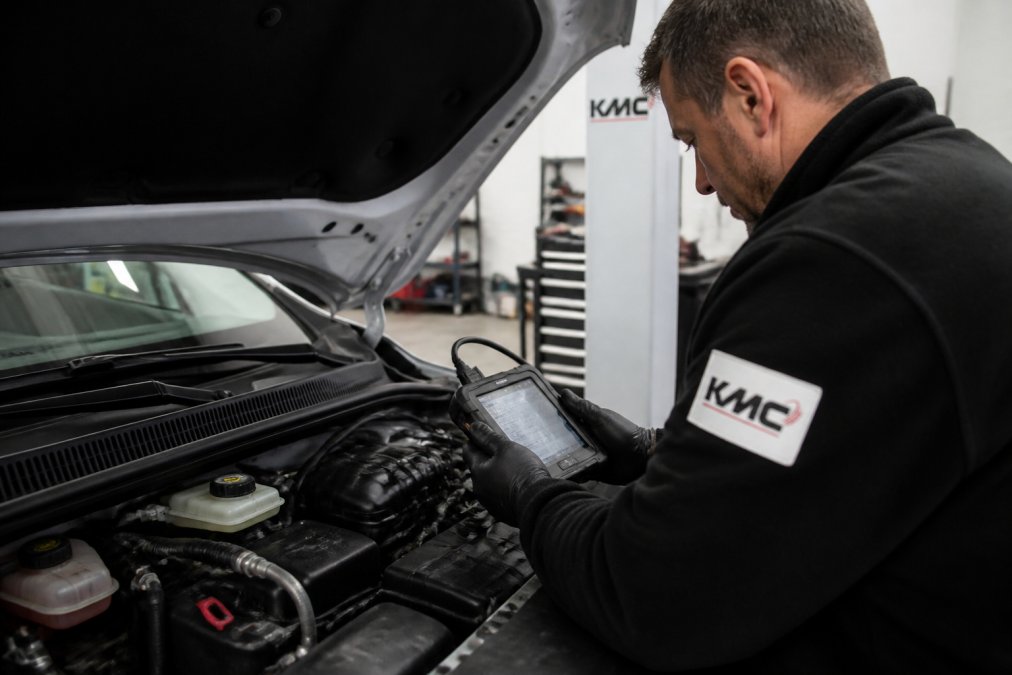
A car diagnostic test is a computerised examination of your vehicle's engine management system and electronic components to identify faults, inefficiencies, and potential problems before they become serious. It reads data from your car's onboard computer and translates error codes into actionable information about what needs attention.
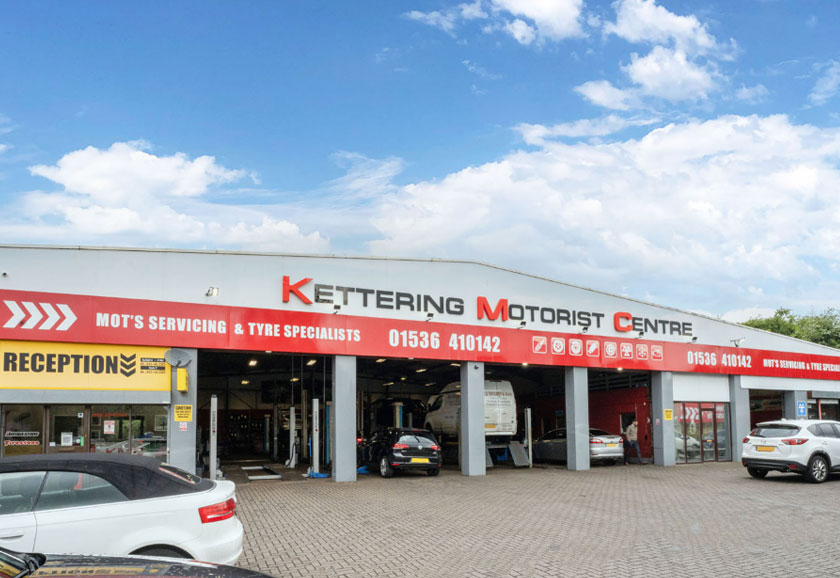
Modern vehicles generate thousands of data points every second: fuel consumption, engine temperature, emission levels, brake performance, transmission health. At Kettering Motorist Centre, we use advanced diagnostic equipment to connect to your vehicle's diagnostic port and retrieve real-time data from your engine control unit, precise, measurable information that tells us exactly what's wrong and what needs fixing.
Pro TipA diagnostic test performed early can prevent expensive repairs. Many drivers ignore [warning lights](/blog/how-to-reset-dashboard-warning-lights-step-by-step) for weeks, only to discover that a minor sensor issue has cascaded into a major repair. Catching problems early saves money and keeps you safer on the road.
How Does a Car Diagnostic Check Work?
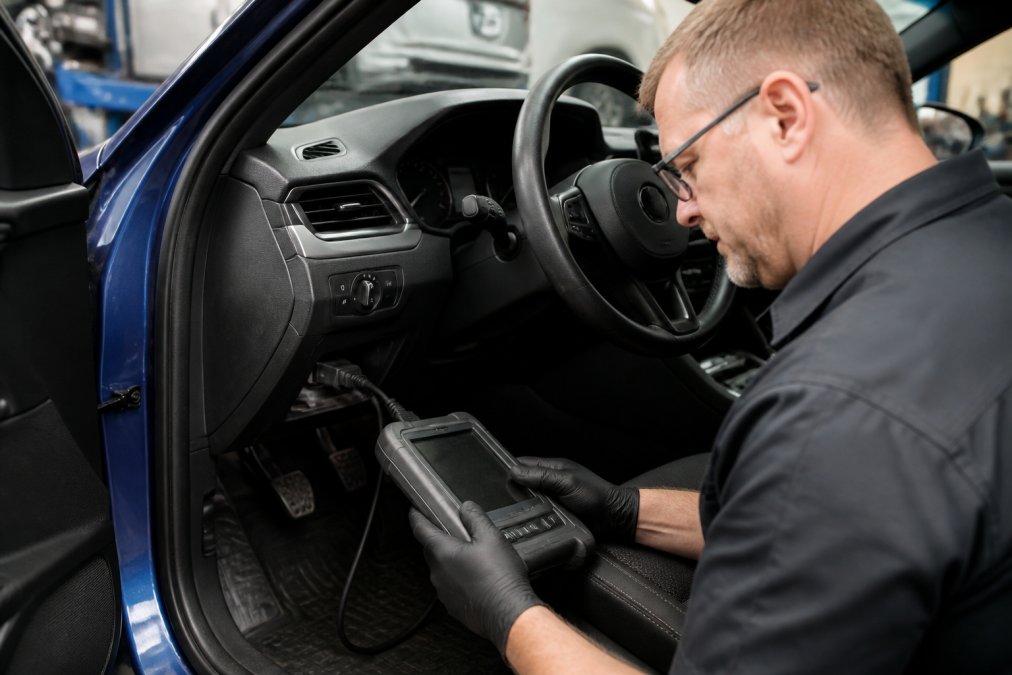
A car diagnostic check begins when a technician connects a diagnostic scanner to your vehicle's OBD2 port, a standardised connection point usually located beneath the steering column or dashboard. This port is the gateway to your vehicle's electronic control unit, or ECU, which monitors and controls engine performance, emissions, and dozens of other systems.
The scanner communicates with the ECU using the CAN bus protocol, a standardised language that allows different vehicle systems to share information. Once connected, the scanner retrieves stored fault codes, also called diagnostic trouble codes, or DTCs, which are numerical identifiers that pinpoint exactly what the vehicle's systems have detected as abnormal. A code like P0300 indicates random misfires in the combustion process; P0171 points to a fuel system running too lean.
Modern diagnostic software allows technicians to view live data streams, real-time readings from sensors monitoring engine temperature, oxygen levels, fuel pressure, throttle position, and dozens of other parameters. This live data reveals whether sensors are functioning correctly or whether the problem lies elsewhere in the system. A faulty oxygen sensor might trigger an emissions fault code, but live data shows whether the sensor itself is responding properly or whether the problem is actually a vacuum leak affecting readings.
The technician will also perform system resets and run comprehensive scans across all vehicle systems, not just the engine. The entire process typically takes between 30 minutes and an hour, depending on vehicle complexity and the number of fault codes present.
Key TakeawayThe diagnostic check is only as good as the equipment and technician performing it. Professional diagnostic software reveals the true root cause of a problem, not just surface-level fault codes.
Understanding OBD2 Scanner Tools and Fault Codes
The OBD2 scanner is the physical tool that communicates with your vehicle's onboard diagnostics system. OBD2 stands for "On-Board Diagnostics, Version 2", a standardised system mandated in the UK and Europe since 2001 for petrol vehicles and 2004 for diesel vehicles. Every car sold in the UK for the last two decades has an OBD2 port and responds to OBD2 diagnostic protocols.
Professional diagnostic software accesses live data, performs system tests, and offers repair guidance. A basic code reader tells you what's wrong; professional diagnostics tell you why it's wrong and what to do about it.
Diagnostic trouble codes, or DTCs, are the language your vehicle uses to communicate problems. These four-character alphanumeric codes follow a standardised format. The first character indicates the system: P for powertrain (engine, transmission, emissions), C for chassis (brakes, suspension, steering), B for body (windows, doors, climate control), or U for undefined network problems.
Common examples include:
P0101, Mass airflow sensor out of range
P0420, Catalyst system efficiency below threshold
P0505, Idle air control system malfunction
C0035, Left rear wheel speed sensor fault
When your check engine light illuminates, the ECU has detected a fault meeting the threshold for reporting. Some faults are critical and require immediate attention; others are informational and can wait for your next scheduled service.
Watch OutNot every fault code requires immediate repair. A stored code from months ago that hasn't reoccurred might indicate a one-time sensor glitch rather than a persistent problem. A technician at Kettering Motorist Centre can advise whether a code requires urgent action or whether monitoring is sufficient.
Dashboard Warning Light Meanings Explained
Your dashboard warning lights communicate problems directly to you. Understanding what each light means helps you make informed decisions about whether to drive to a garage or pull over immediately.
The check engine light, usually a small engine symbol or the words "check engine", illuminates when the ECU detects a fault affecting emissions, engine performance, or fuel system efficiency. This light does not mean your engine is about to fail; it means a diagnostic test is needed to identify the specific issue.
The oil pressure warning light, typically a red oil can symbol, indicates low engine oil pressure. Unlike the check engine light, this one demands immediate action. Driving with low oil pressure risks catastrophic engine damage within minutes. Stop safely, check your oil level, and if it's low, top it up immediately.
The battery warning light, a red or amber battery symbol, suggests your charging system is not functioning properly. This could indicate a failing alternator, loose battery terminal, or dying battery. You can usually drive to a garage, but avoid using electrical systems unnecessarily.
The brake system warning light, a red circle or the word "BRAKE", indicates low brake fluid or a brake system fault. This is a safety-critical warning. Do not drive beyond the nearest safe location.
The coolant temperature warning light, usually a thermometer in liquid, means your engine is overheating. Stop immediately and allow the engine to cool. Continuing to drive risks engine seizure.
The ABS warning light, an amber symbol showing "ABS" or a car with skid marks, indicates a fault in the anti-lock braking system. Your brakes will still function, but without ABS assistance. You can drive to a garage, but avoid heavy braking until the system is repaired.
Red lights are urgent safety issues; amber lights are faults requiring attention but not immediate danger. A diagnostic test clarifies which category your warning light falls into.
How Long Does a Diagnostic Check Take?
The duration of a diagnostic check depends on several factors: vehicle age, system complexity, number of fault codes, and whether the technician needs to perform live data analysis or component testing.
A straightforward diagnostic scan on a modern vehicle with a single check engine light typically takes 30 to 45 minutes. More complex diagnostics, where multiple fault codes are present or live data shows inconsistent readings, can take 60 to 90 minutes. Intermittent faults are particularly time-consuming because they don't always show up during testing.
Older vehicles or those with non-standard modifications can take longer still. Hybrid and electric vehicles introduce additional complexity due to their networked battery management and dual powertrains.
At Kettering Motorist Centre, we provide a time estimate when you book your diagnostic appointment. Most diagnostics are completed within your appointment window, though occasionally we'll recommend a follow-up session if the initial findings require further investigation.
Electric Vehicle Health Check: What's Different
Electric vehicles require diagnostic approaches that differ significantly from conventional petrol or diesel cars. Whilst an EV still uses an OBD2 port and generates fault codes, the systems being monitored are fundamentally different.
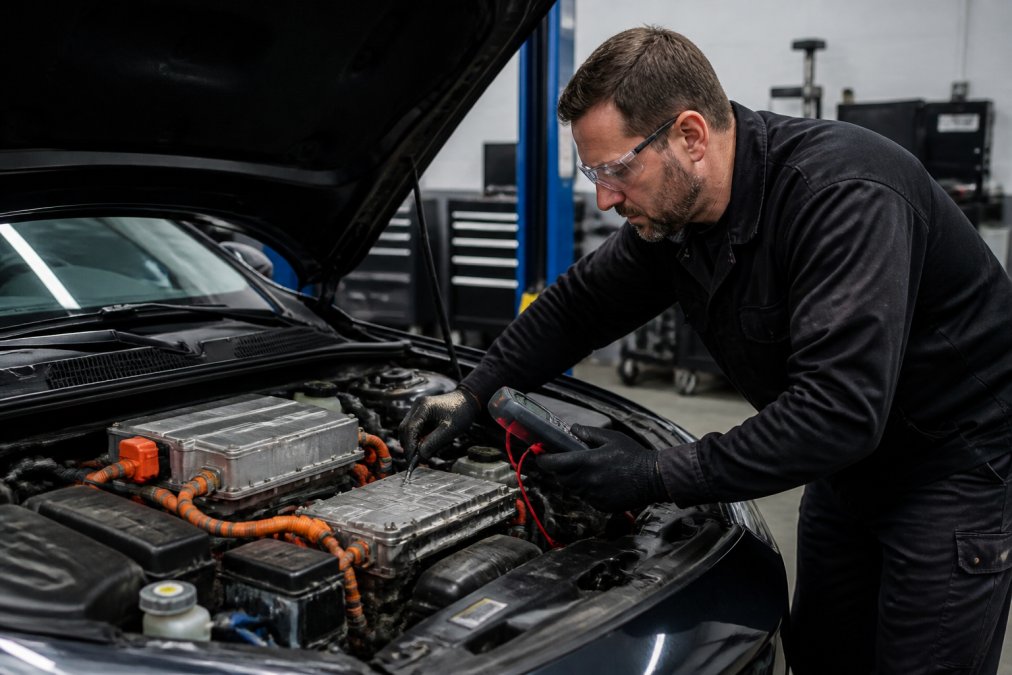
The most critical system in an electric vehicle is the battery management system, or BMS. This sophisticated network of sensors, relays, and control units monitors battery health, charge state, temperature, and cell balance. A diagnostic check on an EV examines battery voltage, individual cell voltages, charge/discharge rates, and thermal management. Problems in the BMS can affect range, charging speed, and vehicle performance far more severely than a single sensor fault in a conventional engine.
The electric motor and inverter system also require specialised diagnostic knowledge. These components convert stored electrical energy into motion and manage power delivery. Fault codes related to motor performance, inverter efficiency, or power electronics require technicians trained specifically in EV systems.
Regenerative braking systems in EVs introduce another layer of complexity. These systems capture energy during braking and return it to the battery. A diagnostic check must verify that regenerative braking is functioning correctly and that conventional friction brakes are operating as backup. Hybrid vehicles require diagnostics across both powertrains simultaneously.
For EV owners in Kettering and Northamptonshire, specialist diagnostic capability is essential. Kettering Motorist Centre has invested in EV-specific diagnostic tools and technician training. For comprehensive electric vehicle diagnostics and servicing, consult our specialist team at kmcelectric.co.uk, which specialises in electric and hybrid vehicle maintenance.
The diagnostic process for an EV typically takes 60 to 90 minutes due to the additional systems involved. Battery health diagnostics cannot be rushed.
Diagnostic Limitations and When False Positives Occur
Diagnostic tests are powerful tools, but they have real limitations. Understanding these prevents misdiagnosis and unnecessary repairs.
False positives occur when the diagnostic system reports a fault that doesn't actually exist or isn't the root cause of the problem. A common example: a faulty oxygen sensor triggers an emissions fault code. But the real problem might be a vacuum leak causing incorrect sensor readings. Replacing the sensor won't fix the leak, and the fault will reoccur.
Intermittent faults are another common issue. Your vehicle experiences a glitch during a specific driving condition, perhaps a loose connector that only disconnects when the engine vibrates at certain RPM. The diagnostic test performed in a garage at idle won't reproduce the fault. The fault code clears, but the problem reoccurs later.
Diagnostic limitations for older vehicles are significant. Vehicles built before 2001 have simpler OBD systems with fewer monitored parameters. Modern vehicles with networked systems can be harder to diagnose because multiple control units communicate constantly, and a fault in one system can trigger secondary faults in connected systems.
Watch OutIf a repair based on a diagnostic report doesn't solve your problem, the diagnostic might have been incomplete or misinterpreted. Ask the technician to explain the root cause and why that specific repair addresses it. A good garage will investigate further rather than simply replacing parts.
Why Regular Diagnostics Matter for Your Vehicle
Proactive vehicle diagnostics catch issues early when repairs are cheaper and simpler. A sensor beginning to fail might generate a fault code months before it fails completely. Replacing that sensor during a routine diagnostic costs far less than waiting until complete failure causes drivability problems and poor fuel economy.
Regular diagnostics also establish a baseline. If your vehicle's oxygen sensor voltage is normally 0.45 volts and a diagnostic check shows it's now 0.42 volts, that's worth monitoring. The next check might show gradual degradation, allowing you to plan replacement before failure occurs.
For vehicles approaching major service intervals, 60,000 miles, 100,000 miles, a diagnostic check provides valuable information about system health. It reveals which components are beginning to wear, allowing you to plan repairs rather than facing surprise failures. This is particularly valuable for hybrid and electric vehicles, where battery health diagnostics can detect degradation before range suffers noticeably.
Diagnostic checks also provide documentation. If you're selling your vehicle, a recent diagnostic report demonstrating that all systems are functioning correctly increases buyer confidence. If you're claiming warranty work, a diagnostic report provides objective evidence of the fault.
At Kettering Motorist Centre, we recommend a diagnostic check as part of your annual vehicle health assessment. Combined with visual inspection and fluid checks, a diagnostic scan ensures you understand your vehicle's condition and can make informed decisions about maintenance and repairs. For hybrid and electric vehicle owners, we recommend more frequent diagnostics, at least annually, to monitor battery health and system integration.
Your vehicle's health is too important to guess about. At Kettering Motorist Centre in Northamptonshire, we use professional-grade diagnostic equipment and technician expertise to identify problems accurately and recommend the right repairs, not unnecessary ones. Book your diagnostic check online, and get clarity on what your vehicle actually needs. For electric and hybrid vehicles, our specialist team has the training and tools to diagnose complex systems correctly.
Frequently Asked Questions
What is included in a full car diagnostic check?
A full car diagnostic test scans your vehicle's engine management system, transmission, braking system, exhaust emissions, and other electronic components using OBD2 scanner tools. The diagnostic port reads fault codes (DTCs) stored in the electronic control unit (ECU), revealing any issues affecting performance, emissions, or safety. The technician then interprets these codes and provides a vehicle health report explaining what needs attention.
Can I perform a car diagnostic test myself using a scanner?
You can purchase a basic OBD2 scanner and read fault codes yourself, but professional diagnostics go much further. A technician uses advanced diagnostic software, real-time data streams, and technical knowledge to interpret codes accurately, distinguish between genuine faults and false positives, and identify the root cause. Self-scanning often misses underlying issues and can lead to unnecessary repairs. Professional diagnostics from KMC give you confidence in the findings.
How long does a professional diagnostic check take to complete?
A standard car diagnostic check typically takes 30 to 60 minutes, depending on the vehicle's complexity and the number of systems being tested. Modern vehicles with multiple electronic control units may take longer. If the technician needs to perform additional testing to isolate a fault or investigate intermittent issues, the time may extend. KMC will advise you of the expected duration when you book.
Why does my dashboard warning light stay on after a repair?
After repair work, the fault code remains stored in the ECU memory until it is cleared by a technician. Some warning lights turn off automatically once the underlying fault is fixed and the system resets during normal driving. However, if the light persists, it may indicate the fault wasn't fully resolved, a sensor needs recalibration, or a false positive occurred. A follow-up diagnostic check confirms whether the repair was successful.
Thank you for placing a booking with Kettering Motorist Centre Limited for vehicle
PLEASE TAKE YOUR BOOKING REFERENCE NUMBER WITH YOU TO THE MOT CENTRE
Your items
MOT Test
×
Terms and Conditions
These terms and conditions form the basis on which you can visit and use this website. Please read them carefully as they contain important information.
General terms and conditions
This website is owned and operated by Kettering Motorist Centre Ltd (company registration number: 4485858) operating at Trafalgar Road, Kettering, Northamptonshire, NN16 8DB (the "MOT Centre", the "Company", "we" or "us"). If you have any queries about these terms and conditions or if you have any comments or complaints on or about this website, you can contact us at [email protected] or 01536 410142.
The website is to promote and offer for sale the products and services of Kettering Motorist Centre Limited.
1. The contract between us
This website does not take payment for products or services online. The website enables you to view products and services online and to make a booking for later delivery and payment. The vehicle and provision of other products and services promoted by this website and the payment by you of the price of those products and services will take place at the MOT Centre. The booking does not constitute a contract.
The booking process on the site provides details of the booked MOT order. Please take the time to read and check your booking. It is your responsibility to make sure the order is correct and for the correct vehicle.
2. Ownership of rights
All rights, including copyright, in this website are owned by or licensed to the Company. Any use of this website or its contents, including copying or storing it or them in whole or part, other than for your own personal, non commercial use, is prohibited without our permission. You may not modify, distribute or repost anything on this website for any purpose.
3. Accuracy of content
We have taken care in the preparation of the content of this website, in particular to ensure that prices quoted are correct at the time of publishing and that all goods have been fairly described. However, bookings will only be accepted if there are no material errors in the description of the goods or their prices as advertised on this website. Any weights, dimensions and capacities given about the goods are approximate only.
4. Damage to your computer
We try to ensure that this website is free from viruses or defects. However, we cannot guarantee that your use of this website or any websites accessible through it will not cause damage to your computer. It is your responsibility to ensure that the right equipment is available to use the website. Except in the case of negligence on our part, we will not be liable to any person for any loss or damage which may arise to computer equipment as a result of using this website.
5. Availability
All bookings are subject to acceptance and availability. If the MOT date you have requested are is not available, the Centre will contact you by e-mail or phone. You will have the option either to wait until another slot is available or to cancel your booking.
6. Booking errors
You are able to correct errors on your booking up to the point on which you click on “Place Booking” during the booking process.
7. Price
The prices payable for goods that you order are as set out in our website. All prices are inclusive of VAT at the current rates and are correct at the time of entering information, errors and omissions excepted.
Whenever it is not possible to accept your booking to buy goods of the specification and description at the price indicated, the MOT Centre will advise you by email or phone or when you visit the centre.
8. Payment terms
You will be required to pay for the goods or services to the Centre at time of a completed MOT.
9. Delivery charges
N/A
10. Cancellation
The MOT Centre reserves the right to cancel the booking if:
10.1 There is insufficient stock to deliver the goods you have booked.
10.2 One or more of the goods you booked was listed at an incorrect price.
If your booking is cancelled the Centre will notify you by e-mail or phone.
You have the right to cancel your booking at any time up to the point of the MOT. If you do cancel your booking you should inform the centre by phone.
11. Liability
Notwithstanding the foregoing, nothing in these terms and conditions is intended to limit any rights you might have as a consumer under applicable local law or other statutory rights that may not be excluded nor in any way to exclude or limit our liability to you for any death or personal injury resulting from our negligence.
12. Notices
Unless otherwise expressly stated in these terms and conditions, all notices from you to us must be in writing and sent to our contact address given above and all notices from us to you will be displayed on our website from time to time.
13. Changes to legal notices
We reserve the right to change these terms and conditions from time to time and you should look through them as often as possible.
14. Law, jurisdiction and language
This website, any content contained therein and any contract brought into being as a result of usage of this website are governed by and construed in accordance with English law. Parties to any such contract agree to submit to the exclusive jurisdiction of the courts of England and Wales.
15. Invalidity
If any part of these terms and conditions is unenforceable (including any provision in which we exclude our liability to you) the enforceability of any other part of these conditions will not be affected.
16. Privacy
You acknowledge and agree to be bound by the terms of our privacy policy
17. Third party rights
Nothing in this Agreement is intended to, nor shall it confer any rights on a third party.