Blog >
Get Car Repair Quote Online: A Practical 2026 Guide Get Car Repair Quote Online: A Practical 2026 Guide
16 May 2026
Table of Contents
Last Updated: May 16, 2026
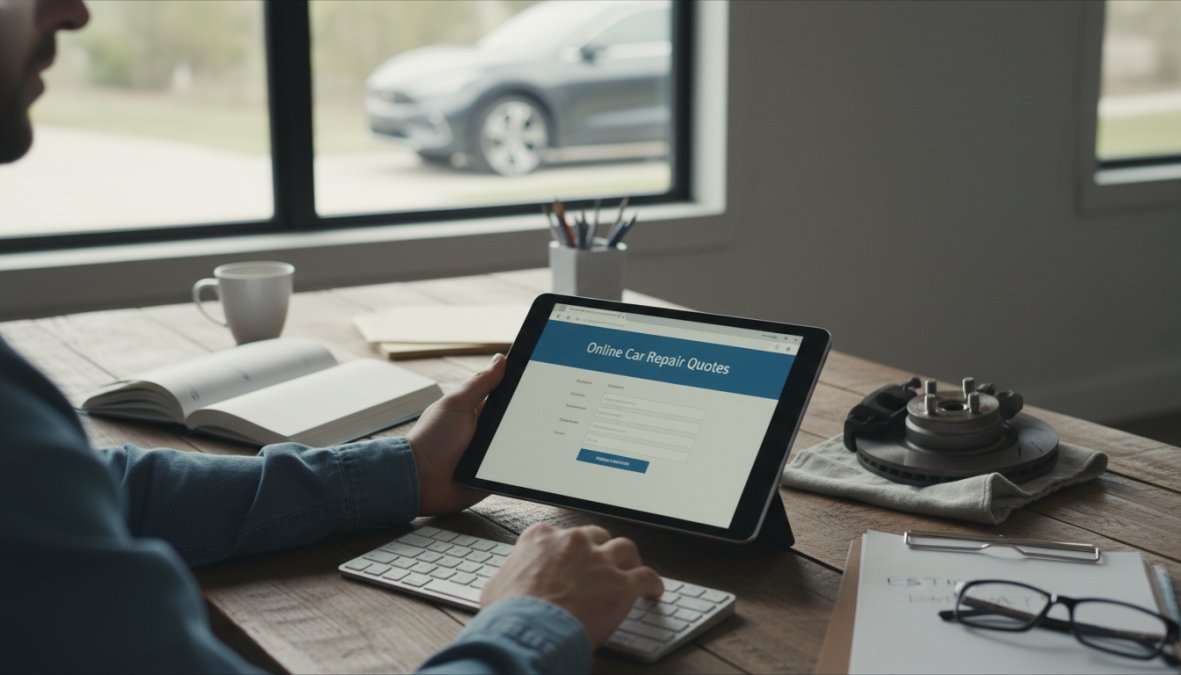
Knowing how to get car repair quote online before you walk into a garage is one of the smartest moves a driver can make. At Kettering Motorist Centre, we see it regularly: motorists who arrive with a clear idea of expected costs negotiate better, avoid unnecessary upsells, and make more confident decisions about whether a repair is worth doing at all. This guide walks you through the entire process, from gathering your vehicle details to comparing quotes and deciding between a mobile mechanic and a traditional garage. Below, we cover exactly what online estimators can and cannot tell you, what questions to ask before work begins, and the repair-vs-replace decision most guides skip entirely.
An online car repair estimate is a price range generated by a digital tool based on your vehicle's details, your postcode, and the type of repair needed. It is not a guaranteed invoice, but it is a reliable benchmark for understanding fair pricing before any mechanic sees your car.
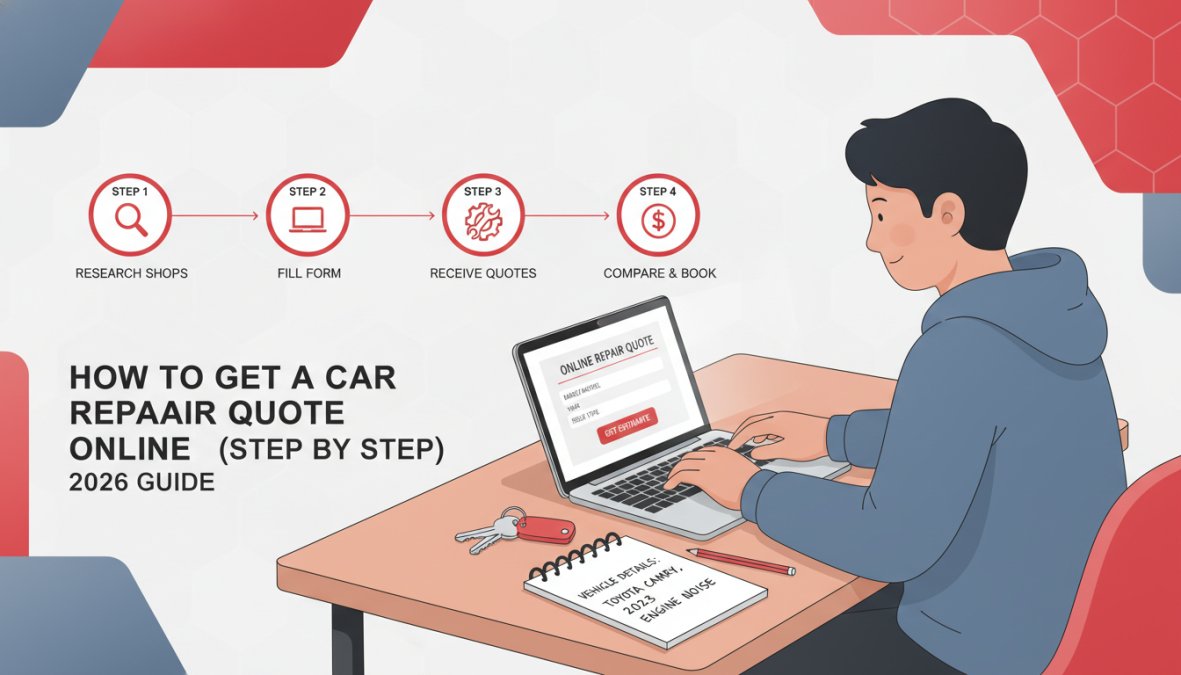
How to Get a Car Repair Quote Online (Step by Step)
Getting an online repair quote takes less than five minutes when you have the right information ready. The process is straightforward: enter your vehicle details, select your repair category, input your postcode, and review the estimated cost range. Most tools then connect you to local repair facilities or allow you to book an appointment directly.
Here is the full step-by-step process:
Gather your vehicle registration number, year, make, model, and trim level
Visit a reputable auto repair estimate tool or garage booking platform
Select your vehicle from the dropdown or enter the registration manually
Choose the service category (e.g., brakes, exhaust, tyres, diagnostics)
Enter your postcode to get localised labour rates
Review the cost breakdown showing parts and labour separately
Compare across two or three providers before booking
Book your appointment, ideally with no upfront payment required
The accuracy of any online quote depends almost entirely on the accuracy of what you enter. A common mistake is selecting the wrong trim level, which can shift parts pricing significantly because OEM components vary between trim specifications.
Before you start, have the following ready:
Vehicle registration number (the tool can usually pull year, make, and model automatically)
Engine type (petrol, diesel, hybrid, or electric)
Mileage (some tools use this to assess wear-related probability)
Trim level (e.g., SE, Sport, Titanium)
Service history (useful if the garage asks follow-up questions)
Description of the fault (the more specific, the better the estimate)
Vague inputs produce vague estimates. If you describe your issue as "a noise from the front," the range will be wide. If you specify "grinding noise from the front-left wheel when braking," the tool can narrow the estimate to brake disc and pad replacement.
How to Select Your Vehicle: Year, Make, Model and Trim Level
Vehicle identification is the foundation of any accurate auto repair estimate. Most platforms use a vehicle identification lookup tied to your registration plate, which automatically populates year, make, model, and often engine type. If you are entering details manually, the trim level matters more than most drivers realise.
A base-trim vehicle and a top-spec variant of the same model can require different parts, different labour times, and occasionally different specialist tools. Selecting the wrong trim level is one of the most common reasons an online quote differs from the final invoice. Always cross-check your trim level against your V5C logbook or the manufacturer's vehicle configuration page if you are unsure.
Using a Car Repair Estimate Calculator: What It Can and Cannot Tell You
A car repair estimate calculator is a useful benchmarking tool, not a diagnostic instrument. It can tell you the expected cost range for a defined job on a specific vehicle. It cannot tell you whether that job is actually what your car needs. That distinction matters.
What a good estimate calculator does well:
Provides a fair price range based on national average labour rates and parts pricing
Separates labour costs from parts costs so you can see the cost breakdown clearly
Flags whether OEM or aftermarket parts are being priced
Adjusts for your postcode and local labour market rates
Gives you a starting point for negotiation with any repair facility
What it cannot do:
Diagnose the root cause of a fault (that requires a physical inspection or diagnostic fee)
Account for hidden damage found during the repair
Guarantee the final price (additional faults discovered mid-repair will add cost)
Replace a written quote from a qualified, ASE certified or IMI-accredited mechanic
Pro TipAlways request a written itemised quote from the garage before authorising any work. An online estimate gets you in the room with the right number in your head; the written quote is what protects you legally.
Why Does the Estimator Provide a Range Instead of a Fixed Price?
The estimator provides a price range rather than a fixed price because several variables cannot be confirmed without a physical inspection. Labour rates vary by region and by garage type. Parts pricing varies depending on whether OEM or aftermarket components are used. The condition of surrounding components, which may need replacing at the same time, is unknown until the car is on a ramp.
According to the Society of Motor Manufacturers and Traders guidance on vehicle repair pricing, labour rates across the UK vary considerably between independent garages and franchised dealerships. A range reflects this reality honestly rather than presenting false precision.
The range also accounts for trim level and engine type variations within the same model family. A 1.0-litre three-cylinder engine and a 2.0-litre four-cylinder in the same car model require different parts and different labour times for identical jobs.
Auto Repair Pricing and Cost Estimates: What Drives the Numbers
Most people assume the parts are the expensive part. Often, they are not. Labour is frequently the dominant cost in an auto repair estimate, particularly for jobs that require significant disassembly, clutch replacement, timing chain work, or suspension overhauls. Understanding what drives the numbers helps you evaluate whether a quote is fair, and it also determines how you should approach the repair if an insurance claim is involved.
The main factors that influence repair costs:
Factor | Impact on Cost | Notes |
|---|
Labour rate | High | Varies by region and garage type |
Parts choice (OEM vs aftermarket) | Medium-High | OEM typically costs more |
Vehicle age and complexity | Medium | Older or specialist vehicles take longer |
Diagnostic fee | Low-Medium | Usually £50-£90 if charged separately |
Warranty coverage | Variable | May cover parts or labour |
Location (postcode) | Medium | Urban rates are generally higher |
Labour Rates and Diagnostic Fees Explained
Labour rates are charged per hour and vary significantly across the UK. Independent garages in Kettering and the wider Northamptonshire area typically charge less per hour than main dealerships, while offering equivalent quality for most standard repairs. The difference can be meaningful on a multi-hour job.
A diagnostic fee is the charge for connecting your vehicle to specialist equipment to read fault codes and identify the root cause of a problem. Most garages charge this separately, and some will waive it if you proceed with the repair. Always ask upfront whether the diagnostic fee is included in the quote or charged additionally.
The thing nobody tells you about diagnostic fees: a thorough diagnostic can actually save you money. Skipping it and guessing the fault often leads to replacing the wrong component, which means paying for parts and labour twice.
OEM vs Aftermarket Parts: How Your Choice Affects the Quote
OEM (Original Equipment Manufacturer) parts are components made by or to the exact specification of the vehicle manufacturer. Aftermarket parts are produced by third-party manufacturers and are designed to fit the same application, often at a lower price point.
The choice between OEM and aftermarket affects both the upfront cost and the long-term outcome:
OEM parts typically carry a manufacturer warranty and are guaranteed to fit correctly
Quality aftermarket parts from reputable suppliers can match OEM performance at lower cost
Low-grade aftermarket parts may fail sooner, creating a false economy
Some warranty coverage conditions require OEM parts to remain valid
For common wear items like brake pads, filters, and wiper blades, quality aftermarket parts are a sensible choice. For complex components like sensors, control modules, or safety-critical parts, OEM is generally the safer option. A trustworthy garage will explain the trade-off and let you decide.
Watch OutIf a garage quotes a very low price without specifying the parts brand or quality tier, ask directly. Unusually cheap quotes sometimes rely on unbranded parts with no warranty coverage, which can leave you exposed if the repair fails.
How Online Repair Estimates Interact With Insurance Claims
This is the angle almost no online repair guide covers, and it is one of the most practically important for drivers facing a fault that may be covered, whether through comprehensive motor insurance, a manufacturer warranty, an extended warranty policy, or a third-party liability claim after an accident.
The core problem: An online estimate gives you an out-of-pocket cost benchmark. But if an insurer, warranty provider, or third party is paying, the pricing rules change, and your estimate may not reflect what the insurer will actually authorise.
Here is how the interaction works in practice:
1. Fault or accident claims through your motor insurer
If the repair follows an accident and you are claiming through your own comprehensive policy, your insurer will typically direct you to an approved repairer network. Approved repairers have agreed labour rates with the insurer, which are often lower than the standard retail rate a garage would charge a private customer. This means the online estimate you gathered may be higher than what your insurer will pay, not because the estimate is wrong, but because the insurer has negotiated different rates.
What to do: Use your online estimate to understand the scope of work and parts involved, then ask your insurer's approved repairer to provide a written breakdown. If you choose a non-approved repairer, your insurer may only pay up to the approved repairer rate, leaving you to cover the difference.
2. Third-party liability claims (the other driver was at fault)
If a third party was at fault, their insurer is liable for your repair costs. In this situation, you have more flexibility to choose your own repairer, but the third-party insurer will still assess the repair cost and may challenge quotes they consider above market rate. An independent online estimate from a reputable tool gives you documented evidence of fair market pricing, which strengthens your position if the insurer disputes the garage's invoice.
3. Manufacturer warranty and extended warranty claims
New vehicles under manufacturer warranty must typically be repaired at an authorised dealership using OEM parts for the warranty to remain valid. An online estimate from a general repair tool is useful for understanding what the repair would cost outside warranty, which tells you how much the warranty is actually saving you, but it will not reflect the dealership's internal warranty labour rates, which are set by the manufacturer.
For extended warranties (purchased separately, often through a dealer or insurer), the policy document will specify approved repairers, parts requirements, and claim limits. Read the policy before authorising any repair, because using a non-approved repairer or aftermarket parts can void the claim.
4. Using an online estimate as a claims negotiation tool
Insurers and warranty providers sometimes offer a settlement figure, a cash payment in lieu of repair, that is lower than the actual cost of getting the work done. An online estimate from a reputable tool, combined with a written quote from a qualified garage, gives you documented evidence to challenge a low settlement offer. This is particularly relevant for older vehicles where insurers may argue that aftermarket parts are sufficient, when OEM parts are actually required to maintain safety or resale value.
Pro TipIf you are making an insurance claim, gather your online estimate before speaking to your insurer. It takes less than five minutes and gives you an independent reference point before the insurer's assessor sets the repair value. Do not rely solely on what the insurer's approved repairer tells you the repair is worth.
Key questions to ask when a repair involves an insurance or warranty claim:
Is this garage on my insurer's approved repairer network, and if not, what is the cost difference I will need to cover?
Will OEM or aftermarket parts be used, and does my policy require OEM for the claim to be valid?
Is the diagnostic fee covered under the claim, or is it charged to me separately?
If additional faults are found during the repair, does the insurer need to authorise the additional work before it proceeds?
What is the claims excess, and does the repair cost exceed it enough to make claiming worthwhile versus paying out of pocket?
According to the Association of British Insurers guidance on motor claims, policyholders have the right to request a full breakdown of how a repair settlement figure was calculated. If the figure does not align with independent market estimates, you can formally dispute it through your insurer's complaints process and, if unresolved, escalate to the Financial Ombudsman Service.
Is It Better to Get Multiple Repair Quotes? Here Is the Honest Answer
Yes, getting multiple repair quotes is almost always worth doing for any job over roughly £150. The honest answer, though, is that the value of comparison shopping depends on what you are comparing. Three quotes using different parts quality or different scope of work are not comparable. You need like-for-like.
Here is how to compare quotes properly:
Ensure each quote specifies the same repair scope
Confirm whether each quote includes OEM or aftermarket parts, and which brand
Check whether the diagnostic fee is included or separate
Ask about warranty coverage on parts and labour
Verify whether the garage is accredited (look for IMI, RAC Approved, or similar)
The cheapest quote is rarely the best value. A garage that charges slightly more per hour but uses quality parts, provides a written warranty, and employs qualified technicians will almost always cost you less over a two-year ownership period than one that cuts corners on parts.
According to Which? guidance on finding a trustworthy garage, checking for accreditation and reading verified customer reviews are two of the most reliable ways to assess garage quality before committing.
What to Ask a Mechanic Before Repairs Begin
Most drivers hand over their keys and hope for the best. That is the wrong approach. Asking the right questions before repairs begin is how you protect yourself from scope creep, unnecessary work, and surprise charges.
Ask these questions before authorising any repair:
What exactly has been diagnosed, and how was that diagnosis reached?
Is this a written itemised quote, and will I be contacted before any additional work is carried out?
Are the parts OEM or aftermarket, and what brand are they?
What warranty is provided on the parts and the labour?
Is the diagnostic fee included in this quote?
What is the estimated completion time?
Are there any other issues you noticed that I should be aware of?
The last question is particularly useful. A good mechanic will flag additional concerns without pressuring you to fix everything at once. A mechanic who insists every identified issue must be fixed immediately deserves more scrutiny.

Key TakeawayA written, itemised quote that requires your approval before any additional work begins is your single most important protection as a customer. Never authorise repairs verbally only.
DIY vs Professional Repair and Mobile Mechanic vs Garage: Choosing the Right Option
Most online repair guides tell you to 'consider DIY for simple jobs.' That is not useful advice. What is useful is understanding the actual cost difference between doing a job yourself and paying a professional, and knowing exactly where that line sits before you commit either way.
DIY vs Professional: A Real Cost Comparison
The financial case for DIY repair depends on three things: the cost of parts alone, the cost of any tools you do not already own, and the realistic risk of getting the job wrong. The table below uses common repair categories to show how the numbers typically stack up.
Repair Type | Typical DIY Cost (parts only) | Typical Professional Cost (parts + labour) | DIY Tool Outlay (if needed) | DIY Viable? |
|---|
Wiper blade replacement | £8-£20 | £20-£40 | None | Yes |
Cabin air filter | £8-£18 | £30-£60 | None | Yes |
12V battery replacement | £60-£120 | £100-£180 | None (most cases) | Yes |
Front brake pads (both sides) | £25-£60 | £100-£200 | Torque wrench, jack, axle stands | Caution |
Front brake discs and pads | £60-£140 | £180-£350 | As above + disc removal tool | Caution |
Spark plugs (4-cylinder) | £20-£50 | £80-£160 | Spark plug socket, torque wrench | Yes (accessible engines) |
Oil and filter change | £25-£55 | £60-£120 | Oil drain pan, filter wrench | Yes |
Timing belt/chain | £40-£120 (belt kit) | £350-£900+ | Specialist locking tools (engine-specific) | No |
Wheel alignment | Not DIY-viable | £40-£80 | Requires alignment rig | No |
Clutch replacement | £80-£200 (clutch kit) | £400-£900+ | Transmission jack, specialist tools | No |
How to read this table: The 'DIY viable' column assumes you already own basic hand tools. Where specialist tools are listed, factor in their purchase or hire cost before assuming DIY saves money. A torque wrench costs roughly £20-£50; engine-specific timing lock kits can cost £80-£200 and are often single-use in practice.
The hidden cost most DIY guides ignore is the cost of a mistake. A brake job done with incorrect torque settings on the caliper bolts, or pads fitted without lubricating the correct contact points, can result in brake fade, uneven wear, or, in a worst case, a safety failure. The professional repair cost you were trying to avoid becomes the cost of fixing the botched DIY attempt plus the original repair. For safety-critical systems, the risk-adjusted cost of DIY is almost always higher than it appears.
A practical rule: DIY makes financial sense when the tool outlay is zero or near-zero, the job does not involve safety-critical systems, and you can find a model-specific guide (not a generic one) that confirms the procedure for your exact vehicle. If any of those three conditions is not met, get a professional quote first.
Mobile Mechanic vs Brick-and-Mortar Repair Facility
A mobile mechanic travels to your location, your driveway, workplace car park, or roadside, and carries out repairs on-site. A fixed workshop operates from a dedicated facility with a vehicle lift, specialist diagnostic equipment, and a full tool inventory. The choice between them is not simply about convenience; it affects what work can safely be done, what it costs, and what recourse you have if something goes wrong.
Where mobile mechanics have a genuine advantage:
Lower overhead costs. A mobile mechanic does not pay workshop rent, rates, or the staffing costs of a reception team. Those savings are often passed on, making mobile labour rates competitive for straightforward jobs.
Convenience value. No need to arrange a courtesy car or alternative transport. For a working driver, the time saved can be worth more than any price difference.
Transparent pricing. Many mobile mechanics quote a fixed price per job rather than an hourly rate, which removes the risk of labour hours creeping upward.
Where mobile mechanics have a hard limitation:
Any repair requiring a vehicle lift, exhaust replacement, underside inspection, gearbox work, suspension component replacement, cannot be safely carried out on a driveway. A mobile mechanic who agrees to do this work without a proper lift is taking a safety risk with your vehicle.
Advanced diagnostic work requires equipment that is not practical to transport. A mobile mechanic can read basic OBD-II fault codes with a handheld scanner, but deep-system diagnostics for transmission, ABS, or airbag faults require workshop-grade equipment.
Parts sourcing is more limited. A fixed workshop has accounts with multiple factors and can source parts same-day. A mobile mechanic typically orders in advance, which can extend the repair timeline if the initial diagnosis turns out to be incomplete.
Pricing structure comparison:
Factor | Mobile Mechanic | Fixed Workshop |
|---|
Labour rate structure | Often fixed per job | Hourly rate (varies by region and garage type) |
Overhead costs passed to customer | Lower | Higher |
Suitable job types | Accessible components, no-lift work | Full range |
Diagnostic capability | Basic to intermediate | Full |
Parts warranty | Varies, ask explicitly | Standard with reputable garages |
Accreditation verification | Check IMI registration | Look for RAC Approved, IMI, or manufacturer approval |
As noted by the Institute of the Motor Industry on mobile mechanic standards, motorists should verify that any mobile mechanic holds a recognised qualification, such as an IMI Award or NVQ in Light Vehicle Maintenance, regardless of where the work takes place. Accreditation is not guaranteed by self-description.
The decision framework in plain terms:
Choose a mobile mechanic for: battery replacement, brake pad changes on accessible vehicles, oil and filter changes, minor electrical faults (bulbs, fuses), and pre-purchase inspections.
Choose a fixed workshop for: anything requiring a lift, full diagnostic work, MOT testing, wheel alignment, air conditioning regas, and any repair where specialist tooling is listed in the manufacturer's service data.
For jobs in the grey area, get a quote from both. The price difference and the mechanic's willingness to explain their approach will tell you a great deal about which option is right for that specific job.
Vehicle Age, Depreciation and the Repair vs Replace Decision
This is the part most online guides skip entirely. At some point, the cost of repairing a vehicle exceeds its market value, and continuing to invest in it stops making financial sense. Understanding where that line sits requires honest assessment.
A useful rule of thumb: if the repair cost exceeds 50% of the vehicle's current market value, and the car has other known faults, the replace argument becomes compelling. If the repair cost is below that threshold and the vehicle is otherwise sound, repair is almost always cheaper than the total cost of acquiring, insuring, and taxing a replacement.
Vehicle age and depreciation context matters here. A ten-year-old car worth £2,000 that needs a £1,800 gearbox replacement is a different calculation from a three-year-old car worth £12,000 needing the same repair. Online valuation tools and the DVLA's vehicle history data can help you establish a realistic current value before you make the decision.
Key TakeawayBefore authorising any repair costing more than roughly one month's equivalent car finance payment, check the vehicle's current market value using a free valuation tool. If the repair exceeds 50% of that value and the car has additional known issues, run the numbers on replacement before committing.
Get a Car Repair Quote Online in Kettering, Northamptonshire
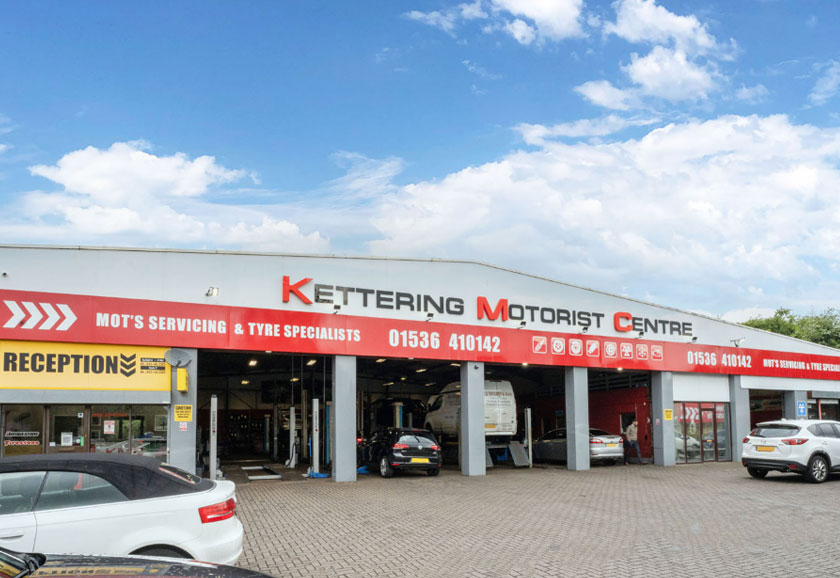
Drivers across Kettering and the surrounding Northamptonshire area have a straightforward option for transparent, trustworthy vehicle care. Kettering Motorist Centre is a family-run business offering professional diagnostic and repair services, MOT testing, vehicle servicing, tyres, air conditioning, and exhaust work, all from a fixed workshop with the equipment to handle the full range of repairs.
The online booking system for MOT and tyre appointments requires no upfront payment, which is a meaningful distinction. Many garages require card details to hold an appointment. The Kettering Motorist Centre approach keeps the process simple and commitment-free until you are satisfied with the service received.
For drivers near Kettering looking for a repair facility that handles both conventional vehicles and specialist electric and hybrid models, the combination of local knowledge, transparent booking, and no-payment-required scheduling removes most of the friction that makes car repair stressful.
If you are searching for trustworthy professionals for an MOT or tyre appointment near Kettering, the online booking system is the fastest way to secure a slot without any financial commitment upfront.
Pro TipBooking your MOT online removes the risk of missing your expiry date. Set a reminder two months before your current MOT expires and book as soon as the slot opens, especially in spring when demand peaks across Northamptonshire garages.
According to DVSA guidance on MOT testing and vehicle roadworthiness, driving a vehicle without a valid MOT (outside of driving to a pre-booked test) is a criminal offence carrying a fine of up to £1,000. Online booking makes it easier to stay compliant without the administrative burden.
Conclusion: Turn Your Online Quote Into a Confident Repair Decision
Getting an accurate online car repair estimate is the starting point, not the finish line. The real value comes from using that estimate as a benchmark, asking the right questions, comparing like-for-like quotes, and choosing a repair facility you can trust to do the work properly with quality parts and a clear warranty.
Frequently Asked Questions
Can you get an accurate car repair estimate online?
Online estimates give a useful fair price range based on your vehicle configuration, engine type, and location, but they are rarely a final fixed price. Factors like hidden damage, the specific labour rates of your chosen repair facility, and whether OEM or aftermarket parts are used can shift the final cost. Treat an online quote as a reliable starting point for budgeting and comparison, then confirm the exact figure with a trusted, ASE-certified or similarly qualified local mechanic before authorising any work.
To use a car repair estimate calculator accurately, you will typically need your vehicle's year, make, model, trim level, and engine type. Some tools also ask for your postcode or zip code to factor in local labour rates. Having your service history and vehicle identification number (VIN) to hand can improve accuracy further. The more precise your vehicle configuration details, the closer the online estimate will be to the final cost a repair shop provides.
Is it better to get multiple repair quotes before booking?
Yes, getting two or three quotes is generally good practice, especially for larger jobs like collision repair, exhaust replacement, or complex diagnostics. Comparing quotes helps you identify outliers, both suspiciously cheap estimates and overpriced ones. When comparing, check what each quote includes: labour rates, parts pricing, warranty coverage, and any diagnostic fee. For routine maintenance like an MOT or tyre fitting, a single quote from a trusted local repair facility is usually sufficient.
Do mechanics charge for estimates?
Policies vary. Many garages offer a free visual inspection or a free auto repair estimate for straightforward jobs. However, for complex faults that require the vehicle to be partially dismantled or connected to diagnostic equipment, a diagnostic fee is common. Always ask upfront whether the estimate is free and whether the diagnostic fee is deducted from the final repair bill if you proceed. Reputable repair facilities will be transparent about this before any work begins.
What is the difference between a repair estimate and a quote?
An estimate is an approximate cost based on available information and may change once the mechanic inspects the vehicle in detail. A quote is typically a fixed price commitment for a defined scope of work. When you get a car repair quote online, you are usually receiving an estimate based on national average data and your vehicle details. A binding quote comes after a physical inspection. Always clarify which you are receiving, and ask for any agreed price to be confirmed in writing before repairs start.
Car repair decisions are stressful when you do not have reliable information or a garage you can trust. Kettering Motorist Centre offers a transparent, no-payment-required online booking process, expert diagnostic and repair services, and specialist capability for electric and hybrid vehicles, all from a family-run business with genuine local accountability. Book your MOT with Kettering Motorist Centre and take the uncertainty out of keeping your vehicle roadworthy.