A bumpy, uncomfortable ride doesn't just make your commute miserable, it can mask serious suspension problems that affect your safety and fuel efficiency. At Kettering Motorist Centre, we help drivers across Northamptonshire improve their ride quality through targeted adjustments and strategic upgrades. Whether you're dealing with a harsh, jarring experience on poor roads or noticing excessive body roll through corners, there are practical steps you can take today to improve car suspension comfort and restore a smoother, more controlled driving experience.
This guide covers seven proven methods to enhance your suspension's performance and comfort, from simple tyre pressure adjustments to more involved component upgrades, plus maintenance schedules that keep your suspension working at its best.
1. Adjust Your Tyre Pressure for Comfort
Your tyre pressure is the first place to look when diagnosing suspension discomfort. Incorrect pressure directly impacts how your tyres absorb road imperfections, which then transfers through to your suspension and chassis. Under-inflated tyres flex excessively, creating a soft but wallowy feel and increasing rolling resistance. Over-inflated tyres become rigid, transmitting every bump straight to your car's frame.
The correct pressure for your vehicle is printed on a label inside the driver's door jamb or in your owner's manual, not on the tyre sidewall itself. That sidewall figure represents the maximum safe pressure, not the recommended operating pressure. Check your pressure when tyres are cold, ideally before driving or at least three hours after your last journey, as heat increases pressure readings.
For improved ride comfort, some drivers find that running slightly below the maximum recommended pressure (within the manufacturer's range) softens the ride by allowing the tyre sidewall to work more effectively as a suspension element. However, this trade-off reduces handling precision and increases fuel consumption. The sweet spot for most drivers is the manufacturer's specified pressure, which balances comfort, safety, handling, and efficiency.
Seasonal temperature swings affect tyre pressure significantly. A 10°C drop in ambient temperature can reduce tyre pressure by approximately 1 bar. During winter months in the UK, check your pressure more frequently to maintain consistency.
Pro TipInvest in a quality digital tyre pressure gauge for home use. Petrol station gauges are often inaccurate. Checking pressure monthly takes five minutes and prevents most comfort-related suspension issues before they start.
2. Recognise Signs of Worn Shock Absorbers
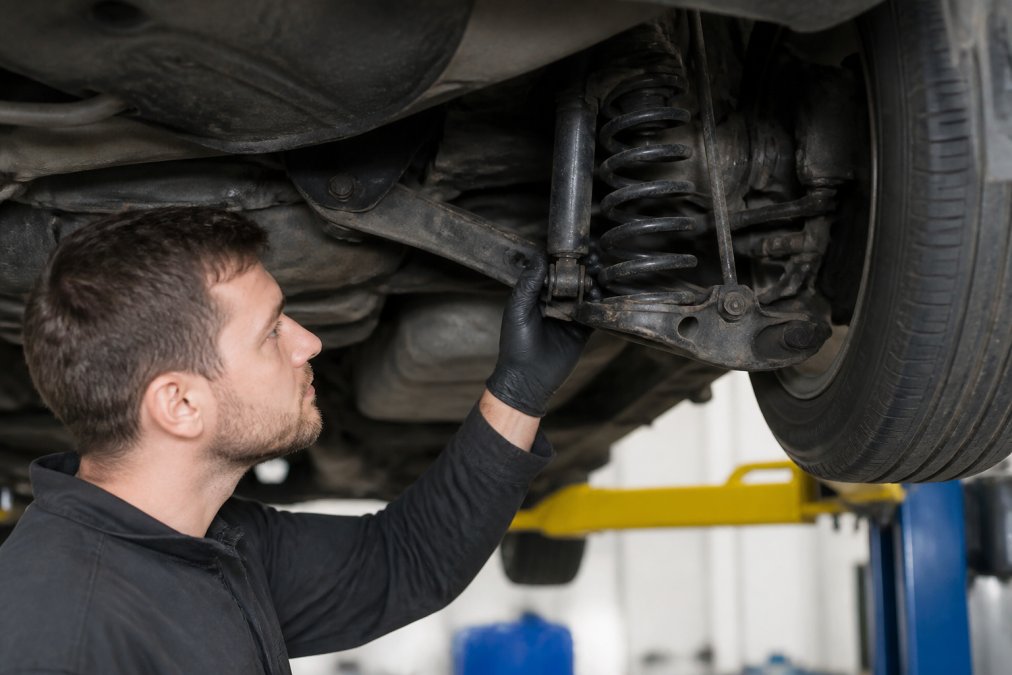
Worn shock absorbers are one of the most common causes of poor suspension comfort. Shock absorbers (or dampers) control how quickly your suspension compresses and rebounds after hitting a bump. When they wear out, they lose their dampening ability, leaving your suspension to oscillate uncontrollably. You'll notice the car bouncing excessively after hitting a pothole, taking several seconds to settle instead of immediately returning to normal.
Other signs of worn shock absorbers include excessive body roll during cornering, the front end diving under braking, or the rear squatting under acceleration. Your car may also feel unstable on motorways, especially in crosswinds. In wet conditions, worn dampers reduce your tyres' contact with the road, compromising grip and braking performance, a genuine safety concern.
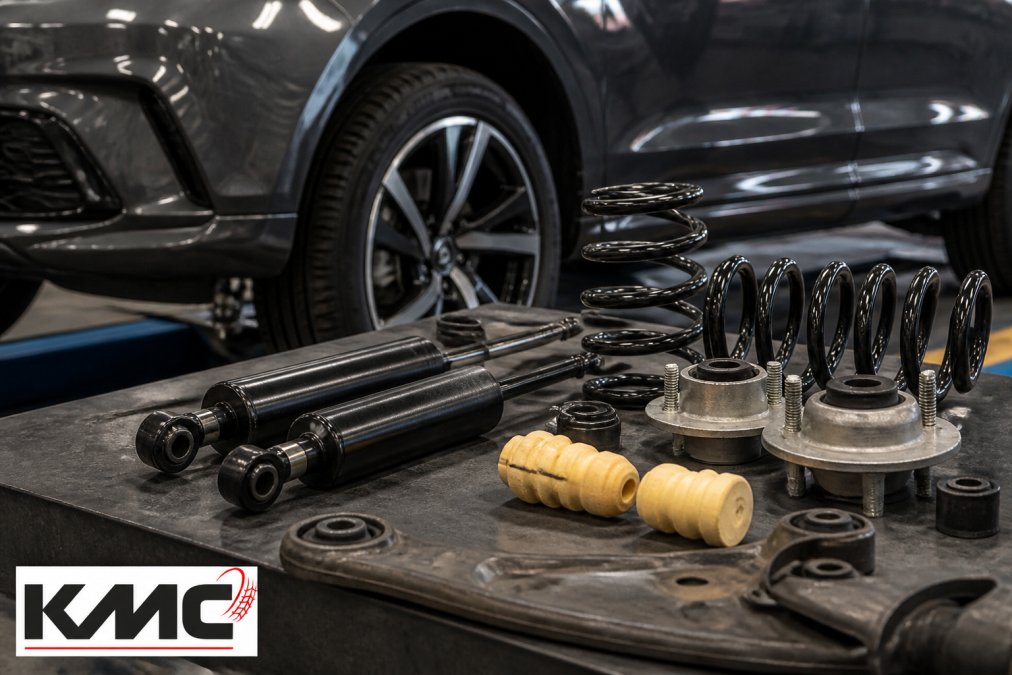
Professional illustration showing Professional for improve car suspension comfort
The lifespan of shock absorbers depends on driving conditions and road quality. In the UK, where potholes and uneven surfaces are common, many vehicles need replacement every 40,000 to 80,000 miles. If your vehicle is approaching these mileage thresholds or you're noticing any of the symptoms above, have them inspected by a qualified technician.
At Kettering Motorist Centre, we can perform a full suspension diagnostic to determine whether your dampers are genuinely worn or whether the discomfort stems from another component. A visual inspection alone isn't always reliable; modern dampers can look fine externally while failing internally. A proper test involves assessing suspension travel, checking for leaks, and evaluating how the car responds to weight transfer. Replacing worn shock absorbers is one of the most effective ways to improve car suspension comfort. Contact Kettering Motorist Centre for a transparent quote tailored to your vehicle.
3. Upgrade to Performance Springs
Your springs support your vehicle's weight and determine ride height. Over time, springs can sag or lose their ability to return to their original length, resulting in a lower ride height and harsher suspension geometry. Upgrading to performance springs is a direct way to improve car suspension comfort while also enhancing handling.
Performance springs are stiffer than standard springs, which reduces body roll during cornering and improves suspension geometry across a wider range of driving conditions. They also typically lower your vehicle's centre of gravity slightly, improving stability. The key to comfort when upgrading springs is matching them with compatible shock absorbers. A stiffer spring needs a damper tuned to control its increased rate of compression and rebound.
Spring rate is measured in Newtons per millimetre (N/mm). Standard road springs typically range from 15-25 N/mm, whilst performance springs often sit at 25-35 N/mm or higher. For daily driving and comfort, a moderate upgrade (25-28 N/mm) provides noticeably improved handling without sacrificing too much ride quality on poor surfaces.
Key TakeawayThe most common mistake is upgrading springs without upgrading dampers. You'll end up with a harder, bouncier ride instead of the controlled, composed feel you're after. Always upgrade both together.
4. Install Coilover Suspension Systems
Coilover systems combine a spring and damper into a single unit, offering precise control over both ride height and stiffness. They allow independent adjustment of compression and rebound damping, plus ride height adjustment without changing spring rate.
A coilover system lets you fine-tune your suspension to match your specific driving style and road conditions. You can soften the compression damping for a more compliant ride over bumps while maintaining stiff rebound damping for controlled body movement. Coilovers also allow you to lower your vehicle's ride height, which improves aerodynamics, lowers the centre of gravity for better handling, and often provides a more purposeful aesthetic.
The downside is cost and complexity. Quality coilover systems are significantly more expensive than standard suspension components, and installation requires specialist knowledge. Poor installation or incorrect setup can make your ride worse, not better. For most drivers seeking to improve car suspension comfort without major expense, coilovers are overkill. They make more sense if you're already considering a suspension overhaul or if you want the flexibility to adjust your setup seasonally or for different driving conditions.
5. Replace Worn Suspension Bushings
Suspension bushings are rubber or polyurethane components that connect various suspension parts to the chassis. They isolate vibration and noise from the road, whilst allowing controlled movement. Worn bushings lose their damping properties, causing clunking sounds, excessive movement, and a disconnected, vague feel through the steering and chassis.
Common symptoms of worn bushings include knocking noises when driving over bumps, increased body roll, wandering steering, or a general feeling that the suspension is loose and unresponsive. Bushings wear through a combination of age, heat, and constant flexing. In the UK's variable climate, temperature swings and exposure to salt and moisture accelerate degradation. Most bushings need replacement every 80,000 to 120,000 miles.
Replacing bushings is often overlooked but can have a significant impact on comfort and handling. New bushings restore precision to your suspension geometry, reduce vibration transmission, and improve the overall responsiveness of your car.
Watch OutWorn suspension bushings aren't just a comfort issue, they affect alignment and wheel geometry. Driving on significantly worn bushings can cause uneven tyre wear and compromise braking performance. If you're noticing clunking or vagueness in the steering, have it checked soon.
6. Check Your Wheel Alignment and Suspension Geometry
Your suspension geometry determines how your wheels sit relative to the road and chassis. Misalignment, whether from wear, damage, or simply normal use, directly affects ride quality, handling, and tyre wear. Poor alignment forces your tyres to work against your suspension, creating harshness and instability that no amount of spring or damper tuning can fully resolve.
Key alignment angles include camber (the angle of the wheel relative to vertical), toe (whether the wheels point slightly inward or outward), and caster (the angle of the steering pivot). When these angles drift out of specification, your suspension has to work harder to keep the car stable, resulting in a less comfortable, less controlled ride.
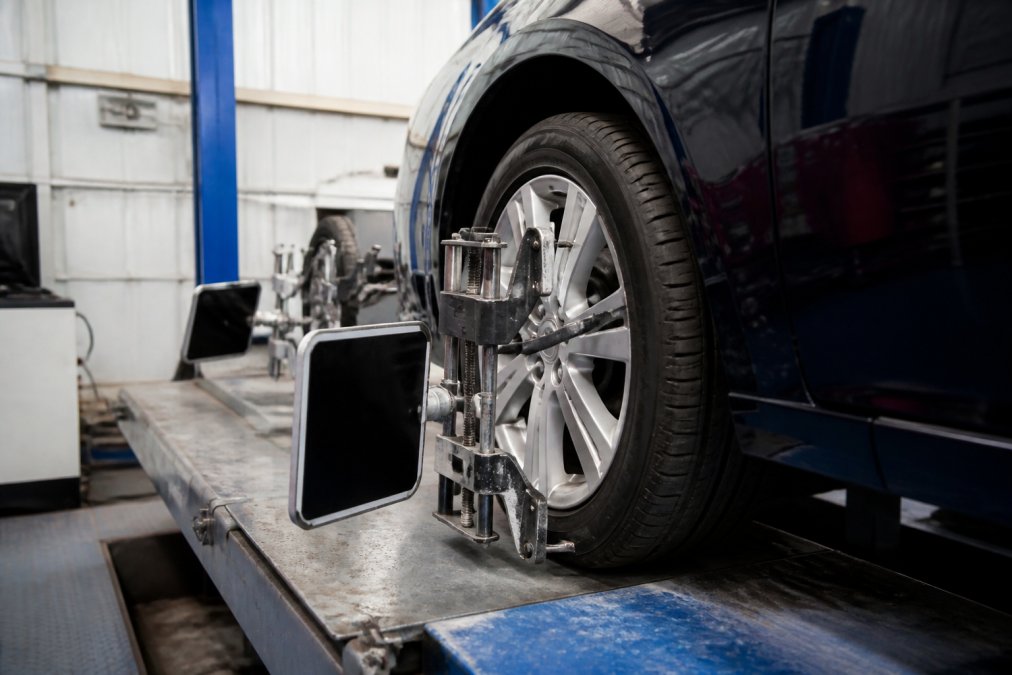
Professional illustration showing Modern for improve car suspension comfort
In Kettering, poor road surfaces and potholes are common culprits for alignment drift. A single hard impact can knock your alignment out of spec. If you've hit a significant pothole, noticed uneven tyre wear, or feel that your car pulls to one side, alignment is the first thing to check.
Modern alignment equipment uses laser sensors and computer analysis to measure your suspension geometry to within fractions of a millimetre. A proper four-wheel alignment takes about an hour and provides a detailed printout showing your vehicle's current angles versus manufacturer specifications. Checking alignment is particularly important if you've recently replaced suspension components or if your vehicle is older and has accumulated many miles.
7. Improve Ride Quality Through Seat and Interior Ergonomics
Suspension comfort isn't entirely about the suspension itself. How the seat supports your body, how your posture aligns with the pedals and steering wheel, and how well the interior isolates you from vibration all contribute to your perception of ride quality. A well-designed seat can make a mediocre suspension feel acceptable, whilst a poor seat makes even good suspension feel uncomfortable.
Your seat should support the natural curve of your spine, keeping your back straight and your hips level. Lumbar support is critical; many standard car seats lack adequate lower-back support. Upgrading to an aftermarket seat with better lumbar support, or adding a lumbar support cushion to your existing seat, can dramatically improve comfort on rough roads.
Steering wheel and pedal position also matter. Your arms should reach the wheel with a slight bend at the elbows, and your legs should have a comfortable bend when the pedals are fully depressed. Adjusting your seat height, distance from the wheel, and recline angle to match your body proportions often improves comfort more than you'd expect.
Interior sound deadening also plays a role. Road noise and vibration transmit through the chassis into the cabin, making the ride feel harsher than it actually is. Adding acoustic insulation to the floor, doors, and wheel arches reduces this transmission. Finally, consider your tyre choice. Low-profile, high-performance tyres tend to transmit more road noise and vibration than comfort-oriented tyres. If comfort is your priority, choosing a tyre designed for quiet, smooth ride quality can improve your overall experience significantly.
Maintenance Schedules for Suspension Components
Keeping your suspension in good condition requires regular inspection and timely replacement of worn components. Here's a practical maintenance schedule to help you stay on top of suspension health.
Component
Inspection Interval
Replacement Interval
What to Check
Shock Absorbers
Every 20,000 miles
40,000-80,000 miles
Leaks, bounce test, body control
Springs
Every 40,000 miles
80,000-120,000 miles
Sagging, cracks, ride height
Suspension Bushings
Every 40,000 miles
80,000-120,000 miles
Cracks, movement, clunking noises
Wheel Alignment
Annually or after impact
As needed
Camber, toe, caster angles
Tyre Pressure
Monthly
N/A
Pressure consistency, uneven wear
Anti-Roll Bar Links
Every 40,000 miles
80,000-120,000 miles
Movement, clunking, wear
Control Arm Bushings
Every 40,000 miles
80,000-120,000 miles
Cracks, play, steering vagueness
These intervals are guidelines based on typical UK driving conditions. Aggressive driving, frequent motorway use, or regularly navigating poor roads may require more frequent checks.
A comprehensive suspension inspection typically includes checking all major components, testing dampers, measuring ride height, and assessing alignment. At Kettering Motorist Centre, we recommend a full suspension health check every two years or whenever you notice changes in ride quality, handling, or noise.
Pro TipKeep a maintenance log of all suspension work performed on your vehicle. This record helps you spot patterns and informs future maintenance decisions. It also adds value if you ever sell your car.
Improving car suspension comfort is achievable through a combination of simple adjustments, targeted component upgrades, and consistent maintenance. Start with the basics, tyre pressure and alignment, then move to more involved work if needed. The most common mistake is treating suspension as a single system where one upgrade solves everything. In reality, comfort comes from getting multiple elements right: proper damping, correct geometry, quality tyres, and good ergonomics all working together.
If you're unsure where to start, book a suspension diagnostic at Kettering Motorist Centre | /suspension-diagnostic to identify which improvements will have the biggest impact on your specific vehicle. Our transparent, hassle-free online booking system requires no upfront payment, and our team will provide a clear, honest assessment of your suspension's condition and recommend only the work that genuinely improves your comfort and safety.
Frequently Asked Questions
How can I make my car suspension softer?
You can soften your suspension by reducing tyre pressure slightly (within manufacturer specifications), upgrading to coilover systems with adjustable damping, or installing performance springs with lower spring rates. Worn shock absorbers can also create a softer, bouncier feel. However, if your suspension feels too soft, it may indicate worn components that need replacement rather than intentional softening. Book a suspension check with Kettering Motorist Centre to assess your current setup and recommend the best approach for your vehicle.
What are the signs of worn shock absorbers?
Common signs of worn shock absorbers include excessive bouncing after bumps, uneven tyre wear, a drifting or unstable feeling during cornering, and reduced braking performance. You might also notice the vehicle sits lower on one side or hear clunking noises from the suspension. Worn shocks affect both ride comfort and safety. If you notice these symptoms, have your suspension inspected promptly. Kettering Motorist Centre offers professional diagnostic services to identify worn components and recommend replacements.
Does tyre pressure affect suspension comfort?
Yes, tyre pressure significantly affects suspension comfort and overall ride quality. Under-inflated tyres absorb bumps more but reduce handling precision and fuel efficiency. Over-inflated tyres transmit more road harshness to the chassis and passengers. The correct tyre pressure, specified in your vehicle's handbook or on the driver's door jamb, balances comfort with safety and performance. Checking tyre pressure monthly and adjusting it to manufacturer specifications is one of the simplest ways to improve suspension comfort without expensive upgrades.
What are the best tyres for ride comfort?
The best tyres for ride comfort combine appropriate sidewall height, quality construction, and correct pressure. Tyres with taller sidewalls (higher aspect ratios) provide better cushioning over bumps, whilst premium tyre compounds reduce vibration transmission. Match your tyre choice to your vehicle's intended use and load rating. Kettering Motorist Centre stocks quality tyres suited to comfort-focused driving and can advise on the best options for your specific vehicle and driving needs.
Is it better to have stiffer or softer suspension?
The ideal suspension stiffness depends on your priorities. Softer suspension improves ride comfort on poor road surfaces but reduces handling precision and can feel unstable during cornering. Stiffer suspension enhances handling and control but transmits more road feedback and harshness to passengers. Most road cars use a balanced approach. Performance-oriented drivers prefer stiffer setups, whilst comfort-focused drivers benefit from softer settings. Your driving style, road conditions, and vehicle type should guide your choice.
Thank you for placing a booking with Kettering Motorist Centre Limited for vehicle
PLEASE TAKE YOUR BOOKING REFERENCE NUMBER WITH YOU TO THE MOT CENTRE
Your items
MOT Test
×
Terms and Conditions
These terms and conditions form the basis on which you can visit and use this website. Please read them carefully as they contain important information.
General terms and conditions
This website is owned and operated by Kettering Motorist Centre Ltd (company registration number: 4485858) operating at Trafalgar Road, Kettering, Northamptonshire, NN16 8DB (the "MOT Centre", the "Company", "we" or "us"). If you have any queries about these terms and conditions or if you have any comments or complaints on or about this website, you can contact us at [email protected] or 01536 410142.
The website is to promote and offer for sale the products and services of Kettering Motorist Centre Limited.
1. The contract between us
This website does not take payment for products or services online. The website enables you to view products and services online and to make a booking for later delivery and payment. The vehicle and provision of other products and services promoted by this website and the payment by you of the price of those products and services will take place at the MOT Centre. The booking does not constitute a contract.
The booking process on the site provides details of the booked MOT order. Please take the time to read and check your booking. It is your responsibility to make sure the order is correct and for the correct vehicle.
2. Ownership of rights
All rights, including copyright, in this website are owned by or licensed to the Company. Any use of this website or its contents, including copying or storing it or them in whole or part, other than for your own personal, non commercial use, is prohibited without our permission. You may not modify, distribute or repost anything on this website for any purpose.
3. Accuracy of content
We have taken care in the preparation of the content of this website, in particular to ensure that prices quoted are correct at the time of publishing and that all goods have been fairly described. However, bookings will only be accepted if there are no material errors in the description of the goods or their prices as advertised on this website. Any weights, dimensions and capacities given about the goods are approximate only.
4. Damage to your computer
We try to ensure that this website is free from viruses or defects. However, we cannot guarantee that your use of this website or any websites accessible through it will not cause damage to your computer. It is your responsibility to ensure that the right equipment is available to use the website. Except in the case of negligence on our part, we will not be liable to any person for any loss or damage which may arise to computer equipment as a result of using this website.
5. Availability
All bookings are subject to acceptance and availability. If the MOT date you have requested are is not available, the Centre will contact you by e-mail or phone. You will have the option either to wait until another slot is available or to cancel your booking.
6. Booking errors
You are able to correct errors on your booking up to the point on which you click on “Place Booking” during the booking process.
7. Price
The prices payable for goods that you order are as set out in our website. All prices are inclusive of VAT at the current rates and are correct at the time of entering information, errors and omissions excepted.
Whenever it is not possible to accept your booking to buy goods of the specification and description at the price indicated, the MOT Centre will advise you by email or phone or when you visit the centre.
8. Payment terms
You will be required to pay for the goods or services to the Centre at time of a completed MOT.
9. Delivery charges
N/A
10. Cancellation
The MOT Centre reserves the right to cancel the booking if:
10.1 There is insufficient stock to deliver the goods you have booked.
10.2 One or more of the goods you booked was listed at an incorrect price.
If your booking is cancelled the Centre will notify you by e-mail or phone.
You have the right to cancel your booking at any time up to the point of the MOT. If you do cancel your booking you should inform the centre by phone.
11. Liability
Notwithstanding the foregoing, nothing in these terms and conditions is intended to limit any rights you might have as a consumer under applicable local law or other statutory rights that may not be excluded nor in any way to exclude or limit our liability to you for any death or personal injury resulting from our negligence.
12. Notices
Unless otherwise expressly stated in these terms and conditions, all notices from you to us must be in writing and sent to our contact address given above and all notices from us to you will be displayed on our website from time to time.
13. Changes to legal notices
We reserve the right to change these terms and conditions from time to time and you should look through them as often as possible.
14. Law, jurisdiction and language
This website, any content contained therein and any contract brought into being as a result of usage of this website are governed by and construed in accordance with English law. Parties to any such contract agree to submit to the exclusive jurisdiction of the courts of England and Wales.
15. Invalidity
If any part of these terms and conditions is unenforceable (including any provision in which we exclude our liability to you) the enforceability of any other part of these conditions will not be affected.
16. Privacy
You acknowledge and agree to be bound by the terms of our privacy policy
17. Third party rights
Nothing in this Agreement is intended to, nor shall it confer any rights on a third party.