Why Is My Car Engine Overheating? Common Causes & Fixes
Last Updated: July 8, 2026
Engine overheating is one of the most common problems motorists face. At Kettering Motorist Centre, we've helped hundreds of drivers in Kettering and Northamptonshire diagnose and fix overheating issues before they turn into expensive repairs. Understanding why your car engine is overheating can save you from serious mechanical damage. This guide explains the most common causes, what to do when it happens, and how to prevent it.
Why Is My Car Engine Overheating: Understanding the Problem
Your engine produces enormous amounts of heat during combustion. The cooling system's job is to manage that heat and keep temperatures within a safe operating range. When overheating occurs, it means the cooling system has failed to do its job, either because coolant isn't circulating properly, the radiator fan isn't working, or there's a leak draining coolant faster than it can be replaced.
The engine temperature gauge on your dashboard is your first alert system. Normal operating temperature sits around 90°C. If the needle climbs toward the red zone or a warning light appears, your engine is overheating. At this point, you have minutes, not hours, before serious damage occurs.
Watch OutContinuing to drive an overheating engine causes catastrophic damage. The head gasket can blow, cylinder heads can warp, and the engine block can crack. These repairs cost thousands of pounds and often mean replacing the entire engine. Stop driving immediately when you see overheating signs.
Common Causes of Engine Overheating
Engine overheating happens for a limited set of reasons. Understanding these causes helps you identify which one is affecting your vehicle.
Coolant System Failures
The coolant circulates through passages in the engine block, absorbing heat and carrying it to the radiator where it dissipates into the air. If coolant levels drop, the system can't absorb and transfer heat effectively. Coolant leaks appear at hose connections, the radiator itself, the water pump, or the overflow reservoir. Some leaks are visible, you'll see coloured fluid (usually green, orange, or pink) pooled under the car. Others are internal, where coolant seeps into the combustion chamber without leaving obvious signs.
Check your coolant level regularly by looking at the overflow reservoir when the engine is cold. The fluid should reach the "full" mark. If it's consistently low, you have a leak that needs finding and fixing.
:::pro-tip
Top up coolant only when the engine is completely cold. Opening the radiator cap on a hot engine releases pressurised steam that can cause severe burns. Always wait at least 30 minutes after turning off the engine before touching the cooling system.
:::
Thermostat and Water Pump Issues
The thermostat is a valve that opens and closes to regulate coolant flow through the radiator. When the engine is cold, it stays closed so the engine warms up faster. Once the engine reaches operating temperature, it opens to let coolant flow through the radiator for cooling. If the thermostat gets stuck closed, coolant can't reach the radiator, and temperatures climb rapidly.
The water pump pushes coolant through the entire system. If the pump fails, usually due to a worn bearing or broken impeller, coolant stops circulating even though it's present in the system. The engine temperature rises quickly because heat isn't being carried away. Water pump failure often comes with warning signs: a high-pitched squealing noise from the engine bay, visible coolant leaks around the pump, or steam rising from under the bonnet.
Both components require professional replacement. At Kettering Motorist Centre, we can diagnose thermostat and water pump problems through temperature monitoring and visual inspection.
Radiator Fan Malfunctions
The radiator fan pulls air through the radiator's fins, allowing heat to dissipate. On modern cars, it's electric and controlled by the engine computer, running only when needed to save fuel. If the electric fan fails, the engine can't cool itself at idle or in slow traffic. You might notice overheating only when stationary or crawling in congestion, but temperatures drop once you accelerate and get airflow through the radiator.
Common causes include a blown fuse, a failed fan motor, a faulty temperature sensor that doesn't signal the fan to activate, or a wiring problem. Listen for the fan when the engine is hot, you should hear it running. If it's silent, the fan is likely the problem.
Signs and Symptoms of an Overheating Engine
Recognising overheating early gives you time to stop and prevent damage.
The first indicator is the temperature gauge on your dashboard. If the needle climbs noticeably higher than usual, your engine is overheating. A warning light, usually a thermometer symbol, illuminates when the engine exceeds safe operating temperature. This is your cue to pull over immediately.
Steam rising from under the bonnet indicates coolant is boiling. Unusual engine sounds, a loud knocking or pinging noise, suggest the fuel is detonating abnormally due to excessive heat. A burning smell, distinct from normal engine smell, often comes from overheating coolant or oil. Loss of power or hesitation during acceleration can indicate overheating is affecting engine performance.
What to Do When Your Car Overheats: Immediate Steps
When your car engine overheats, follow these steps to minimise damage.
Safe Shutdown Procedure
Pull over to a safe location as soon as possible. Turn off the air conditioning, which reduces load on the engine. Turn the heater on full blast to divert heat away from the engine. Turn off the engine and let it cool for at least 30 minutes before checking anything.
Once cooled, pop the bonnet and look for obvious problems: loose hose clamps, visible coolant leaks, or a fan that isn't spinning. Check the coolant level in the overflow reservoir once the engine has cooled completely. If it's low, you've likely found your problem.
Key TakeawayNever attempt to open the radiator cap on a hot engine. The cooling system is pressurised, and opening the cap releases steam under pressure that can cause severe burns. Always wait until the engine is completely cold.
What Not to Do When the Engine Is Hot
Don't pour cold water directly onto a hot engine block. The sudden temperature change can cause the engine to crack. Don't assume the problem is fixed just because the engine cooled, overheating usually indicates an underlying problem that will happen again. If overheating happens twice in one journey, stop and call for roadside assistance.
How to Check Coolant Levels and Identify Leaks
Checking coolant levels regularly catches small problems before they become big ones.
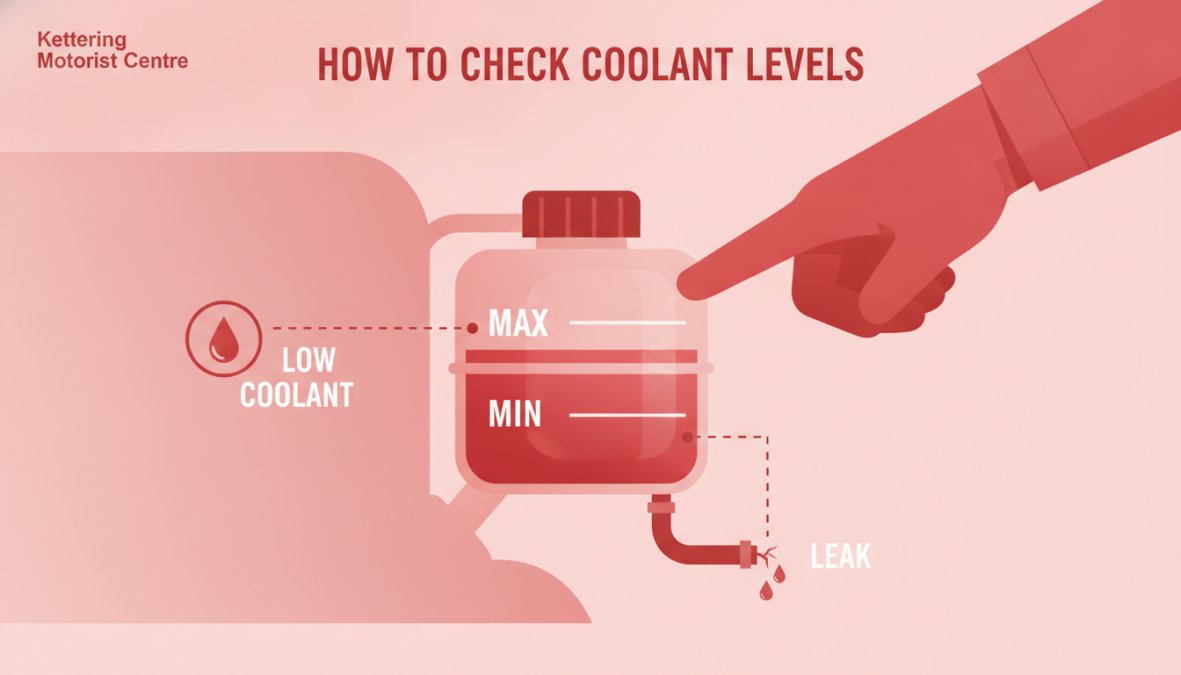
Close-up of a mechanic's hands checking the coolant overflow reservoir under an open car bonnet, showing the minimum and maximum level markings clearly visible on the translucent plastic container
Ensure the engine is completely cold. Open the bonnet and locate the overflow reservoir, a translucent plastic container connected to the radiator by a rubber hose. The fluid should be between the "minimum" and "maximum" marks. If low, add the appropriate coolant type for your vehicle.
To identify leaks, inspect all hose connections for cracks or loose clamps. Feel along hoses for soft spots or bulges. Check the radiator for visible damage. Look at the water pump for weeping coolant around the seal. If you can't see a leak but coolant keeps disappearing, you likely have an internal leak requiring professional diagnosis.
Check
Frequency
What to Look For
Coolant level
Monthly
Fluid between min/max marks
Hose condition
Every 6 months
Cracks, bulges, soft spots
Radiator fins
Every 6 months
Debris, bent fins, discolouration
Pressure cap
Annually
Cracks, corrosion, proper sealing
Coolant colour
Annually
Discolouration, cloudiness, rust particles
Symptoms of a Bad Thermostat and When to Replace It
A stuck-closed thermostat prevents coolant from reaching the radiator. The engine heats up quickly and the temperature gauge climbs into the red zone. A stuck-open thermostat does the opposite, coolant flows constantly, and the engine never reaches proper operating temperature. You'll notice the temperature gauge stays below the normal midpoint, fuel economy drops, and the heater doesn't produce hot air quickly.
Replacing a thermostat typically requires removing the housing that connects to the radiator hose. Most motorists should have this done professionally.
Watch OutA failed thermostat can damage the head gasket if overheating is severe. The head gasket seals the cylinder head to the engine block. Extreme heat causes it to fail, allowing coolant to leak into oil passages or combustion chambers. This is one of the most expensive engine repairs.
Signs of a Blown Head Gasket: Long-Term Damage Assessment
Repeated or severe overheating can blow the head gasket, the seal between the cylinder head and engine block. The most obvious sign is white smoke from the exhaust, this is coolant burning in the cylinders. The coolant level drops rapidly without visible leaks because coolant is burning away.
Oil becomes contaminated with coolant, giving it a milky appearance. Check the dipstick; if the oil looks like chocolate milk, the head gasket has likely failed. A blown head gasket requires engine removal and complete disassembly to replace properly. This is one of the most expensive repairs a car can need. Prevention through proper cooling system maintenance is far cheaper than repair.
If your vehicle has overheated severely, have it inspected by a professional. At Kettering Motorist Centre, we can perform a compression test to check for head gasket damage and a coolant test to detect internal leaks.
How the Cooling System Works: Thermal Management Explained
Understanding how the cooling system operates helps you recognise problems and appreciate why maintenance matters.
The cooling system is a closed loop. Coolant starts in the engine block, where it absorbs heat from combustion. It flows through passages surrounding the cylinders, extracting heat. The hot coolant then flows to the radiator, a heat exchanger with thin metal fins. Air passes through the fins, and heat transfers from the coolant to the air. The cooled coolant returns to the engine block, and the cycle repeats.
The pressure cap maintains system pressure. Pressurised coolant has a higher boiling point than atmospheric-pressure coolant, allowing the engine to run hotter without coolant vaporising. The overflow reservoir collects coolant that expands when heated. The thermostat regulates coolant flow, keeping the engine in the ideal temperature window. The water pump is driven by a belt connected to the engine, pushing coolant through the system. The radiator fan enhances cooling when the vehicle is stationary or moving slowly.
All these components work together as a system. If any single component fails, the whole system fails. This is why regular maintenance, checking coolant levels, inspecting hoses, and ensuring the fan works, is so important.
Engine overheating is preventable with proper maintenance. Regular coolant checks, hose inspections, and professional servicing catch problems before they become expensive. If you're experiencing overheating or want to ensure your cooling system is in good condition, Kettering Motorist Centre offers expert diagnostic and repair services for all vehicle types. Our team can identify the cause of your overheating, recommend repairs, and get you back on the road safely. Book your appointment through our hassle-free online system, no upfront payment required, and drive with confidence knowing your cooling system is properly maintained.
Frequently Asked Questions
What should I do immediately if my car engine overheats while driving?
Pull over safely away from traffic, switch off the engine, and allow it to cool for at least 15 minutes. Do not open the radiator cap or coolant reservoir whilst the engine is hot, as pressurised steam can cause severe burns. Once cooled, check your coolant level and look for visible leaks. If the problem persists or you're unsure, contact roadside assistance. Never continue driving an overheating engine, as this can cause catastrophic damage to the head gasket and engine block.
Does low coolant cause engine overheating?
Yes, low coolant is one of the most common causes of engine overheating. Coolant absorbs heat from the combustion process and transfers it through the radiator to maintain proper engine temperature. Without sufficient coolant, the thermal management system cannot function effectively. Check your coolant level regularly when the engine is cold, and top up with the correct antifreeze mixture if needed. Persistent low coolant often indicates a leak in the hoses, radiator, or water pump that requires professional attention.
How do I know if my thermostat is stuck?
A stuck thermostat typically causes the engine temperature gauge to climb rapidly and remain at the high end of the scale. You may also notice the radiator fan running constantly or the engine temperature spiking during idle. Another sign is inconsistent heating from your vehicle's heater or the heater blowing cold air whilst the engine temperature gauge shows high readings. If you suspect a faulty thermostat, have it diagnosed professionally, as symptoms can overlap with other cooling system failures. A stuck thermostat prevents proper coolant circulation and can lead to serious engine damage if left unaddressed.
Can I drive a car that is overheating?
No, you should not continue driving an overheating car. Driving with an overheating engine risks catastrophic mechanical failure, including blown head gaskets, warped engine blocks, and seized engines. Even short distances at low speeds can cause irreversible damage. The safest course of action is to pull over immediately, allow the engine to cool, and seek professional help. If you're far from a service centre, contact roadside assistance. Attempting to drive an overheating vehicle can result in a complete engine failure that is far more expensive to repair than addressing the overheating issue promptly.
Your booking Failed
Please try again or please call 01536 410142
Thank you for placing a booking with Kettering Motorist Centre Limited for vehicle
PLEASE TAKE YOUR BOOKING REFERENCE NUMBER WITH YOU TO THE MOT CENTRE
Your items
MOT Test
×
Terms and Conditions
These terms and conditions form the basis on which you can visit and use this website. Please read them carefully as they contain important information.
General terms and conditions
This website is owned and operated by Kettering Motorist Centre Ltd (company registration number: 4485858) operating at Trafalgar Road, Kettering, Northamptonshire, NN16 8DB (the "MOT Centre", the "Company", "we" or "us"). If you have any queries about these terms and conditions or if you have any comments or complaints on or about this website, you can contact us at [email protected] or 01536 410142.
The website is to promote and offer for sale the products and services of Kettering Motorist Centre Limited.
1. The contract between us
This website does not take payment for products or services online. The website enables you to view products and services online and to make a booking for later delivery and payment. The vehicle and provision of other products and services promoted by this website and the payment by you of the price of those products and services will take place at the MOT Centre. The booking does not constitute a contract.
The booking process on the site provides details of the booked MOT order. Please take the time to read and check your booking. It is your responsibility to make sure the order is correct and for the correct vehicle.
2. Ownership of rights
All rights, including copyright, in this website are owned by or licensed to the Company. Any use of this website or its contents, including copying or storing it or them in whole or part, other than for your own personal, non commercial use, is prohibited without our permission. You may not modify, distribute or repost anything on this website for any purpose.
3. Accuracy of content
We have taken care in the preparation of the content of this website, in particular to ensure that prices quoted are correct at the time of publishing and that all goods have been fairly described. However, bookings will only be accepted if there are no material errors in the description of the goods or their prices as advertised on this website. Any weights, dimensions and capacities given about the goods are approximate only.
4. Damage to your computer
We try to ensure that this website is free from viruses or defects. However, we cannot guarantee that your use of this website or any websites accessible through it will not cause damage to your computer. It is your responsibility to ensure that the right equipment is available to use the website. Except in the case of negligence on our part, we will not be liable to any person for any loss or damage which may arise to computer equipment as a result of using this website.
5. Availability
All bookings are subject to acceptance and availability. If the MOT date you have requested are is not available, the Centre will contact you by e-mail or phone. You will have the option either to wait until another slot is available or to cancel your booking.
6. Booking errors
You are able to correct errors on your booking up to the point on which you click on “Place Booking” during the booking process.
7. Price
The prices payable for goods that you order are as set out in our website. All prices are inclusive of VAT at the current rates and are correct at the time of entering information, errors and omissions excepted.
Whenever it is not possible to accept your booking to buy goods of the specification and description at the price indicated, the MOT Centre will advise you by email or phone or when you visit the centre.
8. Payment terms
You will be required to pay for the goods or services to the Centre at time of a completed MOT.
9. Delivery charges
N/A
10. Cancellation
The MOT Centre reserves the right to cancel the booking if:
10.1 There is insufficient stock to deliver the goods you have booked.
10.2 One or more of the goods you booked was listed at an incorrect price.
If your booking is cancelled the Centre will notify you by e-mail or phone.
You have the right to cancel your booking at any time up to the point of the MOT. If you do cancel your booking you should inform the centre by phone.
11. Liability
Notwithstanding the foregoing, nothing in these terms and conditions is intended to limit any rights you might have as a consumer under applicable local law or other statutory rights that may not be excluded nor in any way to exclude or limit our liability to you for any death or personal injury resulting from our negligence.
12. Notices
Unless otherwise expressly stated in these terms and conditions, all notices from you to us must be in writing and sent to our contact address given above and all notices from us to you will be displayed on our website from time to time.
13. Changes to legal notices
We reserve the right to change these terms and conditions from time to time and you should look through them as often as possible.
14. Law, jurisdiction and language
This website, any content contained therein and any contract brought into being as a result of usage of this website are governed by and construed in accordance with English law. Parties to any such contract agree to submit to the exclusive jurisdiction of the courts of England and Wales.
15. Invalidity
If any part of these terms and conditions is unenforceable (including any provision in which we exclude our liability to you) the enforceability of any other part of these conditions will not be affected.
16. Privacy
You acknowledge and agree to be bound by the terms of our privacy policy
17. Third party rights
Nothing in this Agreement is intended to, nor shall it confer any rights on a third party.