A dead car battery can leave you stranded, but replacement isn't always necessary. Many car owners don't realise that a completely discharged battery can often be brought back to life with the right approach. At Kettering Motorist Centre, we help motorists across Kettering and Northamptonshire decide whether recharging makes sense or whether replacement is the better investment. The answer depends on the battery's age, condition, and what caused the discharge.
This guide walks you through diagnosing your battery's condition, safely recharging it if possible, and deciding whether recharging or replacement is the smarter choice.
Signs of a Dead Car Battery
A dead car battery shows itself clearly. When you turn the ignition key, you'll hear nothing, no cranking sound, no clicking. The dashboard lights may be dim or completely off. If lights come on but the engine won't turn over, you're likely dealing with a dead or severely discharged battery rather than an alternator failure.
Cold weather worsens this. In winter, a weakened battery struggles because chemical reactions inside slow at lower temperatures. If your car won't start on a freezing morning but fires up once it warms up, you've got a marginal battery.
Other warning signs appear before complete failure. Slow cranking (the engine turning over sluggishly) suggests the battery is losing charge. Dim headlights or interior lights that fade when you switch on the radio indicate the battery is struggling. A swollen or bloated battery case means internal chemical reactions have gone wrong, that battery needs replacement, not recharging.
Terminal corrosion is another clue. White, blue, or green crusty buildup around the battery terminals prevents proper electrical contact. Cleaning the terminals might restore connection and solve the problem.
Most car batteries last between three and five years. If yours is over five years old and shows weakness, recharging might buy you a few weeks, but replacement will be necessary soon anyway.
Can a Dead Battery Be Recharged?
Yes, a dead battery can almost always be recharged, but whether it should be is a different question. The key distinction is between temporary discharge and permanent damage.
A battery that's dead because you left the headlights on overnight or accidentally drained it through a parasitic draw can usually be fully restored. Once recharged, it should hold charge and perform normally again.
However, if the battery is old, deeply discharged multiple times, or internally damaged, recharging might restore it temporarily but won't fix the underlying problem. A battery left completely flat for weeks may suffer from sulfation, a chemical buildup that reduces its ability to hold charge. Recharging can sometimes reverse mild sulfation, but severe cases are permanent.
A healthy car battery should sit at around 12.6 volts when the engine is off. Anything below 12 volts means it's discharged. Below 10 volts indicates deep discharge; recharging is still possible, but damage is likely significant.
Jump-starting (rapid recharging using another vehicle's battery) works in emergencies, but a proper, slow recharge using a dedicated battery charger is gentler and more likely to restore full capacity.
How to Charge a Car Battery Safely
Charging a car battery safely requires the right equipment and careful procedure. Whether using a battery charger or jump leads, follow critical steps to avoid damage to your vehicle's electrical system or injury.
Using a Battery Charger
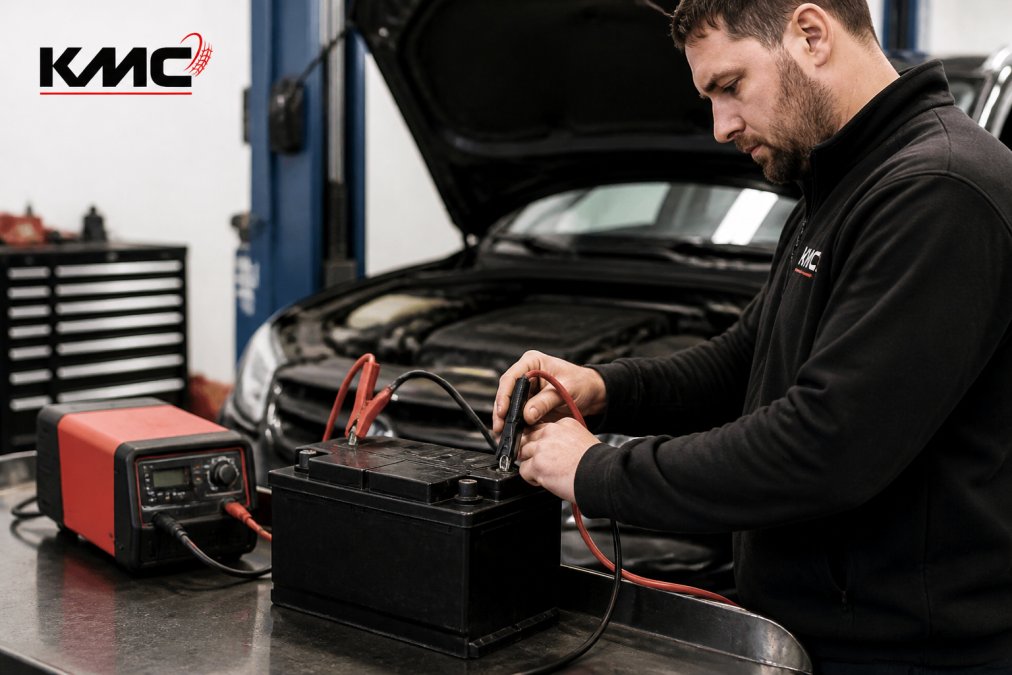
A battery charger is the safest and most effective way to recharge a dead car battery. It allows you to control charging speed and monitor progress.
What you'll need:
A battery charger (trickle charger or smart charger)
Safety glasses
Work gloves
A clean cloth or wire brush for terminal cleaning
Steps to charge your battery:
Switch off the engine and remove the keys. Park on level ground in a well-ventilated area.
Inspect the battery terminals for corrosion. If you see buildup, disconnect the negative terminal first (black cable), then the positive terminal (red cable). Clean both terminals and battery posts with a wire brush until shiny. Reconnect the positive terminal first, then the negative.
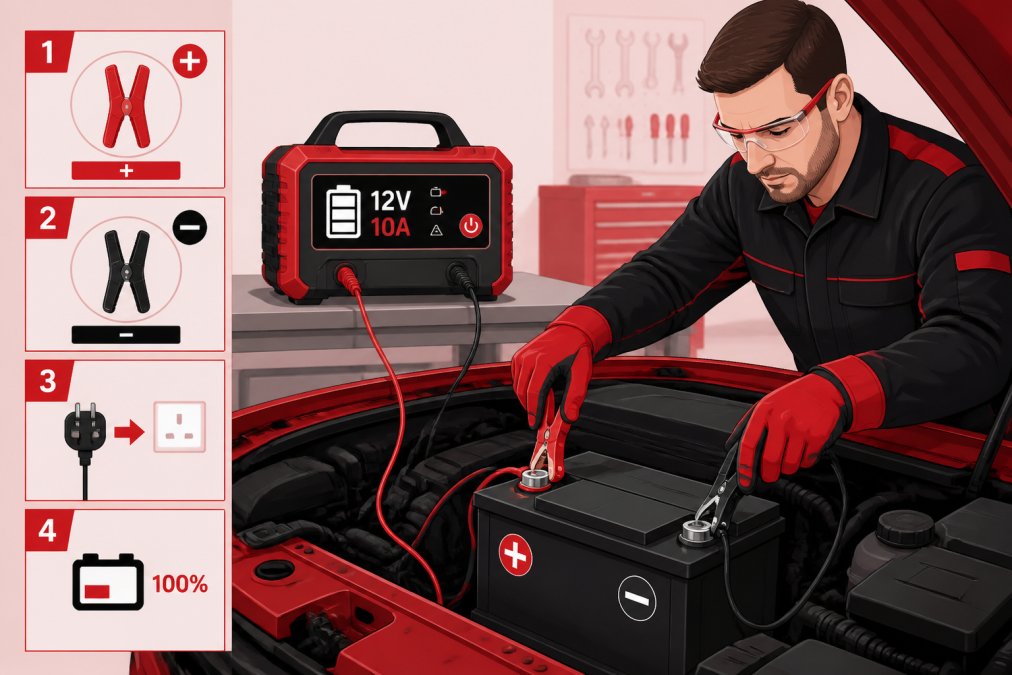
Connect the charger by attaching the red clamp to the positive terminal and the black clamp to the negative terminal. Ensure connections are tight.
Set the charger to the correct voltage. Most car batteries are 12-volt systems. Check your vehicle's handbook if unsure.
Select the charging rate. A trickle charger (2-10 amps) is safest for older batteries and takes 12-24 hours. A standard charger (10-20 amps) takes 4-8 hours. Fast chargers (30+ amps) are quicker but risk damaging weak batteries.
Leave the charger connected until fully charged. Most modern chargers stop automatically when the battery reaches full charge.
Disconnect the charger by removing the black clamp first, then the red clamp. This prevents sparks.
Reconnect the battery to your car if you'd disconnected it earlier. Red terminal first, then black.
Test the car by starting the engine. If it starts reliably, the recharge was successful. If it struggles or won't start, the battery may need replacement.
A trickle charger is ideal if you're not in a hurry. These low-amp chargers can be left connected for days without risk of overcharging, making them perfect for deeply discharged batteries or cars unused for weeks.
Jump-Starting Your Vehicle
Jump-starting is a quick way to get your car running when the battery is too dead to start on its own. It works by borrowing electrical power from another vehicle's battery through jump leads.
What you'll need:
Jump leads with clamps on both ends
Another vehicle with a working battery
Safety glasses
Steps to jump-start your car:
Park both vehicles close together (about 60 centimetres apart) but not touching. Switch off both engines.
Attach the red clamp to the positive terminal of your dead battery.
Attach the other red clamp to the positive terminal of the working battery.
Attach the black clamp to the negative terminal of the working battery.
Attach the final black clamp to an unpainted metal surface on your engine block or chassis, NOT to the negative terminal of your dead battery. This prevents sparks near the battery.
Start the working vehicle and let it run for 2-3 minutes.
Start your car. If it doesn't start after 30 seconds, wait another minute and try again. Don't crank the starter for more than 10 seconds at a time.
Once your car starts, remove the leads in reverse order: black clamp from your car, black clamp from the other car, red clamp from the other car, red clamp from your car.
Drive your car for at least 20 minutes to let the alternator recharge the battery.
Jump-starting works well for temporary discharges but won't help if the battery is internally damaged. If your car starts but dies again within hours, recharging alone won't solve the problem.
When Recharging Won't Work
Some situations call for battery replacement, not recharging.
The battery is visibly damaged. If the case is swollen, cracked, or leaking, recharging is dangerous. Internal chemical reactions have gone wrong, and the battery could fail suddenly. Replace it immediately.
The battery is more than five years old. Age weakens a battery's ability to hold charge. If your battery is past its typical lifespan and shows weakness, recharging might work temporarily, but replacement is the practical choice.
The battery won't hold a charge after recharging. If you've fully recharged the battery and it's dead again within hours without the engine running, the battery has internal damage. Recharging won't fix it.
The car won't start even after a full recharge. This suggests either the battery is too damaged or the problem isn't the battery at all, it could be the alternator, starter motor, or another electrical component. Have the car properly diagnosed before replacing the battery.
Multiple jump-starts were needed in a short time. If you've jump-started the car several times in the past month, the battery is failing. Replacement is inevitable.
The battery repeatedly loses charge in cold weather. This is a sign of internal deterioration. If it keeps dying in winter, replacement is the answer.
Car Battery Replacement
The cost of replacing a car battery varies depending on the battery type and your vehicle model. Rather than guessing, we recommend getting a quote from a professional garage. At Kettering Motorist Centre, we can assess your battery and provide transparent pricing for replacement if needed.
Battery replacement typically involves removing the old battery, cleaning the terminals, and installing a new one. Labour time is usually short, but the battery itself is the main expense. Premium batteries with longer warranties cost more than basic models but often last longer and perform better.
For electric and hybrid vehicles, battery considerations differ. If you drive an EV or hybrid in Kettering or Northamptonshire, specialist knowledge is essential. Visit kmcelectric.co.uk for information about battery health and replacement for electric cars.
When budgeting for battery replacement, consider upgrading to a higher-quality battery if your old one repeatedly failed. A better battery is an investment in reliability.
Testing Battery Health Before You Decide
Before committing to recharging or replacement, test your battery's actual condition. This removes guesswork from the decision.
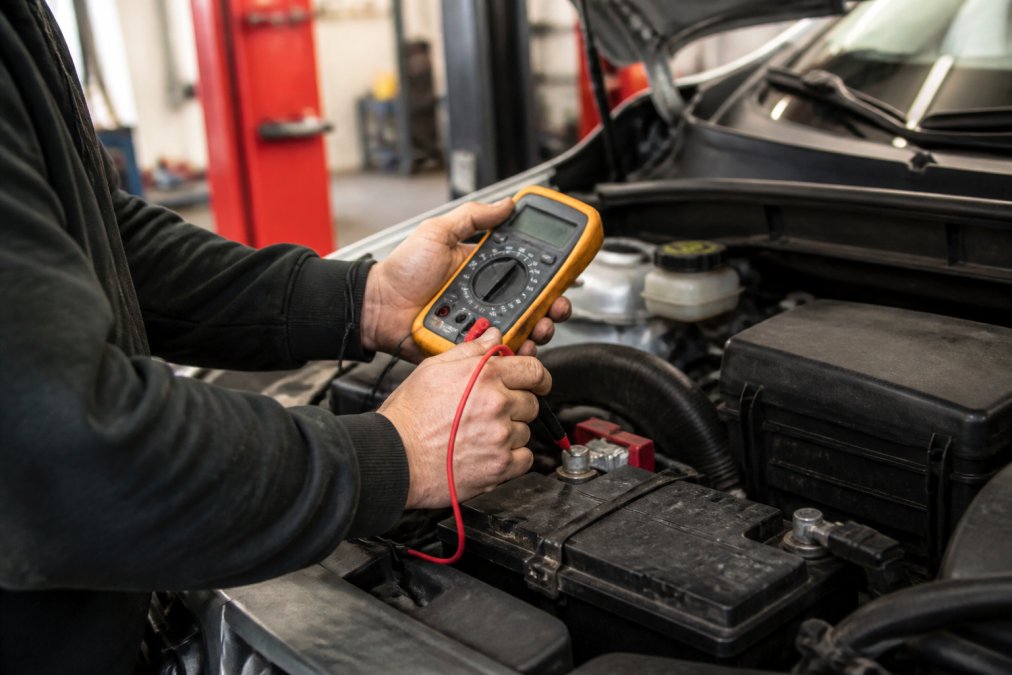
Using a multimeter is the most straightforward method. Set the multimeter to DC voltage, connect the red probe to the positive terminal and the black probe to the negative terminal, and read the voltage.
A healthy battery should show 12.6 volts or higher when the engine is off. Between 12.0 and 12.4 volts means the battery is partially discharged but functional. Below 12.0 volts indicates significant discharge. Below 10.5 volts indicates deep discharge; recharging is necessary, but damage may be severe.
A battery tester (load tester) goes further. It applies a load to the battery and measures how well it performs under stress. This reveals whether the battery can deliver power when the starter motor demands it. Many garages have battery testers, and a professional test gives you certainty.
The alternator test is also important. If your battery keeps dying even after recharging, the alternator (which charges the battery while the engine runs) might be failing. A mechanic can test the alternator's output to rule this out.
At Kettering Motorist Centre, we can run these diagnostic tests for you. Understanding your battery's true condition takes the guesswork out of deciding whether recharging is worth your effort.
Recharge vs. Replace: Making the Right Choice
The decision between recharging and replacing comes down to three factors: the battery's age, its condition, and how often it's failed.
Recharge if:
The battery is less than three years old
This is the first time it's been completely dead
The discharge was caused by something temporary (lights left on, unused car)
A voltage test shows the battery is between 10.5 and 12.6 volts
The battery has no visible damage
Replace if:
The battery is more than five years old
It's been dead multiple times in the past year
A voltage test shows it's below 10.5 volts and stays there after recharging
The case is swollen, cracked, or leaking
The car won't start even after a full recharge
The middle ground: If your battery is three to five years old and this is its second or third discharge, recharging makes sense now, but budget for replacement within the next six months. A failing battery will continue to fail more frequently.
Time is also a factor. If you need your car to start reliably and don't have time to wait for a full recharge, replacement is the practical choice. A new battery gives you peace of mind and reliability.
Recharging is always cheaper than replacement. But if recharging buys you only a few weeks before you're back in the same situation, replacement is the better long-term investment.
When unsure, professional diagnosis is worth the cost. A mechanic can test your battery's capacity, check the alternator, and spot any other electrical issues draining your battery. We offer battery testing and replacement at Kettering Motorist Centre. Book an appointment online with no upfront payment required.
A dead car battery doesn't always mean replacement. Many batteries can be successfully recharged and will serve you reliably for years. The key is diagnosing what you're dealing with, temporary discharge or permanent damage, before you decide. At Kettering Motorist Centre in Kettering and across Northamptonshire, we help you make that decision with professional battery testing and transparent advice. If recharging is the answer, we'll guide you through it safely. If replacement is necessary, we'll ensure you get a quality battery that matches your vehicle's needs. Get in touch to book a battery health check and find out exactly what your car needs.
Frequently Asked Questions
Can a totally dead car battery be recharged?
Yes, a dead battery can often be recharged if the cells haven't suffered permanent damage. Most lead-acid batteries respond well to recharging if the battery is simply discharged rather than internally damaged. However, age and deep discharge cycles reduce the likelihood of a full recovery. A multimeter test showing voltage above 10.5V suggests recharging may work; below that, replacement is more likely necessary. KMC can test your battery's state of charge to determine the best course of action.
How long can a car battery stay dead and still be recharged?
A battery left completely discharged for extended periods risks permanent sulphation, where lead sulphate crystals form on the plates and block charging. Most batteries can recover if recharged within a few weeks, but waiting months significantly reduces recovery chances. Cold weather accelerates this damage. The sooner you recharge after discovering a dead battery, the higher your chances of success. If you're unsure how long yours has been flat, bring it to KMC for a diagnostic test.
What are the signs of a dead car battery versus one that just needs charging?
A dead battery typically shows no dashboard lights, won't turn the engine over, and produces no clicking sounds when you turn the key. A failing battery might show dim lights, slow cranking, or intermittent starting issues. If your car won't start but all electrics work normally, the battery is likely just discharged and can be recharged. However, if you notice corrosion around terminals, swelling, or a rotten-egg smell, the battery may be damaged beyond repair and needs replacement.
Is a 20-minute drive enough to charge a dead car battery?
A 20-minute drive provides some charging via the alternator, but won't fully restore a completely dead battery. The alternator charges slowly at idle and moderately during driving. For a deeply discharged battery, you need 30 minutes to an hour of consistent driving at moderate speeds, or better yet, use a dedicated battery charger for controlled, complete recharging. If your battery struggles to start even after a drive, it likely needs professional testing or replacement. KMC can assess whether your battery needs a full recharge cycle.
Thank you for placing a booking with Kettering Motorist Centre Limited for vehicle
PLEASE TAKE YOUR BOOKING REFERENCE NUMBER WITH YOU TO THE MOT CENTRE
Your items
MOT Test
×
Terms and Conditions
These terms and conditions form the basis on which you can visit and use this website. Please read them carefully as they contain important information.
General terms and conditions
This website is owned and operated by Kettering Motorist Centre Ltd (company registration number: 4485858) operating at Trafalgar Road, Kettering, Northamptonshire, NN16 8DB (the "MOT Centre", the "Company", "we" or "us"). If you have any queries about these terms and conditions or if you have any comments or complaints on or about this website, you can contact us at [email protected] or 01536 410142.
The website is to promote and offer for sale the products and services of Kettering Motorist Centre Limited.
1. The contract between us
This website does not take payment for products or services online. The website enables you to view products and services online and to make a booking for later delivery and payment. The vehicle and provision of other products and services promoted by this website and the payment by you of the price of those products and services will take place at the MOT Centre. The booking does not constitute a contract.
The booking process on the site provides details of the booked MOT order. Please take the time to read and check your booking. It is your responsibility to make sure the order is correct and for the correct vehicle.
2. Ownership of rights
All rights, including copyright, in this website are owned by or licensed to the Company. Any use of this website or its contents, including copying or storing it or them in whole or part, other than for your own personal, non commercial use, is prohibited without our permission. You may not modify, distribute or repost anything on this website for any purpose.
3. Accuracy of content
We have taken care in the preparation of the content of this website, in particular to ensure that prices quoted are correct at the time of publishing and that all goods have been fairly described. However, bookings will only be accepted if there are no material errors in the description of the goods or their prices as advertised on this website. Any weights, dimensions and capacities given about the goods are approximate only.
4. Damage to your computer
We try to ensure that this website is free from viruses or defects. However, we cannot guarantee that your use of this website or any websites accessible through it will not cause damage to your computer. It is your responsibility to ensure that the right equipment is available to use the website. Except in the case of negligence on our part, we will not be liable to any person for any loss or damage which may arise to computer equipment as a result of using this website.
5. Availability
All bookings are subject to acceptance and availability. If the MOT date you have requested are is not available, the Centre will contact you by e-mail or phone. You will have the option either to wait until another slot is available or to cancel your booking.
6. Booking errors
You are able to correct errors on your booking up to the point on which you click on “Place Booking” during the booking process.
7. Price
The prices payable for goods that you order are as set out in our website. All prices are inclusive of VAT at the current rates and are correct at the time of entering information, errors and omissions excepted.
Whenever it is not possible to accept your booking to buy goods of the specification and description at the price indicated, the MOT Centre will advise you by email or phone or when you visit the centre.
8. Payment terms
You will be required to pay for the goods or services to the Centre at time of a completed MOT.
9. Delivery charges
N/A
10. Cancellation
The MOT Centre reserves the right to cancel the booking if:
10.1 There is insufficient stock to deliver the goods you have booked.
10.2 One or more of the goods you booked was listed at an incorrect price.
If your booking is cancelled the Centre will notify you by e-mail or phone.
You have the right to cancel your booking at any time up to the point of the MOT. If you do cancel your booking you should inform the centre by phone.
11. Liability
Notwithstanding the foregoing, nothing in these terms and conditions is intended to limit any rights you might have as a consumer under applicable local law or other statutory rights that may not be excluded nor in any way to exclude or limit our liability to you for any death or personal injury resulting from our negligence.
12. Notices
Unless otherwise expressly stated in these terms and conditions, all notices from you to us must be in writing and sent to our contact address given above and all notices from us to you will be displayed on our website from time to time.
13. Changes to legal notices
We reserve the right to change these terms and conditions from time to time and you should look through them as often as possible.
14. Law, jurisdiction and language
This website, any content contained therein and any contract brought into being as a result of usage of this website are governed by and construed in accordance with English law. Parties to any such contract agree to submit to the exclusive jurisdiction of the courts of England and Wales.
15. Invalidity
If any part of these terms and conditions is unenforceable (including any provision in which we exclude our liability to you) the enforceability of any other part of these conditions will not be affected.
16. Privacy
You acknowledge and agree to be bound by the terms of our privacy policy
17. Third party rights
Nothing in this Agreement is intended to, nor shall it confer any rights on a third party.