Many drivers question whether an interim car service is worth the cost, especially when budgets are tight and the car runs fine. At Kettering Motorist Centre, we hear this regularly. The short answer: yes. An interim service protects your wallet, warranty, and resale value by catching wear before it becomes expensive.
Most guides treat the interim service as a watered-down full service. It isn't. It's a purpose-built maintenance interval for drivers covering higher annual mileage or operating in demanding conditions.
Is Interim Car Service Worth the Money? The Financial Case
An interim car service is a scheduled maintenance check performed between full annual services, typically every six months or every 6,000 miles, whichever comes first. Its purpose is to catch wear before it escalates into costly repair.
The financial logic is straightforward: a minor oil and filter change costs a fraction of what a seized engine or warped brake disc costs to fix. According to the RAC's vehicle maintenance guidance, neglected engine oil is one of the leading causes of preventable engine damage in UK vehicles. Engine rebuilds run to thousands of pounds. An interim service does not.
Long-term repair savings and preventative maintenance
Preventative maintenance is the principle that small, regular interventions cost less than large, infrequent repairs. An interim service sits squarely in that philosophy.
Common issues caught during an interim check include low or contaminated engine oil, worn brake pads before they damage the disc, underinflated tyres, low coolant levels, and dirty air filters. Each is cheap to address at the interim stage. Left unattended, each can cascade into significantly more expensive failure. Drivers who skip interim servicing often face higher repair bills over three to five years than those who maintain a consistent schedule.
Pro TipIf your annual mileage exceeds 12,000 miles, an interim service is not optional. A once-yearly full service leaves too long a gap between oil changes and safety checks.
Impact on vehicle warranty and service history
Many manufacturer warranties and extended warranty products require evidence of regular servicing to remain valid. A gap in your service history can give insurers or warranty providers grounds to reject a claim.
Maintaining a complete service book with interim and full service stamps at correct intervals demonstrates proper maintenance. This matters for warranty protection and resale value.
Interim vs Full Service: Key Differences and Cost Comparison
The most common source of confusion is understanding what separates an interim service from a full service.
Service Type
Typical Interval
Key Checks Included
Best For
Interim Service
Every 6 months or 6,000 miles
Oil, filter, fluids, brakes, tyres, lights
High-mileage drivers
Full Service
Annually or every 12,000 miles
All interim checks plus spark plugs, air filter, cabin filter, detailed inspection
Most drivers
Major Service
Every 2-3 years or 24,000 miles
All full service checks plus timing belt, fuel filter, transmission fluid
Long-term ownership
The interim service is not a replacement for a full service. They work together. A driver covering 15,000 miles per year would typically follow: interim service at 6 months, full service at 12 months, interim at 18 months, full service at 24 months, and so on.
What is included in an interim service
A standard interim service typically covers engine oil drain and replacement, oil filter replacement, fluid level checks and top-ups (coolant, brake fluid, power steering fluid, screen wash), brake inspection, tyre pressure check and visual assessment, lights and indicators check, visual check of steering and suspension components, and service book stamp.
Major service comparison and when you need it
A major service includes replacement of spark plugs, air filter, pollen filter, fuel filter, and thorough engine management inspection. Some major services include diagnostic checks using electronic equipment to identify fault codes before dashboard warnings appear.
The major service is not an annual requirement for most vehicles. Manufacturer guidelines in your logbook specify correct intervals for your make and model.
Watch OutNever assume your car only needs a major service because it "feels fine." Many developing faults, particularly fuel system or emissions issues, produce no noticeable symptoms until they cause failure or MOT refusal.
How Often Should You Service Your Car? Mileage and Interval Guidelines
Manufacturer guidelines define the correct service interval for your specific vehicle. These are published in your vehicle's handbook and logbook and represent the minimum recommended maintenance frequency.
For most petrol and diesel vehicles, the standard guidance from the Society of Motor Manufacturers and Traders points to annual servicing as the baseline. The interim service layer is added for drivers whose mileage or driving conditions place greater demands on the vehicle.
Manufacturer guidelines and driving conditions
Driving conditions matter as much as mileage. Stop-start urban driving, frequent short trips, towing, and driving on dusty or rural roads all accelerate wear on engine oil, filters, and brakes. If your usage skews toward demanding patterns, erring toward the interim service interval is sensible.
High-mileage driving and annual service schedules
High-mileage drivers, defined as those covering more than 12,000 miles per year, should treat the interim service as non-negotiable. At higher mileage, engine oil degrades faster, brake components wear more quickly, and cumulative stress on tyres, suspension, and steering increases.
A practical annual service schedule for a high-mileage driver might look like: January interim service (oil, filter, fluids, brakes, tyres), July full service (all interim checks plus air filter, spark plugs, comprehensive inspection), and repeat annually with a major service every two to three years per manufacturer guidelines.
Car Service Checklist: What Gets Checked During an Interim Service
A well-executed interim service follows a structured checklist. Understanding what gets checked helps you confirm the work has been done properly.
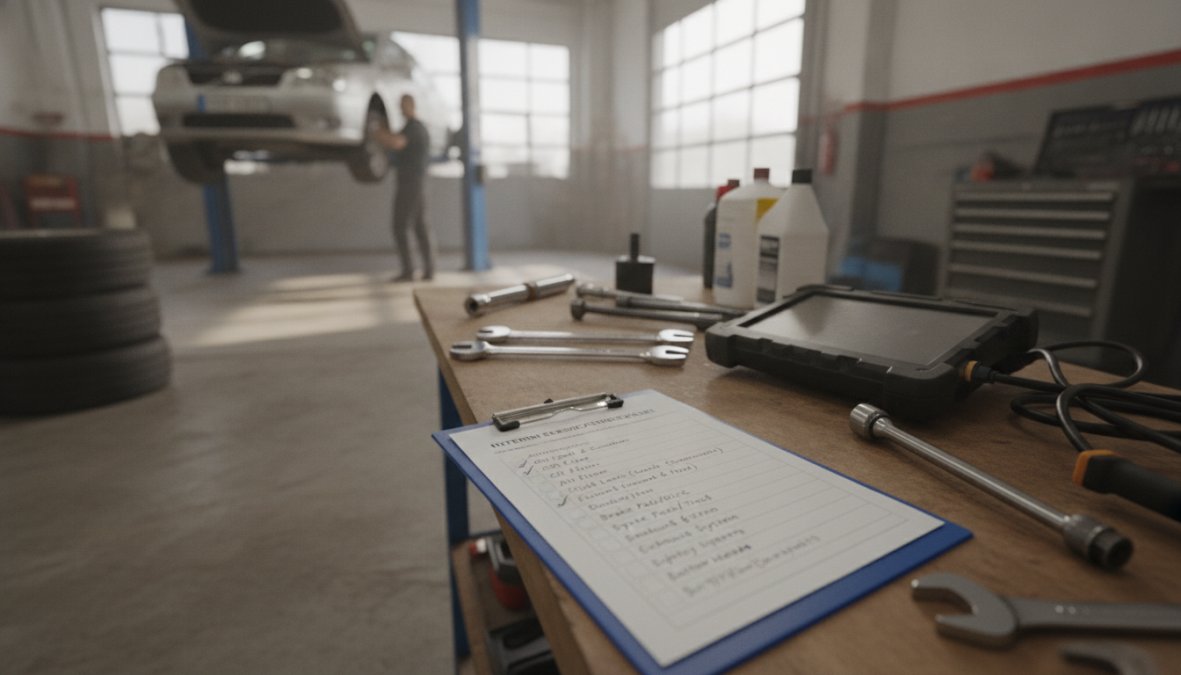
A mechanic in a workshop wearing overalls draining engine oil from a car on a ramp, with oil filter tools and a diagnostic tablet visible on the workbench beside the vehicle
Oil, filters, and fluid levels inspection
Engine oil lubricates moving components, reduces friction, and regulates engine temperature. During an interim service, old oil is drained completely, the oil filter is replaced, and fresh oil of correct specification is added.
Fluid level checks cover coolant (prevents overheating and freezing), brake fluid (absorbs moisture; low or contaminated fluid affects stopping performance), power steering fluid, and windscreen washer fluid.
Brake, tyre, and suspension checks
Brake inspection is a visual and measurement-based assessment. A mechanic checks pad thickness against minimum safe thresholds, inspects discs for scoring or warping, and checks brake fluid level.
Tyre pressure is checked against manufacturer specifications. Tyre condition is assessed visually for uneven wear, cuts, bulges, or sidewall damage. Suspension components are checked for visible wear or damage affecting handling and safety.
Service History and Resale Value: Why Documentation Matters
A complete service history is one of the most tangible financial assets attached to a used vehicle. Buyers place real value on a car with a full, stamped service book.
A car with no service history could have been maintained perfectly, but the buyer has no way to verify that. A car with a complete logbook showing interim and full services at correct intervals demonstrates consistent care and gives buyers confidence.
According to the AA's used car buying guidance, a full service history can add meaningful value to a used vehicle's asking price. For vehicles over three years old, the gap widens as the cumulative maintenance record becomes more important.
Key TakeawayEvery interim service stamp in your logbook is evidence of responsible ownership. It reduces buyer risk and supports a stronger asking price when you sell.
DIY vs Professional Service: Cost-Benefit Analysis
Some drivers perform basic maintenance themselves, particularly oil and filter changes. For mechanically confident owners with the right tools, this is legitimate. However, DIY servicing carries risks that professional servicing does not.
The most significant is the absence of a safety inspection. Changing your own oil is straightforward. Identifying that rear brake pads are approaching minimum thickness or that a suspension bush shows early wear requires a trained eye and a vehicle on a ramp.
When professional servicing delivers real value
Professional servicing delivers value beyond the physical work. A garage-stamped service book carries weight that a self-certified DIY record does not. Manufacturer warranties often require evidence of professional servicing at approved workshops to remain valid.
A professional mechanic brings diagnostic equipment that identifies electronic fault codes before they become dashboard warnings or MOT failures. This early detection is particularly valuable as vehicles age.
Electric and Hybrid Vehicle Interim Servicing: Different Needs
Electric vehicles and hybrids have different servicing requirements from petrol and diesel cars.
Fully electric vehicles do not require engine oil changes but still require regular maintenance checks: brake fluid (absorbs moisture over time), coolant levels (battery thermal management systems use coolant), tyre wear (EVs are heavier, accelerating wear), cabin air filter replacement, and software and battery health diagnostics.
Hybrid vehicles retain an internal combustion engine alongside their electric drivetrain. They require oil and filter changes, often at extended intervals because the engine runs less frequently.
Who Needs an Interim Service and When to Book
An interim service is most valuable for high-mileage drivers covering more than 12,000 miles per year, drivers using vehicles for frequent short urban journeys, owners of vehicles over three years old, drivers with active warranties requiring documented servicing, and anyone planning to sell or part-exchange within 12 months.
Book every six months or every 6,000 miles, whichever comes first. If your full service was in January, book your interim service in July. If you reach 6,000 miles before six months have passed, book at the mileage threshold.
Kettering Motorist Centre offers hassle-free online booking with no payment required upfront, making it easy to schedule maintenance without surprises.
The question of whether interim car service is worth the money resolves clearly when you weigh the cost of a routine check against the cost of repairs it prevents, the warranty protection it maintains, and the resale value it supports.
Frequently Asked Questions
What is included in an interim car service?
An interim service typically includes an oil and oil filter change, fluid level checks (coolant, brake fluid, power steering), brake inspection, tyre pressure and tread depth assessment, and a visual check of suspension and steering components. It's a lighter maintenance package than a full service, designed to keep your vehicle running safely between major services. The exact checklist varies by manufacturer guidelines and workshop standards.
How often should you get an interim service?
Most manufacturers recommend an interim service every 6 months or 6,000 miles, whichever comes first. However, this depends on your driving conditions and annual mileage. High-mileage drivers (over 12,000 miles annually) may benefit from more frequent interim services to maintain engine performance and prevent wear and tear. Always check your vehicle's service schedule in the logbook for specific guidance.
Is an interim car service worth the money for resale value?
Yes. A complete service history, including interim services, significantly boosts your car's resale value and buyer confidence. Prospective buyers view a full logbook service history as proof of proper maintenance and vehicle care. Without documented interim services, you may struggle to justify a higher asking price or face buyer scepticism about the car's condition and engine longevity.
What is the difference between interim and full service?
An interim service covers essential fluid top-ups, filter changes, and safety inspections. A full (or major) service includes everything in an interim service plus additional work like spark plug replacement, air filter changes, and more thorough diagnostic checks. Full services are typically recommended annually or every 12,000 miles. Interim services cost less but don't replace the comprehensive nature of a full service.
Can I do an interim service myself to save money?
Whilst you can change oil and check fluid levels yourself, professional interim servicing offers diagnostic expertise, proper parts, and, critically, a stamped service book that protects your warranty and resale value. DIY servicing may void manufacturer warranties and won't appear in your logbook, undermining future resale prospects. Professional servicing delivers peace of mind and documented proof of maintenance.
Keeping your vehicle properly maintained between annual services is one of the most cost-effective decisions you can make as a driver. Kettering Motorist Centre provides expert diagnostic and repair services for all vehicle types, including specialist care for electric and hybrid vehicles, with a transparent and convenient approach to booking. Book your MOT or service appointment online today with no upfront payment required, and keep your car running safely and efficiently throughout the year.
Your booking Failed
Please try again or please call 01536 410142
Thank you for placing a booking with Kettering Motorist Centre Limited for vehicle
PLEASE TAKE YOUR BOOKING REFERENCE NUMBER WITH YOU TO THE MOT CENTRE
Your items
MOT Test
×
Terms and Conditions
These terms and conditions form the basis on which you can visit and use this website. Please read them carefully as they contain important information.
General terms and conditions
This website is owned and operated by Kettering Motorist Centre Ltd (company registration number: 4485858) operating at Trafalgar Road, Kettering, Northamptonshire, NN16 8DB (the "MOT Centre", the "Company", "we" or "us"). If you have any queries about these terms and conditions or if you have any comments or complaints on or about this website, you can contact us at [email protected] or 01536 410142.
The website is to promote and offer for sale the products and services of Kettering Motorist Centre Limited.
1. The contract between us
This website does not take payment for products or services online. The website enables you to view products and services online and to make a booking for later delivery and payment. The vehicle and provision of other products and services promoted by this website and the payment by you of the price of those products and services will take place at the MOT Centre. The booking does not constitute a contract.
The booking process on the site provides details of the booked MOT order. Please take the time to read and check your booking. It is your responsibility to make sure the order is correct and for the correct vehicle.
2. Ownership of rights
All rights, including copyright, in this website are owned by or licensed to the Company. Any use of this website or its contents, including copying or storing it or them in whole or part, other than for your own personal, non commercial use, is prohibited without our permission. You may not modify, distribute or repost anything on this website for any purpose.
3. Accuracy of content
We have taken care in the preparation of the content of this website, in particular to ensure that prices quoted are correct at the time of publishing and that all goods have been fairly described. However, bookings will only be accepted if there are no material errors in the description of the goods or their prices as advertised on this website. Any weights, dimensions and capacities given about the goods are approximate only.
4. Damage to your computer
We try to ensure that this website is free from viruses or defects. However, we cannot guarantee that your use of this website or any websites accessible through it will not cause damage to your computer. It is your responsibility to ensure that the right equipment is available to use the website. Except in the case of negligence on our part, we will not be liable to any person for any loss or damage which may arise to computer equipment as a result of using this website.
5. Availability
All bookings are subject to acceptance and availability. If the MOT date you have requested are is not available, the Centre will contact you by e-mail or phone. You will have the option either to wait until another slot is available or to cancel your booking.
6. Booking errors
You are able to correct errors on your booking up to the point on which you click on “Place Booking” during the booking process.
7. Price
The prices payable for goods that you order are as set out in our website. All prices are inclusive of VAT at the current rates and are correct at the time of entering information, errors and omissions excepted.
Whenever it is not possible to accept your booking to buy goods of the specification and description at the price indicated, the MOT Centre will advise you by email or phone or when you visit the centre.
8. Payment terms
You will be required to pay for the goods or services to the Centre at time of a completed MOT.
9. Delivery charges
N/A
10. Cancellation
The MOT Centre reserves the right to cancel the booking if:
10.1 There is insufficient stock to deliver the goods you have booked.
10.2 One or more of the goods you booked was listed at an incorrect price.
If your booking is cancelled the Centre will notify you by e-mail or phone.
You have the right to cancel your booking at any time up to the point of the MOT. If you do cancel your booking you should inform the centre by phone.
11. Liability
Notwithstanding the foregoing, nothing in these terms and conditions is intended to limit any rights you might have as a consumer under applicable local law or other statutory rights that may not be excluded nor in any way to exclude or limit our liability to you for any death or personal injury resulting from our negligence.
12. Notices
Unless otherwise expressly stated in these terms and conditions, all notices from you to us must be in writing and sent to our contact address given above and all notices from us to you will be displayed on our website from time to time.
13. Changes to legal notices
We reserve the right to change these terms and conditions from time to time and you should look through them as often as possible.
14. Law, jurisdiction and language
This website, any content contained therein and any contract brought into being as a result of usage of this website are governed by and construed in accordance with English law. Parties to any such contract agree to submit to the exclusive jurisdiction of the courts of England and Wales.
15. Invalidity
If any part of these terms and conditions is unenforceable (including any provision in which we exclude our liability to you) the enforceability of any other part of these conditions will not be affected.
16. Privacy
You acknowledge and agree to be bound by the terms of our privacy policy
17. Third party rights
Nothing in this Agreement is intended to, nor shall it confer any rights on a third party.