Blog >
How to Safely Jump Start a Dead Car Battery How to Safely Jump Start a Dead Car Battery
07 August 2026
Table of Contents
Last Updated: August 7, 2026
Safety Precautions Before You Start
A car battery contains sulphuric acid and generates hydrogen gas during charging, both dangerous if mishandled. The electrical current is powerful enough to cause serious injury, and sparks can ignite hydrogen, creating an explosion risk.
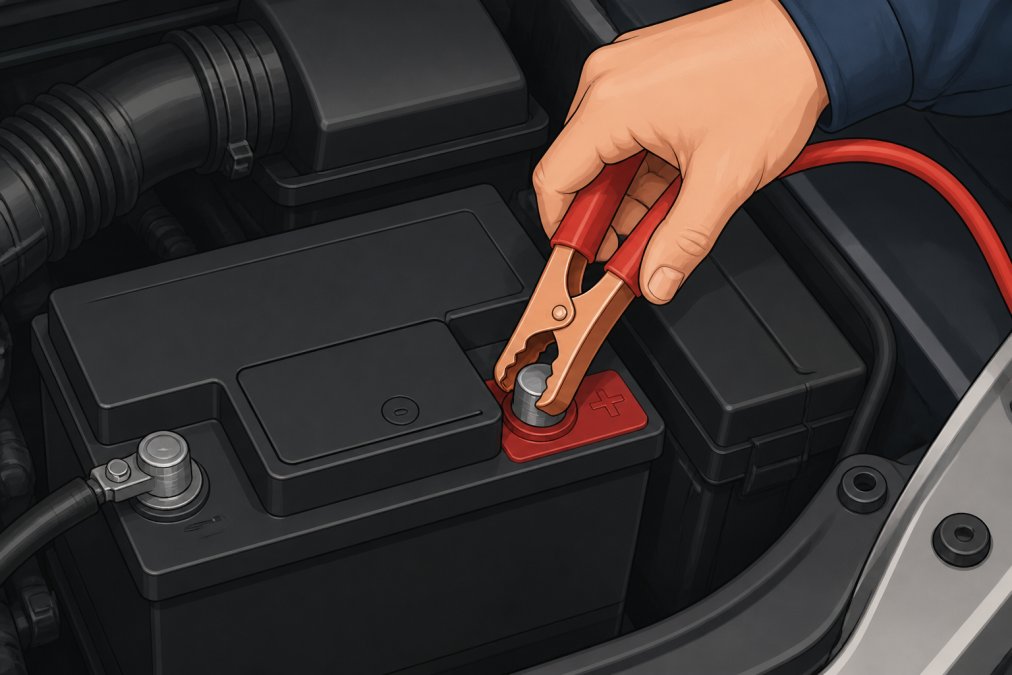
Always wear safety goggles to protect against acid splashes or sparks. Remove any metal jewellery, watches, or rings that could create an accidental short circuit. Ensure both vehicles are parked on level ground away from traffic with engines switched off. Check that battery terminals are free from corrosion; clean them first with a wire brush if needed.
Never attempt to jump start a battery if it's visibly cracked, leaking, or swollen. If you detect a strong smell of rotten eggs near the battery, do not proceed, this indicates a serious internal fault requiring professional replacement. Ensure the area is well-ventilated, as hydrogen gas can accumulate in enclosed spaces, creating an explosion hazard.
Watch OutNever jump start a battery if you're uncertain about the vehicle's electrical system or battery condition. If the car has been sitting unused for months or warning lights appear on the dashboard, have the vehicle professionally inspected first. Attempting to jump start a severely damaged electrical system can cause additional damage costing far more to repair.
Jump starting requires quality jump leads (booster cables), insulated wires with metal clamps designed to safely transfer electrical current between batteries. Thicker cables (4 or 6 AWG) suit most cars; heavy-duty vehicles benefit from 2 AWG leads. Length should be at least 2 metres to comfortably reach between parked vehicles.
You'll also need a second vehicle with a working, fully charged battery of similar size or larger. Keep heavy-duty work gloves, safety goggles, and a torch in your vehicle. If terminals are corroded, bring a wire brush and a small container of water mixed with baking soda to clean them before connecting leads.
Pro TipStore your jump leads in a dedicated bag in your vehicle boot, along with gloves and safety goggles. Check the leads annually for damaged insulation or corroded clamps; damaged leads should be replaced.
Best Jump Leads for Cars: What to Look For
The gauge (thickness) of the wire is critical. Leads with 4 or 6 AWG wire suit most saloon cars and small SUVs. For larger vehicles, vans, or trucks, 2 AWG leads provide better performance by reducing resistance and allowing more current to flow.
Look for clamps made from solid copper or reinforced metal with a strong spring mechanism. The clamp should grip the battery terminal post firmly without slipping. The insulation covering the wires should be thick, flexible rubber or PVC that doesn't crack or peel, particularly in cold conditions where rubber becomes brittle.
A 2-metre length is the minimum; 3 metres gives more flexibility. Avoid leads with plastic or aluminium clamps, as these don't conduct electricity reliably and can overheat during use. Investing in quality leads that will last years rather than cheaper alternatives that may fail at a critical moment is recommended.
Best ForDrivers who want reliable, long-lasting jump leads that work in all conditions. Quality leads are particularly important if you drive an older vehicle, live in a cold climate, or frequently travel on long journeys.
Step-by-Step: How to Jump Start Your Car Battery
Jump starting follows a specific sequence. Connecting the leads in the wrong order can cause dangerous sparks or damage the vehicle's electrical system.
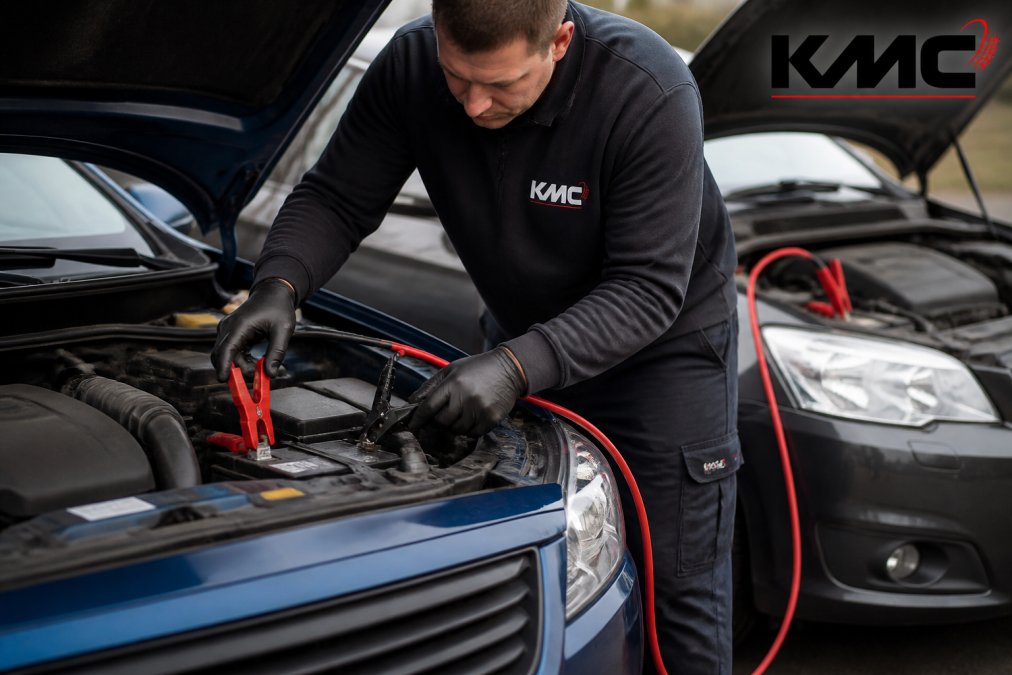
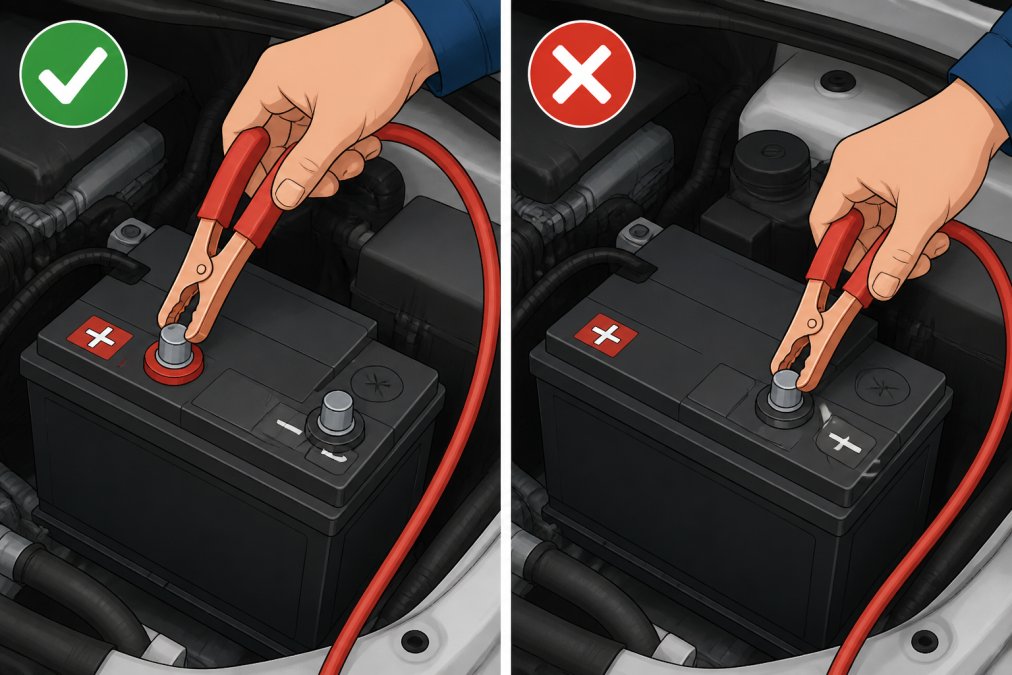
Position both vehicles so the leads reach comfortably between the batteries without the vehicles touching. Switch off both engines and all electrical systems. Remove any metal jewellery and put on safety goggles. Locate the battery in both vehicles and identify the positive terminal (marked with + and usually red) and the negative terminal (marked with − and usually black). Remove any plastic caps covering the terminals.
Connecting the Jump Leads in the Right Order
The sequence for connecting jump leads is critical. Always connect in this exact order:
- Connect the red lead to the positive terminal of the dead battery. Ensure the clamp grips the terminal post firmly with no wobbling.
- Connect the red lead's other end to the positive terminal of the donor vehicle's battery. Ensure a firm connection.
- Connect the black lead to the negative terminal of the donor vehicle's battery. Start with the donor vehicle, not the dead battery.
- Connect the black lead's other end to an unpainted metal surface on the engine block or chassis of the vehicle with the dead battery. This grounding connection prevents sparks near the battery and reduces the risk of igniting hydrogen gas.
This sequence ensures that when you make the final connection, any spark occurs away from the battery where hydrogen gas may be present.
Starting the Engine and Letting It Run
Once all four connections are secure, start the donor vehicle's engine. Let it run for 2-3 minutes to allow current to flow into the dead battery, gradually raising its charge level.
After 2-3 minutes, attempt to start the vehicle with the dead battery. If it doesn't start after 10 seconds, stop and wait another minute before trying again. Once the engine starts, let it run for at least 30 seconds before disconnecting the leads. The engine needs to begin charging the battery through the alternator.
Disconnecting the Cables Safely
Reverse the connection sequence exactly:
- Disconnect the black lead from the grounding point on the vehicle that was dead.
- Disconnect the black lead from the negative terminal of the donor vehicle.
- Disconnect the red lead from the positive terminal of the donor vehicle.
- Disconnect the red lead from the positive terminal of the vehicle that was dead.
Book Your MOT →
By disconnecting in this reverse sequence, you avoid creating a spark at either battery. Keep the revived vehicle running for at least 20 minutes to allow the alternator to charge the battery fully.
Watch OutIf the engine stalls immediately after disconnecting the leads, the battery charge is insufficient. Reconnect the leads and allow the donor vehicle to run for another 5 minutes before trying again. Repeated stalling indicates the battery needs professional charging or replacement.
How Long to Leave Jump Leads Connected
Typically, allow the donor vehicle to run for 2-3 minutes before attempting to start the dead vehicle. In very cold weather (below freezing), extend this to 3-5 minutes, as cold reduces battery efficiency significantly.
If the engine doesn't start on the first attempt, reconnect the leads and wait another 1-2 minutes before trying again. Never attempt to start more than three times in succession, as this can damage the starter motor and drain the donor battery.
Once the engine starts, leave the leads connected for at least 30 seconds whilst the revived vehicle runs. The key indicator is engine stability. If the engine runs smoothly without stalling, the charge is sufficient. After disconnecting the leads, keep the revived vehicle running for at least 20 minutes to allow the alternator to fully recharge the battery.
Signs of a Failing Car Battery
Slow engine cranking is the most obvious sign. When you turn the ignition key, the starter motor turns over sluggishly, taking longer than usual to engage. Dim interior and exterior lights are another early warning, if your headlights are noticeably dimmer than usual, the battery isn't supplying adequate voltage.
A clicking sound when you turn the ignition key, with no engine cranking, indicates severe battery weakness. Some vehicles display a battery warning light on the dashboard; don't ignore this warning.
A battery that requires jump starting more than once every few months is failing. Corrosion around the battery terminals, a white, blue, or green crusty deposit, indicates chemical leakage and suggests the battery casing is compromised. Swelling or bulging of the battery casing indicates internal damage and requires immediate replacement.
Most car batteries last 3-5 years in the UK climate. If your battery is older than five years, have it tested professionally. Kettering Motorist Centre can test your battery's condition and advise whether replacement is necessary.
What to Do If Your Car Won't Start After Jump Starting
First, verify that the connections were correct. Turn off both engines and inspect all four connection points. Ensure each clamp is gripping the terminal firmly. Corrosion on the terminals can prevent proper electrical contact; if you see white or blue deposits, disconnect the leads and clean the terminals with a wire brush before reconnecting.
If connections are secure and clean, the issue may be insufficient battery charge. Reconnect the leads and allow the donor vehicle to run for 5 minutes at a slightly elevated idle speed, then try starting again. A completely dead battery may need a slower, more prolonged charging process through trickle charging.
If the engine turns over but won't fire and run, the problem isn't the battery, it's likely the fuel system, ignition system, or engine itself. A seized or locked engine won't turn over at all and indicates mechanical damage requiring professional repair.
If the vehicle has been sitting unused for months, the fuel may have degraded or the fuel injectors may be clogged. At Kettering Motorist Centre in Northamptonshire, our diagnostic team can investigate why your vehicle won't start after a jump attempt. We use professional diagnostic equipment to test the battery, alternator, starter motor, and fuel system. Book an appointment through our hassle-free online booking system.
Key TakeawayIf jump starting fails, don't keep attempting it repeatedly. Each failed attempt drains the donor battery further and risks damaging the starter motor. Instead, call a professional recovery service or have the vehicle towed to a garage for proper diagnosis.
Modern Vehicles and Electronic Safety Concerns
Modern cars contain complex electronic systems that can be vulnerable to voltage spikes and electrical surges during jump starting. A careless jump start, particularly one with reversed polarity, can cause voltage spikes that damage these systems.
Hybrid and electric vehicles require special attention. These vehicles have high-voltage battery systems separate from the 12-volt auxiliary battery. Jump starting using a standard 12-volt jump start is safe, you're only charging the auxiliary battery, but you must ensure the leads connect only to the 12-volt battery. Consult the vehicle manual if you're uncertain. For electric vehicle owners in the Kettering area, our specialist services for electric and hybrid vehicles can provide diagnostic and servicing support. You can find more information on our sister site INTERNAL_LINK: kmcelectric.co.uk.
Some modern vehicles have automatic engine shutdown systems that cut the engine when stationary. After jump starting, the engine may shut down automatically if you don't drive immediately. This is normal; simply restart the engine and drive at steady speed for at least 20 minutes to charge the battery fully.
Modern vehicles also have battery management systems that monitor battery health continuously. After a jump start, the battery management system may take several charging cycles to recalibrate. If warning lights remain after 24 hours of normal driving, bring the vehicle to Kettering Motorist Centre for a full diagnostic check to ensure all systems are functioning correctly.
Jump starting a dead car battery is straightforward when you follow the correct procedure and prioritise safety. The key is understanding why each step matters: connecting in the right sequence, grounding the final connection away from the battery, and disconnecting in reverse order. These practices protect you from electrical hazards and prevent damage to your vehicle's electronics.
If your vehicle won't start after multiple jump attempts, or if warning lights persist after jump starting, professional diagnosis is necessary. At Kettering Motorist Centre, we provide expert battery testing, charging, and replacement services for all vehicle types, including hybrid and electric vehicles. Our online booking system makes it simple to schedule a diagnostic appointment at a time that suits you. INTERNAL_LINK: Book your battery check today and discover why local motorists in Kettering and Northamptonshire trust us with their vehicle care.
Frequently Asked Questions
Is it safe to jump start a modern car with electronic systems?
Yes, but modern vehicles require extra care. Always check your owner's manual for the designated jump start points, as some vehicles have grounding points on the chassis rather than direct battery terminals. Avoid connecting to the negative terminal on newer cars with sensitive electronics. Ensure both vehicles are switched off before connecting jump leads, and never allow the clamps to touch each other. If your car has hybrid or electric components, consult KMC's specialist team at kmcelectric.co.uk before attempting a jump start.
How long should you leave jump leads connected to a dead battery?
Leave the jump leads connected for 2-3 minutes after the donor vehicle's engine is running at idle. This allows the dead battery to receive enough charge to start your engine. Once your engine starts, keep both vehicles running for at least 5-10 minutes to allow the alternator to recharge your battery further. Disconnecting too quickly may cause the engine to stall, while leaving leads connected for longer than 15 minutes risks overcharging.
What are the signs of a failing car battery?
Watch for slow engine cranking, dim dashboard lights, clicking sounds when turning the ignition, or a battery warning light on your instrument panel. A battery may also fail if it won't hold a charge after jump starting, or if you notice corrosion (white, blue, or green deposits) on the terminal posts. If your battery is more than 3-5 years old and showing these signs, it's likely time for replacement. KMC can test your battery during an MOT or routine service appointment.
Can you jump start a car with a completely dead battery?
Yes, a completely dead battery can usually be jump started successfully, as long as the battery cells haven't been damaged by freezing or internal short circuits. However, if the battery is very old or severely damaged, the jump start may only provide temporary power. If your car won't start even after jump starting, or if the engine cuts out shortly after, the battery may be beyond repair and require professional testing. KMC can diagnose battery condition and recommend replacement if needed.