Understanding how often should brake fluid be changed starts with knowing that brake fluid deteriorates over time, absorbing moisture from the air and losing its ability to protect your braking system. Most vehicle manufacturers recommend changing brake fluid every two years, regardless of mileage. However, the exact interval depends on several factors specific to your vehicle and driving habits.
Regular fluid maintenance can prevent brake failures. Your brakes are literally what keep you safe on the road, which makes this one maintenance task you genuinely cannot afford to skip. Understanding how often your brake fluid needs changing isn't just about following a schedule, it's about understanding what's actually happening inside your brake lines.
The simple answer is straightforward: most cars need a brake fluid change every two years. But the real story is more nuanced. Some vehicles may need it sooner, others slightly later, and certain conditions demand more frequent attention. Below, we'll walk you through exactly what determines your brake fluid change interval and why it matters far more than many drivers realise.
Signs of Old Brake Fluid
Old brake fluid shows itself through several warning signs that your braking system is under stress. The most obvious indicator is a soft or spongy brake pedal, one that feels like it's sinking toward the floor rather than offering firm resistance. This happens because moisture in aged fluid lowers its boiling point, allowing air bubbles to form inside the brake lines.
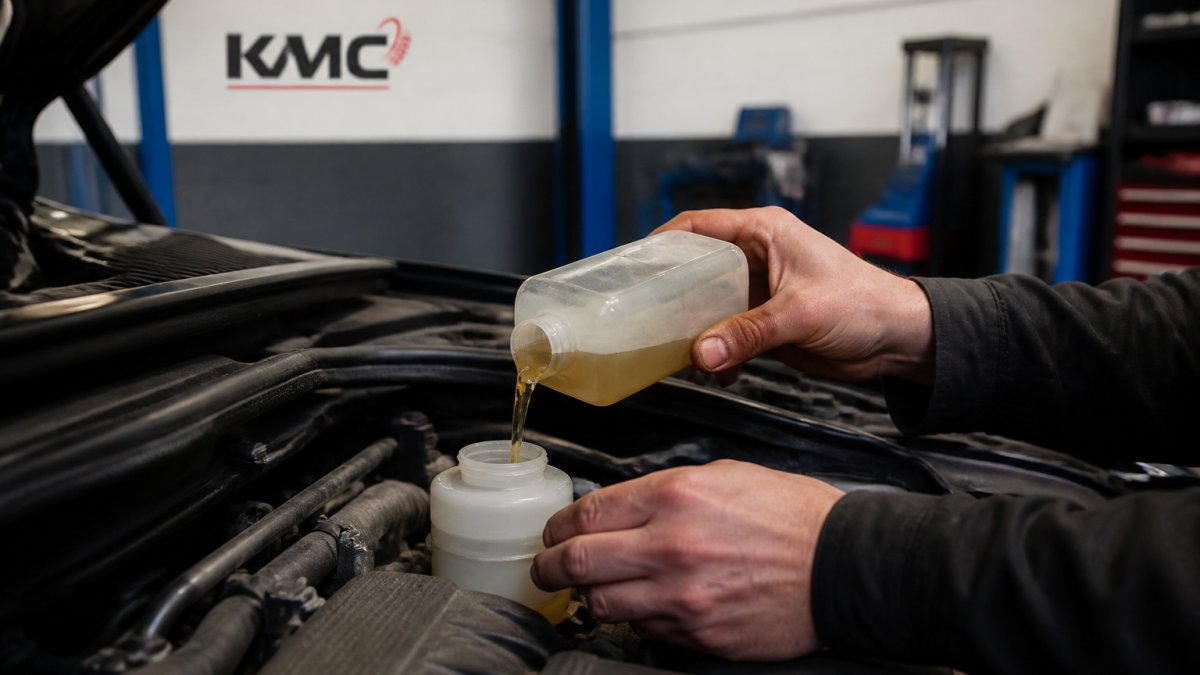
Another sign is brake fluid that's turned dark brown or black. Fresh brake fluid is typically amber or light brown. When it darkens significantly, it's absorbing contaminants and moisture. You can check this yourself by looking at the fluid in the reservoir, if it looks murky or discoloured, that's your cue to schedule maintenance.
Reduced braking responsiveness is a more serious warning. If you notice that your brakes don't feel as sharp as they used to, or if you're pressing the pedal further than usual to achieve the same stopping power, contaminated brake fluid is likely the culprit. Don't ignore this. Bring your vehicle to Kettering Motorist Centre for a brake fluid inspection. We can assess the condition and recommend whether an immediate change is necessary.
Factors That Influence Brake Fluid Change Frequency
Several variables affect how quickly your brake fluid degrades and when you'll need a replacement. Your driving environment plays a significant role. If you regularly drive in humid conditions, which is common across Northamptonshire during autumn and winter, your brake fluid absorbs moisture faster than it would in drier climates.
Your driving style matters too. Aggressive braking generates heat, which accelerates fluid degradation. Drivers who frequently brake hard or drive in mountainous terrain will see their brake fluid break down more quickly than those with gentler braking patterns. Heavy vehicles and those towing loads also place greater stress on brake fluid, shortening its service life.
The type of brake fluid your vehicle uses influences the change interval as well. DOT 3 and DOT 4 fluids are hygroscopic, meaning they naturally absorb moisture from the air. DOT 5 fluid is silicone-based and doesn't absorb moisture, but it's less commonly used and requires careful handling. Always check your vehicle's handbook to confirm which type is specified, using the wrong fluid can damage your braking system.
Age matters independently of mileage. Even if you've barely driven your car, brake fluid degrades chemically over time. This is why the two-year interval is recommended regardless of how many miles you've covered. A car that's been sitting in a garage for two years still needs a brake fluid change.
Brake Fluid Moisture Content and Why It Matters
Moisture in brake fluid is the primary reason it needs regular replacement. Brake fluid is hygroscopic by design, it's engineered to absorb moisture because water exists in brake systems naturally, from humidity in the air and condensation that forms in the reservoir. The fluid's job is to trap that water and prevent it from causing corrosion inside your brake lines.
However, there's a limit to how much water brake fluid can safely contain. When moisture levels exceed approximately 3-4 percent, the fluid's boiling point drops dangerously. During hard braking, brake fluid heats up rapidly. If it boils, vapour bubbles form in the brake lines, and your brakes lose their ability to transmit pressure effectively. You press the pedal, but nothing happens, or at least, not with the force you expect.
This is why moisture content matters more than the fluid's age alone. An older fluid sample with low moisture content might still function adequately, whilst a newer fluid with high moisture absorption could already be compromised. Professional brake fluid testing is valuable. Kettering Motorist Centre can measure the exact moisture content and determine whether your fluid needs changing now or can safely wait a bit longer.
Moisture also causes corrosion inside your brake system. Brake lines, cylinders, and valves are made of metal, and water accelerates rust formation. Once corrosion starts, it's difficult to reverse. Changing your brake fluid regularly prevents this damage from occurring in the first place.
Electric vehicles present a unique consideration for brake fluid maintenance. EVs use regenerative braking, which captures energy from braking and feeds it back into the battery. This means the traditional friction brakes are used less frequently than in conventional cars, potentially extending the life of brake fluid.
However, this doesn't mean you can ignore brake fluid changes entirely. Regenerative braking doesn't eliminate the need for friction brakes, it simply reduces how often they're engaged. During emergency stops or when the battery is fully charged, the friction brakes engage fully. Additionally, the fluid still absorbs moisture from the air regardless of how often the brakes are used.
Manufacturers of electric vehicles typically recommend brake fluid changes every two to three years, sometimes slightly longer than conventional vehicles. But check your vehicle's handbook for the specific interval. At Kettering Motorist Centre, we have specialist expertise in servicing electric and hybrid vehicles. Our team understands the unique requirements of EV braking systems and can ensure your fluid is changed according to the manufacturer's specifications. For more detailed guidance on EV maintenance, visit our sister site KMC Electric, which specialises in electric vehicle servicing.
What Happens If You Don't Change Your Brake Fluid
Neglecting brake fluid changes leads to a cascade of problems that become progressively more dangerous and expensive to fix. Initially, you'll notice the soft pedal feeling we mentioned earlier, the brakes still work, but they feel less responsive. At this stage, a fluid change will restore normal function.
If you continue ignoring the warning signs, moisture-laden fluid begins corroding the internal components of your brake system. Brake cylinders, pistons, and seals suffer damage that can't be easily repaired. What started as a simple fluid change becomes a full brake system overhaul. The cost increases dramatically, and the repair timeline stretches from hours to days.
In the worst-case scenario, brake failure occurs. This isn't theoretical, it happens to drivers who've neglected brake maintenance. Brake failure whilst driving, especially at speed or in traffic, is genuinely life-threatening. You could injure yourself, your passengers, or other road users. This isn't a risk worth taking to save the cost of routine maintenance.
Corrosion also spreads throughout your braking system. Even after you replace the fluid, corroded components continue to shed particles into the new fluid, contaminating it faster. You end up needing more frequent changes, or worse, you need to replace major brake components like the master cylinder or brake lines, repairs that cost significantly more than preventative fluid changes.
How to Check Your Brake Fluid Level
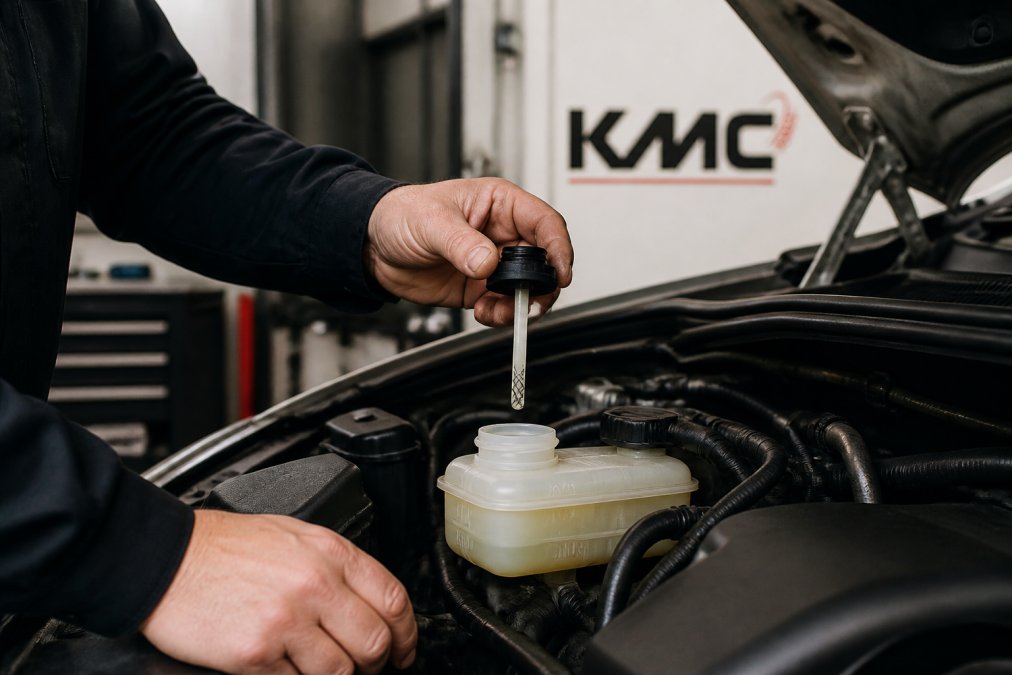
Checking your brake fluid level is straightforward and takes only a few minutes. Open your bonnet and locate the brake fluid reservoir, it's typically a translucent plastic container near the back of the engine bay, usually on the driver's side. The reservoir has minimum and maximum level markings on its side.
Look at where the fluid level sits between the minimum and maximum marks. If it's at or below the minimum line, your fluid needs topping up. However, don't just assume a low level means you need more fluid.
Why Professional Brake Fluid Maintenance Matters
Whilst checking your fluid level is something any car owner can do, changing brake fluid properly requires specialist knowledge and equipment. It's not simply a matter of draining the old fluid and pouring in new fluid.
Frequently Asked Questions
What happens if you don't change your brake fluid?
Old brake fluid absorbs moisture and loses its ability to withstand heat, leading to spongy brakes, longer stopping distances, and potential brake failure. Water contamination lowers the fluid's boiling point, which is especially dangerous during heavy braking or towing. Over time, corrosion inside the brake system can cause expensive damage to cylinders and valves. Regular fluid changes prevent these hazards and keep your braking system reliable.
How do I know if my brake fluid needs changing?
Check your brake fluid colour through the transparent reservoir on your engine bay. Fresh fluid is clear to pale yellow; dark brown or black indicates age and contamination. A soft or spongy brake pedal, longer stopping distances, or a burning smell when braking all suggest degraded fluid. Most vehicles need a change every two years or 30,000 miles, but check your handbook for your car's specific interval. Kettering Motorist Centre can inspect your fluid condition during a service or MOT.
Is brake fluid change included in a standard MOT?
No, brake fluid renewal is not part of the standard MOT test. The MOT checks that your brakes work safely, but does not include fluid replacement. However, if your brake fluid fails a condition test or shows signs of contamination, it will be flagged as a defect. Many garages recommend changing fluid every two years as preventative maintenance. Kettering Motorist Centre can advise you on your brake fluid condition and recommend a change if needed during your MOT or service.
Does brake fluid go bad over time even if the car isn't driven?
Yes, brake fluid degrades even when a car sits unused. It absorbs moisture from the air through microscopic pores in brake hoses and seals, a process that happens regardless of mileage. This hygroscopic property means that stored vehicles can have contaminated fluid after months of inactivity. If your car has been parked for an extended period, have the fluid inspected before driving. Kettering Motorist Centre recommends checking fluid condition on any vehicle that has been stationary for several months.
Thank you for placing a booking with Kettering Motorist Centre Limited for vehicle
PLEASE TAKE YOUR BOOKING REFERENCE NUMBER WITH YOU TO THE MOT CENTRE
Your items
MOT Test
×
Terms and Conditions
These terms and conditions form the basis on which you can visit and use this website. Please read them carefully as they contain important information.
General terms and conditions
This website is owned and operated by Kettering Motorist Centre Ltd (company registration number: 4485858) operating at Trafalgar Road, Kettering, Northamptonshire, NN16 8DB (the "MOT Centre", the "Company", "we" or "us"). If you have any queries about these terms and conditions or if you have any comments or complaints on or about this website, you can contact us at [email protected] or 01536 410142.
The website is to promote and offer for sale the products and services of Kettering Motorist Centre Limited.
1. The contract between us
This website does not take payment for products or services online. The website enables you to view products and services online and to make a booking for later delivery and payment. The vehicle and provision of other products and services promoted by this website and the payment by you of the price of those products and services will take place at the MOT Centre. The booking does not constitute a contract.
The booking process on the site provides details of the booked MOT order. Please take the time to read and check your booking. It is your responsibility to make sure the order is correct and for the correct vehicle.
2. Ownership of rights
All rights, including copyright, in this website are owned by or licensed to the Company. Any use of this website or its contents, including copying or storing it or them in whole or part, other than for your own personal, non commercial use, is prohibited without our permission. You may not modify, distribute or repost anything on this website for any purpose.
3. Accuracy of content
We have taken care in the preparation of the content of this website, in particular to ensure that prices quoted are correct at the time of publishing and that all goods have been fairly described. However, bookings will only be accepted if there are no material errors in the description of the goods or their prices as advertised on this website. Any weights, dimensions and capacities given about the goods are approximate only.
4. Damage to your computer
We try to ensure that this website is free from viruses or defects. However, we cannot guarantee that your use of this website or any websites accessible through it will not cause damage to your computer. It is your responsibility to ensure that the right equipment is available to use the website. Except in the case of negligence on our part, we will not be liable to any person for any loss or damage which may arise to computer equipment as a result of using this website.
5. Availability
All bookings are subject to acceptance and availability. If the MOT date you have requested are is not available, the Centre will contact you by e-mail or phone. You will have the option either to wait until another slot is available or to cancel your booking.
6. Booking errors
You are able to correct errors on your booking up to the point on which you click on “Place Booking” during the booking process.
7. Price
The prices payable for goods that you order are as set out in our website. All prices are inclusive of VAT at the current rates and are correct at the time of entering information, errors and omissions excepted.
Whenever it is not possible to accept your booking to buy goods of the specification and description at the price indicated, the MOT Centre will advise you by email or phone or when you visit the centre.
8. Payment terms
You will be required to pay for the goods or services to the Centre at time of a completed MOT.
9. Delivery charges
N/A
10. Cancellation
The MOT Centre reserves the right to cancel the booking if:
10.1 There is insufficient stock to deliver the goods you have booked.
10.2 One or more of the goods you booked was listed at an incorrect price.
If your booking is cancelled the Centre will notify you by e-mail or phone.
You have the right to cancel your booking at any time up to the point of the MOT. If you do cancel your booking you should inform the centre by phone.
11. Liability
Notwithstanding the foregoing, nothing in these terms and conditions is intended to limit any rights you might have as a consumer under applicable local law or other statutory rights that may not be excluded nor in any way to exclude or limit our liability to you for any death or personal injury resulting from our negligence.
12. Notices
Unless otherwise expressly stated in these terms and conditions, all notices from you to us must be in writing and sent to our contact address given above and all notices from us to you will be displayed on our website from time to time.
13. Changes to legal notices
We reserve the right to change these terms and conditions from time to time and you should look through them as often as possible.
14. Law, jurisdiction and language
This website, any content contained therein and any contract brought into being as a result of usage of this website are governed by and construed in accordance with English law. Parties to any such contract agree to submit to the exclusive jurisdiction of the courts of England and Wales.
15. Invalidity
If any part of these terms and conditions is unenforceable (including any provision in which we exclude our liability to you) the enforceability of any other part of these conditions will not be affected.
16. Privacy
You acknowledge and agree to be bound by the terms of our privacy policy
17. Third party rights
Nothing in this Agreement is intended to, nor shall it confer any rights on a third party.