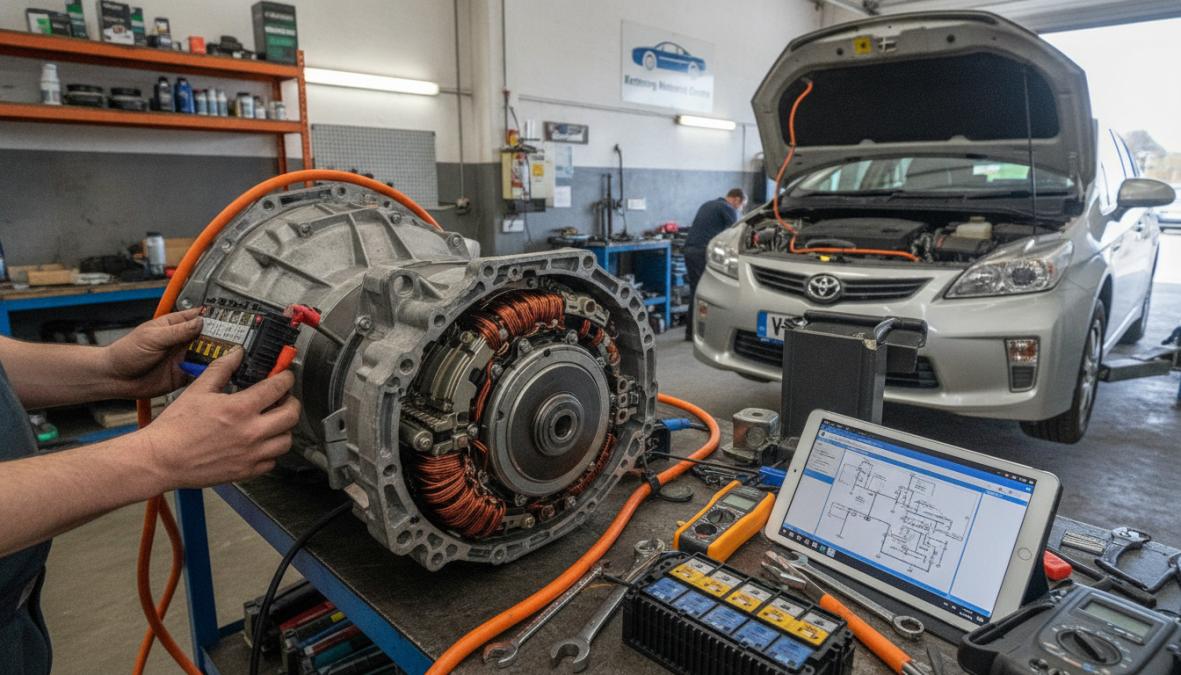
Understanding common hybrid car repair issues is essential for hybrid vehicle owners. Hybrid systems combine an internal combustion engine with an electric motor, battery pack, and sophisticated power electronics. When something fails, it rarely affects just one component, a degraded hybrid battery affects the inverter, a failing cooling fan impacts battery longevity, and worn brakes change how regenerative braking functions. This interconnectedness means addressing hybrid issues early prevents catastrophic failures.
Pro TipMany hybrid owners miss early warning signs because they expect their vehicles to behave like conventional cars. Hybrid system warning lights, unusual electrical behaviour, and subtle changes in fuel efficiency are your first clues that something needs [professional attention](/servicing).
Hybrid Battery Degradation and Signs of Hybrid Battery Failure
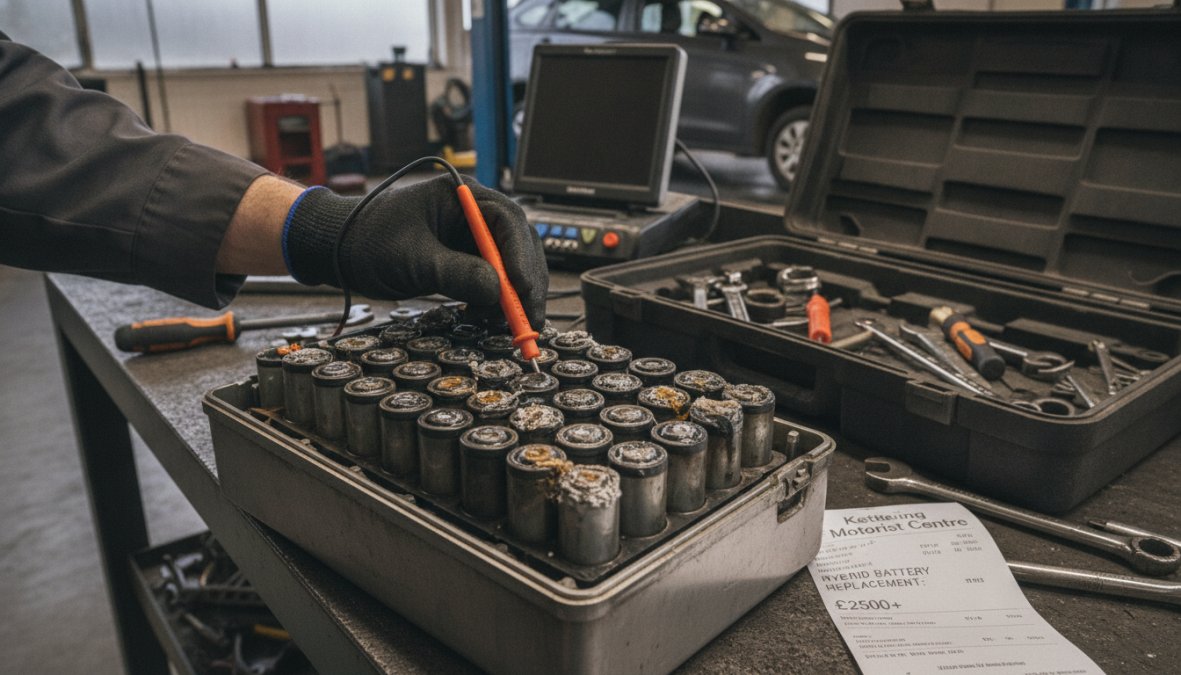
Automotive technician using diagnostic equipment on a hybrid vehicle's battery pack in a professional garage workshop
Hybrid battery degradation is the single most common issue in vehicles over eight years old. A hybrid battery typically loses 5-10% of its capacity every 100,000 miles due to constant charging and discharging cycles.
Early signs include reduced fuel efficiency, more frequent engine engagement, and the hybrid system warning light. Modern hybrid vehicles maintain the battery between 40% and 80% state of charge during normal driving to protect longevity. As the battery ages, even this managed state becomes harder to maintain, triggering diagnostic trouble codes.
Climate significantly affects hybrid battery longevity. Extreme heat accelerates chemical degradation; vehicles in hot climates experience 20-30% faster battery degradation. Proper thermal management through a functioning battery cooling fan becomes critical.
Key TakeawayHybrid battery degradation is inevitable but manageable. Addressing it early, before capacity drops below 60%, prevents cascading failures in other hybrid components and keeps repair costs predictable.
12-Volt Battery and Electrical System Failures
While hybrid owners focus on the high-voltage battery pack, the 12-volt battery often gets overlooked. In hybrid vehicles, this smaller battery is constantly charged and discharged by the power management system, creating unique failure patterns. A failing 12-volt battery can trigger the hybrid system to enter limp-home mode or disable regenerative braking entirely.
The typical 12-volt battery in a hybrid lasts 3-5 years. Signs of failure include slow cranking, dim interior lights, and warning messages on the dashboard. We recommend testing your 12-volt battery annually, particularly as it approaches the three-year mark.
Electrical system failures extend beyond the battery itself. Corroded battery terminals, damaged alternator output, or faulty battery management relays can mimic battery failure. Professional diagnosis is essential because replacing the battery won't fix an underlying electrical fault.
Watch OutA completely dead 12-volt battery can prevent your hybrid from starting and may trigger expensive diagnostic procedures. Always keep jumper cables in your vehicle and know how to safely jump-start your hybrid.
Inverter and Converter Malfunctions in Hybrid Systems
The inverter converts DC power from the hybrid battery into AC power for the electric motor, and vice versa during regenerative braking. It's one of the most complex and expensive components in your hybrid powertrain. When an inverter fails, your vehicle loses electric motor assist, dropping fuel efficiency dramatically.
Converter malfunctions are equally problematic. The converter steps down high voltage from the battery pack to 12 volts for the auxiliary electrical system. A failing converter prevents the 12-volt system from charging properly, cascading into other electrical failures.
Both inverter and converter failures typically announce themselves through diagnostic trouble codes. However, these codes don't always pinpoint the exact problem, a code might indicate inverter failure when the actual issue is a loose high-voltage connector or corroded terminal. Professional diagnostic equipment can distinguish between a component needing replacement and one needing cleaning or reconnection.
Inverter replacement is expensive, often running into four figures. Addressing cooling system issues, which cause inverter overheating, can extend inverter life by several years.
Regenerative Braking System Issues
Regenerative braking makes hybrid vehicles efficient. When you decelerate, the electric motor reverses function and acts as a generator, converting kinetic energy back into electrical energy that recharges the battery. This reduces wear on friction brakes and recaptures energy that would otherwise be lost as heat.
However, regenerative braking systems are complex. The system must smoothly blend electric braking with friction braking, adjusting the balance based on battery state of charge, road conditions, and driver input. When this system malfunctions, you might notice the brake pedal feeling unusually soft or hard, or the vehicle not slowing as expected during coasting.
A common issue is the regenerative braking system disabling itself temporarily due to battery overcharge protection. If your battery is fully charged, the system won't accept more charge, so regenerative braking deactivates. This is normal behaviour, but fuel economy will drop noticeably.
Brake system warning lights related to regenerative braking often indicate sensor failures rather than actual braking problems. The system relies on multiple sensors to monitor wheel speed, battery voltage, and motor speed. A single faulty sensor can disable the entire regenerative braking function.
Brake Pads and Brake System Wear
Because regenerative braking does most of the work in normal driving, friction brake pads last significantly longer in hybrids than in conventional vehicles. Many hybrid owners drive 80,000-100,000 miles before needing brake pad replacement, compared to 40,000-60,000 miles in conventional cars.
However, extended pad life creates a different problem: corrosion and rust. Brake pads and rotors sitting unused accumulate moisture and rust, particularly in the UK's damp climate. Some owners report grinding sensation or reduced braking power after extended periods of light regenerative braking.
Brake system rust is preventable through occasional aggressive braking. Driving down a long hill or deliberately using friction brakes periodically keeps the system clean and functional. Brake fluid degrades at the same rate as in conventional cars, requiring replacement every two years regardless of mileage.
Engine and Cooling System Problems
The internal combustion engine in a hybrid works differently from engines in conventional cars. It starts and stops frequently, runs at optimal efficiency points rather than varying RPM with driver demand, and often operates at higher temperatures. This creates unique engine problems.
One common issue is carbon buildup on intake valves. Because hybrid engines run at consistent, efficient RPM points, they don't experience the varied combustion temperatures that naturally clean intake valves. Professional fuel system cleaning every 80,000-100,000 miles prevents this problem.
Hybrid engines cycle on and off constantly, creating more startup wear than conventional engines. Many hybrid owners benefit from switching to synthetic oil with a longer change interval.
Spark Plugs, Oxygen Sensors and Catalytic Converter Issues
Spark plugs in hybrid vehicles typically last longer because the engine runs fewer total hours. However, when they fail, they often fail suddenly, causing rough idle or poor fuel economy.
Oxygen sensors monitor exhaust composition and help the engine management system optimise fuel injection. A failing oxygen sensor triggers the check engine light and causes noticeably poor fuel economy. Replacement typically costs less than repair, and the improvement in efficiency often pays for itself within weeks.
The catalytic converter processes exhaust gases to reduce emissions. In hybrid vehicles, it experiences less stress than in conventional cars. However, carbon buildup can damage it over time. If you hear rattling from underneath the vehicle or notice a rotten egg smell in the exhaust, your catalytic converter may be failing internally.
Thermal Management and Battery Cooling Fan Failures
The battery cooling fan maintains optimal battery temperature by drawing air through cooling passages in the battery pack. Without proper cooling, the battery overheats, triggering the hybrid system warning light and reducing available power.
Battery cooling fan failures are surprisingly common in vehicles over ten years old. The fan motor burns out, bearings wear, or the fan blade cracks. Symptoms include the hybrid system warning light, reduced acceleration power, and the engine running constantly even at highway speeds.
Replacing a battery cooling fan costs significantly less than replacing the battery itself, yet prevents battery damage that would otherwise require full replacement. We recommend having the cooling fan inspected during routine maintenance, particularly before summer months.
Key TakeawayThermal management is the foundation of hybrid reliability. A properly functioning cooling system, battery cooling fan, and adequate coolant circulation prevent 70% of hybrid powertrain failures.
Hybrid Battery Replacement Cost and Repair vs. Replacement Decision
When your hybrid battery reaches end of life, you face a critical decision: repair the battery, replace it with a new unit, or replace the entire vehicle. This depends on your vehicle's age, mileage, overall condition, and how long you plan to keep it.
A new hybrid battery pack is expensive, but prices have dropped significantly. Refurbished and remanufactured batteries offer cost-effective alternatives. Some hybrid owners successfully extend battery life by 50,000-100,000 additional miles through careful driving and proper maintenance.
Cost-Benefit Analysis for Aging Hybrids
The decision to replace a hybrid battery should consider the vehicle's total remaining value. If your hybrid is worth £8,000 and a new battery costs £6,000, replacement makes financial sense only if you plan to keep the vehicle for 5-7 more years. Refurbished batteries typically cost 40-60% less than new batteries and come with manufacturer warranties.
A battery replacement restores your hybrid to near-new fuel efficiency, potentially saving £800-1,200 annually in fuel costs compared to driving with a degraded battery. Over five years, these savings can offset much of the battery replacement cost.
DIY vs. Professional Repair: Safety and Warranty Considerations
Hybrid battery replacement is not a DIY project. The high-voltage battery pack operates at 200+ volts and can cause serious injury or death if handled improperly. Professional installation ensures proper connections, correct software configuration, and warranty protection.
Warranty coverage on replacement batteries typically ranges from 5-8 years or 100,000 miles. This warranty protects you against premature battery failure. DIY installations usually come with no warranty.
Preventative Maintenance and Hybrid Car Maintenance Schedule
Following a proper hybrid car maintenance schedule prevents most of the issues covered in this guide. Hybrid vehicles require the same routine maintenance as conventional cars, oil changes, filter replacements, coolant flushes, plus additional hybrid-specific checks.
Battery health checks every 20,000 miles help catch degradation early. Cooling system inspections ensure the battery cooling fan and thermal management system function properly. High-voltage system checks verify that all electrical connections are secure and corrosion-free.
Many hybrid owners skip maintenance because their vehicles run quietly and smoothly. This is a mistake. Hybrid systems are more complex than conventional powertrains, and deferred maintenance creates expensive problems. A £150 cooling system inspection today prevents a £3,000 battery replacement tomorrow.
Tyre maintenance is slightly more critical in hybrid vehicles because they're heavier than comparable conventional cars. Proper tyre pressure and alignment reduce rolling resistance, improving fuel efficiency. Under-inflated tyres can reduce fuel economy by 5-10%.
Brake fluid replacement every two years is essential in hybrid vehicles due to the complex regenerative braking system. Moisture in brake fluid can damage the electronic components that control regenerative braking.
Manufacturer Recalls and Diagnostic Trouble Codes
Hybrid vehicles have experienced various recalls, particularly early-generation models. Common recalls involve battery pack issues, inverter software glitches, and cooling system failures. Checking your vehicle's recall status at the manufacturer's website ensures you've addressed all safety-related issues.
Diagnostic trouble codes are your hybrid's way of communicating problems. A code doesn't always indicate a failed component; it might indicate a sensor malfunction, loose connection, or software glitch. Professional diagnostic equipment reads these codes and performs follow-up testing to pinpoint the actual problem.
Some owners ignore warning lights, hoping they'll go away. This is dangerous and expensive. A warning light indicating a failing oxygen sensor might seem minor, but ignoring it reduces fuel efficiency by 10-15% and can damage the catalytic converter.
Issue
Prevention
Frequency
Impact
Hybrid battery degradation
Proper cooling, avoid extreme temperatures
Every 20,000 miles check
Loss of fuel efficiency, reduced power
12-volt battery failure
Annual battery testing
Every 12 months
Starting issues, electrical failures
Cooling system failure
Coolant flush, fan inspection
Every 40,000 miles
Battery overheating, inverter damage
Brake system rust
Occasional aggressive braking
Monthly light use
Reduced braking performance
Spark plug failure
Follow manufacturer schedule
Every 100,000 miles
Rough idle, poor economy
Inverter malfunction
Thermal management
Every 40,000 miles inspection
Loss of electric assist, poor economy
Conclusion
Understanding common hybrid car repair issues helps you make informed maintenance decisions and catch problems before they become catastrophic. From hybrid battery degradation to cooling system failures, inverter malfunctions, and brake system rust, each issue has warning signs and preventative strategies.
The most important takeaway is this: hybrid vehicles are reliable when properly maintained, but they demand attention to systems that conventional cars don't have. Regular diagnostic checks, thermal management monitoring, and adherence to the manufacturer's maintenance schedule keep your hybrid running efficiently for 150,000+ miles.
If you're experiencing any symptoms described in this guide, warning lights, reduced fuel efficiency, unusual electrical behaviour, or brake system concerns, professional diagnosis is your next step. At Kettering Motorist Centre, we specialise in hybrid vehicle diagnostics and repairs. Visit Kettering Motorist Centre to book your appointment today, or explore our electric and hybrid vehicle specialists for additional support.
Frequently Asked Questions
What are the most common hybrid car repair issues?
The most common hybrid car repair issues include hybrid battery degradation, 12-volt battery failures, inverter and converter malfunctions, regenerative braking system problems, cooling system failures, and engine-related issues like spark plug wear. Many of these stem from the complex interaction between the internal combustion engine and electric motor in the hybrid drivetrain. Kettering Motorist Centre specialises in diagnosing and repairing these issues with expert automotive technicians trained in hybrid systems.
What are the signs of hybrid battery failure?
Signs of hybrid battery failure include reduced fuel efficiency, the hybrid system warning light illuminating on your dashboard, decreased electric motor performance, difficulty starting the vehicle, and unusual noises from the battery cooling fan. State of charge problems may also appear, where the battery won't hold a charge properly. If you notice these symptoms, contact Kettering Motorist Centre for a diagnostic assessment to determine if your high-voltage battery pack needs repair or replacement.
How does a hybrid car maintenance schedule differ from regular vehicles?
A hybrid car maintenance schedule requires more frequent checks of the high-voltage battery system, thermal management components, and regenerative braking mechanisms alongside standard servicing. The hybrid system warning light should be monitored closely, and diagnostic trouble codes should be read regularly. Kettering Motorist Centre recommends following manufacturer-specific maintenance guidelines and scheduling preventative maintenance every 6 months or 6,000 miles to catch issues early and extend vehicle longevity.
Is it worth repairing a hybrid car with high mileage?
Whether to repair or replace depends on the vehicle's age, mileage, repair costs, and remaining market value. A cost-benefit analysis is essential: if repair costs exceed 50-70% of the vehicle's value, replacement may be more economical. However, many hybrid vehicles are reliable beyond 150,000 miles with proper maintenance. Kettering Motorist Centre can provide a detailed diagnostic report and honest advice on repair viability, helping you make an informed decision based on your specific vehicle's condition.
Your booking Failed
Please try again or please call 01536 410142
Thank you for placing a booking with Kettering Motorist Centre Limited for vehicle
PLEASE TAKE YOUR BOOKING REFERENCE NUMBER WITH YOU TO THE MOT CENTRE
Your items
MOT Test
×
Terms and Conditions
These terms and conditions form the basis on which you can visit and use this website. Please read them carefully as they contain important information.
General terms and conditions
This website is owned and operated by Kettering Motorist Centre Ltd (company registration number: 4485858) operating at Trafalgar Road, Kettering, Northamptonshire, NN16 8DB (the "MOT Centre", the "Company", "we" or "us"). If you have any queries about these terms and conditions or if you have any comments or complaints on or about this website, you can contact us at [email protected] or 01536 410142.
The website is to promote and offer for sale the products and services of Kettering Motorist Centre Limited.
1. The contract between us
This website does not take payment for products or services online. The website enables you to view products and services online and to make a booking for later delivery and payment. The vehicle and provision of other products and services promoted by this website and the payment by you of the price of those products and services will take place at the MOT Centre. The booking does not constitute a contract.
The booking process on the site provides details of the booked MOT order. Please take the time to read and check your booking. It is your responsibility to make sure the order is correct and for the correct vehicle.
2. Ownership of rights
All rights, including copyright, in this website are owned by or licensed to the Company. Any use of this website or its contents, including copying or storing it or them in whole or part, other than for your own personal, non commercial use, is prohibited without our permission. You may not modify, distribute or repost anything on this website for any purpose.
3. Accuracy of content
We have taken care in the preparation of the content of this website, in particular to ensure that prices quoted are correct at the time of publishing and that all goods have been fairly described. However, bookings will only be accepted if there are no material errors in the description of the goods or their prices as advertised on this website. Any weights, dimensions and capacities given about the goods are approximate only.
4. Damage to your computer
We try to ensure that this website is free from viruses or defects. However, we cannot guarantee that your use of this website or any websites accessible through it will not cause damage to your computer. It is your responsibility to ensure that the right equipment is available to use the website. Except in the case of negligence on our part, we will not be liable to any person for any loss or damage which may arise to computer equipment as a result of using this website.
5. Availability
All bookings are subject to acceptance and availability. If the MOT date you have requested are is not available, the Centre will contact you by e-mail or phone. You will have the option either to wait until another slot is available or to cancel your booking.
6. Booking errors
You are able to correct errors on your booking up to the point on which you click on “Place Booking” during the booking process.
7. Price
The prices payable for goods that you order are as set out in our website. All prices are inclusive of VAT at the current rates and are correct at the time of entering information, errors and omissions excepted.
Whenever it is not possible to accept your booking to buy goods of the specification and description at the price indicated, the MOT Centre will advise you by email or phone or when you visit the centre.
8. Payment terms
You will be required to pay for the goods or services to the Centre at time of a completed MOT.
9. Delivery charges
N/A
10. Cancellation
The MOT Centre reserves the right to cancel the booking if:
10.1 There is insufficient stock to deliver the goods you have booked.
10.2 One or more of the goods you booked was listed at an incorrect price.
If your booking is cancelled the Centre will notify you by e-mail or phone.
You have the right to cancel your booking at any time up to the point of the MOT. If you do cancel your booking you should inform the centre by phone.
11. Liability
Notwithstanding the foregoing, nothing in these terms and conditions is intended to limit any rights you might have as a consumer under applicable local law or other statutory rights that may not be excluded nor in any way to exclude or limit our liability to you for any death or personal injury resulting from our negligence.
12. Notices
Unless otherwise expressly stated in these terms and conditions, all notices from you to us must be in writing and sent to our contact address given above and all notices from us to you will be displayed on our website from time to time.
13. Changes to legal notices
We reserve the right to change these terms and conditions from time to time and you should look through them as often as possible.
14. Law, jurisdiction and language
This website, any content contained therein and any contract brought into being as a result of usage of this website are governed by and construed in accordance with English law. Parties to any such contract agree to submit to the exclusive jurisdiction of the courts of England and Wales.
15. Invalidity
If any part of these terms and conditions is unenforceable (including any provision in which we exclude our liability to you) the enforceability of any other part of these conditions will not be affected.
16. Privacy
You acknowledge and agree to be bound by the terms of our privacy policy
17. Third party rights
Nothing in this Agreement is intended to, nor shall it confer any rights on a third party.