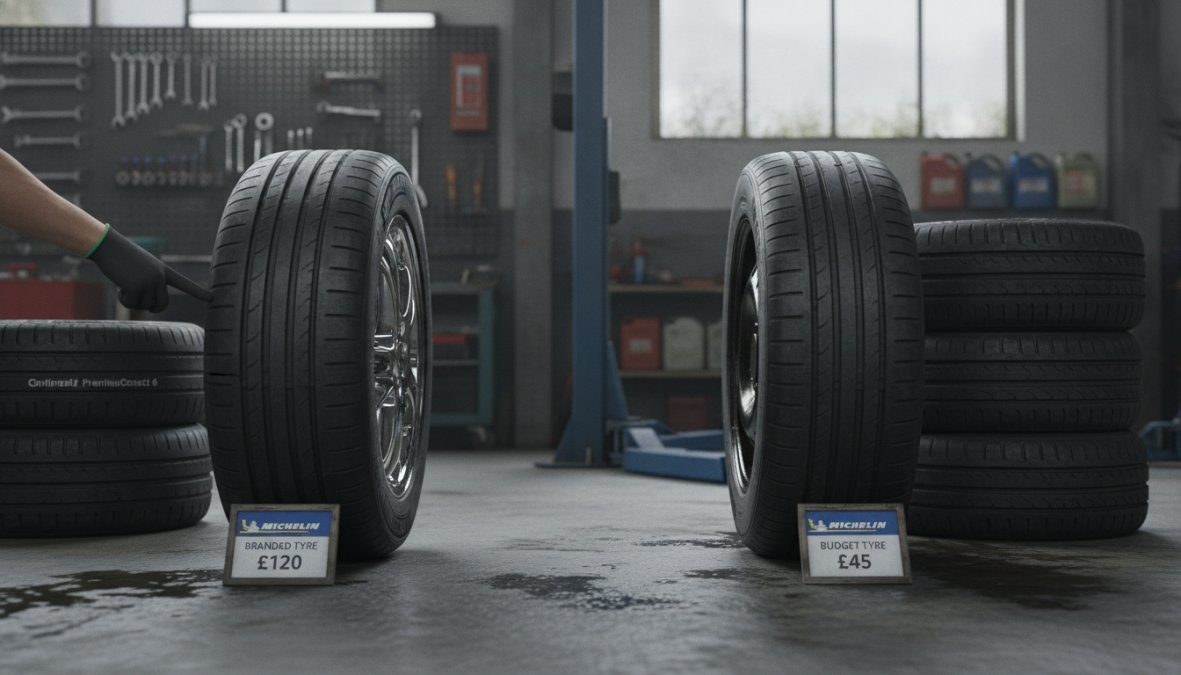
The choice between branded tyres vs budget tyres carries more weight than most drivers realise. At Kettering Motorist Centre, we see the consequences of both decisions every week, from customers who've stretched their budget wisely to those who've paid twice over for a cheap set that wore out in under a year. This guide breaks down exactly what separates premium from budget options and how to make the right call for your vehicle and wallet.
Here's what most guides get wrong: they treat this as a simple price comparison. It isn't. The real argument is about safety margins, tyre lifespan, and cost-per-mile, and those numbers tell a very different story than the sticker price.
Branded Tyres vs Budget Tyres: What's Actually Different?
The core difference comes down to two things: the rubber compound and the engineering investment behind it. Premium manufacturers spend years developing proprietary compounds that balance grip, durability, rolling resistance, and road noise. Budget manufacturers use simpler formulations that meet minimum safety thresholds without the same performance ceiling.
Rubber Compound and R&D Investment
Rubber compound quality is the single biggest performance variable in tyre manufacturing. Premium brands like Michelin, Continental, and Bridgestone invest heavily in R&D, testing compounds across thousands of variables before production. The Michelin Primacy 4 uses EverGrip Technology, a compound that maintains wet braking performance even as the tyre wears. That's a structural engineering decision, not a marketing claim.
Budget tyres meet the minimum legal standards required for UK sale but don't carry the same safety buffer. Tread wear patterns degrade more quickly, and wet grip falls off faster as the tyre ages.
The Continental PremiumContact 7 takes this further with its RedChili compound, delivering immediate grip without a warm-up phase, a meaningful advantage in the cold, wet conditions common across Northamptonshire from autumn through spring.
Tyre Safety Standards and Testing
All tyres sold legally in the UK must pass standardised safety tests. Budget tyres do comply. The distinction is what happens above that compliance floor. Premium brands routinely exceed minimum standards by a significant margin, which is why their wet grip and braking distance scores on the EU tyre label are consistently higher.
According to UK Government guidance on tyre safety standards, tyres must meet specific load and speed rating requirements for each vehicle class. Budget tyres satisfy these requirements, what they don't always deliver is the performance headroom that separates a safe stop from a near-miss in an emergency.
Wet Weather Performance, Braking Distance and Aquaplaning
Wet weather performance is where the gap between premium and budget tyres becomes genuinely dangerous. Braking distance, aquaplaning resistance, and vehicle control in standing water are all directly tied to tread design and compound quality, and this is where budget tyres consistently underperform.
A tyre's ability to evacuate water from beneath the contact patch determines whether it maintains grip or floats. Wide channel tread grooves, like those on the Hankook Kinergy Eco 2, channel water away efficiently. Budget tyres with simpler tread patterns can struggle at motorway speeds, increasing aquaplaning risk significantly.
Close-up of a car tyre on wet tarmac road with water spray visible around the tread, the tyre's grooves channelling water to the sides under rainy driving conditions with dark, reflective road surface
The difference between a premium and budget tyre in a wet emergency stop can be several car lengths at 60mph. As documented in TyreSafe's annual road safety report, tyre condition is a contributing factor in a significant proportion of UK road casualties each year. On a wet A-road outside Kettering, a driver on budget tyres will need more distance to stop than one on premium tyres, that's not theoretical.
Tyre Safety Ratings and the EU Tyre Label Explained
The EU tyre label grades all tyres across three categories: fuel efficiency, wet grip, and external rolling noise. Understanding it is the fastest way to compare branded tyres vs budget tyres objectively.
How to Read Speed Rating, Load Rating and Wet Grip Scores
Wet grip is graded A (best) to E (worst). Most premium tyres score A or B; many budget options land at C or D.
Fuel efficiency follows the same A-E scale, reflecting rolling resistance. Lower rolling resistance means less energy wasted and direct fuel savings over the tyre's lifespan.
Speed rating appears on the sidewall as a letter code. Common ratings include H (up to 130mph), V (up to 149mph), and W (up to 168mph). Fitting a tyre below your vehicle's required speed rating is illegal and voids your insurance.
Load rating is a numerical code indicating maximum weight per tyre. Exceeding this on a budget tyre with a lower load rating is a genuine structural risk, particularly on heavier vehicles.
Pro TipAlways check the tyre sidewall markings before purchasing. Size, load rating, and speed rating must match your vehicle's specifications exactly. Fitting the wrong speed rating on a UK road is not just illegal, it invalidates your insurance policy.
How Long Do Budget Tyres Last Compared to Premium Brands?
Budget tyres generally last fewer miles than premium alternatives, which directly affects the cost-per-mile calculation.
Tread Wear, Replacement Frequency and Tyre Maintenance
Premium compounds are engineered to wear evenly and slowly. Budget compounds wear faster, particularly under hard acceleration, heavy braking, or cornering. The UK legal minimum tread depth is 1.6mm across the central three-quarters of the tyre's breadth, driving below this carries a fine of up to £2,500 per tyre and three penalty points. Budget tyres reach this threshold sooner, meaning higher replacement frequency.
Correct tyre pressure, regular rotation, and alignment checks extend lifespan for both tyre types equally. That said, premium tyres carry more built-in durability, so the ceiling is higher even with identical maintenance. The Michelin Primacy 4 includes a built-in treadwear indicator to monitor remaining life; most budget tyres lack this feature.
Watch OutChecking tyre pressure monthly is not optional. Underinflation by as little as 20% can reduce tyre lifespan by thousands of miles and significantly increases blowout risk at speed. Budget tyres are particularly sensitive because their sidewalls are generally less reinforced.
Are Cheap Tyres a False Economy? The Real Cost-Per-Mile
The answer is: often, yes. Cheap tyres carry a lower upfront price, but when you divide total cost by miles delivered, the value proposition frequently inverts.
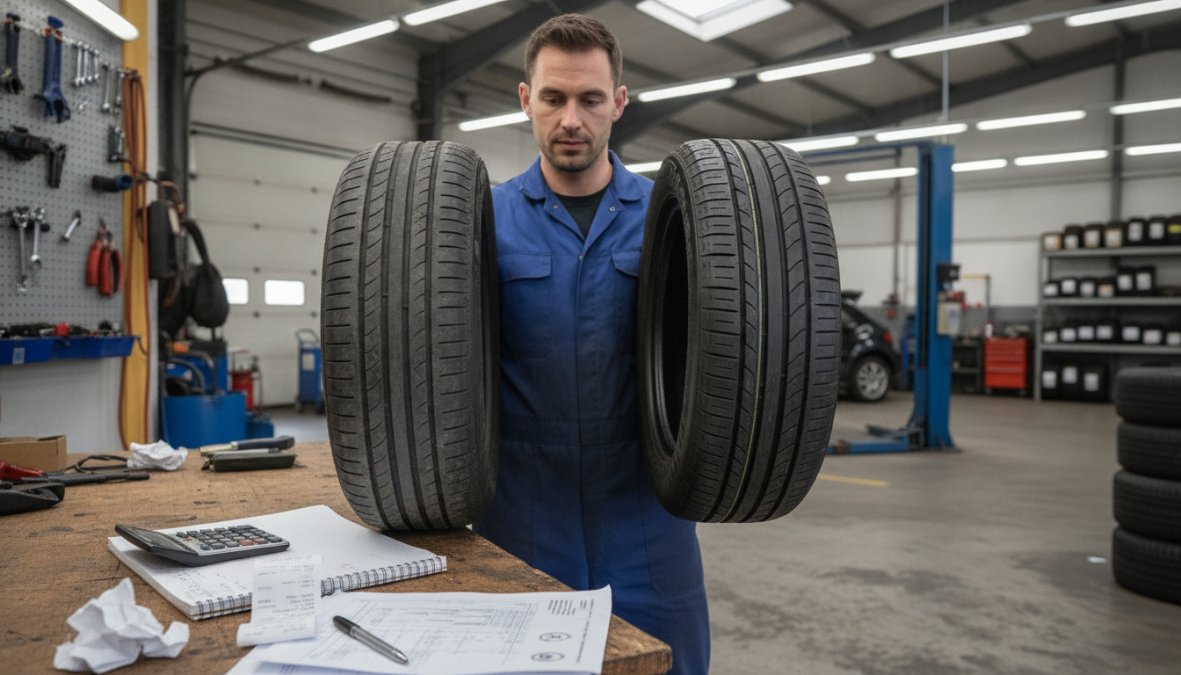
A mechanic in a well-lit garage workshop holding two tyres side by side, one visibly worn budget tyre with shallow tread and one newer branded tyre with deep grooves, comparing them under bright overhead workshop lighting
Fuel Efficiency, Rolling Resistance and Long-Term Savings
Higher rolling resistance means the engine works harder and burns more fuel. The Hankook Kinergy Eco 2, at around £60-£75 per tyre, achieves strong fuel efficiency ratings through its optimised rolling resistance compound. A budget tyre at £25-£50 may appear cheaper, but if it lasts 20,000 miles versus a premium tyre's 40,000 miles, you're buying twice as often, and paying more in fuel across those miles.
Tyre Type
Approx. Price
Estimated Lifespan
Cost Per 10,000 Miles
Budget (e.g. Westlake)
£25-£50
15,000-25,000 miles
£10-£33
Mid-Range (e.g. Hankook)
£60-£75
30,000-40,000 miles
£15-£25
Premium (e.g. Michelin)
£90-£105
40,000-60,000 miles
£15-£26
The pattern is consistent: the cost-per-mile gap between budget and premium is smaller than the sticker price suggests, and mid-range tyres from reputable manufacturers often represent the strongest value for money.
Two Angles Most Guides Miss: EVs, Part-Worn Risks and the Environment
EV-Specific Tyre Requirements and Why They Matter
Electric vehicles place fundamentally different demands on tyres. Instant torque accelerates tread wear significantly faster than a conventional drivetrain, and heavier battery packs increase the load on each tyre, demanding a higher load rating. Budget tyres are rarely engineered with EV-specific requirements in mind.
The Continental PremiumContact 7 is explicitly designed for EV compatibility, low rolling resistance to preserve battery range and reinforced construction for additional vehicle weight. Fitting a standard budget tyre to an EV risks faster wear, reduced range, and potentially inadequate load capacity. At Kettering Motorist Centre, we regularly advise EV owners on tyre selection: the wrong tyre doesn't just wear faster, it can measurably reduce your range per charge.
Key TakeawayEV owners should treat tyre selection as a range and safety decision, not just a cost decision. A tyre not rated for EV loads on a heavy electric vehicle is a structural risk, not just a performance compromise.
Used and Part-Worn Tyre Risks Under UK Safety Regulations
Part-worn tyres are legal to sell in the UK under specific conditions, but the reality is often far from those conditions. According to TyreSafe's part-worn tyre safety research, a significant proportion of part-worn tyres tested in the UK fail to meet legal safety standards, with hidden damage, inadequate tread depth, and missing speed rating markings being common issues. A budget new tyre at £30-£50 is a safer and more economical choice than a part-worn at £15-£25, even before factoring in blowout risk on a motorway.
Environmental Impact of Tyre Wear and Microplastics
Tyre wear is one of the largest sources of microplastic pollution in the UK. Premium tyres, engineered to wear more slowly and evenly, generate less particulate matter per mile. Budget tyres that wear faster produce more microplastic pollution and require more frequent replacement, increasing manufacturing energy and end-of-life waste. The UK Government's Environmental Improvement Plan guidance on tyre microplastics acknowledges tyre wear particles as a priority pollution concern, choosing a longer-lasting tyre is an environmental decision as much as a financial one.
Branded Tyres vs Budget Tyres: Side-by-Side Comparison
Feature
Premium (e.g. Michelin, Continental)
Mid-Range (e.g. Hankook)
Budget (e.g. Westlake)
Wet Grip Rating
A-B
B-C
C-E
Braking Distance
Shortest
Moderate
Longest
Tread Lifespan
40,000-60,000 miles
30,000-40,000 miles
15,000-25,000 miles
Rolling Resistance
Low
Low-Medium
Medium-High
EV Compatibility
Yes (specific models)
Limited
Rarely
Approx. Price Per Tyre
£90-£105+
£60-£75
£25-£50
EU Label Fuel Rating
A-B
B-C
C-D
Road Noise
Low
Low-Medium
Medium-High
R&D Investment
Extensive
Moderate
Minimal
Pros of premium branded tyres:
Superior wet grip and shorter braking distances
Longer tread life and lower replacement frequency
Lower rolling resistance improves fuel efficiency
EV-specific options available
Consistent performance throughout tyre lifespan
Cons of premium branded tyres:
Higher upfront cost per tyre
May be excessive for low-mileage, low-speed urban driving
Pros of budget tyres:
Low upfront cost
Meets legal minimum safety standards
Suitable for short-term, low-mileage needs
Cons of budget tyres:
Shorter lifespan increases replacement frequency
Poorer wet grip and longer braking distances
Higher rolling resistance increases fuel costs
Not suitable for EVs or high-load vehicles
Greater environmental impact per mile driven
Which Tyre Type Is Right for Your Driving Habits?
The honest answer depends on your mileage, vehicle type, and the roads you drive most often.
Choose premium branded tyres if you:
Cover more than 15,000 miles per year
Drive regularly on motorways or A-roads at speed
Own an electric or hybrid vehicle
Drive in wet conditions frequently (relevant for most Kettering and Northamptonshire drivers through autumn and winter)
Prioritise safety margins and handling characteristics
Choose mid-range tyres if you:
Drive moderate annual mileage and want strong value for money
Want better performance than budget without premium pricing
Drive a conventional petrol or diesel vehicle on mixed roads
Choose budget tyres only if you:
Drive very low annual mileage (under 8,000 miles)
Need a temporary solution while saving for a better set
Drive a low-speed, short-journey vehicle in urban conditions
Most drivers in and around Kettering are best served by a mid-range tyre from a reputable manufacturer. The Hankook Kinergy Eco 2 at £60-£75 per tyre delivers performance metrics that rival entry-level premium options at a genuinely competitive cost-per-mile. The one thing to avoid categorically is part-worn tyres, the risks outweigh the savings in almost every scenario.
Choosing the right tyres is a safety decision as much as a financial one. Kettering Motorist Centre offers expert tyre fitting and advice for all vehicle types, including specialist guidance for electric and hybrid vehicles, with a transparent online booking process that requires no upfront payment. Book your tyre appointment or MOT online today and get the right set of tyres fitted by a team that knows your vehicle.
Frequently Asked Questions
Are budget tyres safe to use on UK roads?
Budget tyres can be road-legal and meet minimum UK safety regulations, but they generally offer lower performance margins than branded tyres, particularly in wet weather. The key is to check the EU tyre label ratings for wet grip and braking distance before buying. A budget tyre with a poor wet grip score can significantly increase stopping distances in rain, which is a genuine safety concern for everyday driving in the UK.
What is the main difference between branded and budget tyres?
The core difference between branded tyres vs budget tyres lies in the rubber compound, tyre technology, and R&D investment behind each product. Premium brands like Michelin and Continental invest heavily in developing advanced compounds that deliver consistent wet grip, lower rolling resistance, and longer tread wear. Budget tyres use simpler compounds that meet minimum standards but typically underperform in extreme wet braking, cornering performance, and overall tyre lifespan.
How long do budget tyres last compared to premium tyres?
How long budget tyres last depends on driving habits, tyre pressure maintenance, and road conditions, but they generally wear faster than premium equivalents. A quality branded tyre may last 30,000-50,000 miles, while a budget tyre could wear out in 15,000-25,000 miles under similar conditions. This faster replacement frequency can erode the initial price saving, making the cost-per-mile comparison less favourable for budget options over time.
Do EV drivers need different tyres from standard branded or budget options?
Yes. Electric vehicles place unique demands on tyres due to their heavier kerb weight and instant torque delivery, which accelerates tread wear. EVs also benefit from tyres with low rolling resistance to maximise battery range. Most budget tyres are not engineered for these demands. Premium brands like Continental offer EV-compatible designs with reinforced sidewalls and optimised rubber compounds. Fitting standard or budget tyres to an EV can reduce range and increase replacement frequency noticeably.
Are part-worn or used tyres a safe alternative to new budget tyres?
Part-worn tyres carry significant risks and are generally not recommended. Under UK safety regulations, part-worn tyres must meet strict standards, but enforcement is inconsistent and hidden internal damage is often undetectable by visual inspection alone. Even a legal part-worn tyre starts with reduced tread depth, cutting into the safety margins that matter most in wet weather. For most drivers, a new budget or mid-range tyre from a reputable supplier is a safer and often similarly priced choice.
Your booking Failed
Please try again or please call 01536 410142
Thank you for placing a booking with Kettering Motorist Centre Limited for vehicle
PLEASE TAKE YOUR BOOKING REFERENCE NUMBER WITH YOU TO THE MOT CENTRE
Your items
MOT Test
×
Terms and Conditions
These terms and conditions form the basis on which you can visit and use this website. Please read them carefully as they contain important information.
General terms and conditions
This website is owned and operated by Kettering Motorist Centre Ltd (company registration number: 4485858) operating at Trafalgar Road, Kettering, Northamptonshire, NN16 8DB (the "MOT Centre", the "Company", "we" or "us"). If you have any queries about these terms and conditions or if you have any comments or complaints on or about this website, you can contact us at [email protected] or 01536 410142.
The website is to promote and offer for sale the products and services of Kettering Motorist Centre Limited.
1. The contract between us
This website does not take payment for products or services online. The website enables you to view products and services online and to make a booking for later delivery and payment. The vehicle and provision of other products and services promoted by this website and the payment by you of the price of those products and services will take place at the MOT Centre. The booking does not constitute a contract.
The booking process on the site provides details of the booked MOT order. Please take the time to read and check your booking. It is your responsibility to make sure the order is correct and for the correct vehicle.
2. Ownership of rights
All rights, including copyright, in this website are owned by or licensed to the Company. Any use of this website or its contents, including copying or storing it or them in whole or part, other than for your own personal, non commercial use, is prohibited without our permission. You may not modify, distribute or repost anything on this website for any purpose.
3. Accuracy of content
We have taken care in the preparation of the content of this website, in particular to ensure that prices quoted are correct at the time of publishing and that all goods have been fairly described. However, bookings will only be accepted if there are no material errors in the description of the goods or their prices as advertised on this website. Any weights, dimensions and capacities given about the goods are approximate only.
4. Damage to your computer
We try to ensure that this website is free from viruses or defects. However, we cannot guarantee that your use of this website or any websites accessible through it will not cause damage to your computer. It is your responsibility to ensure that the right equipment is available to use the website. Except in the case of negligence on our part, we will not be liable to any person for any loss or damage which may arise to computer equipment as a result of using this website.
5. Availability
All bookings are subject to acceptance and availability. If the MOT date you have requested are is not available, the Centre will contact you by e-mail or phone. You will have the option either to wait until another slot is available or to cancel your booking.
6. Booking errors
You are able to correct errors on your booking up to the point on which you click on “Place Booking” during the booking process.
7. Price
The prices payable for goods that you order are as set out in our website. All prices are inclusive of VAT at the current rates and are correct at the time of entering information, errors and omissions excepted.
Whenever it is not possible to accept your booking to buy goods of the specification and description at the price indicated, the MOT Centre will advise you by email or phone or when you visit the centre.
8. Payment terms
You will be required to pay for the goods or services to the Centre at time of a completed MOT.
9. Delivery charges
N/A
10. Cancellation
The MOT Centre reserves the right to cancel the booking if:
10.1 There is insufficient stock to deliver the goods you have booked.
10.2 One or more of the goods you booked was listed at an incorrect price.
If your booking is cancelled the Centre will notify you by e-mail or phone.
You have the right to cancel your booking at any time up to the point of the MOT. If you do cancel your booking you should inform the centre by phone.
11. Liability
Notwithstanding the foregoing, nothing in these terms and conditions is intended to limit any rights you might have as a consumer under applicable local law or other statutory rights that may not be excluded nor in any way to exclude or limit our liability to you for any death or personal injury resulting from our negligence.
12. Notices
Unless otherwise expressly stated in these terms and conditions, all notices from you to us must be in writing and sent to our contact address given above and all notices from us to you will be displayed on our website from time to time.
13. Changes to legal notices
We reserve the right to change these terms and conditions from time to time and you should look through them as often as possible.
14. Law, jurisdiction and language
This website, any content contained therein and any contract brought into being as a result of usage of this website are governed by and construed in accordance with English law. Parties to any such contract agree to submit to the exclusive jurisdiction of the courts of England and Wales.
15. Invalidity
If any part of these terms and conditions is unenforceable (including any provision in which we exclude our liability to you) the enforceability of any other part of these conditions will not be affected.
16. Privacy
You acknowledge and agree to be bound by the terms of our privacy policy
17. Third party rights
Nothing in this Agreement is intended to, nor shall it confer any rights on a third party.