Most car engines are built to last well beyond 200,000 miles, yet many fail far earlier due to neglected maintenance and poor driving habits. This guide from Kettering Motorist Centre covers the 6 ways to extend your car engine life, from oil change intervals to cold start best practices, giving you a practical checklist for keeping your engine running longer.
Engine wear is cumulative. Every missed service, every cold start with a heavy right foot, every ignored warning light adds a small but permanent cost. Consistent preventative maintenance keeps friction, heat, and contaminants from doing lasting damage.
Why Engine Longevity Starts With Preventative Maintenance
Preventative maintenance is servicing a vehicle on a regular schedule to prevent failure before it occurs. It is the single most effective strategy for extending engine life, and costs a fraction of reactive repairs.
The engine is a system of tightly toleranced moving parts under extreme heat and pressure. Lubrication, cooling, and filtration systems manage these forces. When any one degrades, damage cascades: a blocked oil filter increases friction on piston rings; low coolant pushes temperatures beyond safe limits; a clogged air filter forces the engine to work harder for the same output.
The earliest stages of engine wear are invisible. There is no warning light for degraded oil viscosity or a cooling system running 15% below efficiency. By the time symptoms appear, damage has accumulated over thousands of miles. Following a car maintenance checklist tied to your manufacturer's service interval is the foundation everything else rests on.
Key TakeawayEngine wear is cumulative and largely invisible in its early stages. Consistent preventative maintenance is the only way to interrupt that accumulation before it becomes irreversible damage.
6 Ways to Extend Your Car Engine Life: The Core Checklist
The core checklist covers six areas that every driver can manage with the right habits and a reliable service partner. Each targets a specific failure mode that shortens engine lifespan.
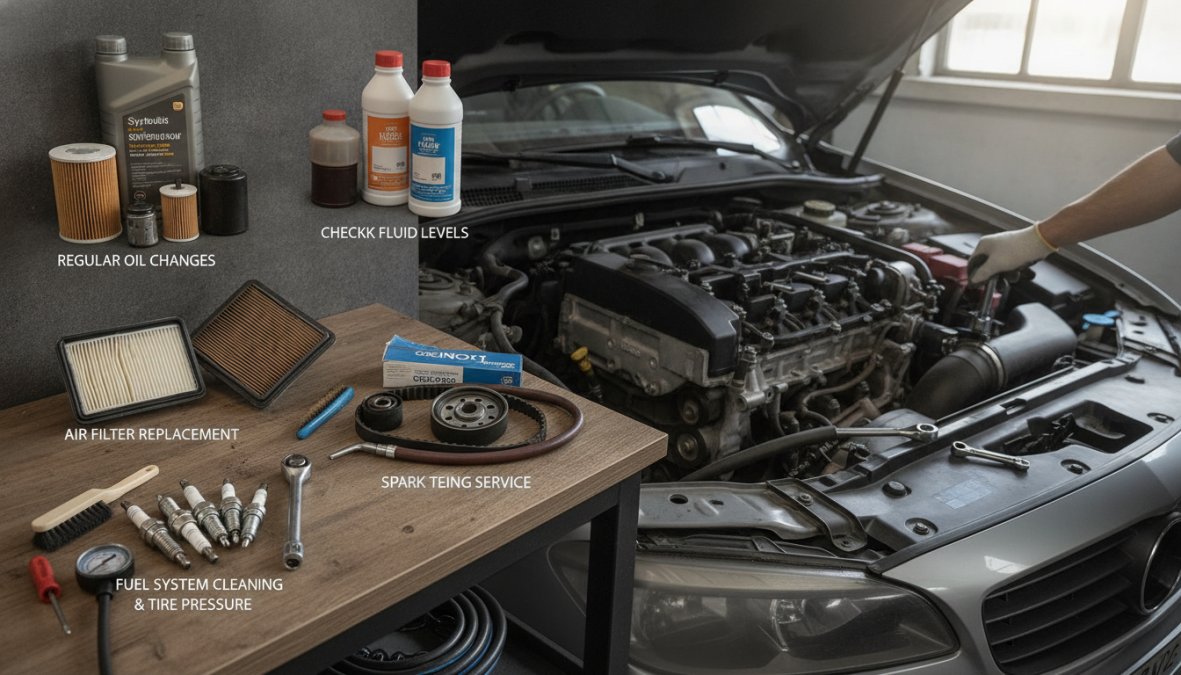
A mechanic in a clean, well-lit workshop performing an [oil change](/oil-change) on a raised car, with a bottle of full synthetic motor oil and a used oil filter resting on a metal workbench nearby
1. Change Your Oil and Oil Filter Regularly
Oil forms a lubricating film between moving metal surfaces, carries heat away from critical components, and suspends contaminants for the filter to trap. As oil ages, viscosity breaks down and its additive package depletes. Old oil cannot maintain the film strength needed to prevent metal-on-metal contact. Replace the filter at every oil change, it is the point of the exercise.
For most modern engines, full synthetic oil is the correct choice. It resists thermal breakdown, maintains viscosity across a wider temperature range, and flows more freely during cold starts when wear is highest. Products like Amsoil Signature Series Synthetic Motor Oil are engineered for extended drain intervals and superior protection in turbocharged engines.
How to stay on schedule:
Check your owner's manual for the manufacturer's recommended oil change interval
Do not rely solely on mileage, time matters too (annual changes at minimum for low-mileage vehicles)
Use the correct viscosity grade specified for your engine
Replace the oil filter at every change without exception
2. Keep the Cooling System and Coolant in Good Shape
The cooling system manages operating temperature. When it underperforms, metal components expand beyond design tolerances and head gasket failure becomes a real risk. Coolant degrades over time, its corrosion inhibitors break down, it becomes acidic, and it loses the ability to protect aluminium and iron components. Most manufacturers recommend a coolant flush every two to five years.
Check coolant level regularly using the reservoir markings. If you are topping up frequently, that is a symptom, investigate for leaks at hoses, the radiator, or the water pump.
3. Replace the Air Filter on Schedule
Clean combustion requires a precise fuel-air mixture. A clogged air filter restricts airflow, disrupts that ratio, forces the engine to work harder, and reduces fuel efficiency. Replacement intervals vary by environment, urban drivers in Kettering dealing with stop-start traffic may need more frequent changes than the standard interval suggests.
The Bosch Engine Air Filter is a reliable OEM-spec option. For a long-term alternative, the K&N Engine Air Filter is washable and reusable while maintaining effective filtration.
4. Check All Fluid Levels Routinely
Beyond oil and coolant, transmission fluid, brake fluid, power steering fluid, and differential fluid all have service lives many drivers ignore. A practical approach is a monthly ten-minute check of all fluid levels. Low transmission fluid is a particularly common cause of drivetrain damage that presents no warning until the gearbox is already stressed.
Watch OutIgnoring low transmission fluid is one of the most expensive oversights a driver can make. By the time a gearbox shows symptoms, the damage typically requires a full rebuild rather than a simple top-up.
5. Follow Your Manufacturer's Service Interval
Your owner's manual contains a service schedule built around the specific tolerances and design of your engine, it is the most authoritative car maintenance checklist available. Deviating from it voids the engineering assumptions behind the engine's design. Intervals cover spark plugs, drive belts, timing chains or belts, and fuel system components. A timing belt failure in an interference engine is catastrophic and entirely preventable with scheduled replacement.
6. Use OEM or OEM-Equivalent Parts
OEM parts are manufactured to the exact specifications of the original components. Cheap aftermarket alternatives may fit physically but often fail to meet the metallurgical or dimensional standards that keep wear within acceptable limits. This matters most for piston rings, valve seals, and gaskets, where minor dimensional differences translate directly into oil consumption, compression loss, or coolant contamination.
The Benefits of Synthetic Oil for Engine Protection
Full synthetic oil is not a premium upgrade for enthusiasts, for most modern engines, it is the correct specification.
Full Synthetic vs. Conventional: What the Difference Means for Engine Wear
Full synthetic oil is produced through chemical synthesis, creating uniform, stable molecules. Conventional mineral oil retains a range of molecular sizes and impurities. The practical result: synthetic oil maintains viscosity across a wider temperature range, resists thermal breakdown under sustained heat, and flows immediately during cold starts when the oil film is most critical.
Engine wear happens disproportionately in the first thirty seconds after a cold start. Synthetic oil's superior cold-flow characteristics reduce this vulnerability significantly. For turbocharged engines, which generate intense localised heat, thermal stability is especially important. Longer drain intervals and reduced sludge formation lower total engine ownership costs over time.
The Role of Fuel Additives in Keeping Your Engine Clean
A quality fuel system cleaner used periodically has real value, but it is not a substitute for mechanical maintenance. Carbon buildup is a genuine problem in modern direct injection (GDI) engines, where fuel does not wash over the intake valves. Deposits accumulate on injectors and inside combustion chambers, reducing efficiency and causing rough idle. Red Line Fuel System Cleaner uses a high concentration of polyetheramine (PEA) to dissolve these deposits and is most effective every 10,000 to 15,000 miles. For high-mileage diesel engines showing sludge buildup, Hot Shot's Secret Stiction Eliminator targets sticky friction deposits on oil-wetted components, improving cold-start performance.
Driving Habits That Damage Your Engine (And How to Change Them)
Cold Start Best Practices: Why the First Few Minutes Matter Most
When an engine is cold, oil has drained to the sump and the pump needs several seconds to build pressure and circulate lubrication to the valve train, piston rings, and cylinder walls. Revving a cold engine to warm it up dramatically increases wear on unlubricated components. The correct approach: idle for thirty to sixty seconds before pulling away, then drive gently for the first two to three miles until the engine reaches operating temperature.
Pro TipOn cold mornings in Kettering and across Northamptonshire, where temperatures regularly drop below freezing in winter, allow a slightly longer idle before driving. Cold oil is significantly thicker and takes longer to circulate fully in sub-zero conditions.
Short-Trip vs. Long-Trip Engine Stress
Short trips are harder on engines than most drivers realise. A journey under five miles rarely allows the engine to reach full operating temperature. Water vapour, a byproduct of combustion, condenses inside the crankcase in a cold engine, mixes with oil, and forms a corrosive emulsion that accelerates wear and promotes sludge. Drivers who primarily make short trips in and around Kettering should schedule periodic longer drives to purge this moisture. If short trips are unavoidable, shortening oil change intervals is a sensible precaution.
Modern Engine Tech: Turbocharged and GDI Engines Need Extra Care
Turbocharged engines and GDI systems are now standard across the market, delivering improved efficiency from smaller displacements, but both introduce specific maintenance demands conventional advice does not address.
Turbochargers operate at extreme temperatures and are lubricated by engine oil, so oil quality and change frequency directly determine turbocharger lifespan. After hard driving, idling briefly before shutdown prevents heat-soak from cooking residual oil into carbon deposits, a simple habit that meaningfully extends turbocharger life.
GDI engines inject fuel directly into the cylinder, so fuel never washes the intake valves. Carbon deposits accumulate on valve stems and seats, eventually causing misfires and rough idle. Periodic fuel system cleaner slows this process, but many GDI vehicles benefit from a physical intake valve cleaning service every 50,000 to 80,000 miles.
6 Ways to Extend Your Car Engine Life: Recognising the Signs of Engine Wear Early
Catching engine wear early is the difference between a straightforward repair and a complete rebuild. The 6 ways to extend your car engine life are most effective when combined with active monitoring for early warning signals.
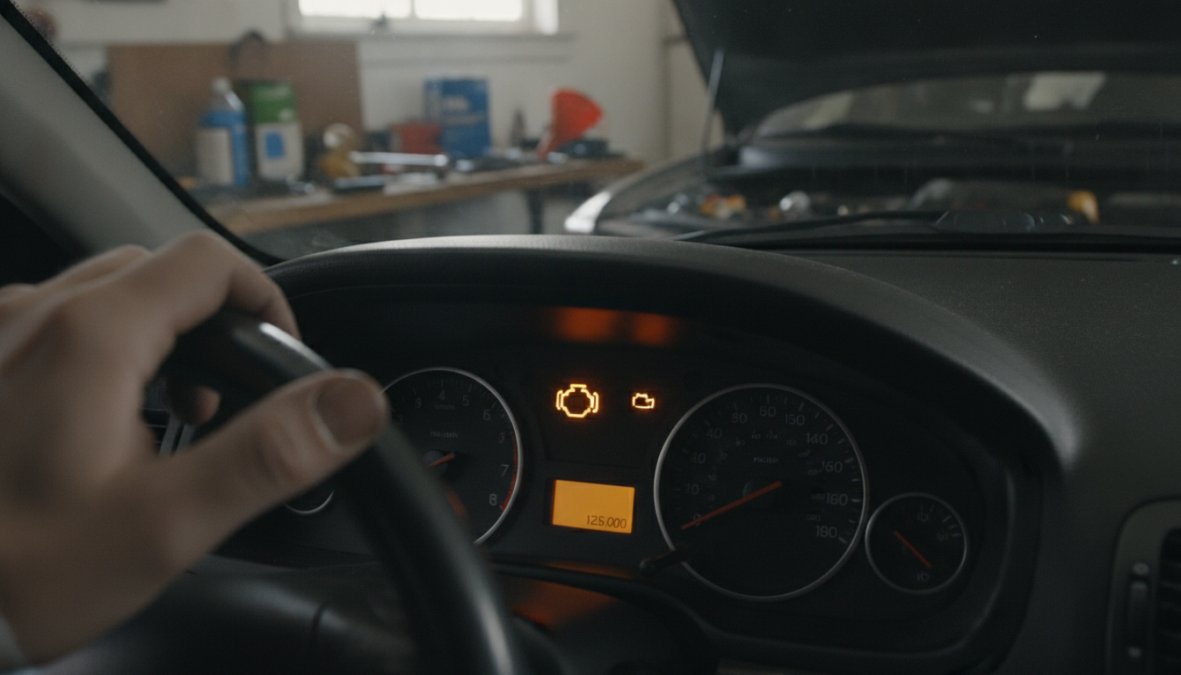
Close-up of a car dashboard with the amber check engine warning light illuminated, the driver's hands resting on the steering wheel slightly visible in soft background blur
Dashboard Warning Lights and Engine Diagnostics
The check engine light represents a stored diagnostic trouble code pointing to a specific fault. Ignoring it allows the underlying issue to progress. A professional diagnostics scan reads these codes and provides actionable information. Tools like the ThinkScan 689 by Thinkcar offer full system diagnostics for workshops, while the Car Scanner ELM OBD2 app paired with a Bluetooth adapter gives drivers a basic window into live engine parameters. Neither replaces a qualified technician, but both are useful before a workshop visit.
Oil pressure and temperature warning lights demand immediate attention, driving with low oil pressure is one of the fastest routes to catastrophic engine damage.
Physical Symptoms: Noises, Smoke, and Oil Consumption
A knocking or tapping noise often signals worn bearings or low oil pressure. Blue exhaust smoke indicates oil entering the combustion chamber through worn piston rings or valve seals. White smoke points to coolant contamination, typically from a failing head gasket. Increased oil consumption between services is an early warning many drivers normalise, an engine using noticeably more oil than it did 20,000 miles ago is signalling its internal condition.
According to Institute of the Motor Industry guidance on engine health monitoring, early diagnosis consistently reduces repair costs and prevents minor issues from escalating into major failures.
The Kettering Motorist Centre team carries out comprehensive engine diagnostics as part of its vehicle servicing offer, identifying these signals before they become costly problems for drivers across Kettering and the surrounding areas.
Keeping an engine running well past 150,000 miles comes down to consistent service habits, quality parts, and catching problems early. Kettering Motorist Centre provides expert diagnostic and repair services for all vehicle types, including hybrid and electric vehicles, with a hassle-free online booking system for MOT and servicing appointments that requires no upfront payment. For drivers in Kettering and Northamptonshire who want straightforward, professional care from a family-run business they can trust, book your MOT with Kettering Motorist Centre and give your engine the attention it deserves.
Frequently Asked Questions
What is the best way to make a car engine last longer?
The most effective way to extend your car engine life is consistent preventative maintenance. This means changing your oil and oil filter at the correct service interval, keeping coolant levels topped up, replacing the air filter regularly, and following your manufacturer's recommended schedule. Pairing good maintenance with sensible driving habits, avoiding harsh cold starts, excessive idling, and short trips, compounds the benefit and significantly reduces long-term engine wear.
Are synthetic oils better for extending engine life?
Full synthetic oil generally offers superior engine protection compared to conventional oil. Its higher resistance to thermal breakdown means it maintains the correct viscosity across a wider temperature range, reducing friction and engine wear during both cold starts and sustained high-temperature driving. Synthetic oil is particularly beneficial for turbocharged and GDI engines, which run hotter and demand more from their lubrication. Always check your manufacturer's specification before switching oil types.
Does idling your car damage the engine?
Prolonged idling can contribute to engine wear over time. When an engine idles for extended periods, it may not reach its full operating temperature, which can lead to incomplete combustion, fuel dilution in the oil, and carbon buildup on piston rings and cylinder walls. Short periods of idling to warm up a modern engine are generally unnecessary, most manufacturers recommend driving gently shortly after starting rather than sitting stationary for several minutes.
What are the signs of a dying car engine?
Common signs of engine wear include the check engine light appearing on your dashboard, unusual knocking or ticking noises, excessive oil consumption between service intervals, blue or white smoke from the exhaust, and a noticeable drop in fuel efficiency. Rough idling and loss of power during acceleration can also point to issues with the fuel system, piston rings, or combustion chambers. If you notice any of these symptoms, a professional engine diagnostic is strongly recommended.
How often should you really change your oil?
The right oil change interval depends on your vehicle, engine type, and the oil you use. Many modern cars using full synthetic oil can go between 7,500 and 10,000 miles between changes, while older vehicles or those using conventional oil may need changes every 3,000 to 5,000 miles. Always follow your manufacturer's service schedule as the primary guide. If you frequently make short trips or drive in stop-start traffic, consider changing oil more frequently to prevent sludge and contaminant buildup.
Your booking Failed
Please try again or please call 01536 410142
Thank you for placing a booking with Kettering Motorist Centre Limited for vehicle
PLEASE TAKE YOUR BOOKING REFERENCE NUMBER WITH YOU TO THE MOT CENTRE
Your items
MOT Test
×
Terms and Conditions
These terms and conditions form the basis on which you can visit and use this website. Please read them carefully as they contain important information.
General terms and conditions
This website is owned and operated by Kettering Motorist Centre Ltd (company registration number: 4485858) operating at Trafalgar Road, Kettering, Northamptonshire, NN16 8DB (the "MOT Centre", the "Company", "we" or "us"). If you have any queries about these terms and conditions or if you have any comments or complaints on or about this website, you can contact us at [email protected] or 01536 410142.
The website is to promote and offer for sale the products and services of Kettering Motorist Centre Limited.
1. The contract between us
This website does not take payment for products or services online. The website enables you to view products and services online and to make a booking for later delivery and payment. The vehicle and provision of other products and services promoted by this website and the payment by you of the price of those products and services will take place at the MOT Centre. The booking does not constitute a contract.
The booking process on the site provides details of the booked MOT order. Please take the time to read and check your booking. It is your responsibility to make sure the order is correct and for the correct vehicle.
2. Ownership of rights
All rights, including copyright, in this website are owned by or licensed to the Company. Any use of this website or its contents, including copying or storing it or them in whole or part, other than for your own personal, non commercial use, is prohibited without our permission. You may not modify, distribute or repost anything on this website for any purpose.
3. Accuracy of content
We have taken care in the preparation of the content of this website, in particular to ensure that prices quoted are correct at the time of publishing and that all goods have been fairly described. However, bookings will only be accepted if there are no material errors in the description of the goods or their prices as advertised on this website. Any weights, dimensions and capacities given about the goods are approximate only.
4. Damage to your computer
We try to ensure that this website is free from viruses or defects. However, we cannot guarantee that your use of this website or any websites accessible through it will not cause damage to your computer. It is your responsibility to ensure that the right equipment is available to use the website. Except in the case of negligence on our part, we will not be liable to any person for any loss or damage which may arise to computer equipment as a result of using this website.
5. Availability
All bookings are subject to acceptance and availability. If the MOT date you have requested are is not available, the Centre will contact you by e-mail or phone. You will have the option either to wait until another slot is available or to cancel your booking.
6. Booking errors
You are able to correct errors on your booking up to the point on which you click on “Place Booking” during the booking process.
7. Price
The prices payable for goods that you order are as set out in our website. All prices are inclusive of VAT at the current rates and are correct at the time of entering information, errors and omissions excepted.
Whenever it is not possible to accept your booking to buy goods of the specification and description at the price indicated, the MOT Centre will advise you by email or phone or when you visit the centre.
8. Payment terms
You will be required to pay for the goods or services to the Centre at time of a completed MOT.
9. Delivery charges
N/A
10. Cancellation
The MOT Centre reserves the right to cancel the booking if:
10.1 There is insufficient stock to deliver the goods you have booked.
10.2 One or more of the goods you booked was listed at an incorrect price.
If your booking is cancelled the Centre will notify you by e-mail or phone.
You have the right to cancel your booking at any time up to the point of the MOT. If you do cancel your booking you should inform the centre by phone.
11. Liability
Notwithstanding the foregoing, nothing in these terms and conditions is intended to limit any rights you might have as a consumer under applicable local law or other statutory rights that may not be excluded nor in any way to exclude or limit our liability to you for any death or personal injury resulting from our negligence.
12. Notices
Unless otherwise expressly stated in these terms and conditions, all notices from you to us must be in writing and sent to our contact address given above and all notices from us to you will be displayed on our website from time to time.
13. Changes to legal notices
We reserve the right to change these terms and conditions from time to time and you should look through them as often as possible.
14. Law, jurisdiction and language
This website, any content contained therein and any contract brought into being as a result of usage of this website are governed by and construed in accordance with English law. Parties to any such contract agree to submit to the exclusive jurisdiction of the courts of England and Wales.
15. Invalidity
If any part of these terms and conditions is unenforceable (including any provision in which we exclude our liability to you) the enforceability of any other part of these conditions will not be affected.
16. Privacy
You acknowledge and agree to be bound by the terms of our privacy policy
17. Third party rights
Nothing in this Agreement is intended to, nor shall it confer any rights on a third party.









 on a raised car, with a bottle of full synthetic motor oil and a used oil filter resting on a metal workbench nearby](https://cdn.grandranker.com/articles/6-ways-to-extend-your-car-engine-life-content-1-1781055784.jpg)