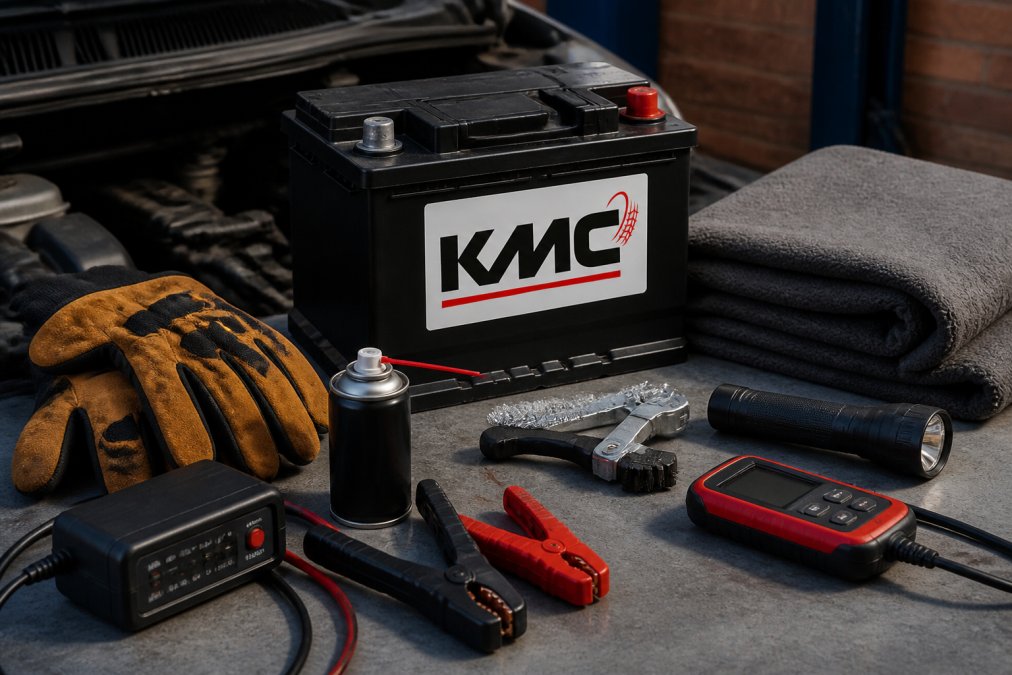
Winter is the worst season for car batteries. Cold temperatures reduce the chemical reactions inside your battery that produce electrical current, whilst parasitic drain from your vehicle's electrical systems continues relentlessly when the engine is off. A battery already struggling to deliver enough cranking amps to start your engine, combined with constant power loss, leaves you stranded on a freezing morning.
The good news: most car battery drain in winter is preventable. At Kettering Motorist Centre, we've seen countless drivers avoid expensive roadside call-outs and replacements by taking simple precautions before the cold months arrive. Below are seven proven strategies to keep your battery healthy and reliable throughout winter.
Why Cold Weather Drains Your Car Battery Faster
Cold air makes everything inside your battery work harder. The electrolyte inside a lead-acid battery becomes more viscous in low temperatures, slowing the chemical reactions that generate electrical power. A battery delivering full cranking amps at 20°C might only manage 50% of that power at -10°C. Your starter motor demands even more current in cold weather because engine oil thickens, creating more mechanical resistance.
Meanwhile, parasitic drain, power consumed by your car's alarm, clock, infotainment system, and other electronics when the engine is off, continues 24/7. In winter, when you're driving less frequently or taking only short trips, your alternator doesn't get enough time to fully recharge the battery between uses. This combination of reduced output and constant drain creates the perfect storm for battery failure.
1. Check Your Car Battery Health Regularly
The first step to preventing car battery drain in winter is knowing your battery's condition before the cold arrives. A battery weakened by age, damage, or poor maintenance will fail much faster when temperatures drop.
What to look for during inspection
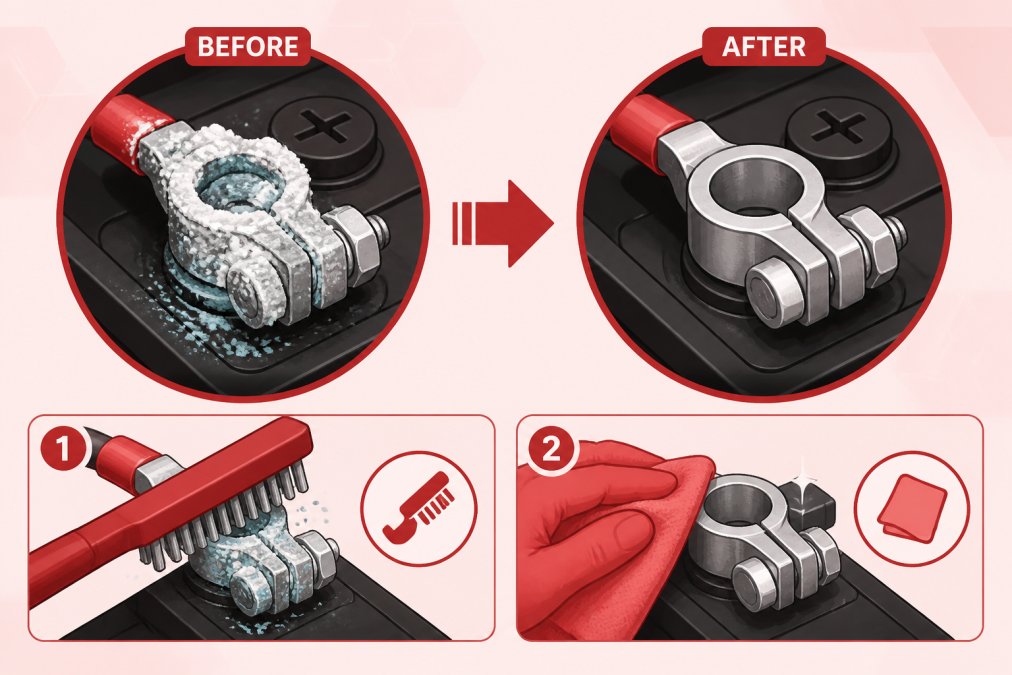
Open your bonnet and examine the battery terminals, the metal connectors where the cables attach. Look for white, blue-green, or grey crusty deposits, which indicate corrosion. Corrosion increases internal resistance and reduces the battery's ability to deliver current.
Check the battery case itself for cracks, bulging, or leaks. A damaged case means the battery is failing and replacement is urgent. Inspect the battery cables for fraying, cracks in the insulation, or loose connections. A loose cable connection prevents current from flowing efficiently.
If your battery is more than 3-4 years old, have its state of charge tested. Many batteries look fine externally but have lost significant capacity due to sulfation, where lead sulfate crystals build up on the battery plates, reducing their surface area and the battery's ability to hold a charge.
When to seek professional diagnostics
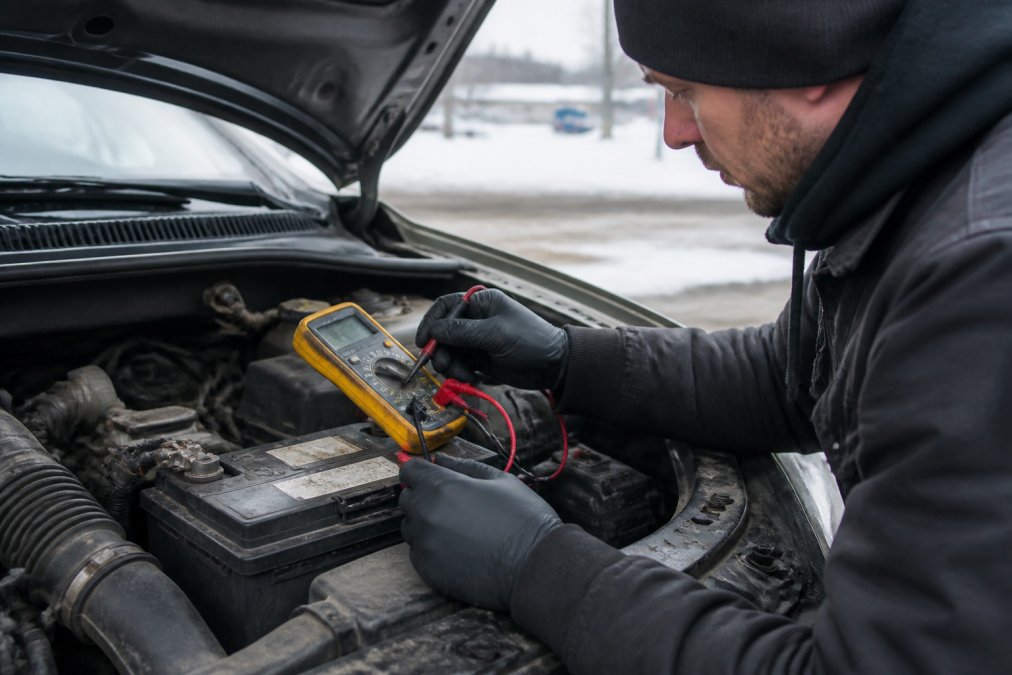
If your visual inspection raises concerns or you're unsure about your battery's age or condition, book a diagnostic appointment at Kettering Motorist Centre. Our team can test your battery's voltage and cranking amps under load, revealing whether it's fit for winter driving. This test takes minutes and costs far less than a roadside recovery call or emergency replacement.
For hybrid and electric vehicle owners, we offer specialist battery diagnostics at our sister site kmcelectric.co.uk. Hybrid batteries have different requirements and failure modes requiring specialist equipment and knowledge.
2. Use a Battery Trickle Charger or Maintainer
A trickle charger, also called a battery maintainer, is one of the most effective tools for preventing car battery drain in winter, especially if your vehicle sits unused for days or weeks.
How trickle chargers work in winter
A trickle charger delivers a small, continuous charge to your battery whilst it's parked, compensating for parasitic drain and keeping the battery's state of charge high. A fully charged battery performs better in cold weather than a partially discharged one.
Modern smart chargers monitor the battery's voltage and only deliver charge when needed, preventing overcharging and damage. Many include temperature compensation, adjusting the charging voltage based on ambient temperature, essential for winter use.
The CTEK MXS 5.0 UK automatically switches between charging and maintenance modes, handles multiple battery types (lead-acid, AGM, gel), and includes a reconditioning function that can recover deeply discharged batteries. The NOCO GENIUS5UK offers similar functionality and supports both 6V and 12V batteries, plus lithium-ion batteries if you have a modern vehicle with auxiliary lithium systems.
For drivers storing their vehicle over winter, a trickle charger is invaluable. Connect it before you park the car for an extended period, and it will maintain the battery's charge throughout the cold months, ensuring reliable starting when you need it again.
Choosing the right charger for your battery type
Not all chargers suit all batteries. Lead-acid batteries need different charging profiles than AGM (Absorbent Glass Mat) or gel batteries, which are more sensitive to overcharging. Lithium-ion auxiliary batteries found in some modern vehicles require completely different charging electronics.
Check your battery's label or your vehicle's manual to identify your battery type. If unsure, the team at Kettering Motorist Centre can advise you on the right charger for your specific vehicle. Once chosen, set it up in a well-ventilated space away from flammable materials, connect it following the instructions, and leave it connected whilst the vehicle is parked.
3. Drive Your Car Regularly and Avoid Short Journeys
One of the most overlooked causes of car battery drain in winter is infrequent or very short driving. Short trips cause more battery damage than no trips at all.
Why short trips fail to recharge your battery
Your alternator, which recharges the battery whilst the engine runs, needs time to restore the charge used during engine start. A typical start consumes 25-50 amps of current. On a short trip of just a few minutes, the alternator might only restore half the charge that was used, leaving the battery slightly more depleted than before.
Repeat this pattern daily, and your battery's state of charge gradually falls. By mid-winter, when cold weather is reducing the battery's capacity anyway, you're left with a battery that's both chemically weakened and electrically depleted. The solution is simple: avoid short journeys where possible, or combine multiple errands into one longer trip. A 20-minute drive at steady speed gives the alternator enough time to fully recharge the battery and build up a reserve.
4. Turn Off Electrical Accessories When Parked
Parasitic drain is the silent killer of winter batteries. Even when your engine is off, your vehicle's electrical systems continue drawing power: the alarm system, the clock, the infotainment system's standby mode, interior lights on a timer, and various control modules all consume current 24 hours a day.
The total parasitic load on a modern car is typically 20-50 milliamps. Over a week of parking, this adds up to significant discharge. In winter, when your battery's capacity is already reduced and you might not be driving frequently, parasitic drain can be the difference between a battery that starts and one that doesn't.
You can't eliminate parasitic drain entirely, many systems are essential for security and functionality. But you can minimise it by turning off non-essential accessories before you park. Switch off interior lights, close sunroofs or windows that might trigger motors, and disable any aftermarket devices (phone chargers, dashcams, heated seats) that draw power when the engine is off.
If you're planning to leave your vehicle unused for more than a week, consider disconnecting the negative terminal from the battery. This completely stops parasitic drain.
5. Clean Battery Terminals and Prevent Corrosion
Battery terminal corrosion is one of the most common causes of car battery drain in winter. Corrosion creates electrical resistance that prevents the alternator from charging the battery efficiently and prevents the battery from delivering current to the starter motor.
Baking soda and water (or commercial battery terminal cleaner)
Clean cloth or paper towels
Gloves and eye protection
Adjustable spanner or socket set
Steps:
Disconnect the battery. Always disconnect the negative terminal first (the black cable), then the positive terminal (the red cable).
Inspect the terminals. Look for white, blue-green, or grey crusty deposits on the metal connectors and cable ends. This corrosion is caused by a chemical reaction between the battery's sulfuric acid and the metal terminals.
Mix your cleaning solution. Combine one tablespoon of baking soda with one cup of water to create a mild alkaline solution that neutralises battery acid and dissolves corrosion.
Scrub the terminals. Dip your wire brush into the solution and scrub both the battery terminal posts and the cable connector ends until the corrosion is gone and the metal is shiny.
Rinse with clean water. Pour clean water over the terminals to rinse away the baking soda solution and loosened corrosion particles.
Dry thoroughly. Use a clean cloth to dry the terminals completely. Moisture left behind will cause corrosion to return quickly.
Reconnect the cables. Reconnect the positive terminal first (red cable), then the negative terminal (black cable). Make sure both connections are tight.
Apply terminal protector. Once everything is dry and reconnected, apply a thin layer of petroleum jelly or commercial battery terminal protector to the terminals. This creates a barrier that slows corrosion formation.
Cleaning your battery terminals takes 20-30 minutes and can be the difference between a reliable start and a dead battery on a cold morning. If you're uncomfortable doing this yourself, the team at Kettering Motorist Centre can clean your terminals as part of a routine service or battery health check.
6. Park in a Sheltered Location or Use Battery Insulation
Cold is the enemy of battery performance, but you can't control the weather. What you can control is how much cold your battery is exposed to.
Parking in a garage or sheltered location keeps your battery warmer overnight, which reduces the chemical drag that cold imposes on the battery's ability to deliver current. Even a carport or covered parking space makes a measurable difference. If you don't have access to covered parking, consider using a battery insulation wrap.
A battery wrap is an insulated sleeve that fits around your battery case and reduces heat loss. It won't generate heat, but it will keep your battery warmer than it would be exposed to the cold air.
For drivers with hybrid or electric vehicles, battery thermal management is even more critical. Electric vehicle batteries lose significant range in cold weather, and the auxiliary 12V battery that powers the starter and electrical systems is just as vulnerable to cold as a conventional battery. Check our specialist guidance at kmcelectric.co.uk for cold-weather battery strategies specific to your vehicle type.
7. Keep an Emergency Jump Starter in Your Vehicle
Despite your best efforts, sometimes a battery fails. Having an emergency jump starter in your car means you're never completely stranded.
A traditional jump starter cable requires another vehicle with a working battery, which might not be available in an isolated area or at an inconvenient time. A portable lithium jump starter is self-contained and can start your engine without any external help.
Portable jump starters deliver sufficient cranking power to start most petrol and diesel engines. They include spark-proof technology and reverse polarity protection, so you can't accidentally damage your battery or vehicle by connecting it backwards. They also double as portable power banks for charging your phone or other USB devices, and include an LED flashlight for working in the dark.
Keep your jump starter in the boot or under a seat, fully charged. Check it monthly to ensure it still holds a charge. If you do need to use it, follow the instructions carefully: connect the positive lead first, then the negative lead, wait a few seconds, and then start the engine. Once the engine is running, let it idle for a few minutes before disconnecting the leads (negative first, then positive).
A portable jump starter is essential insurance against a winter breakdown. For drivers in Kettering and surrounding areas who rely on their vehicles for work or family commitments, it's an essential piece of emergency kit.
Cold weather reduces your battery's output by up to 50%, whilst parasitic drain continues relentlessly. This combination is why winter battery failures are so common.
Check your battery's health before winter arrives. Corrosion, age, and damage all accelerate failure in cold weather.
A trickle charger is the single most effective tool for preventing car battery drain in winter, especially if your vehicle sits unused for days or weeks.
Short journeys fail to fully recharge your battery. One 20-minute drive does more to maintain battery health than five 5-minute trips.
Clean battery terminals immediately if you see corrosion. Corrosion blocks charging and starting current, making winter battery failure much more likely.
Park in a sheltered location or use a battery insulation wrap to reduce heat loss and keep your battery warmer.
Keep a portable jump starter in your vehicle as emergency backup. A flat battery is inconvenient; being stranded is dangerous.
For drivers in Kettering and Northamptonshire, Kettering Motorist Centre offers professional battery diagnostics and maintenance as part of our routine vehicle health checks. We can test your battery's condition, clean corroded terminals, and advise on the right preventative strategy for your specific vehicle and driving pattern. Our hassle-free online booking system makes it simple to schedule an appointment, no upfront payment required. Book your battery health check today and start winter with confidence.
Frequently Asked Questions
How do I stop my car battery from draining in cold weather?
Cold weather reduces battery capacity by up to 50% because chemical reactions inside the battery slow down at lower temperatures. To prevent drain, use a trickle charger during storage, drive regularly to recharge the battery through the alternator, turn off electrical accessories when parked, and keep terminals clean to reduce internal resistance. Professional car battery health checks can identify weak cells before winter arrives. Kettering Motorist Centre offers diagnostic services to assess your battery's readiness for cold months.
What is the impact of short journeys on battery life?
Short trips prevent your alternator from fully recharging the battery. Your engine needs 20 minutes of driving at normal speeds to restore the charge consumed during cold starts. Frequent short journeys leave the battery progressively depleted, especially in winter when cold cranking amps demand is highest. If you make only short trips, use a battery trickle charger between journeys to maintain state of charge and extend battery lifespan.
How often should I start my car to keep the battery charged in winter?
Aim to drive your car at least twice weekly for 20+ minutes at a time to allow the alternator to fully recharge the battery. If you cannot drive regularly, connect a smart battery maintainer that automatically keeps the battery topped up without overcharging. For vehicles in long-term storage, check the battery monthly and consider using a solar trickle charger or a mains-powered charger set to maintenance mode.
What causes car battery drain overnight in winter?
Parasitic drain from vehicle systems (alarm, clock, engine control unit) combines with cold-induced capacity loss. Modern vehicles draw 20-80 milliamps even when off. In winter, this drain depletes a weakened battery faster. Additionally, short-circuit risks increase if battery terminals are corroded, and internal sulfation accelerates in cold temperatures. Regular battery health checks and terminal cleaning prevent most overnight drain issues. Kettering Motorist Centre can test your charging system to rule out alternator faults.
Thank you for placing a booking with Kettering Motorist Centre Limited for vehicle
PLEASE TAKE YOUR BOOKING REFERENCE NUMBER WITH YOU TO THE MOT CENTRE
Your items
MOT Test
×
Terms and Conditions
These terms and conditions form the basis on which you can visit and use this website. Please read them carefully as they contain important information.
General terms and conditions
This website is owned and operated by Kettering Motorist Centre Ltd (company registration number: 4485858) operating at Trafalgar Road, Kettering, Northamptonshire, NN16 8DB (the "MOT Centre", the "Company", "we" or "us"). If you have any queries about these terms and conditions or if you have any comments or complaints on or about this website, you can contact us at [email protected] or 01536 410142.
The website is to promote and offer for sale the products and services of Kettering Motorist Centre Limited.
1. The contract between us
This website does not take payment for products or services online. The website enables you to view products and services online and to make a booking for later delivery and payment. The vehicle and provision of other products and services promoted by this website and the payment by you of the price of those products and services will take place at the MOT Centre. The booking does not constitute a contract.
The booking process on the site provides details of the booked MOT order. Please take the time to read and check your booking. It is your responsibility to make sure the order is correct and for the correct vehicle.
2. Ownership of rights
All rights, including copyright, in this website are owned by or licensed to the Company. Any use of this website or its contents, including copying or storing it or them in whole or part, other than for your own personal, non commercial use, is prohibited without our permission. You may not modify, distribute or repost anything on this website for any purpose.
3. Accuracy of content
We have taken care in the preparation of the content of this website, in particular to ensure that prices quoted are correct at the time of publishing and that all goods have been fairly described. However, bookings will only be accepted if there are no material errors in the description of the goods or their prices as advertised on this website. Any weights, dimensions and capacities given about the goods are approximate only.
4. Damage to your computer
We try to ensure that this website is free from viruses or defects. However, we cannot guarantee that your use of this website or any websites accessible through it will not cause damage to your computer. It is your responsibility to ensure that the right equipment is available to use the website. Except in the case of negligence on our part, we will not be liable to any person for any loss or damage which may arise to computer equipment as a result of using this website.
5. Availability
All bookings are subject to acceptance and availability. If the MOT date you have requested are is not available, the Centre will contact you by e-mail or phone. You will have the option either to wait until another slot is available or to cancel your booking.
6. Booking errors
You are able to correct errors on your booking up to the point on which you click on “Place Booking” during the booking process.
7. Price
The prices payable for goods that you order are as set out in our website. All prices are inclusive of VAT at the current rates and are correct at the time of entering information, errors and omissions excepted.
Whenever it is not possible to accept your booking to buy goods of the specification and description at the price indicated, the MOT Centre will advise you by email or phone or when you visit the centre.
8. Payment terms
You will be required to pay for the goods or services to the Centre at time of a completed MOT.
9. Delivery charges
N/A
10. Cancellation
The MOT Centre reserves the right to cancel the booking if:
10.1 There is insufficient stock to deliver the goods you have booked.
10.2 One or more of the goods you booked was listed at an incorrect price.
If your booking is cancelled the Centre will notify you by e-mail or phone.
You have the right to cancel your booking at any time up to the point of the MOT. If you do cancel your booking you should inform the centre by phone.
11. Liability
Notwithstanding the foregoing, nothing in these terms and conditions is intended to limit any rights you might have as a consumer under applicable local law or other statutory rights that may not be excluded nor in any way to exclude or limit our liability to you for any death or personal injury resulting from our negligence.
12. Notices
Unless otherwise expressly stated in these terms and conditions, all notices from you to us must be in writing and sent to our contact address given above and all notices from us to you will be displayed on our website from time to time.
13. Changes to legal notices
We reserve the right to change these terms and conditions from time to time and you should look through them as often as possible.
14. Law, jurisdiction and language
This website, any content contained therein and any contract brought into being as a result of usage of this website are governed by and construed in accordance with English law. Parties to any such contract agree to submit to the exclusive jurisdiction of the courts of England and Wales.
15. Invalidity
If any part of these terms and conditions is unenforceable (including any provision in which we exclude our liability to you) the enforceability of any other part of these conditions will not be affected.
16. Privacy
You acknowledge and agree to be bound by the terms of our privacy policy
17. Third party rights
Nothing in this Agreement is intended to, nor shall it confer any rights on a third party.