Checking steering rack boots for damage is one of the simplest jobs you can do on your own car, and it takes less than twenty minutes with the right kit. The boots, also called gaiters, are rubber sleeves that protect the steering rack's inner joints from grit, water and road salt. When they split, the damage underneath happens fast and quietly.
At Kettering Motorist Centre, we see split boots on MOT inspections every week, and the pattern is always the same: the driver had no idea until the tester pointed it out. This guide shows you how to check steering rack boots for damage yourself, so you find problems before they become expensive.
Here's what you'll need before you start:
A trolley jack and two axle stands
A torch or inspection light
A small flat-bladed screwdriver
Nitrile gloves and a rag
A wheel brace
That's it. No specialist tools, no diagnostic equipment. If you'd rather leave it to us, our team in Kettering can inspect the full steering and suspension system during a routine service.
Access starts with getting the front of the car safely off the ground. Steering rack boots sit behind the front wheels, so you need the car raised and supported on stands, never on the jack alone.
Jacking and Supporting Your Vehicle
Park on level, solid ground. Apply the handbrake, engage first gear or park, and loosen the front wheel nuts half a turn before lifting. Jack under the manufacturer's lifting point, then lower the car onto axle stands placed under the subframe or sill points. Once it's down on the stands, give the car a firm shove to confirm it's stable.
Remove both front wheels. On most front-wheel-drive cars, the boots are now visible either side of the rack, tucked behind the inner wheel arch liner. You may need to release a few clips or screws to pull the liner back. On some models, particularly rear-wheel-drive and all-wheel-drive cars, you'll need to look from underneath.
Turn the steering wheel to full lock, which pushes one boot into a stretched position and the other into a compressed one. Check both positions, because a split often only opens up when the rubber is stretched.
Watch OutNever work under a car supported only by a jack. Jacks fail, and a car that drops while you're underneath it causes fatal injuries. Axle stands cost very little and take thirty seconds to place.
Step 2: Inspect the Boots for Splits, Cracks and Leaks
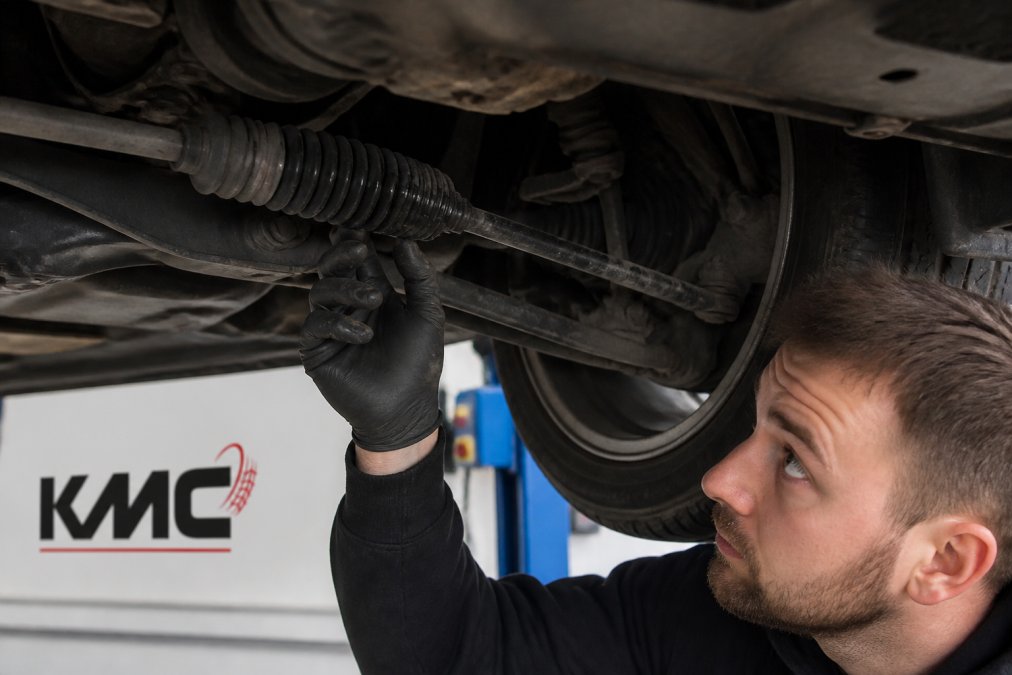
Inspect each boot along its full length with a torch, squeezing the rubber gently to open any hidden splits. Look for four things: splits, cracks, grease leaks and loose clips.
Start at the outer end near the track rod and work inwards. A healthy boot is supple, dry on the outside and fully pleated. Run your fingers along the ridges, flexing the rubber as you go. Small surface cracks are normal on older cars, but any split that goes through the rubber is a failure.
Grease on the outside of the boot is the clearest sign of trouble. The boot holds grease around the inner joint, so if grease is escaping, grit is getting in. Check the area around the boot for a dark, sticky film, and look at the inner tie rod itself for play by gripping it and trying to rock it.
Checking the Gaiter Clips and Seals
The clips matter as much as the rubber. A boot can be perfectly intact but still let water in if a clip has rusted through or worked loose.
Check both ends of each boot. The inner clip secures the boot to the rack housing, and the outer clip secures it to the track rod. Look for rust, missing clips and boots that have slipped out of position. A boot that has slid along the rod is doing nothing at all.
Grip each boot and twist it gently. It should feel firmly attached at both ends with no movement. If it rotates freely on the rack housing, the seal is compromised. Replace the clips, or the boot if the rubber is perished, before refitting the wheels.
Steering Rack Boot Replacement Tools You'll Need
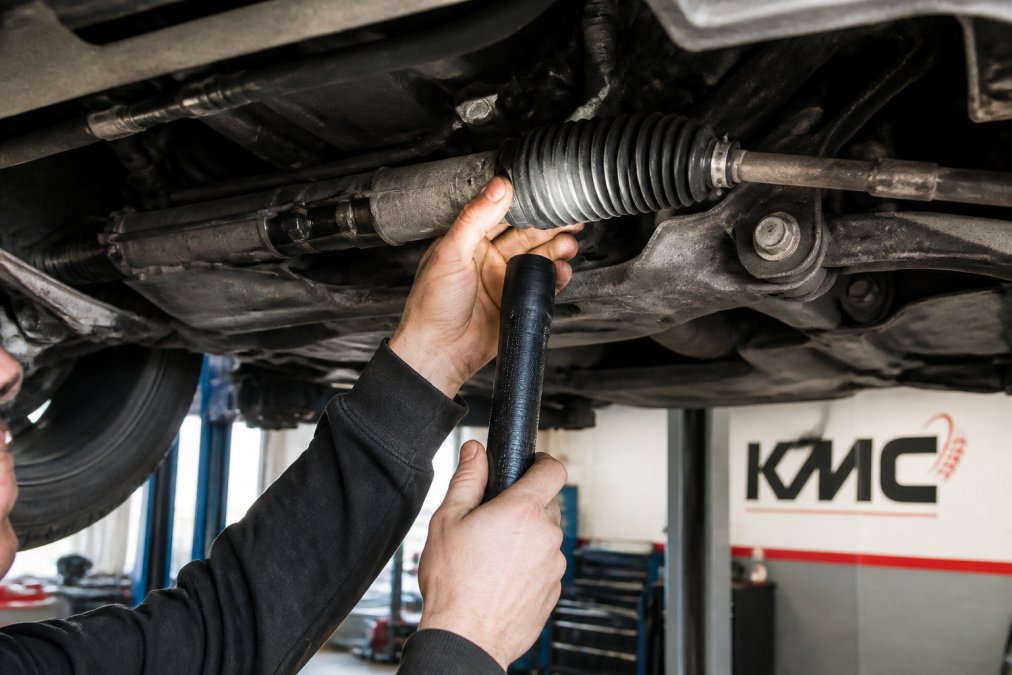
Steering rack boot replacement tools are mostly basic hand tools, though one or two items make the job far easier. The exact list depends on whether you're replacing just the boot or the inner track rod joint as well.
For a boot-only replacement, you'll need:
A ball joint splitter or a track rod end removal tool
A torque wrench
New gaiter clips, usually supplied with the boot kit
A pair of clip pliers or heavy-duty pincers
A grease pack for the inner joint
If the inner joint has play, the job grows. You'll need a tie rod removal tool and possibly a specialist socket for the inner joint. At that point, most owners hand the car over, because the tracking must be reset afterwards with proper alignment equipment.
A common mistake is reusing old clips. They're cheap, they corrode, and a failed clip undoes the whole repair. Always fit new ones.
If your car is a hybrid or electric model, the steering rack sits close to high-voltage cabling on some platforms. Our team at kmcelectric.co.uk handles hybrid and EV steering work with the correct isolation procedures, and you can book through Kettering Motorist Centre for the same standard of care.
Steering Rack Gaiter Replacement Cost UK: What to Expect
Steering rack gaiter replacement cost UK varies widely depending on the car and how much work the job involves. A boot kit itself is inexpensive, but labour dominates the bill because the rack area is awkward to reach.
Pricing depends on your make and model, whether one or both boots need replacing, and whether the inner joints have suffered damage. A split boot caught early is a straightforward job. A boot that has been split for months usually means a worn inner tie rod, and that changes the scope entirely.
We don't publish fixed prices, because quoting blind would be guesswork. What we do offer is a transparent process: bring the car in, we inspect it, and you get a clear explanation of what's needed before any work starts. No surprise bills, and no payment required when you book online.
For current pricing on steering and suspension repairs in Kettering, check our servicing pages or give us a call with your registration and we'll talk you through the options.
MOT Steering Component Failure: Why Boots Matter
MOT steering component failure is one of the most common reasons a car fails its test, and split rack boots sit high on the list. The MOT tests steering components for condition, security and function, and a perished or split gaiter counts against you (gov.uk).
The tester isn't being pedantic. A split boot allows water and grit into the inner joint, which accelerates wear on a component that directly affects your steering. A worn inner tie rod can cause vague steering, uneven tyre wear and, in the worst cases, loss of control.
Here's how the common boot faults map to what happens next:
Fault Found
Why It Matters
Typical Fix
Split or perished rubber
Grit and water reach the inner joint
Replace boot and clips
Grease leaking from boot
Seal already compromised
Replace boot, inspect joint
Loose or missing clip
Boot no longer seals
Fit new clips
Boot slipped along rod
No protection at all
Refit or replace boot
Play in inner tie rod
Joint worn beyond saving
Replace joint and boot
If your MOT is due, book it with us and we'll flag any steering issues clearly, with the work explained before we touch anything. No upfront payment is needed to reserve your slot.
Common Mistakes to Avoid When Checking Steering Rack Boots
The biggest mistake is checking the boot only in the straight-ahead position. Rubber splits open when it's stretched, so a boot that looks fine with the wheels straight can show an obvious split at full lock.
Other errors we see:
Confusing grease with an oil leak. Grease around the boot points to the boot itself. Engine oil contamination usually comes from above and rots the rubber over time.
Ignoring small cracks. Surface cracking on an older boot is a warning, not a pass. Rubber that has started to perish will split soon.
Reusing old clips. Covered above, and worth repeating. New clips every time.
Checking one side only. Both boots wear at similar rates, so if one is gone, inspect the other carefully.
Skipping the inner joint check. A new boot over a worn joint is money wasted.
Pro TipPhotograph both boots with your phone before you refit the wheels. If a split develops later, you'll have a clear record of what the rubber looked like, which helps when you're discussing the repair.
If you're not confident judging what you find, that's a sensible place to stop. Our technicians at Kettering Motorist Centre inspect steering and suspension as part of routine servicing, and we'll tell you honestly whether a boot needs replacing now or just watching.
A split steering rack boot is cheap to fix early and expensive to ignore, because the inner joint it protects wears quickly once grit gets in. If your inspection turns up anything more than light surface cracking, get it looked at before your next MOT. Kettering Motorist Centre offers expert diagnostic and repair services across Kettering, Northamptonshire and surrounding areas, with hassle-free online booking for MOTs and tyres and no payment required upfront. Book your MOT with us and let our team check your steering properly.
Frequently Asked Questions
What are the symptoms of a torn steering rack boot?
A torn steering rack boot often shows as grease leaking onto the inner wheel arch or nearby components. You may notice a knocking or clunking sound when turning, vague or loose steering feel, or an uneven wear pattern on the front tyres. In some cases, a torn boot triggers an advisory on your MOT. If you spot any of these signs, have the boots checked promptly to prevent dirt and water reaching the steering rack internals.
Can I drive with a damaged steering rack gaiter?
You can drive short distances with a damaged gaiter, but it is not advisable. Once the rubber is split, road grit and water enter the steering rack, accelerating wear on the internal gears and seals. This can lead to costly repairs or, in severe cases, loss of steering assistance. Book an inspection at Kettering Motorist Centre as soon as you notice damage. Early replacement is far cheaper than a full rack rebuild.
Why is it important to check steering rack boots during an MOT?
Steering rack boots are part of the MOT inspection because they protect critical steering components. A split or missing boot can result in an MOT steering component failure, leading to a fail or an advisory. The tester checks for security, condition and leaks. Keeping boots in good order helps your vehicle pass the MOT and maintains safe, predictable steering. KMC can check your boots as part of a routine service or pre-MOT inspection.
How much does it cost to replace a steering rack boot in the UK?
Steering rack gaiter replacement cost UK varies depending on your vehicle make, model and labour rates. The boot itself is usually inexpensive, but the labour involved in removing and refitting the rack or steering arms can add up. For an accurate quote, contact Kettering Motorist Centre with your registration. We provide transparent pricing before any work begins, so you know exactly what to expect.
Thank you for placing a booking with Kettering Motorist Centre Limited for vehicle
PLEASE TAKE YOUR BOOKING REFERENCE NUMBER WITH YOU TO THE MOT CENTRE
Your items
MOT Test
×
Terms and Conditions
These terms and conditions form the basis on which you can visit and use this website. Please read them carefully as they contain important information.
General terms and conditions
This website is owned and operated by Kettering Motorist Centre Ltd (company registration number: 4485858) operating at Trafalgar Road, Kettering, Northamptonshire, NN16 8DB (the "MOT Centre", the "Company", "we" or "us"). If you have any queries about these terms and conditions or if you have any comments or complaints on or about this website, you can contact us at [email protected] or 01536 410142.
The website is to promote and offer for sale the products and services of Kettering Motorist Centre Limited.
1. The contract between us
This website does not take payment for products or services online. The website enables you to view products and services online and to make a booking for later delivery and payment. The vehicle and provision of other products and services promoted by this website and the payment by you of the price of those products and services will take place at the MOT Centre. The booking does not constitute a contract.
The booking process on the site provides details of the booked MOT order. Please take the time to read and check your booking. It is your responsibility to make sure the order is correct and for the correct vehicle.
2. Ownership of rights
All rights, including copyright, in this website are owned by or licensed to the Company. Any use of this website or its contents, including copying or storing it or them in whole or part, other than for your own personal, non commercial use, is prohibited without our permission. You may not modify, distribute or repost anything on this website for any purpose.
3. Accuracy of content
We have taken care in the preparation of the content of this website, in particular to ensure that prices quoted are correct at the time of publishing and that all goods have been fairly described. However, bookings will only be accepted if there are no material errors in the description of the goods or their prices as advertised on this website. Any weights, dimensions and capacities given about the goods are approximate only.
4. Damage to your computer
We try to ensure that this website is free from viruses or defects. However, we cannot guarantee that your use of this website or any websites accessible through it will not cause damage to your computer. It is your responsibility to ensure that the right equipment is available to use the website. Except in the case of negligence on our part, we will not be liable to any person for any loss or damage which may arise to computer equipment as a result of using this website.
5. Availability
All bookings are subject to acceptance and availability. If the MOT date you have requested are is not available, the Centre will contact you by e-mail or phone. You will have the option either to wait until another slot is available or to cancel your booking.
6. Booking errors
You are able to correct errors on your booking up to the point on which you click on “Place Booking” during the booking process.
7. Price
The prices payable for goods that you order are as set out in our website. All prices are inclusive of VAT at the current rates and are correct at the time of entering information, errors and omissions excepted.
Whenever it is not possible to accept your booking to buy goods of the specification and description at the price indicated, the MOT Centre will advise you by email or phone or when you visit the centre.
8. Payment terms
You will be required to pay for the goods or services to the Centre at time of a completed MOT.
9. Delivery charges
N/A
10. Cancellation
The MOT Centre reserves the right to cancel the booking if:
10.1 There is insufficient stock to deliver the goods you have booked.
10.2 One or more of the goods you booked was listed at an incorrect price.
If your booking is cancelled the Centre will notify you by e-mail or phone.
You have the right to cancel your booking at any time up to the point of the MOT. If you do cancel your booking you should inform the centre by phone.
11. Liability
Notwithstanding the foregoing, nothing in these terms and conditions is intended to limit any rights you might have as a consumer under applicable local law or other statutory rights that may not be excluded nor in any way to exclude or limit our liability to you for any death or personal injury resulting from our negligence.
12. Notices
Unless otherwise expressly stated in these terms and conditions, all notices from you to us must be in writing and sent to our contact address given above and all notices from us to you will be displayed on our website from time to time.
13. Changes to legal notices
We reserve the right to change these terms and conditions from time to time and you should look through them as often as possible.
14. Law, jurisdiction and language
This website, any content contained therein and any contract brought into being as a result of usage of this website are governed by and construed in accordance with English law. Parties to any such contract agree to submit to the exclusive jurisdiction of the courts of England and Wales.
15. Invalidity
If any part of these terms and conditions is unenforceable (including any provision in which we exclude our liability to you) the enforceability of any other part of these conditions will not be affected.
16. Privacy
You acknowledge and agree to be bound by the terms of our privacy policy
17. Third party rights
Nothing in this Agreement is intended to, nor shall it confer any rights on a third party.