Diesel vs Petrol Car Service Intervals: Key Differences
Diesel engines operate under fundamentally different combustion conditions than petrol engines, directly impacting service frequency. Compression ignition in diesel engines generates higher temperatures and pressures, causing components to wear differently and demand more frequent attention to specific systems. Diesel engines typically require oil changes at shorter intervals than many petrol cars, though modern synthetic oils have changed this equation somewhat.
Why Diesel Engines Require Different Maintenance
Diesel engines demand specialized maintenance because compression ignition creates more soot and carbon buildup than spark-plug ignition in petrol engines. Higher combustion temperatures mean engine oil degrades more quickly, which is why diesel service intervals often fall between 10,000 and 15,000 miles, compared to 10,000 to 20,000 miles for many petrol engines. Diesel fuel contains more sulfur compounds, further accelerating oil degradation. The turbocharger standard on most modern diesel engines requires clean oil to function properly at extreme speeds.
Professional servicing is particularly important for diesel engines because diagnostic tools must specifically check diesel-related systems. Skipping scheduled maintenance on a diesel engine can lead to catastrophic engine damage costing thousands to repair.
Pro TipDiesel engines run hotter and dirtier than petrol engines, meaning oil degrades faster. Never extend diesel service intervals beyond manufacturer guidelines without consulting a professional mechanic.
Oil Change Frequency Differences
Many diesel cars require an oil change every 10,000 miles, while some petrol equivalents can stretch to 20,000 miles. Diesel engines produce more soot because combustion is less complete than in petrol engines, and this soot mixes with engine oil, reducing its protective qualities.
Modern synthetic oils have improved this picture. A quality synthetic diesel oil can sometimes extend intervals to 15,000 miles, whereas conventional mineral oils rarely exceed 10,000 miles safely. However, synthetic oils cost significantly more upfront, and you must verify with your vehicle's manual that synthetic oil is approved.
The fuel filter on a diesel engine also requires more frequent replacement than on a petrol car. Water contamination is a particular risk with diesel fuel, and if not replaced regularly, water reaches the fuel injectors and damages them. Most diesel vehicles need a fuel filter change every 20,000 to 30,000 miles, often coinciding with an oil change.
Cost of Diesel vs Petrol Maintenance: What to Expect
Diesel servicing typically costs more than petrol servicing. A basic diesel oil change and filter replacement might cost £80 to £120, while a petrol equivalent runs £60 to £90. However, diesel engines are built to last longer, many run reliably past 150,000 miles with proper maintenance, whereas petrol engines typically show significant wear by 120,000 miles. This durability can offset the higher per-service cost.
Modern diesel engines include a Diesel Particulate Filter (DPF) and selective catalytic reduction (SCR) systems to meet environmental standards. A DPF regeneration service costs £150 to £300, and replacing a blocked DPF can exceed £1,000. Petrol cars with catalytic converters face similar costs, but the risk of failure is lower with proper maintenance.
Key TakeawayDiesel servicing costs more per service, but diesel engines last longer and consume less fuel. The real cost difference depends on how long you keep the vehicle and how well you maintain it.
Long-term Maintenance Cost Comparison
A diesel car typically costs more to service per visit but requires fewer repairs due to strong engine design. Diesel engines suffer from short-trip driving, where the engine doesn't reach full operating temperature. If you drive primarily short urban routes, a petrol car may prove more economical. However, if you regularly take longer journeys, the diesel's superior fuel economy and durability make it the better investment.
Warranty compliance is critical for both diesel and petrol cars. Skipping a service, even by 1,000 miles, can void warranty claims. For diesel engines, this is particularly critical because warranty claims on emissions systems are expensive. Keeping detailed service records protects you if a component fails unexpectedly.
Common Diesel Engine Components: DPF and Glow Plugs
The Diesel Particulate Filter (DPF) traps soot particles from the exhaust and periodically burns them off in a process called regeneration. Passive regeneration happens automatically during driving at high temperatures, but if you drive mostly short distances, active regeneration is needed. If regeneration fails repeatedly, the DPF becomes blocked, triggering a warning light and reduced engine power.
Glow plugs preheat the combustion chamber before the engine starts, essential for cold-start reliability in diesel engines. They typically last 80,000 to 100,000 miles. A faulty glow plug causes hard starting and rough idle, especially in winter. Replacing a set of glow plugs costs £150 to £400 depending on the engine.
Watch OutIgnoring DPF warning lights or attempting to disable the DPF system voids your warranty and damages the emissions system. Professional regeneration or replacement is the only safe option.
Factors Affecting Car Service Intervals
Service intervals aren't fixed; they're influenced by driving patterns, vehicle age, and fuel quality.
Manufacturer Recommendations vs Real-world Usage
Your vehicle's handbook specifies service intervals based on ideal conditions. Most modern cars recommend servicing every 12 months or 10,000 miles, whichever comes first. However, severe driving conditions, towing, frequent short trips, dusty environments, or extreme temperatures, shorten component life. Manufacturers often publish a separate severe-duty schedule recommending servicing every 5,000 to 7,500 miles for these conditions.
Short-trip driving particularly affects diesel engines. Each cold start produces excess soot because the engine doesn't reach full operating temperature. If your daily commute is under 10 miles, you should service your diesel engine 3,000 to 5,000 miles earlier than the handbook suggests.
Professional mechanics assess your specific driving patterns and recommend appropriate intervals. Using diagnostic tools, they can check oil condition and engine wear to determine if you need earlier servicing.
Short-trip vs Long-haul Impact
A driver making daily 5-mile commutes accumulates far more soot and moisture in the oil than someone doing 50-mile journeys. Short-trip driving prevents the engine from reaching optimal operating temperature, leaving excess soot in the oil and moisture in the fuel tank.
Long-haul driving is gentler on diesel engines because the engine reaches full temperature and maintains it. A driver doing regular 200-mile motorway trips can often extend service intervals to 15,000 miles without risk, whereas a short-trip driver should stick to 10,000 miles.
Diesel Particulate Filter Maintenance: Essential Care
The DPF works by trapping fine soot particles in a ceramic filter. When soot accumulation reaches about 45% of the filter's capacity, the engine management system triggers regeneration. During regeneration, the exhaust temperature rises to 600-700°C, burning the trapped soot to ash.
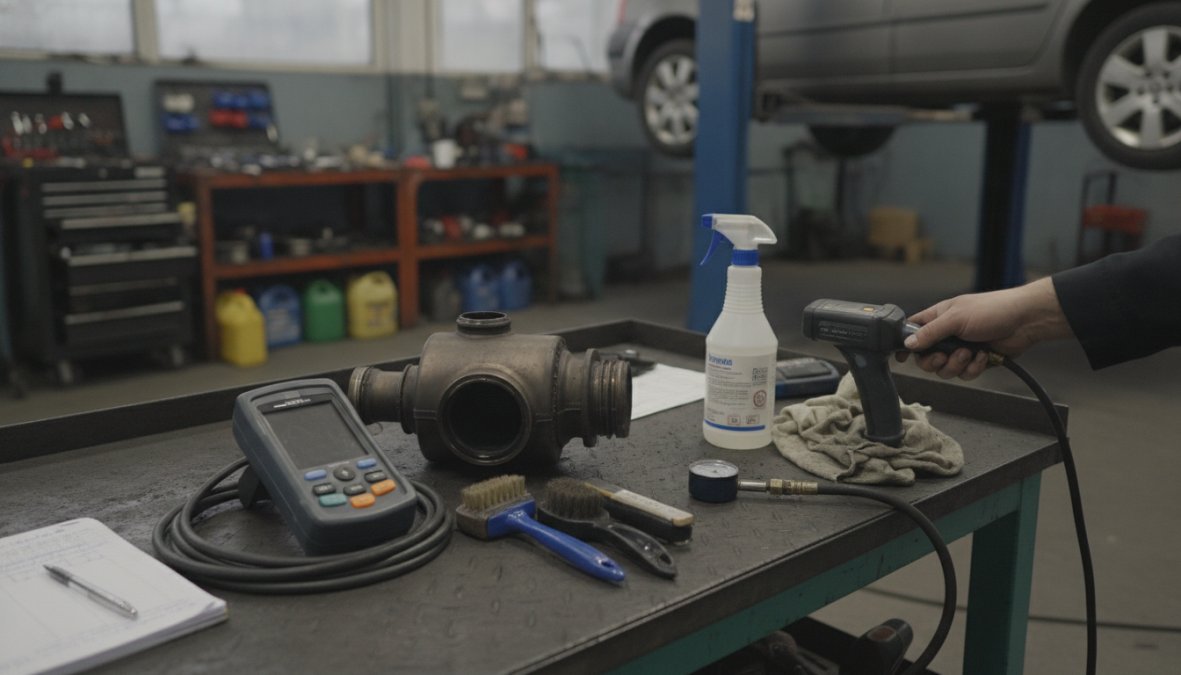
Software tools interface for diagnostic and skilled and mechanic concepts for diesel vs petrol car service intervals
Passive regeneration is silent and invisible. However, if you never drive at sustained high speeds, passive regeneration doesn't occur. The DPF gradually fills with soot until the engine management system forces active regeneration. You'll notice active regeneration as a slight increase in fuel consumption and a hot smell from the exhaust. The process takes 10 to 20 minutes and is completely normal.
A blocked DPF triggers a warning light and limp-home mode, reducing engine power. At this point, professional intervention is essential. A professional garage uses specialized equipment to monitor regeneration and ensure it completes safely. This service costs £150 to £300. If the DPF is damaged beyond regeneration, replacement costs £800 to £2,000.
Prevention is far cheaper than cure. To keep your DPF healthy, take regular longer drives, at least one 30-minute motorway trip weekly. Avoid turning off the engine during active regeneration. Use quality diesel fuel and keep your oil and fuel filters clean.
Pro TipNever disable your DPF or attempt "DPF delete" modifications. This is illegal, damages the environment, and can result in your vehicle failing its MOT. Professional regeneration is the correct solution.
Signs Your Car Needs Servicing
Your car communicates when it needs attention through warning lights, sounds, and performance changes.
Engine Warning Lights and Diagnostic Tools
The engine management light indicates a fault detected by the engine computer. Never ignore this light; have it diagnosed professionally using a diagnostic scanner.
The diesel particulate filter warning light signals that soot accumulation is high. This is your cue to drive at sustained high speed to trigger passive regeneration. If you ignore this light, active regeneration will be forced, and if that fails, the DPF blocks.
The glow plug light indicates the glow plugs are warming up before starting, normal on cold mornings. However, if this light stays on while driving or flashes, a glow plug has failed.
Oil pressure warning lights indicate low oil pressure, a serious problem requiring immediate attention. Stop driving and check your oil level.
Beyond warning lights, listen to your engine. A diesel engine should sound like a steady, rhythmic heartbeat. Knocking sounds, grinding noises, or rattles suggest mechanical problems. Difficulty starting, especially in cold weather, points to glow plug or fuel system issues.
Diagnostic tools read the engine computer's fault codes, revealing problems that warning lights haven't yet triggered. A professional diagnostic scan costs £40 to £80 and can save thousands by catching problems early.
Modern Synthetic Oil Technology and Engine Longevity
Synthetic oils represent a revolution in engine protection, particularly beneficial for diesel engines operating under stress.
Synthetic vs Conventional: Viscosity and Performance
Conventional mineral oil is refined from crude oil and breaks down quickly under heat. Synthetic oil is engineered with uniform molecular structures, designed to resist breakdown and maintain viscosity across temperature ranges.
A synthetic diesel oil typically lasts 15,000 miles between changes, compared to 10,000 miles for conventional oil. Engines using synthetic oil show less wear in laboratory tests. Fuel economy improves slightly because synthetic oil reduces internal friction.
However, synthetic oil costs roughly double the price of conventional oil. A synthetic oil change costs £100 to £150 versus £60 to £90 for conventional. For a diesel engine driven 15,000 miles annually, synthetic oil means one fewer oil change per year, a saving of £50 to £60 annually.
Your vehicle's manual specifies which oil type is approved. Never use a lower specification than recommended, as it voids your warranty and risks engine damage.
Oil Type
Change Interval
Cost per Change
Annual Cost (15K miles)
Conventional Mineral
10,000 miles
£60-£90
£90-£135
Semi-Synthetic
12,000 miles
£75-£110
£90-£137
Full Synthetic
15,000 miles
£100-£150
£100-£150
DIY vs Professional Servicing: What You Need to Know
If your vehicle is under manufacturer warranty, professional servicing is mandatory. Warranty terms explicitly require servicing by approved garages using approved parts and procedures. DIY servicing, even if done perfectly, voids coverage.
Once warranty expires, DIY servicing becomes viable if you have mechanical skill and proper equipment. However, most diesel maintenance requires specialist tools. An oil change is straightforward, but a fuel filter change requires depressurizing the fuel system safely. A glow plug replacement needs access to tight engine spaces and knowledge of correct torque specifications.
The service logbook is your proof of maintenance. Every service must be recorded with the date, mileage, work performed, and parts replaced. This record is essential if you sell the vehicle, as buyers verify service history to assess reliability. It's also critical for warranty claims.
Watch OutSkipping even one scheduled service can void your warranty for that component and subsequent failures. [The cost](/blog/is-a-full-service-worth-the-cost) of professional servicing is negligible compared to the risk of warranty loss.
Conclusion: Maintaining Your Diesel or Petrol Engine
Diesel and petrol engines have fundamentally different maintenance needs. Diesel engines require more frequent servicing, specialist attention to the DPF, and careful monitoring of fuel quality. The right approach depends on your vehicle type, driving patterns, and warranty status.
Short-trip drivers benefit from professional servicing every 10,000 miles; long-haul drivers can safely extend to 15,000 miles. Synthetic oil extends intervals but costs more. DPF maintenance is non-negotiable for diesel owners, as ignoring it leads to expensive failures.
Which? guide to car servicing costs and intervals for different fuel types
Department for Transport regulations on emissions systems and DPF maintenance
Whether your vehicle is diesel or petrol, professional servicing protects your investment and keeps you safe on the road.
Frequently Asked Questions
Do diesel cars need more frequent servicing than petrol cars?
No, diesel cars typically require servicing at longer intervals than petrol cars, often every 10,000 to 15,000 miles compared to 6,000 to 10,000 miles for petrol engines. However, diesel service intervals can be more demanding in terms of component replacement, particularly for the diesel particulate filter and fuel injectors. Always follow your manufacturer's guidelines in your service logbook to maintain warranty compliance and engine longevity.
What is the cost of diesel vs petrol maintenance over a car's lifetime?
Diesel maintenance costs are typically higher per service due to specialist components like DPF cleaning and turbocharger servicing. However, because diesel cars need servicing less frequently, total annual costs may be comparable. Synthetic oil used in many modern diesels costs more upfront but extends engine oil degradation intervals. Factor in fuel efficiency gains when calculating long-term ownership costs, diesels often deliver better fuel economy on motorway driving.
How does driving style affect diesel vs petrol service intervals?
Short-trip, low-speed driving significantly impacts diesel engines more than petrol cars. Diesel engines struggle to reach optimal combustion temperatures on short journeys, causing soot accumulation in the DPF and accelerating engine wear. Petrol engines are more forgiving of varied driving patterns. Regular long-haul driving on motorways keeps both engine types in better condition. If you primarily do short trips, you may need more frequent servicing regardless of fuel type.
Why do diesel engines have different service intervals and maintenance needs?
Diesel engines operate using compression ignition rather than spark plugs, creating higher combustion pressures and temperatures. This demands stronger components, thicker engine oil with specific viscosity ratings, more robust fuel injectors, and glow plugs for cold starts. Diesel engines also produce soot that accumulates in the DPF, requiring periodic regeneration. These fundamental differences in the combustion process mean diesel servicing focuses on emissions system maintenance and fuel system care that petrol cars don't require.
What happens if you miss a car service interval?
Missing service intervals risks engine oil degradation, increased wear on turbochargers and fuel injectors, and DPF blockages in diesel cars. Your warranty may be invalidated if you don't maintain service logbook records. Engine performance deteriorates, fuel efficiency drops, and emissions increase. Professional servicing at the correct mileage-based or time-based intervals, whichever comes first, is essential for maintaining your vehicle's reliability and resale value.
Your booking Failed
Please try again or please call 01536 410142
Thank you for placing a booking with Kettering Motorist Centre Limited for vehicle
PLEASE TAKE YOUR BOOKING REFERENCE NUMBER WITH YOU TO THE MOT CENTRE
Your items
MOT Test
×
Terms and Conditions
These terms and conditions form the basis on which you can visit and use this website. Please read them carefully as they contain important information.
General terms and conditions
This website is owned and operated by Kettering Motorist Centre Ltd (company registration number: 4485858) operating at Trafalgar Road, Kettering, Northamptonshire, NN16 8DB (the "MOT Centre", the "Company", "we" or "us"). If you have any queries about these terms and conditions or if you have any comments or complaints on or about this website, you can contact us at [email protected] or 01536 410142.
The website is to promote and offer for sale the products and services of Kettering Motorist Centre Limited.
1. The contract between us
This website does not take payment for products or services online. The website enables you to view products and services online and to make a booking for later delivery and payment. The vehicle and provision of other products and services promoted by this website and the payment by you of the price of those products and services will take place at the MOT Centre. The booking does not constitute a contract.
The booking process on the site provides details of the booked MOT order. Please take the time to read and check your booking. It is your responsibility to make sure the order is correct and for the correct vehicle.
2. Ownership of rights
All rights, including copyright, in this website are owned by or licensed to the Company. Any use of this website or its contents, including copying or storing it or them in whole or part, other than for your own personal, non commercial use, is prohibited without our permission. You may not modify, distribute or repost anything on this website for any purpose.
3. Accuracy of content
We have taken care in the preparation of the content of this website, in particular to ensure that prices quoted are correct at the time of publishing and that all goods have been fairly described. However, bookings will only be accepted if there are no material errors in the description of the goods or their prices as advertised on this website. Any weights, dimensions and capacities given about the goods are approximate only.
4. Damage to your computer
We try to ensure that this website is free from viruses or defects. However, we cannot guarantee that your use of this website or any websites accessible through it will not cause damage to your computer. It is your responsibility to ensure that the right equipment is available to use the website. Except in the case of negligence on our part, we will not be liable to any person for any loss or damage which may arise to computer equipment as a result of using this website.
5. Availability
All bookings are subject to acceptance and availability. If the MOT date you have requested are is not available, the Centre will contact you by e-mail or phone. You will have the option either to wait until another slot is available or to cancel your booking.
6. Booking errors
You are able to correct errors on your booking up to the point on which you click on “Place Booking” during the booking process.
7. Price
The prices payable for goods that you order are as set out in our website. All prices are inclusive of VAT at the current rates and are correct at the time of entering information, errors and omissions excepted.
Whenever it is not possible to accept your booking to buy goods of the specification and description at the price indicated, the MOT Centre will advise you by email or phone or when you visit the centre.
8. Payment terms
You will be required to pay for the goods or services to the Centre at time of a completed MOT.
9. Delivery charges
N/A
10. Cancellation
The MOT Centre reserves the right to cancel the booking if:
10.1 There is insufficient stock to deliver the goods you have booked.
10.2 One or more of the goods you booked was listed at an incorrect price.
If your booking is cancelled the Centre will notify you by e-mail or phone.
You have the right to cancel your booking at any time up to the point of the MOT. If you do cancel your booking you should inform the centre by phone.
11. Liability
Notwithstanding the foregoing, nothing in these terms and conditions is intended to limit any rights you might have as a consumer under applicable local law or other statutory rights that may not be excluded nor in any way to exclude or limit our liability to you for any death or personal injury resulting from our negligence.
12. Notices
Unless otherwise expressly stated in these terms and conditions, all notices from you to us must be in writing and sent to our contact address given above and all notices from us to you will be displayed on our website from time to time.
13. Changes to legal notices
We reserve the right to change these terms and conditions from time to time and you should look through them as often as possible.
14. Law, jurisdiction and language
This website, any content contained therein and any contract brought into being as a result of usage of this website are governed by and construed in accordance with English law. Parties to any such contract agree to submit to the exclusive jurisdiction of the courts of England and Wales.
15. Invalidity
If any part of these terms and conditions is unenforceable (including any provision in which we exclude our liability to you) the enforceability of any other part of these conditions will not be affected.
16. Privacy
You acknowledge and agree to be bound by the terms of our privacy policy
17. Third party rights
Nothing in this Agreement is intended to, nor shall it confer any rights on a third party.