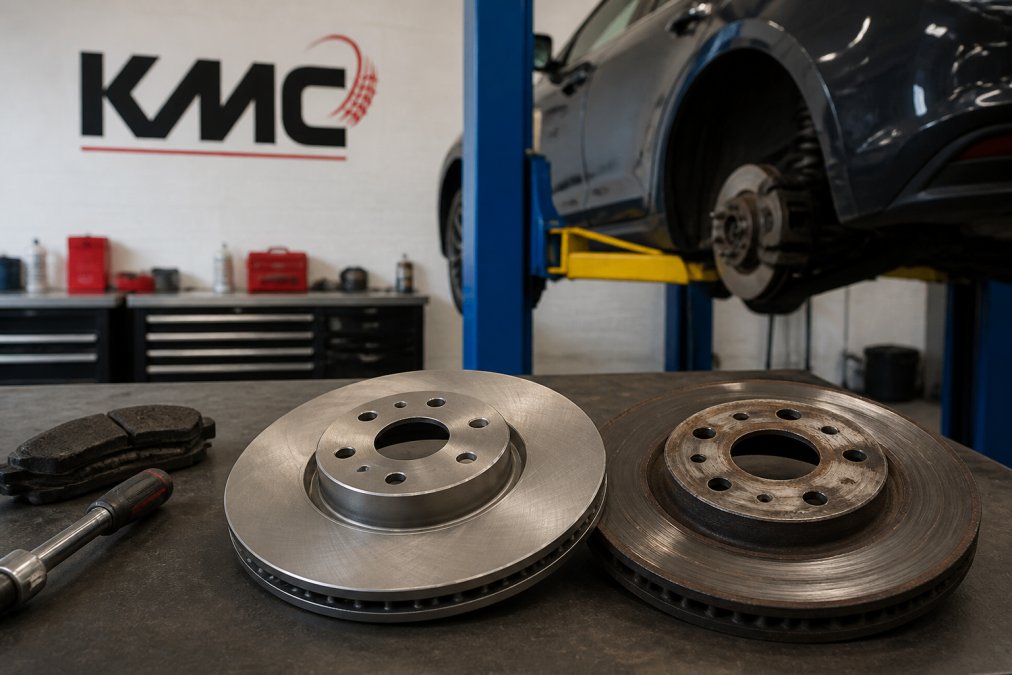
The lifespan of your brake discs depends on several factors, but most vehicles see their discs last between 40,000 and 80,000 miles before replacement becomes necessary. Some drivers manage longer intervals; others need replacements sooner. Understanding what influences brake disc longevity helps you plan maintenance and avoid unexpected failures on the road.
At Kettering Motorist Centre, we assess brake disc condition during routine MOT testing and vehicle servicing. The brake system is one of the most critical safety components on your car, and worn discs compromise stopping power, increase braking distances, and can damage other brake components like pads and calipers.
Several variables affect how quickly your brake discs wear. Driving habits, vehicle weight, local road conditions, and the quality of your brake pads all play a role. A driver who brakes gently and avoids heavy traffic may see discs last significantly longer than someone who commutes through congested urban areas or drives in hilly terrain where constant braking is unavoidable.
The average lifespan of brake discs varies considerably across different driving patterns. Motorway driving, which involves lighter, less frequent braking, typically extends disc life. City driving in heavy traffic accelerates wear because repeated hard braking generates more heat and friction. If you're based in Kettering or surrounding areas in Northamptonshire, your driving environment, whether you're navigating town centres or motorway commutes, directly affects how often you'll need replacement discs.
Pro TipCheck your brake discs during your annual MOT or routine service appointment. Early detection of wear prevents more expensive repairs to your entire brake system.
Signs of Worn Brake Discs
Visual and Audible Warning Signs
Worn brake discs produce several clear warning signals that drivers shouldn't ignore. The most obvious is a high-pitched squealing or grinding noise when you apply the brakes. This sound indicates that your brake pads have worn through their friction material and are now metal-on-metal with the disc itself, a situation that demands immediate attention.
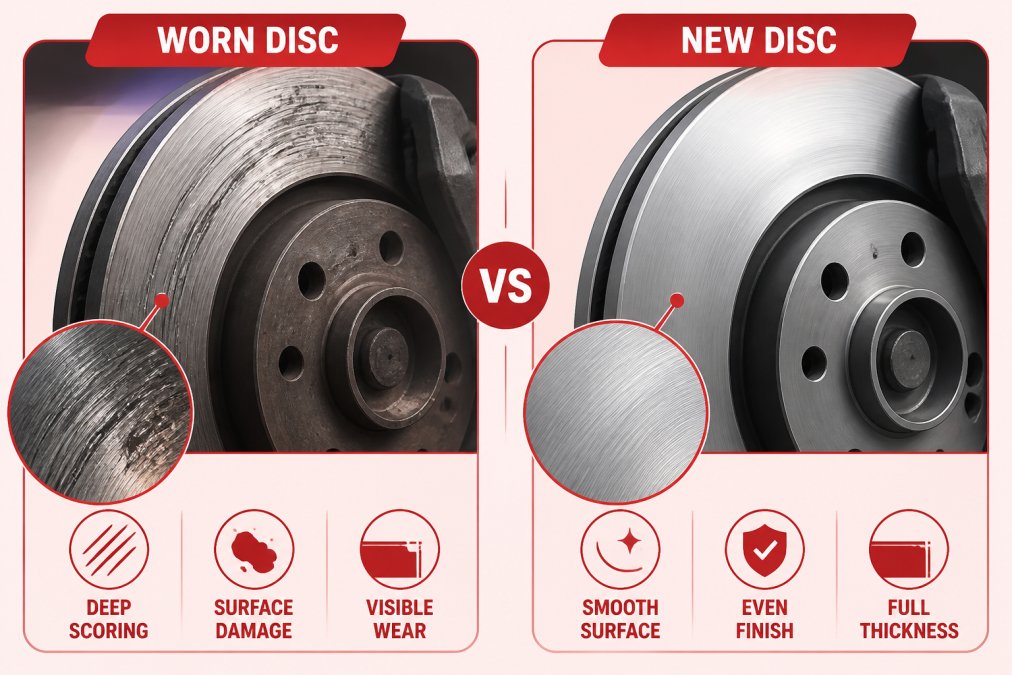
Visual inspection reveals additional clues. If you look through your vehicle's wheel spokes, a severely worn disc appears thinner than normal and may show deep grooves or scoring across its surface. Some discs develop cracks radiating from the centre, particularly if they've been subjected to intense braking or overheating. These cracks compromise structural integrity and create a serious safety hazard.
Another warning sign is brake dust accumulation on your wheels. While some brake dust is normal, excessive amounts suggest accelerated wear. The dust itself is abrasive material shed from both pads and discs, so heavy accumulation points to active, rapid deterioration.
Performance Changes You'll Notice
Before noise or visible damage appears, your brakes may feel different. A spongy or soft brake pedal that requires more pressure than usual suggests wear in the brake system. If your car pulls to one side when braking, this often indicates uneven disc wear, one disc is thinner or more damaged than the other, creating imbalanced stopping force.
Increased braking distance is a critical warning sign. If you notice your car takes longer to stop from the same speed, especially under normal braking conditions, worn discs are a likely culprit. This performance change is particularly noticeable in wet conditions, where worn discs lose their ability to grip effectively.
Vibration through the brake pedal or steering wheel during braking indicates disc warping or severe scoring. This sensation signals that the disc surface is no longer smooth and uniform, preventing consistent contact with the brake pads. If you experience this vibration, have your brakes inspected immediately, continued driving with warped discs damages pads faster and can compromise safety.
Watch OutIgnoring brake warning signs puts you and other road users at risk. Worn brakes increase stopping distances significantly, especially in emergency situations. Schedule an inspection at Kettering Motorist Centre if you notice any of these symptoms.
Factors That Affect Brake Disc Wear
Driving Habits and Road Conditions
How you drive shapes how quickly your brakes wear. Aggressive braking, sudden, hard stops from high speeds, generates extreme heat and friction, accelerating disc deterioration. Drivers who anticipate stops and brake gradually extend their disc lifespan considerably. Coasting to red lights, maintaining steady speeds, and avoiding unnecessary hard braking all reduce wear.
The terrain you drive through matters significantly. Hilly or mountainous areas require constant braking on descents, which heats discs repeatedly and accelerates wear. Drivers in Kettering and the surrounding Northamptonshire region who regularly navigate undulating roads experience faster disc wear than those on flatter routes. Urban driving with frequent stop-start traffic also shortens disc life compared to motorway driving, where braking is lighter and less frequent.
Weather conditions influence disc performance. Wet or icy roads reduce friction between pads and discs, requiring longer braking distances and more forceful brake application. This increases heat generation and accelerates wear. Salt on winter roads also corrodes disc surfaces, weakening them structurally over time.
Vehicle Type and Weight
Heavier vehicles place greater demand on braking systems. A large SUV or van requires more braking force to stop than a small hatchback, which means its discs experience greater stress and wear faster. The relationship between vehicle mass and brake wear is direct: the heavier the car, the shorter the typical disc lifespan.
Brake system design varies between vehicles. Some cars have larger, higher-quality discs engineered to dissipate heat more efficiently, extending their life. Performance vehicles with sport braking systems often use harder disc materials that wear slower but cost more to replace. Standard family cars typically have more basic brake systems with discs that wear at a moderate rate.
Towing capacity also affects brake wear. If you regularly tow a caravan or trailer, your brakes work harder, generating more heat and wearing faster. The combined weight of vehicle plus load increases stopping demands significantly.
Key TakeawayDriving style is the single biggest factor you can control. Smooth, anticipatory braking extends brake disc life far more than any other factor.
How to Check Brake Disc Condition
You don't need specialist equipment to assess your brake discs visually. Park on level ground and look through your vehicle's wheel spokes. A healthy disc appears smooth, uniform in thickness, and has a dark grey or black surface. Measure the thickness if you have a ruler, most discs are 10-12mm thick when new. If yours appear noticeably thinner or show visible grooves and scoring, replacement is overdue.
Listen to your brakes during normal driving. A smooth, quiet stop indicates healthy discs. Any squealing, grinding, or metallic noise warrants professional inspection. Some vehicles have wear indicators, small tabs of metal attached to the brake pad that contact the disc and produce noise when pads reach their wear limit. This noise is an intentional warning signal designed to alert you before pads damage the disc.
The most reliable assessment comes from a professional inspection. During an MOT test or routine service, technicians at Kettering Motorist Centre use calibrated tools to measure disc thickness accurately and check for warping, cracks, and scoring. We can identify wear that's not yet visible to the naked eye and recommend replacement before safety becomes compromised.
Don't rely solely on visual checks if you're unsure. Brake system safety is too important for guesswork. A professional diagnostic check costs far less than the damage caused by driving on severely worn discs, which can damage calipers, wheel cylinders, and other expensive components.
Electric Vehicle Brake Maintenance
Electric vehicles operate differently from conventional petrol and diesel cars, which fundamentally changes how their brakes wear. EVs use regenerative braking, a system that captures kinetic energy during deceleration and converts it back into battery charge. This means the friction brakes are used far less frequently than in traditional vehicles.
Because regenerative braking handles most deceleration, EV brake discs typically last significantly longer than those in conventional cars. Many EV owners report brake disc lifespan extending to 100,000 miles or beyond. However, regenerative braking doesn't eliminate the need for friction brakes entirely, they're still essential for emergency stops and situations where regeneration alone can't slow the vehicle sufficiently.
The reduced brake usage in EVs creates a different maintenance challenge: discs can corrode from inactivity. Moisture accumulation and salt exposure can weaken disc material even when they're not being used heavily.
Brake Disc Maintenance and Replacement Schedule
Regular maintenance extends brake disc lifespan and prevents unexpected failures. Your MOT test includes brake system assessment, but don't wait for annual testing to address brake issues. If you notice any warning signs, noise, reduced stopping power, or vibration, schedule an inspection immediately.
Maintenance Task
Frequency
Typical Lifespan
Brake fluid flush
Every 2 years
Maintains system integrity
Brake pad replacement
25,000-50,000 miles
Protects discs from damage
Brake disc inspection
Annual MOT or service
Early wear detection
Brake disc replacement
40,000-80,000 miles
Depends on driving habits
Frequently Asked Questions
How many miles should brake discs last on UK roads?
Brake disc lifespan typically ranges from 40,000 to 80,000 miles, though this varies significantly based on driving style, road conditions, and vehicle type. Urban drivers with frequent braking may see shorter lifespan, while motorway commuters often achieve higher mileage. Regular inspection helps identify wear before reaching these limits. Book an MOT with Kettering Motorist Centre to have your brake discs professionally assessed.
What are the common signs that brake discs need replacing?
Key warning signs include grinding or squealing noises when braking, a soft or spongy brake pedal, visible wear on the disc surface, and increased stopping distance. Some vehicles have brake wear sensors that trigger warning lights on the dashboard. If you notice any of these signs, arrange a brake inspection immediately. Kettering Motorist Centre offers expert brake diagnostics to assess your disc condition.
Do electric vehicles have different brake disc wear patterns?
Yes. Electric vehicles use regenerative braking, which captures energy during deceleration and reduces reliance on friction brakes. This means brake discs on EVs typically wear more slowly than on conventional petrol or diesel vehicles. However, regular maintenance and inspection remain essential. For specialist electric vehicle brake maintenance, Kettering Motorist Centre and our sister site kmcelectric.co.uk provide expert servicing tailored to EV requirements.
Can driving style affect the lifespan of my brake discs?
Absolutely. Aggressive braking, frequent heavy stops, and riding the brakes causes faster wear than smooth, anticipatory braking. Motorway driving with steady speeds extends disc life, while urban stop-start traffic reduces it significantly. Additionally, towing and carrying heavy loads increases brake wear. Adopting gentler braking habits and regular maintenance checks help maximise brake disc lifespan and safety.
Thank you for placing a booking with Kettering Motorist Centre Limited for vehicle
PLEASE TAKE YOUR BOOKING REFERENCE NUMBER WITH YOU TO THE MOT CENTRE
Your items
MOT Test
×
Terms and Conditions
These terms and conditions form the basis on which you can visit and use this website. Please read them carefully as they contain important information.
General terms and conditions
This website is owned and operated by Kettering Motorist Centre Ltd (company registration number: 4485858) operating at Trafalgar Road, Kettering, Northamptonshire, NN16 8DB (the "MOT Centre", the "Company", "we" or "us"). If you have any queries about these terms and conditions or if you have any comments or complaints on or about this website, you can contact us at [email protected] or 01536 410142.
The website is to promote and offer for sale the products and services of Kettering Motorist Centre Limited.
1. The contract between us
This website does not take payment for products or services online. The website enables you to view products and services online and to make a booking for later delivery and payment. The vehicle and provision of other products and services promoted by this website and the payment by you of the price of those products and services will take place at the MOT Centre. The booking does not constitute a contract.
The booking process on the site provides details of the booked MOT order. Please take the time to read and check your booking. It is your responsibility to make sure the order is correct and for the correct vehicle.
2. Ownership of rights
All rights, including copyright, in this website are owned by or licensed to the Company. Any use of this website or its contents, including copying or storing it or them in whole or part, other than for your own personal, non commercial use, is prohibited without our permission. You may not modify, distribute or repost anything on this website for any purpose.
3. Accuracy of content
We have taken care in the preparation of the content of this website, in particular to ensure that prices quoted are correct at the time of publishing and that all goods have been fairly described. However, bookings will only be accepted if there are no material errors in the description of the goods or their prices as advertised on this website. Any weights, dimensions and capacities given about the goods are approximate only.
4. Damage to your computer
We try to ensure that this website is free from viruses or defects. However, we cannot guarantee that your use of this website or any websites accessible through it will not cause damage to your computer. It is your responsibility to ensure that the right equipment is available to use the website. Except in the case of negligence on our part, we will not be liable to any person for any loss or damage which may arise to computer equipment as a result of using this website.
5. Availability
All bookings are subject to acceptance and availability. If the MOT date you have requested are is not available, the Centre will contact you by e-mail or phone. You will have the option either to wait until another slot is available or to cancel your booking.
6. Booking errors
You are able to correct errors on your booking up to the point on which you click on “Place Booking” during the booking process.
7. Price
The prices payable for goods that you order are as set out in our website. All prices are inclusive of VAT at the current rates and are correct at the time of entering information, errors and omissions excepted.
Whenever it is not possible to accept your booking to buy goods of the specification and description at the price indicated, the MOT Centre will advise you by email or phone or when you visit the centre.
8. Payment terms
You will be required to pay for the goods or services to the Centre at time of a completed MOT.
9. Delivery charges
N/A
10. Cancellation
The MOT Centre reserves the right to cancel the booking if:
10.1 There is insufficient stock to deliver the goods you have booked.
10.2 One or more of the goods you booked was listed at an incorrect price.
If your booking is cancelled the Centre will notify you by e-mail or phone.
You have the right to cancel your booking at any time up to the point of the MOT. If you do cancel your booking you should inform the centre by phone.
11. Liability
Notwithstanding the foregoing, nothing in these terms and conditions is intended to limit any rights you might have as a consumer under applicable local law or other statutory rights that may not be excluded nor in any way to exclude or limit our liability to you for any death or personal injury resulting from our negligence.
12. Notices
Unless otherwise expressly stated in these terms and conditions, all notices from you to us must be in writing and sent to our contact address given above and all notices from us to you will be displayed on our website from time to time.
13. Changes to legal notices
We reserve the right to change these terms and conditions from time to time and you should look through them as often as possible.
14. Law, jurisdiction and language
This website, any content contained therein and any contract brought into being as a result of usage of this website are governed by and construed in accordance with English law. Parties to any such contract agree to submit to the exclusive jurisdiction of the courts of England and Wales.
15. Invalidity
If any part of these terms and conditions is unenforceable (including any provision in which we exclude our liability to you) the enforceability of any other part of these conditions will not be affected.
16. Privacy
You acknowledge and agree to be bound by the terms of our privacy policy
17. Third party rights
Nothing in this Agreement is intended to, nor shall it confer any rights on a third party.