Winter exposes every weakness in your vehicle's systems. Cold, salt, and ice create conditions that demand preparation. This guide from Kettering Motorist Centre covers the 5 best winter car check tips for beginners, essential checks that keep you safe when temperatures drop below freezing.
Most drivers wait until something breaks to think about winter maintenance. By then, you're stranded on a motorway or facing expensive emergency repairs. The good news: these five checks take less than an hour and require only basic tools.
(/how-to-check-tyre-pressure) Battery Health and Cold Cranking Performance]
1. Check Your Battery Health and Cold Cranking Performance
Your battery works harder in winter. Cold reduces its ability to generate the electrical current needed to start your engine. A battery that works fine in July might fail completely in January.
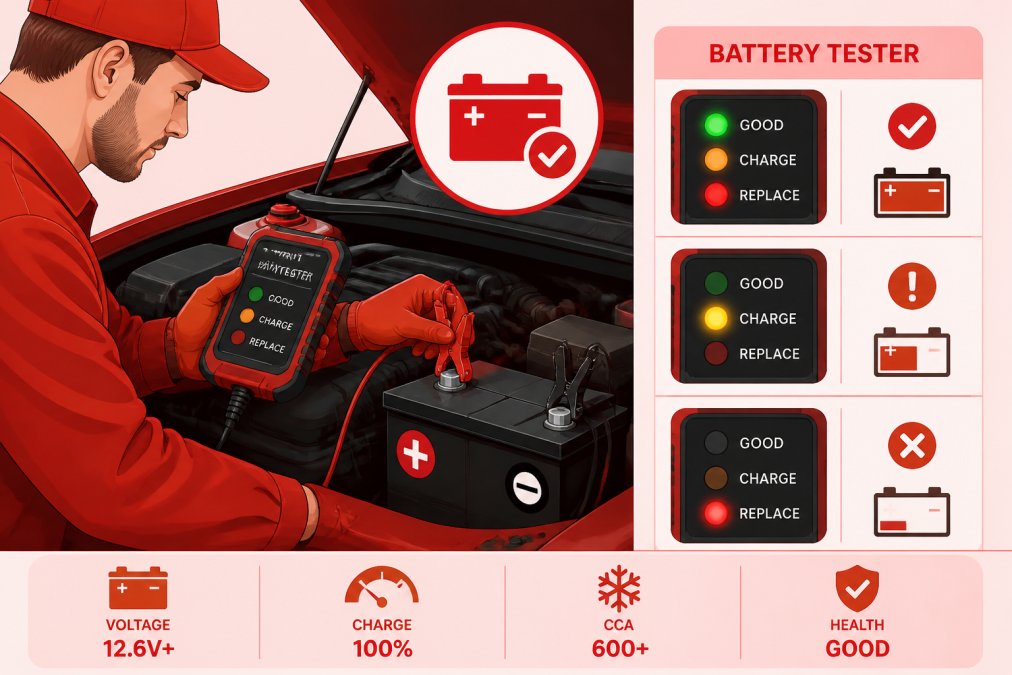
A simple LED battery tester (around £19) clips onto your battery terminals and shows whether your battery is in good shape or struggling. Green light means you're fine; red or amber means replacement is coming soon. Look for corrosion on the battery terminals, white, blue, or green crusty deposits indicate leaking or corroding. Clean these off with a mixture of baking soda and water, then dry thoroughly.
Cold cranking amps (CCA) measures how much electrical power your battery can deliver when starting in freezing conditions. Your car's manual states the correct CCA rating. If your battery is original and your car is over four years old, replacement before winter is sensible.
When to seek professional help
If your battery tester shows poor condition, or if you notice the car struggling to start even in mild weather, visit Kettering Motorist Centre for a professional battery check(https://www.ketteringmotoristcentre.co.uk). The team can test your alternator (which charges the battery while driving) and identify whether the problem is the battery itself or the charging system.
Pro TipKeep your battery terminals clean year-round. A five-minute check every three months prevents corrosion building up and keeps your starting performance consistent.
2. How to Check Tyre Tread Depth and Winter Pressure
Your tyres are your only contact with the road. In winter, they're your primary defence against skidding and aquaplaning on wet or icy surfaces. UK law requires a minimum tread depth of 1.6mm across the central three-quarters of the tyre. Winter driving demands more grip than the legal minimum provides.
Measuring tread depth correctly
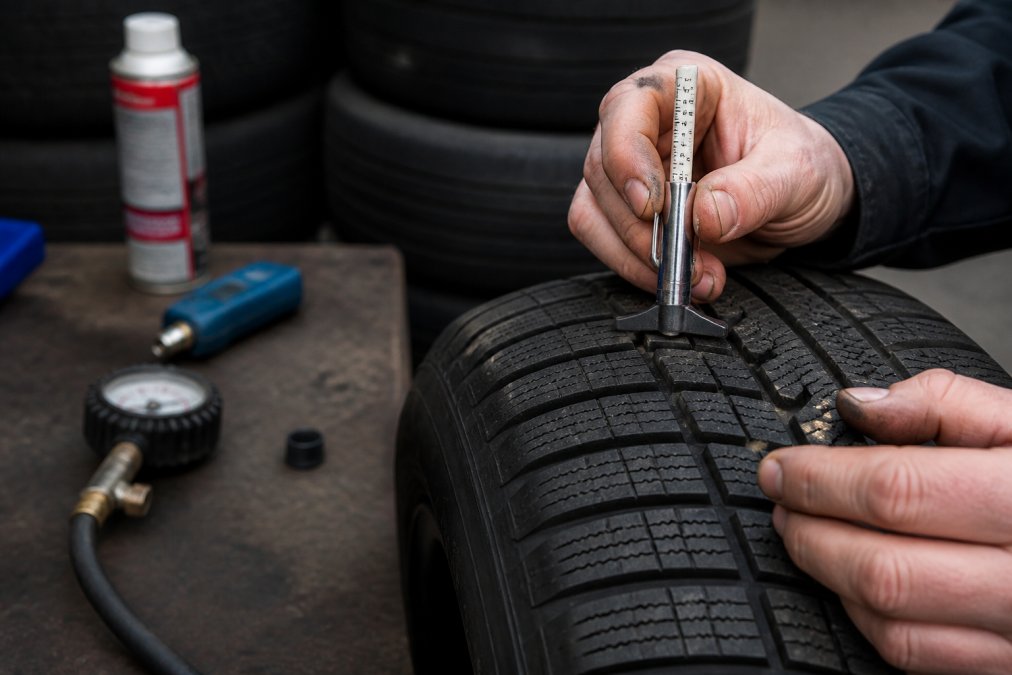
A PCL tyre tread depth gauge (around £10.74) meets Department of Transport standards used in MOT testing. Insert the gauge into the tread grooves at three points on each tyre and record the lowest reading. For winter driving, aim for at least 3mm of tread depth. This provides better water displacement and grip on snow and ice compared to the 1.6mm legal minimum.
The penny test is a quick alternative. Insert a 1p coin into the tread groove with the Queen's head pointing downward. If the Queen's head is visible above the tread, your tyre depth is below 1.6mm and replacement is urgent.
Adjusting tyre pressure for cold weather
Cold air contracts. For every 10 degrees Celsius drop in temperature, tyre pressure falls by approximately 0.1 bar. Winter typically means your tyres lose 0.3-0.5 bar of pressure without any physical leak.
Check your tyre pressure when the car has been parked for at least three hours. Your car's manual or the sticker inside the driver's door shows the correct pressure. Inflate to this specification, not to the maximum pressure printed on the tyre sidewall. Underinflated tyres reduce grip and increase fuel consumption. Check pressure monthly rather than waiting for a warning light.
Key TakeawayWinter tyres (marked with a three-peak mountain symbol) provide significantly better grip than all-season or summer tyres below 7°C. If you drive frequently in winter conditions, the investment in a winter tyre set pays for itself in improved safety and reduced braking distance.
3. Inspect Coolant and Antifreeze Concentration
Your cooling system prevents your engine from overheating in summer and freezing in winter. The fluid that does this is a mixture of water and antifreeze. In winter, the antifreeze concentration is critical; if it's too weak, the coolant freezes solid and your engine seizes.
Most modern cars use ethylene glycol antifreeze mixed at a 50:50 ratio with distilled water. This mixture freezes at approximately -37°C, well below UK winter temperatures. However, if the antifreeze has degraded or been diluted with tap water, the freeze point rises and engine damage becomes possible.
Testing antifreeze strength
A dial-type antifreeze tester (around £8.25) provides immediate feedback. Allow the engine to cool completely before testing. Open the radiator or expansion tank cap slowly and insert the tester bulb into the coolant. If your car's antifreeze protects only to -15°C, you need stronger protection for UK winters.
Topping up coolant safely
If your antifreeze concentration is weak, drain and refill the cooling system with fresh coolant at the correct concentration. This is a job for professionals; the old coolant must be disposed of safely, and the system needs flushing to remove debris and degraded fluid.
At Kettering Motorist Centre, coolant changes are handled as part of routine winter preparation. The team drains the old fluid, flushes the system, and refills with fresh antifreeze at the correct concentration.
Watch OutNever add tap water to your cooling system to top up the level. Tap water contains minerals that degrade antifreeze protection and can cause corrosion inside your engine. Always use distilled water or pre-mixed coolant.
4. Test Windscreen Wipers, Washer Fluid and Visibility
Winter weather reduces visibility constantly. Rain, snow, frost, and salt spray all coat your windscreen. Your wipers must work reliably, and your washer fluid must cut through grime and melt ice.
Checking wiper blade condition
Wiper blades typically last 12 months before the rubber hardens and loses contact with the glass. Winter accelerates this degradation because the rubber becomes brittle in cold weather. If your blades are over a year old, replace them before winter arrives.
Inspect the rubber blade edge for cracks, splits, or hardened areas. If the blade squeaks without leaving water streaks, or if it chatters across the glass, replacement is needed. Most cars use two different blade sizes. Blade replacement takes five minutes and costs between £15 and £40 for a pair.
Winter screen wash formulated for cold weather is essential. Standard summer wash freezes at around -5°C, leaving your windscreen coated with ice that wipers can't clear. Winter screen wash remains liquid down to -10°C or lower and includes additives that help melt frost and cut through road salt.
Winter screen wash comes in ready-to-use bottles or concentrated additive that you mix with water. De-icer aerosol sprays (around £3) provide quick windscreen clearance on frosty mornings. An ice scraper with a rubber squeegee (around £5.95) is also essential.
5. Assemble a Winter Car Emergency Kit Essentials
Breakdowns happen. Winter breakdowns are worse; you might be stranded in cold, wet conditions with limited visibility and heavy traffic. An emergency kit keeps you safe and visible while waiting for recovery.
Core items every car needs
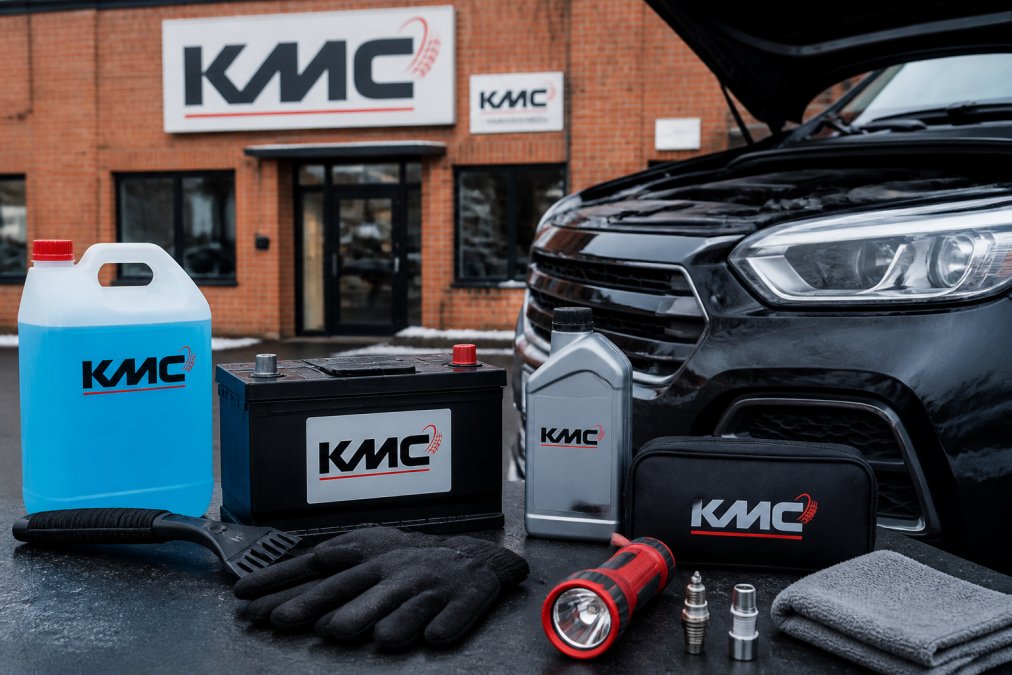
Your winter emergency kit should include:
Jump leads or a portable jump starter - Portable jump starters (around £30-50) work without another vehicle and are more reliable for beginners.
Spare fuses - Match the amperage to your car's fuses. Your manual specifies which sizes.
Spare fan belt - Engine fan belts can snap without warning. Carrying a spare can get you home instead of requiring recovery.
Coolant and water - A 1-litre bottle of pre-mixed coolant and a 2-litre bottle of distilled water let you top up if your cooling system leaks.
Engine oil - Carry the correct grade and viscosity for your car. A 1-litre bottle covers minor top-ups.
Spare wiper blades - A set of replacement blades takes minimal space and solves visibility problems immediately.
Torch and spare batteries - Essential for inspecting your car in darkness. LED torches are reliable and long-lasting.
Hazard warning triangles - UK law requires these if you break down on a motorway or dual carriageway. Place them 45 metres behind your car to warn approaching traffic.
High-visibility vest - Wear this when standing near your car on a busy road. It makes you visible to other drivers.
First aid kit - A basic kit (around £10) covers cuts, sprains, and shock.
De-icer and ice scraper - Keep extras in your kit in case you run out during winter.
Emergency contact numbers - Store your breakdown cover provider's number where you can find it quickly.
Store your kit in the boot, secured so items don't scatter during sudden braking. Use a sturdy plastic storage box or a purpose-built emergency kit bag. Check your kit twice yearly: once before winter (August or September) and once before summer (April or May).
Preparing Electric Vehicles for Winter
Electric vehicles face unique winter challenges. Cold reduces battery range by 20-40%, and the heating system draws significant power. Battery performance degrades in cold weather because the chemical reactions inside the battery slow down. Before winter, check your vehicle's battery management system settings. Many EVs allow you to pre-condition the battery while plugged in, which warms the battery before driving and improves range and charging speed.
Tyre pressure is more critical in electric vehicles because they're heavier than equivalent petrol cars. The extra weight of the battery pack increases tyre loading, making underinflation more damaging. Check pressure monthly and maintain the exact specification in your manual.
For electric vehicle owners in Kettering and Northamptonshire, INTERNAL_LINK: Kettering Motorist Centre's electric vehicle specialist services include winter battery diagnostics and tyre checks tailored to EV requirements. The team understands the specific demands winter places on electric powertrains and can identify issues before they affect your range or safety.
Regenerative braking (which recovers energy when slowing down) is less effective on slippery surfaces. In winter, your EV uses more energy for heating and less energy is recovered through regeneration. Plan journeys with this in mind and charge to full capacity before long winter drives.
DIY Checks vs Professional Winter Car Inspections
You can perform many winter checks yourself using basic tools. Battery testing, tyre pressure, tread depth, and coolant level checks are straightforward and take 30-45 minutes. However, some checks require specialist equipment or knowledge. Brake fluid condition, suspension wear, and electrical system diagnostics need professional diagnostic tools. Brake fluid absorbs moisture over time, and in winter this moisture freezes, reducing braking performance.
At Kettering Motorist Centre, a comprehensive winter inspection covers battery health, tyre condition, coolant concentration, brake fluid condition, wiper blade condition, lighting system, windscreen condition, and heating and demisting system function. The team uses diagnostic equipment that identifies electrical faults, fluid leaks, and sensor problems before they become safety issues.
Check Type
DIY Difficulty
Equipment Needed
Time Required
Battery testing
Easy
LED battery tester (£19)
5 minutes
Tyre tread depth
Easy
Tread gauge (£10.74)
10 minutes
Tyre pressure
Easy
Pressure gauge (£5-15)
10 minutes
Coolant concentration
Easy
Antifreeze tester (£8.25)
5 minutes
Wiper blade condition
Easy
Visual inspection
5 minutes
Brake fluid condition
Difficult
Hygrometer (£30-50)
10 minutes
Suspension wear
Difficult
Diagnostic equipment
15 minutes
Electrical diagnostics
Difficult
Diagnostic computer
20 minutes
Winter car checks aren't optional; they're the difference between a safe journey and a breakdown in dangerous conditions. The 5 best winter car check tips for beginners start with battery health and progress through tyres, coolant, visibility, and emergency preparedness. You can handle most checks yourself using affordable tools and 30-45 minutes of your time.
For a complete winter safety assessment, Kettering Motorist Centre offers professional winter inspections(https://www.ketteringmotoristcentre.co.uk) that combine your DIY checks with specialist diagnostic equipment. The team identifies hidden problems before winter weather makes them critical. Book your winter inspection online with no upfront payment required. Visit Kettering Motorist Centre to schedule your winter car check today.
Frequently Asked Questions
What are the most important winter car checks for beginners?
The five key winter car checks are battery health, tyre tread depth and pressure, coolant and antifreeze levels, windscreen wipers and washer fluid, and assembling an emergency kit. Battery performance drops in cold weather, so testing cold cranking amps is essential. Tyre tread depth must meet legal requirements, and pressure changes as temperature falls. Antifreeze prevents your cooling system from freezing, whilst good visibility is critical for safety. An emergency kit ensures you're prepared for breakdowns or unexpected delays.
How do I check my car battery for winter driving?
Use a simple 12V battery tester to check your battery's condition before winter. These tools show whether your battery is in good, fair, or poor condition via LED indicators. Look for battery terminal corrosion (white, blue, or green crusty deposits) and clean them if needed. If your battery is more than three years old or shows poor readings, have it professionally tested at a garage like Kettering Motorist Centre. Cold weather reduces battery performance significantly, so addressing issues early prevents winter breakdowns.
What tyre tread depth is legal in the UK for winter?
UK law requires a minimum tyre tread depth of 1.6mm across the central three-quarters of the tyre. However, safety experts recommend 3mm for winter driving to maintain proper traction and braking distance on wet or icy roads. Use a tyre tread depth gauge to measure accurately. If your tyres are close to the legal limit, replace them before winter. Winter tyres provide better performance in cold conditions than all-season tyres, though they're not legally required in the UK.
What should I include in a winter car emergency kit?
A winter car emergency kit should contain: jump leads, a torch with batteries, an ice scraper and de-icer, windscreen washer fluid, a first aid kit, reflective warning triangles or a high-visibility vest, a basic tool kit, jump leads, thermal blankets, hand warmers, and drinking water. Store the kit in your boot where it's easily accessible. Professional-grade kits are available ready-made, though you can assemble your own. Keep the kit checked and topped up throughout winter, replacing used items like de-icer or washer fluid promptly.
How do I prepare an electric vehicle for winter driving?
Electric vehicles face unique winter challenges: battery range drops significantly in cold weather, and heating the cabin consumes extra energy. Pre-condition your battery by charging to 80% and warming the cabin while plugged in. Check your EV's coolant system, as electric motors generate less waste heat than petrol engines. Ensure your tyres have adequate tread depth for winter conditions. For specialist EV winter checks and maintenance, visit KMC Electric, our sister site offering dedicated electric vehicle servicing expertise.
Thank you for placing a booking with Kettering Motorist Centre Limited for vehicle
PLEASE TAKE YOUR BOOKING REFERENCE NUMBER WITH YOU TO THE MOT CENTRE
Your items
MOT Test
×
Terms and Conditions
These terms and conditions form the basis on which you can visit and use this website. Please read them carefully as they contain important information.
General terms and conditions
This website is owned and operated by Kettering Motorist Centre Ltd (company registration number: 4485858) operating at Trafalgar Road, Kettering, Northamptonshire, NN16 8DB (the "MOT Centre", the "Company", "we" or "us"). If you have any queries about these terms and conditions or if you have any comments or complaints on or about this website, you can contact us at [email protected] or 01536 410142.
The website is to promote and offer for sale the products and services of Kettering Motorist Centre Limited.
1. The contract between us
This website does not take payment for products or services online. The website enables you to view products and services online and to make a booking for later delivery and payment. The vehicle and provision of other products and services promoted by this website and the payment by you of the price of those products and services will take place at the MOT Centre. The booking does not constitute a contract.
The booking process on the site provides details of the booked MOT order. Please take the time to read and check your booking. It is your responsibility to make sure the order is correct and for the correct vehicle.
2. Ownership of rights
All rights, including copyright, in this website are owned by or licensed to the Company. Any use of this website or its contents, including copying or storing it or them in whole or part, other than for your own personal, non commercial use, is prohibited without our permission. You may not modify, distribute or repost anything on this website for any purpose.
3. Accuracy of content
We have taken care in the preparation of the content of this website, in particular to ensure that prices quoted are correct at the time of publishing and that all goods have been fairly described. However, bookings will only be accepted if there are no material errors in the description of the goods or their prices as advertised on this website. Any weights, dimensions and capacities given about the goods are approximate only.
4. Damage to your computer
We try to ensure that this website is free from viruses or defects. However, we cannot guarantee that your use of this website or any websites accessible through it will not cause damage to your computer. It is your responsibility to ensure that the right equipment is available to use the website. Except in the case of negligence on our part, we will not be liable to any person for any loss or damage which may arise to computer equipment as a result of using this website.
5. Availability
All bookings are subject to acceptance and availability. If the MOT date you have requested are is not available, the Centre will contact you by e-mail or phone. You will have the option either to wait until another slot is available or to cancel your booking.
6. Booking errors
You are able to correct errors on your booking up to the point on which you click on “Place Booking” during the booking process.
7. Price
The prices payable for goods that you order are as set out in our website. All prices are inclusive of VAT at the current rates and are correct at the time of entering information, errors and omissions excepted.
Whenever it is not possible to accept your booking to buy goods of the specification and description at the price indicated, the MOT Centre will advise you by email or phone or when you visit the centre.
8. Payment terms
You will be required to pay for the goods or services to the Centre at time of a completed MOT.
9. Delivery charges
N/A
10. Cancellation
The MOT Centre reserves the right to cancel the booking if:
10.1 There is insufficient stock to deliver the goods you have booked.
10.2 One or more of the goods you booked was listed at an incorrect price.
If your booking is cancelled the Centre will notify you by e-mail or phone.
You have the right to cancel your booking at any time up to the point of the MOT. If you do cancel your booking you should inform the centre by phone.
11. Liability
Notwithstanding the foregoing, nothing in these terms and conditions is intended to limit any rights you might have as a consumer under applicable local law or other statutory rights that may not be excluded nor in any way to exclude or limit our liability to you for any death or personal injury resulting from our negligence.
12. Notices
Unless otherwise expressly stated in these terms and conditions, all notices from you to us must be in writing and sent to our contact address given above and all notices from us to you will be displayed on our website from time to time.
13. Changes to legal notices
We reserve the right to change these terms and conditions from time to time and you should look through them as often as possible.
14. Law, jurisdiction and language
This website, any content contained therein and any contract brought into being as a result of usage of this website are governed by and construed in accordance with English law. Parties to any such contract agree to submit to the exclusive jurisdiction of the courts of England and Wales.
15. Invalidity
If any part of these terms and conditions is unenforceable (including any provision in which we exclude our liability to you) the enforceability of any other part of these conditions will not be affected.
16. Privacy
You acknowledge and agree to be bound by the terms of our privacy policy
17. Third party rights
Nothing in this Agreement is intended to, nor shall it confer any rights on a third party.